


Author: Process Heating Engineer Publish Time: 2026-03-13 Origin: Site
Last updated: August 30, 2026
Most IR lamp RFQs look easier than they really are. A spreadsheet can compare voltage, wattage, length, and price in minutes. What it cannot show is whether the lamp will match the substrate, the machine layout, the control logic, and the maintenance plan once production starts.
That gap is where many purchasing mistakes begin. Buyers think they are comparing interchangeable heating parts, when they are actually comparing different levels of specification control, process understanding, and supply discipline. In industrial infrared heating, the better supplier is usually the one that reduces risk before the order is placed, not the one that sends the fastest quote.
For YFR Heating’s website, this matters because the current site already presents a broader industrial supply position: quartz IR emitters, short wave, fast medium wave, medium wave products, replacement lamps, heating modules, power controls, and project-based systems rather than simple resale inventory. That is the right commercial frame for OEM buyers, engineers, and industrial distributors evaluating a long-term ir heat lamp supplier.
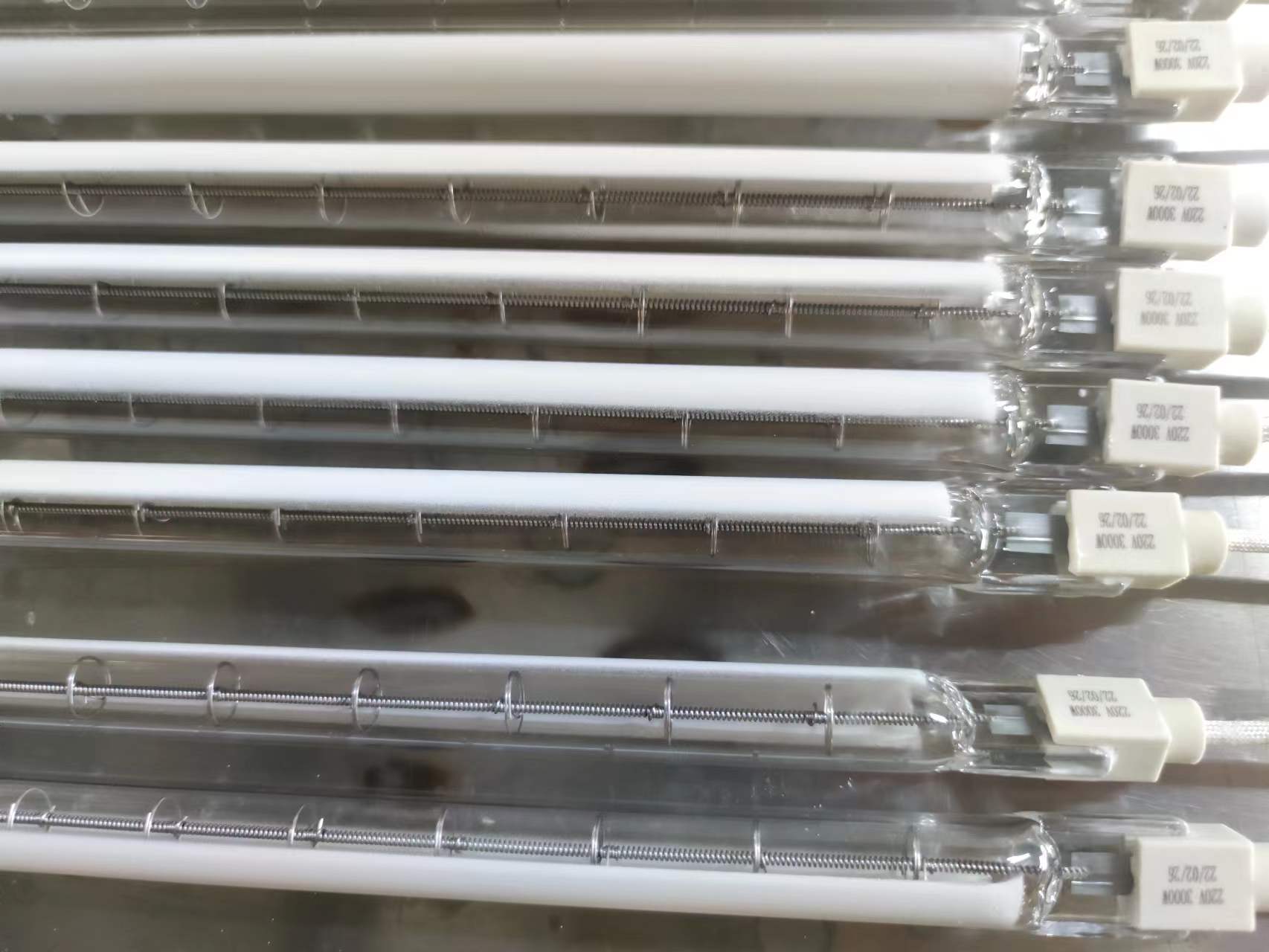
A lamp quote becomes risky when the supplier accepts incomplete information too easily. If the discussion never moves beyond watts, volts, and overall length, there is a strong chance the process-critical variables are still unresolved. In infrared heating, those hidden variables are often the reason a lamp fits mechanically but underperforms thermally.
Industrial buyers usually care about four downstream outcomes: stable heating effect, predictable replacement, manageable spare stock, and consistent delivery over repeat orders. Those outcomes depend on decisions made at the quotation stage, including wavelength, heated length, reflector direction, lead-end layout, mounting position, and zone-level power distribution.
A capable supplier should therefore behave less like a catalog vendor and more like a specification filter. That means asking for substrate details, line speed, duty cycle, heated area, machine orientation, and whether the order is for a new design or a replacement infrared lamp for machinery. The earlier those points are locked, the lower the purchasing risk becomes.
Process target
Define whether the lamp is being used for drying, curing, preheating, forming, bonding, or thermal testing.
Material and absorption context
State the substrate, coating, moisture content, thickness, and whether the process needs surface heating or deeper penetration.
Electrical window
Confirm voltage, wattage target if known, zoning logic, and the type of power control used.
Mechanical geometry
Lock total length, heated length, lamp cross-section, reflector side, and the distance from lamp to product.
Connection details
Confirm lead-end configuration, cable exit, terminal style, ceramic ends, and mounting constraints.
Order intent
Clarify whether the part is a new OEM lamp, a drop-in replacement, or a corrected replacement for an underperforming design.
When a supplier asks for this information, that is usually a sign of process discipline rather than sales friction. Helios Quartz explicitly describes customer-specific control over total length, heated length, filament and ending configuration, power, and voltage, which is exactly the level of definition industrial buyers should expect.
In industrial heating, supply quality starts long before packing and shipping. It begins with whether the supplier can control the variables that determine how the lamp behaves on the line: quartz tube choice, filament geometry, reflector treatment, power density, dimensional tolerances, and repeat-order consistency.
This is why the safest industrial infrared heat lamp supplier often has manufacturer-level control over the emitter, or works so closely with production that those variables are not treated as afterthoughts. YFR’s current site positions the company as both manufacturer and supplier of quartz IR emitters and related systems, which is commercially important because it shortens the distance between quotation, customization, and repeat-order control.
Quartz selection is a practical example. Heraeus notes that low-OH tubing is used to achieve high infrared transmission and strong thermal stability in IR applications. For industrial buyers, that is not an abstract materials point. It affects emitter behavior under load, service stability, and suitability for the intended spectral range.
Filament design is another supplier-level control that buyers often underestimate. Helios states that different filament configurations change heated-area modularity and lead-wire position. That means two lamps with the same nominal rating can still distribute energy differently across a product or zone.
Reflector choice belongs in the same conversation. YFR’s product pages present transparent quartz, ceramic white coating, and gold reflective options, while Noblelight and Helios both describe reflectors as a way to direct more radiation toward the target material. In other words, reflector specification is not cosmetic; it changes how usable energy reaches the workpiece.
The most common sourcing mistake is treating wavelength selection as secondary. In many industrial processes, it is primary.
Noblelight states that short wave radiation can penetrate deeper into some solid materials, while medium wave radiation is absorbed more at the surface and is particularly well absorbed by many plastics, glass, and water. Helios similarly shows strong absorption relevance for water, polyethylene, and PVC in the medium-wave region. That is why a lower-priced lamp with the wrong spectrum can cost more in scrap, slower line speed, or unstable drying than a correctly matched lamp with a higher unit price.
Helios also places fast medium wave around 1.4-1.6 μm and short wave around 1.1-1.4 μm, while noting fast on/off behavior for short wave emitters. For buyers, that matters when the process requires rapid cycling, short dwell time, or tight control in multi-zone systems.
This is where an OEM infrared heating element supplier should sound different from a generic trader. The right starting questions are not “How many watts?” and “What is your target price?” The better questions are “What is being heated?”, “How fast does the line move?”, “What must heat first?”, and “How quickly must the lamp respond to control changes?”
Process situation | What a serious supplier should ask | Why it matters |
|---|---|---|
Fast line speed with short dwell time | Response-time requirement, line speed, stand-off distance | Short wave or fast medium wave may be more suitable where rapid thermal response is critical |
Surface drying of coatings, inks, glass-related processes, or many plastics | Substrate, coating chemistry, moisture, surface target temperature | Medium wave often aligns better with surface absorption in these materials |
Retrofit into existing machinery | Old lamp markings, machine model, heated length, reflector side, terminal style | Prevents “nearly compatible” replacements that create fit or performance problems |
Multi-zone ovens or conveyor systems | Zone lengths, control method, power balancing, maintenance replacement plan | Heated-area modularity and batch consistency affect zone tuning and uptime |
Wide products or long emitters | Lamp length, support method, orientation, reflector coverage | Mechanical stability and power distribution become more critical over long lengths |
Technical basis for wavelength and response considerations: Noblelight and Helios Quartz industrial IR documentation.
On YFR Heating’s site, this is a natural point to guide readers toward the Short Wave Infrared Lamp, FMW Infrared Lamp, and Medium Wave Infrared Lamp pages, because buyers at this stage are typically narrowing the emitter family before requesting a final lamp drawing.
The first shipment proves that the supplier can build one lamp. The second and fifth shipments prove whether the supplier can build the same lamp again.
That distinction matters in OEM programs, maintenance supply, and distributor relationships. A lamp that drifts in heated length, lead-end position, reflector placement, or electrical behavior may still look acceptable at receiving inspection while forcing technicians to retune the equipment or swap stock between machines. In practice, repeat-order stability is where supplier quality becomes visible to production teams.
Power density consistency is part of that stability. Helios describes maximum nominal power densities for fast medium wave and short wave designs, and Noblelight shows how emitter temperature and spectrum affect the distribution of radiated energy. Buyers should therefore look beyond total wattage and ask whether the supplier can keep the same thermal behavior over future batches, not only the same label rating.
Thermal zoning exposes this issue quickly. In a three-zone oven or conveyor heater, one unstable lamp variant can force the entire zone set to compensate. YFR’s project page shows installations involving conveyor ovens, printing equipment, vacuum heating ovens, embossing, flat-glass coating cure, and shortwave booster tunnels, all of which depend on repeatable zone behavior rather than one-off lamp output.
This is also where a quartz infrared lamp supplier needs to maintain drawing history and order traceability. The more exact the supplier is about previous builds, the less time the buyer spends reverse-engineering its own installed base later.
Many buyers think spare-lamp planning is mainly an inventory problem. It is usually a standardization problem first.
If the installed base contains too many near-duplicate lamps, stock becomes expensive and error-prone. One of the most useful things a supplier can do is help the buyer rationalize lamp families across similar machines: the same voltage where possible, the same lead-end pattern where practical, the same reflector direction, and the same heated-length logic where the process allows it. That is how spare planning becomes manageable.
YFR’s replacement page already frames the business in terms of standard and custom lengths, wattages, and voltages for new installations and direct replacements. That is important because industrial stocking is rarely solved by “more stock.” It is solved by fewer uncontrolled variants and clearer replacement rules.
Lead-time control also begins here. Custom lamps with incomplete drawings create avoidable back-and-forth. Lamps that are already documented by drawing, previous order history, or validated replacement notes are easier to plan, quote, and replenish. For maintenance teams, that difference often matters more than a small unit-price gap.
For internal linking inside the article, this section can naturally point readers to Replacement IR Lamps, Infrared Heating Module, and Power Controls, because stocking strategy is closely tied to replacement compatibility and system-level thermal control.
Pre-shipment control for industrial IR lamps should answer three questions: will it fit, will it connect correctly, and will it behave like the approved design.
That sounds basic, but it is not enough to check only resistance. If wavelength family, reflector geometry, filament configuration, and heated length all affect process performance, then shipment quality must also control those variables at the part level. Helios and Noblelight both make clear that emitter geometry, spectrum, and reflector design are integral to performance, not optional details.
For industrial buyers, the most useful supplier-side controls are usually these:
Dimensional verification
Check total length, heated length, end fittings, and reflector placement against the approved drawing.
Electrical confirmation
Verify voltage/wattage configuration, connection integrity, and basic electrical behavior before packing.
Visual inspection
Review quartz condition, coating consistency where applicable, filament position, and end-section build quality.
Marking and traceability
Keep clear identifiers so future replacements can be matched to the correct build.
Packaging discipline
Protect quartz lamps against transport damage and mixing between variants.
These are not luxury controls. They are part of supply reliability. In industrial electroheating, the installed equipment also sits within broader safety requirements such as IEC 60519-1, which is why buyers should treat lamp specification, integration, and documentation as part of the same controlled process rather than as isolated purchasing events.
A strong supplier-selection process does not need to be complicated. It does need to test the right things.
Evaluation point | Weak supplier signal | Strong supplier signal |
|---|---|---|
Technical starting point | Begins with stock code and price | Begins with application, substrate, and process target |
Wavelength logic | Recommends one lamp family for everything | Explains why short wave, fast medium wave, or medium wave fits the material |
Drawing control | Accepts vague dimensions | Requests total length, heated length, terminals, reflector side, and operating orientation |
Customization depth | Only offers standard catalog lamps | Supports custom voltage, wattage, shape, size, and ending configuration |
Batch stability | Focuses on first-order approval | Discusses repeat-order consistency and traceability |
Replacement support | Offers approximate substitutes | Works from photos, markings, drawings, and machine context |
Stock planning | Pushes broad inventory | Helps reduce unnecessary variants and standardize replacements |
Delivery discipline | Quotes lead time only | Aligns lead time with documentation quality and repeat-order control |
This matrix reflects real industrial buying behavior. It is built to reduce scrap, downtime, and stocking confusion rather than to reward generic sales language. The strongest custom IR heating lamp supplier is rarely the one with the broadest adjective list. It is the one with the clearest control over the variables that affect production.
Ask the supplier to explain the selected wavelength in relation to your material and process.
Require a drawing-level review before approving a custom or replacement part.
Confirm reflector type, heated length, terminal style, and operating position in writing.
Check whether the supplier can support both first order and repeat-order continuity.
Review how spare parts will be identified, stocked, and reordered later.
Verify that the supplier can support the application category, not just the lamp itself.
YFR’s current project page is relevant here because it shows application exposure across printing, vacuum ovens, paint drying, conveyor heating, embossing, and coating cure. That kind of range is useful when the buyer is selecting a supplier for an application family rather than for one isolated lamp order.
New machine projects allow time to refine the design. Replacement orders usually do not.
When a lamp fails in service, the buyer is often managing downtime, incomplete historical documentation, and pressure to restore output quickly. That is where supplier depth becomes obvious. A catalog seller may offer a “close equivalent.” A lower-risk supplier will work backward from the installed condition: old markings, machine model, heated length, reflector side, terminal structure, mounting space, voltage, and the actual process result on the line.
This is also the point where buyers should stop assuming that an exact copy is always the best choice. If the original lamp ran too cold, overheated edges, failed early at the ends, or caused uneven drying, the better decision may be a controlled correction rather than a perfect duplication. A supplier with manufacturer understanding can help determine whether the issue was wavelength mismatch, reflector direction, lead-end stress, stand-off distance, or power-density distribution.
On YFR Heating’s website, this section naturally supports internal links to Replacement IR Lamps and to project/application pages involving printing equipment, vacuum heating ovens, paint drying, and conveyor ovens. Those are the moments when supply capability affects maintenance speed, purchasing confidence, and line uptime most directly.
That is why serious buyers should evaluate an ir heat lamp supplier through the full life cycle of the part: specification, first order, repeat supply, stocking logic, and replacement support. Once the conversation reaches drawing level and process level, the right supplier usually becomes much easier to identify.
Send the application, substrate, machine type, voltage, wattage target if known, overall length, heated length, reflector requirement, terminal style, and photos or drawings of the installed lamp. For replacement projects, old markings and machine model details are especially useful because they reduce compatibility errors.
No. Wattage is only one part of the decision. Wavelength, response speed, heated length, reflector design, lead-end layout, and installation distance all affect process performance. Noblelight and Helios both show that spectrum and emitter configuration materially change how energy is absorbed and delivered to the material.
Yes, but that depends on its documentation and customization control. YFR’s current site shows support for standard and custom lengths, wattages, voltages, replacement lamps, and project-based heating systems, which is the kind of overlap buyers usually need when they want one supply partner for both new equipment and aftermarket continuity.
Start by reducing uncontrolled variants. A better stocking plan usually comes from clear drawings, validated compatibility lists, and fewer near-duplicate lamp versions rather than from holding more inventory. Replacement pages and project history are useful because they help map the installed base back to defined lamp families.
Complete drawings, stable specifications, and repeat-order records. When the supplier already knows the heated length, ending configuration, reflector type, and electrical window, the order is easier to quote and reproduce. Helios explicitly describes customer-defined control over these parameters, which is why good documentation improves lead-time reliability.
[Specification Review]
If your team is comparing suppliers for a new machine build, a retrofit, or an ongoing spare-parts program, the most productive next step is not another generic price inquiry. It is a drawing-level and process-level review of the lamp you actually need.
YFR Heating’s current site structure supports that kind of discussion with product coverage across short wave, fast medium wave, medium wave, replacement lamps, infrared heating modules, power controls, and project-based infrared applications. That makes it easier to evaluate not only whether a lamp can be supplied, but whether it can be supplied correctly and repeatedly.
Send your drawing, old lamp photos, machine model, substrate, line speed, operating voltage, and thermal objective. From there, YFR Heating can help you review:
whether the wavelength family matches the process
whether the lamp should be copied exactly or corrected
whether reflector, lead-end, or heated-length changes would improve performance
whether your spare-lamp plan can be simplified for easier repeat purchasing
For OEM buyers, procurement teams, engineers, and industrial distributors, that review usually reduces ordering errors more effectively than comparing unit price alone.
Review YFR industrial infrared heating lamps and heating modules and controls. Confirm emitter choice, mounting, sensing and recipes with representative product trials.
Send YFR your material, dimensions, target, cycle time and current equipment details for an application-specific review.


