


Author: Site Editor Publish Time: 2025-11-28 Origin: Site


Last updated: August 31, 2026
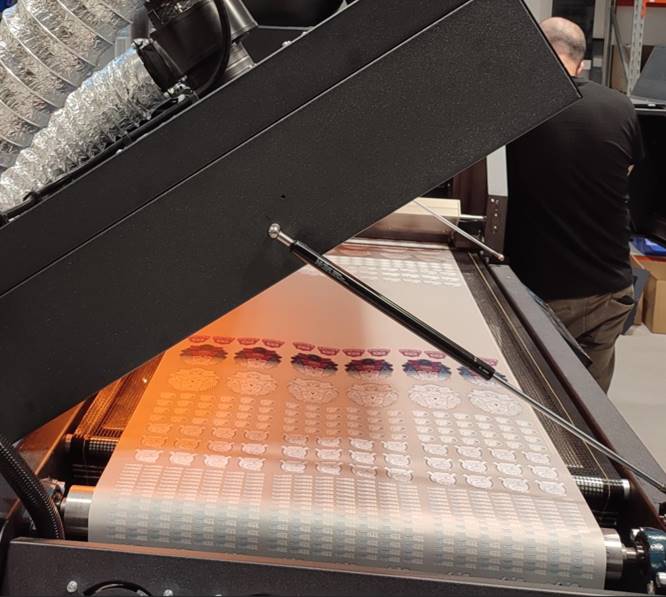
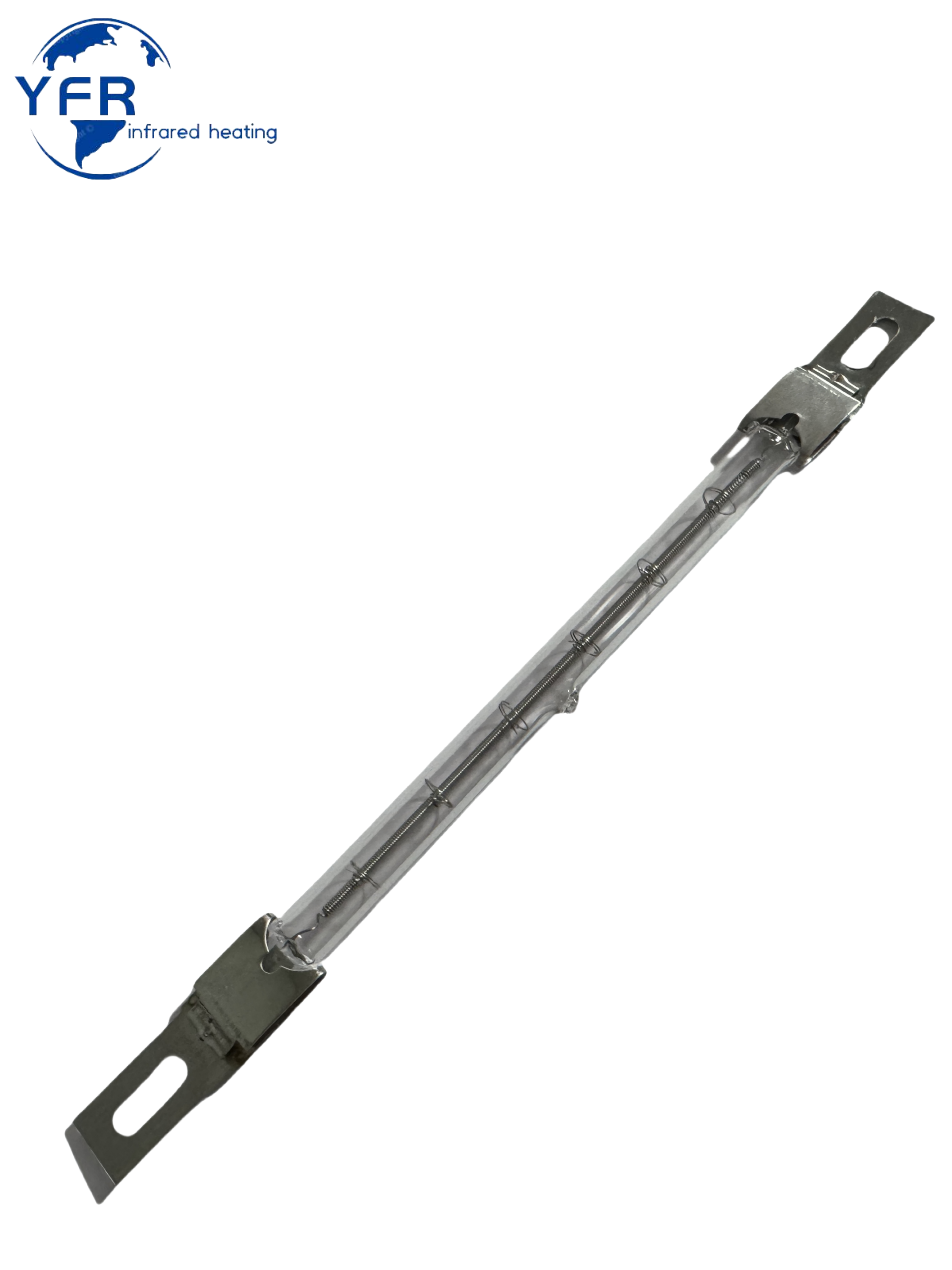
Drying and moisture control are where most of the energy – and many of the bottlenecks – hide in paper production. For paper mill engineers, OEM paper machine builders, and line integrators, quartz infrared heat lamps offer a compact way to boost drying capacity, stabilize moisture profiles, and apply controllable heat at selected bottlenecks without rebuilding the whole dryer section. This article explains where quartz infrared heaters make sense in the paper industry, how to select them, and what to consider for integration, safety, measurement and validation.
The pulp and paper industry is one of the most energy-intensive sectors, with drying accounting for a large share of total process energy, particularly in paper machines.
Quartz infrared heat lamps fit best where you need fast, controllable heat transfer to thin moving webs: press-section preheating, dryer-section upgrades, infrared drying for paper production, coating/size press curing, and edge/moisture-profile correction.
Compared with a purely steam or hot-air baseline, a well-designed infrared stage can change heat-up response, available line speed and moisture control. Any energy or capacity benefit should be measured on representative grades at matched final moisture and quality.
Key technical decision points for quartz infrared heaters for paper machine applications include wavelength band (short vs fast medium wave), required power density, emitter geometry and zoning, working distance, and how you integrate control (on/off, SSR/SCR, PID, PLC/fieldbus).
Huai’an Yinfrared Heating Technology supports both retrofit and new-build projects with short-wave quartz infrared heat lamps, fast medium-wave quartz IR lamps, modular infrared drying cassettes, and custom infrared ovens for paper production, plus OEM design-in support for paper machine manufacturers.
Key takeaway: Treat infrared not as a replacement for the complete dryer section, but as a targeted and testable way to address defined heating or moisture-profile bottlenecks.
In many mills, the main paper machine runs close to the thermal limit of the steam dryer cans. The web – typically from tens to a few hundred grams per square meter – travels at several hundred to well over 1,000 m/min. Steam pressure, hood temperature, and pocket ventilation are already pushed high, yet some grades still limit speed or require frequent grade-dependent adjustments.
Pain points with conventional steam/hot-air drying
Steam capacity already fully used; limited ability to increase pressure further.
Large thermal inertia of dryer cans and hoods – slow response to grade changes or basis-weight swings.
Moisture non-uniformity along machine direction when operating near limits.
Need to invest heavily in new dryer cans, steam lines, and building extensions if more capacity is required.
How quartz infrared heat lamps help
Adding a compact bank of quartz infrared heaters between the press section and first dryer groups, or between existing dryer groups, allows you to:
Preheat the web quickly before it contacts the dryer cans.
Increase web dryness entering the dryer section, easing the evaporation load.
Compensate for temporary load spikes or furnish changes with fast power modulation.
Gain flexibility: increase speed on “bottleneck” grades or run more challenging recipes with fewer breaks.
Preheating the wet web even by a modest temperature rise before pressing or drying can noticeably increase dryness, which translates into significant steam savings or speed headroom.
Recommended Yinfrared solutions
Short-wave quartz infrared heat lamps for maximum power density and very fast response.
Fast medium-wave quartz IR lamps where deeper water absorption is desired with slightly gentler surface impact.
Modular infrared drying cassettes designed to drop into available spans between existing dryer groups.
Coated, sized, or functionalized papers (e.g., packaging, inkjet grades, barrier papers, release liners) require precise coating setting and drying. Coating or size is applied at the size press, film press, or offline coater; typical web speeds can be high, with sensitive chemistry and tight quality tolerances.
Pain points with conventional heating
Hot-air or steam-heated cylinders may not give sufficient surface heat flux to “set” the coating quickly at high speeds.
Uneven drying can cause defects such as mottle, blistering, or poor adhesion.
Long convection sections take valuable floor space and can complicate web threading and access.
How infrared drying for paper production changes the game
Infrared heating lamps for paper coating and laminating deliver heat directly into the moist coating layer and upper fiber region:
Very fast surface heating within seconds improves film formation and binding.
Compact IR zones fit in limited space above or after the coater, where conventional equipment would not.
Power can be zoned across machine width to compensate for edge or CD variations.
Heat input is easy to modulate with recipe or speed changes via PLC/fieldbus.
Recommended Yinfrared solutions
Fast medium-wave quartz IR lamps, tuned to water and binder absorption characteristics, for efficient coating drying and curing.
Modular infrared drying cassettes positioned directly after the coater or size press, often in combination with existing hot-air or steam dryers.
Custom infrared ovens for paper production where longer dwell at controlled atmosphere is needed for high-value specialty grades.
Cross-direction (CD) moisture profile control is critical for machine runnability, curl control, printability, and converting behavior. Even small CD deviations can lead to web breaks, poor reel structure, and downstream waste.
Pain points with conventional profiling
Steam box profiling is effective, but response can be slow and primarily affects press nip/press dryness.
Hot-air profiling nozzles are bulky, slower in response, and sometimes limited in resolution.
Edge dryness problems (wet edges or over-dried edges) can trigger curl, slit breaks, or customer complaints.
How paper web moisture control infrared systems help
Narrow, individually controllable quartz IR emitters installed near the end of the dryer section or before the reel can:
Deliver local heat input in small CD zones, correcting residual moisture streaks.
Dry edges slightly more than the center to control curl, or vice versa.
React quickly to profile measurements from scanning moisture gauges, enabling closed-loop control.
This type of paper web moisture control infrared system is widely used in modern paper and board machines for moisture and gloss profiling.
Recommended Yinfrared solutions
Short-wave quartz infrared heat lamps in narrow CD elements for high-resolution profiling.
Custom profiling arrays with solid reflectors and forced cooling for stable operation in high-temperature dryer hoods.
Integration with existing scanner/moisture control systems via analog or digital interfaces.
Pro tip for plant engineers: Start with IR moisture profiling and edge drying when you need tangible quality benefits with minimal civil work – these systems are compact and typically easier to retrofit than full dryer rebuilds.
When selecting quartz infrared heaters for paper machines, a few parameters define whether the system will meet your drying and energy objectives.
Short-wave IR (approx. 0.8–1.5 µm)
Generated by tungsten-halogen quartz lamps with very hot filaments. Energy is highly directional with very fast response (fractions of a second). Well suited to thin moving webs and situations needing very high heat flux.
Fast medium-wave IR (approx. 1.6–2.4 µm)
Quartz emitters at lower filament temperature. Better matched to water absorption and somewhat deeper penetration into the moist coating or sheet surface. Still fast response (1–2 seconds).
Long-wave IR (approx. 3–10 µm)
Typically from ceramic or metal-foil heaters. More suitable for lower temperature processes and slower lines; less common directly over high-speed paper machines but used in some converting or offline lines.
Matching emitter response to the paper, coating and binder system can improve process controllability. Performance should be assessed through measured web temperature, final moisture, coating quality, line speed and total energy use.
Total power (kW): sum of all emitters in a zone.
Power density (kW/m²): power per projected area of web; key for comparing systems.
Higher power density enables shorter drying zones or higher speed, but it increases the risk of local overheating if control or web handling is poor. The optimal range depends on basis weight, initial moisture, and allowable surface temperature.
Common options in paper applications:
Quartz tube lamps (short-wave or fast medium-wave):
High power density, very fast response, compact.
Often mounted in cooled cassettes with reflectors.
Ceramic or metal-foil panels (long-wave):
Lower power density and slower response.
More common in converting and low-temperature applications.
Modular infrared drying cassettes:
Pre-assembled frames with lamps, reflectors, and cooling, designed for easy installation into existing spans.
Emitter length and cassette size must match:
Machine direction dwell time (dependent on line speed and IR zone length).
Cross-direction web width and required profiling resolution.
Zoning (dividing the width into separately controlled sections) is essential for moisture profiling and for matching dry-end moisture targets across different grades.
Short-wave quartz lamps have filament temperatures in the thousands of degrees Celsius and reach operating output very quickly.
Fast medium-wave lamps run cooler but still respond within seconds.
Fast response is valuable for:
Speed changes and sheet breaks.
Grade changes with different target dryness.
Closed-loop control based on real-time moisture measurements.
The working distance between emitters and paper web influences:
Heat flux at the web.
Uniformity across the width.
Risk of contamination or mechanical contact.
Shorter distances give higher heat flux but require better web stability and protection. Typical IR paper installations use compact but safe distances, considering flutter, sheet breaks, and threading.
For paper machines, common control strategies include:
On/off control: simple, but only suitable for small or auxiliary zones.
Phase-angle or burst-fire control using SSR/SCR: allows smooth power modulation over a wide range.
PID loops: maintain web temperature or moisture targets using sensor feedback.
PLC / fieldbus integration: connects IR zones to existing DCS, moisture scanners, and speed controls.
IR modules near the paper web must withstand:
High ambient temperatures in dryer hoods.
High humidity and fibers/dust.
Water spray during cleaning and sheet breaks.
Appropriate enclosure design, insulation, reflector materials, and IP ratings help ensure service life and safety.
| Infrared Solution Type | Wavelength Band | Typical Power Density (qualitative) | Response Time | Recommended Applications | Control Options |
|---|---|---|---|---|---|
| Short-wave quartz IR module | Short-wave (NIR) | Very high (tens of kW/m² possible) | Very fast (<1 s) | Press-section preheating, bottleneck dryer groups, CD profiling | SCR/SSR, PID, PLC/fieldbus |
| Fast medium-wave quartz IR lamp module | Fast medium-wave | High | Fast (1–2 s) | Coating/size press drying, specialty papers, gentle surface heat | SCR/SSR, PID, PLC/fieldbus |
| Long-wave ceramic IR panel | Long-wave | Low–medium | Slow (minutes) | Low-speed converting, offline drying, board conditioning | On/off, simple PID |
| Modular infrared drying cassette / oven | Mixed (short/FMW) | Medium–very high (by design) | Fast | Custom paper ovens, high-value specialty grades, lab/pilot lines | Fully integrated PLC control |
(Power density notes are order-of-magnitude, for relative comparison only; actual values depend on detailed design.)
If/then rules
If line speed is high and available space is short, then favor short-wave quartz IR for high heat flux.
If the main goal is efficient moisture removal in coatings or surface layers with tight quality requirements, then consider fast medium-wave quartz IR.
If the process is lower temperature or offline converting, then long-wave panels may be sufficient.
If you need detailed moisture profiling in CD, then specify narrow, individually controllable IR zones.
If your mill already uses an advanced DCS and moisture scanners, then integrate IR zones with PLC/fieldbus for closed-loop control.
Mini decision flow (simplified)
What is your main objective?
Increase machine speed → go to A
Improve moisture profile / quality → go to B
Add new specialty grade → go to C
A: Increase machine speed
Yes → Short-wave quartz IR modules, high power density
No → Combination of fast medium-wave IR and improved hood/ventilation
Limited space before/after dryer?
B: Improve moisture profile / edges
Yes → Narrow short-wave quartz IR profiling lamps
No → Wider fast medium-wave zones with basic CD zoning
Need high-resolution CD control?
C: New specialty grade (coated / functional)
Yes → Fast medium-wave quartz IR with careful tuning
No → Short-wave or hybrid IR + hot-air, depending on throughput targets
Sensitive surface / risk of scorching?
When integrating IR into a paper machine:
Mains voltage and phase:
Design heaters for common industrial three-phase levels to simplify power distribution.
High-power IR zones are typically three-phase for better load balancing.
Wiring and protections:
Use appropriately sized cables, contactors/SSRs, and over-current/over-temperature protection.
Provide individual fusing or breakers per zone to limit fault impact.
Ensure proper grounding of frames, reflectors, and cassettes.
Control strategies:
SCR/SSR controllers with phase-angle or burst-fire modes enable smooth power modulation.
PID loops can control web temperature (via IR pyrometers) or moisture (via scanners).
Integrate setpoints and feedback into the mill DCS/PLC using common fieldbuses.
Control cabinet layout hints:
Group zones logically by machine section.
Separate power electronics from high-temperature / high-humidity areas; use cooled enclosures where required.
Provide clear labeling and test points for maintenance.
Mounting options:
Rigid frames above or below the web.
Cassette systems that can swing out or slide out for cleaning and maintenance.
Retrofitting into open spans between press and first dryers, or between dryer groups.
Distance from heater to product:
Shorter distance → higher flux and better efficiency, but higher risk if web flutters or breaks.
For high-speed machines, keep enough clearance for sheet breaks and threading paths; include mechanical protection and catch pans.
Line speed, dwell time, and power sizing:
Required energy per square meter depends on the moisture to be removed and process window.
Power density × dwell time must be sufficient to reach target dryness without overheating the surface.
As speed increases, either power density or zone length (or both) must increase.
Reflectors, shielding, and insulation:
High-quality reflectors redirect otherwise wasted radiation back to the web.
Shields protect surrounding structures and operators from stray radiation.
Insulation reduces unwanted heat losses to the hood or building structure.
Maintenance and access:
Design for quick lamp replacement from one side.
Provide inspection windows or access panels for cleaning reflectors and removing dust/fibers.
Plan safe parking positions for IR banks during threading, sheet breaks, or maintenance.
Define the heating profile:
Targets: inlet/outlet moisture, temperature limits for paper and coating, and maximum allowed gradient.
Ramps: how quickly temperature rises along machine direction.
Soak: whether any hold zone is needed for coating reactions or binder setting.
Instrumentation:
Use thermocouples or surface temperature sensors during commissioning.
Combine IR sensors for surface temperature with moisture scanners to see total effect.
From trial-and-error to structured tuning:
Start with conservative power setpoints and gradually increase while monitoring quality and moisture.
Evaluate speed vs. quality trade-offs systematically.
Use step tests and response curves to configure PID parameters and safe limits.
Defect reduction examples:
Use IR preheating to reduce “picking” on dryer cans and reduce defects at high speeds.
Tune IR after coaters to reduce mottle and improve gloss uniformity.
Adjust edge zones to reduce curl and reel defects.
Lab tests on samples:
Determine heating curves and moisture removal rates for representative paper and coatings.
Identify safe temperature limits and the onset of discoloration or blistering.
Pilot line or test zone validation:
Install a limited IR module in a pilot line or non-critical machine section.
Vary speed, basis weight, and recipes to capture operating envelopes.
Full-scale acceptance criteria:
Throughput: achievable m/min or tons/day compared with baseline.
Temperature uniformity: variation across CD and MD within acceptable limits.
Specific energy consumption (kWh per ton or per m²) compared with baseline.
Product quality metrics: coating adhesion, printability, gloss, curl, moisture variation.
Infrared systems for paper machines must comply with the same general safety and regulatory framework as other industrial heating equipment.
Standards and directives (examples):
CE-related requirements in Europe, typically involving Low Voltage, EMC, and Machinery aspects.
UL/CSA or equivalent standards in North America for electrical safety.
RoHS and REACH considerations for materials used in emitters, wiring, and housings.
Safety topics to address:
High-surface-temperature risk: guards, shields, and clear warning labels to prevent contact burns.
Fire prevention: adequate clearances from combustible materials, over-temperature protection, and interlocks to shut off IR in case of web breaks or stops.
Electrical safety: proper grounding, short-circuit and earth-fault protection, emergency stop integration, and safe lock-out/tag-out procedures.
A dedicated compliance or technical support package from Huai’an Yinfrared Heating Technology can provide detailed documentation, example certificates, and guidance on how IR modules integrate into the mill’s overall safety concept.
For OEM paper machine builders, system integrators, and mill upgrade projects, Huai’an Yinfrared Heating Technology can support different engagement models:
Standard catalog heaters/modules:
Off-the-shelf short-wave quartz IR lamps, fast medium-wave quartz IR elements, and modular infrared drying cassettes.
Suitable for common retrofit sizes and generic integrations.
Customized emitters/panels:
Tailored lamp lengths, power ratings, reflector geometries, and cooling concepts to fit specific machine layouts.
Custom profiling arrays for CD moisture control and edge drying.
Complete infrared heating systems or retrofits:
Turnkey IR sections with mechanical structures, power and control cabinets, and integration support.
Engineering support to align with paper machine OEM and mill standards.
Typical commercial aspects (generic, for illustration):
MOQ:
Small batches for spares and trials (e.g., a few cassettes or lamp sets).
Higher MOQs for OEM serial projects, with volume pricing.
Lead times (indicative ranges):
Samples and standard modules: typically in the range of weeks, depending on configuration.
Custom designs and tooling: additional design and validation time before serial supply.
Mass production: scheduled deliveries aligned with OEM production plans.
Private label / co-branding:
Option to deliver IR modules with OEM branding and part numbers.
Shared engineering data, 3D models, and documentation.
Documentation and support:
3D and 2D CAD models for mechanical integration.
Wiring diagrams, power/load lists, and recommended protection schemes.
Application notes for infrared drying for paper production and moisture profiling.
Wrong wavelength selection:
Using long-wave heaters directly over high-speed paper machines can lead to poor penetration and limited effect. Match wavelength to water and process needs.
Under-sizing power density:
Installing too little power “just to be safe” often results in negligible impact. Design for realistic moisture removal and speed targets, then control down.
Neglecting insulation and reflectors:
Poor reflector design and missing insulation waste a significant portion of radiant energy. Invest in good optics and thermal design.
Poor mounting and accessibility:
Systems that are hard to access will not be cleaned or maintained; performance drifts over time. Design for easy cassette removal and cleaning.
Missing safety interlocks:
Lack of web-break detection or over-temperature shutdown can create quality issues or safety risks. Always integrate IR systems with machine safety logic.
Insufficient process tuning:
Turning IR “full on” without structured tests can cause scorching or uneven drying. Use step tests, sensors, and recipes.
Ignoring emitter lifetime and spares:
Not planning for lamp replacement intervals and spare stock can lead to unplanned downtime.
These are generic orientation values; each mill and grade will differ:
Heat-up time:
With short-wave IR, surface temperature response is typically in fractions of a second.
Fast medium-wave may take 1–2 seconds to reach steady output.
Temperature uniformity:
Aim for CD variation within acceptable limits based on product (for example, a few degrees Celsius or within the tolerance of your moisture profile spec).
Specific energy consumption:
Many paper mills target continuous improvement of specific energy (kWh/t) in drying. IR can be one tool among others (heat recovery, better pressing, high-temperature heat pumps) to move toward lower-carbon operation.
In general terms, a robust QA approach for industrial IR equipment includes:
Incoming inspection of quartz tubes, filaments, ceramics, and critical components.
Electrical and functional testing of each emitter or cassette.
Burn-in procedures for lamps and modules to stabilize performance.
Final checks for insulation resistance, grounding, and mechanical integrity.
3+6
3Traceable labeling and documentation to support OEM and mill quality systems.
1. How do I size quartz infrared heaters for my paper machine?
Start from your process targets: basis weight, initial and target moisture, line speed, and allowable temperature limits. From these, estimate required energy per square meter and convert to power density with your available dwell time. Then choose wavelength (short or fast medium wave) and configure cassette lengths and CD zoning.
2. How should an infrared paper-drying project be evaluated?
Record the baseline grade, throughput, inlet and outlet moisture, web-temperature profile, steam use, electrical input and quality limits. Compare the same measurements during a controlled trial. This separates a real process benefit from a nominal heater-efficiency claim.
3. How long do IR emitters last in paper applications?
Emitter lifetime depends on filament temperature, switching cycles, ambient conditions, and maintenance. With proper design and cooling, quartz emitters can run for thousands of hours. Regular inspection and cleaning of reflectors and filters help maintain efficiency over time.
4. Can I use IR only for coated and specialty papers?
You can, but many mills find value in also adding IR to preheating and moisture profiling. For example, infrared heating lamps for paper coating and laminating are common, and similar modules can be adapted for tissue, packaging papers, and lightweight grades.
5. What information do you need from us to design a solution?
Typically: paper grade(s), basis-weight range, initial and target moisture, current machine speed and bottlenecks, available space and distances, existing utilities (steam, electricity, compressed air), and any quality issues you want to solve (curl, picking, mottle, edge breaks).
6. How does IR support decarbonization in the paper industry?
By enabling more efficient drying and better use of electricity from low-carbon sources, IR can help lower fossil-fuel consumption and specific emissions. The pulp and paper sector is under strong pressure to improve energy efficiency and reduce CO₂ emissions; IR is one of several technologies contributing to this goal.
7. Do you support OEM/ODM and private label projects?
Yes. Modules and cassettes can be customized and supplied under OEM branding, with engineering support, CAD models, and documentation tailored to your platform.
If you are planning an upgrade to your paper machine dryer section, coater, or moisture-profiling system, share your basic process data – grade range, speed, moisture targets, and layout constraints. Huai’an Yinfrared Heating Technology can provide a preliminary feasibility check and sizing suggestion for quartz infrared heaters for your paper machine. OEMs, system integrators, and mill engineering teams are invited to contact us to discuss standard modules, custom IR drying cassettes, or complete infrared ovens for paper production.
Application results depend on the material, working distance, line speed, control method and validation criteria. Contact YFR to discuss your infrared heating application.


