


Author: Process Heating Engineer Publish Time: 2026-03-13 Origin: Site
Last updated: August 30, 2026
In industrial heating, the purchase risk rarely starts with the lamp turning on. It starts earlier, when a buyer compares wattage, price, and lead time but does not yet know whether the emitter will match the process, fit the machine, or hold consistency across repeat orders.
That is why selecting an ir heat lamp manufacturer is not the same as sourcing a commodity electrical part. For OEMs, plant engineers, and technical procurement teams, the real question is whether the supplier can convert process conditions into a stable lamp specification, then reproduce that specification without drift from batch to batch.
YFR Heating positions itself as a manufacturer of quartz IR emitters and infrared heating systems, with custom product capability across lengths, wattages, voltages, replacement lamps, heating modules, reflectors, and related controls. Its current site structure also shows project exposure in conveyor ovens, printing equipment, vacuum heating ovens, embossing, and paint-drying applications.
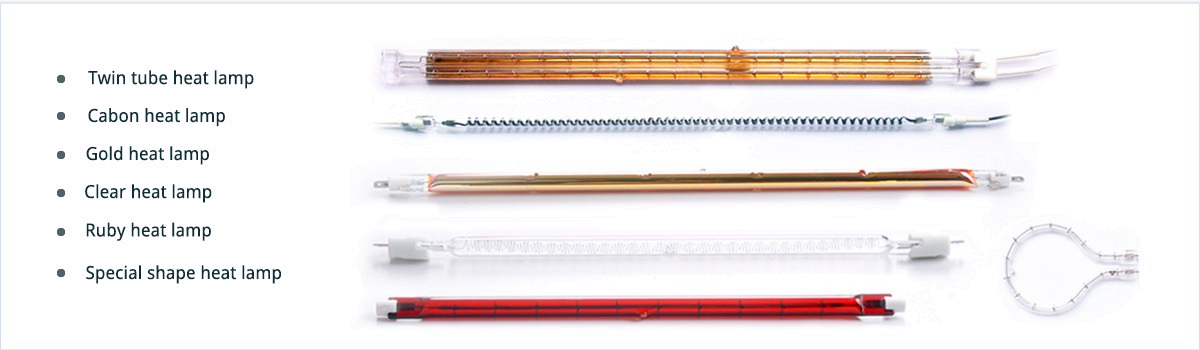
A lamp quote can look clean on paper: 400V, 3000W, twin tube, gold reflector. But two lamps with the same nominal wattage can behave very differently in production if the wavelength, heated length, reflector geometry, filament layout, and installation position are not aligned with the material and machine.
This is where many buyers lose time. They assume the lamp is the variable with the least engineering risk, when in fact it is often the part that directly shapes heat-up speed, surface temperature profile, cure window, and replacement frequency. In real industrial lines, small specification errors become scrap, rework, unstable quality, or maintenance interruptions.
For YFR Heating’s website, this opening section is also a natural place for internal links to the Short Wave Infrared Lamp, FMW Infrared Lamp, and Medium Wave Infrared Lamp pages, because buyers at this stage are usually trying to understand which emitter family belongs to their process.
The first technical mistake is evaluating an industrial infrared heat lamp only by wattage. Wavelength selection is often more important than nameplate power because the material does not absorb every part of the infrared spectrum equally. Noblelight notes that short wave radiation can penetrate deeper into some solids, while medium wave radiation is absorbed more strongly at the surface and is particularly well absorbed by many plastics, glass, and water. Helios Quartz similarly shows stronger absorption relevance for materials such as water, polyethylene, and PVC in the medium-wave region.
A manufacturer that understands application matching will therefore ask different questions from a trader. Instead of starting with “How many watts?”, the better starting points are: What material is being heated? What must heat first: surface or depth? Is the target effect drying, curing, forming, bonding, shrinking, or thermal testing? Is the line continuous or indexed? Is rapid on/off control necessary? Those questions determine the emitter family before the final electrical rating is locked.
Helios Quartz identifies fast medium wave emitters in the 1.4-1.6 μm range and short wave emitters in the 1.1-1.4 μm range, with short wave designs characterized by very fast on/off response. That is exactly why serious buyers should ask a manufacturer not only for the lamp type, but for the reason that type is being recommended.
Process condition | Usually worth discussing with the manufacturer | Why it matters |
|---|---|---|
Fast line speed, short dwell time, rapid cycling | Short wave or fast response designs | Response behavior can be as important as nominal power |
Surface drying of coatings, inks, water-based layers, many plastics or glass-related processes | Medium wave or fast medium wave options | Absorption behavior may favor these wavelengths |
Sensitive substrates or finish-critical surfaces | Reflector choice, zoning, stand-off distance, control method | Prevents overheating and uneven surface profile |
Retrofit into existing machinery | Replacement compatibility by drawing, terminal, heated length, reflector side, voltage, and mount | Avoids costly “almost compatible” lamps |
Large heated area or long emitters | Twin-tube stability, support method, power distribution, zone design | Mechanical stability and temperature uniformity become more critical |
Reference basis for wavelength and response considerations: Noblelight and Helios Quartz technical documentation on industrial IR emitter selection and spectral behavior.
Industrial buyers often discover too late that “same lamp” is not a precise description. A reliable IR heating lamp specification normally needs more than power and voltage. At minimum, the manufacturer should be able to confirm total length, heated length, tube cross-section, reflector type, orientation, lead-end configuration, cable exit direction, connector style, operating position, and replacement compatibility with the installed machine. Helios Quartz explicitly frames custom realization around total length, heating-part length, filament and ending configuration, power, and voltage.
This matters in both new machine design and replacement business. YFR Heating’s current product and replacement pages emphasize standard and custom lengths, wattages, and voltages for new installations and direct replacements, which is the correct commercial framing for industrial buyers managing uptime risk.
When a manufacturer asks for your existing lamp photo, machine model, working voltage, heated length, terminal detail, and reflector position, that is not administrative friction. It is usually evidence that they are trying to prevent a misfit order before production starts. In industrial IR, a missing drawing detail is often more expensive than a higher unit price.
Material to be heated
State the substrate, coating, moisture content, thickness, and whether heat must penetrate or stay near the surface.
Electrical window
Confirm voltage, wattage, phase environment, and any control constraints such as SCR, SSR, or stepped zoning.
Geometry
Freeze total length, heated length, cross-section, reflector coverage, and the installation distance to the product.
Termination
Define lead wire length, terminal type, ceramic end style, cable routing direction, and any heat shielding around the connection area.
Operating environment
Clarify whether the lamp sits in a conveyor dryer, closed chamber, vacuum oven, printing machine, paint line, or thermal test setup.
Replacement logic
Decide whether the target is a direct drop-in replacement or a redesigned lamp that improves the original thermal behavior.
That six-point control list is often the difference between a lamp that merely powers on and a lamp that actually performs in production.
Industrial buyers do not just buy a design. They buy repeatability.
Quartz selection matters because tube purity, thermal stability, and IR transmission affect the emitter’s behavior under load. Noblelight describes quartz glass in its industrial emitters as offering high purity, good transmission, and thermal stability, while Heraeus notes that fused quartz and silica tubes for lamp manufacturing are selected to achieve strong IR transmission with suitable thermal stability, including low-OH tubing for infrared applications.
Filament design also matters more than many buyers expect. Helios Quartz highlights that different filament configurations change heated-area modularity and lead-wire position, which directly affects how energy is distributed across the working zone and how easily the lamp fits the machine layout. That means a capable manufacturer is not only selling a tube; it is controlling the geometry of radiation delivery.
Reflector processing is another dividing line. A reflector is not just an accessory for “more heat.” It changes directionality, target concentration, and shielding of non-target surfaces. YFR Heating’s site emphasizes both gold reflector capability and custom industrial heating elements with reflector options, while Helios Quartz notes that reflectors can be applied directly on the quartz tube to better focus emitted energy on the material.
Mechanical stability is easy to ignore until the lamp gets long. Noblelight notes that twin-tube designs can maintain strong mechanical stability even at lengths up to 6.5 meters, which is highly relevant for conveyor systems, wide-web equipment, and large heated zones where sag, handling damage, and alignment become practical concerns.
A manufacturer worth shortlisting should therefore be able to discuss at least five factory-side controls in plain terms:
quartz tube source and grade logic
filament design and heated-zone layout
reflector method and coverage control
dimensional tolerance checkpoints
electrical validation and batch traceability
If the conversation cannot move past wattage and delivery time, the supplier is unlikely to help when the process becomes more demanding.
New equipment projects allow room for specification development. Replacement projects do not. In retrofit work, buyers are usually managing downtime, machine legacy constraints, and incomplete historical data at the same time. That is where manufacturer competence becomes visible very quickly.
A basic seller may offer a “close alternative.” A real manufacturer will normally work backward from the installed condition: machine model, old lamp markings, heated length, terminal structure, reflector side, operating orientation, target temperature, duty cycle, and actual process result. Only then does the replacement discussion become reliable.
This is especially important when the original lamp underperformed. Many buyers request an exact duplicate when the better question is whether the original design should be corrected. A capable manufacturer can help determine whether the issue came from wavelength mismatch, power density, cold-end stress, reflector direction, mounting distance, or control settings rather than from the lamp body alone.
For YFR Heating, this section should naturally link to the Replacement IR Lamps page and to relevant project pages showing use in printing equipment, vacuum heating ovens, conveyor ovens, and paint-drying systems. Those are the points where replacement intent and real machine context usually meet.
Below is a manufacturer-selection framework designed for OEM buyers, technical procurement teams, and engineers who need to reduce project risk before issuing a PO.
A manufacturer-led conversation begins with substrate, line speed, target effect, duty cycle, ambient conditions, and replacement context. A catalog-led conversation starts with stock codes. For industrial projects, the first approach is usually safer.
You do not need a long lecture. You do need a clear explanation. If the supplier cannot explain why short wave, fast medium wave, or medium wave fits your material and process, the recommendation is weak.
A credible manufacturer should be comfortable discussing length, heated zone, voltage, wattage, lead-end style, reflector option, and compatibility with existing machinery. YFR Heating’s current product scope publicly presents custom combinations in these areas.
The more exact the inputs, the lower the misorder risk. Serious manufacturers usually want drawings, photos, old lamp markings, machine information, and process notes.
Instead of asking, “Is it high quality?”, ask:
“What do you inspect before shipment?”
“How do you verify dimensional tolerances?”
“How do you confirm electrical consistency?”
“Can you maintain the same specification over repeat orders?”
Industrial electroheating equipment falls under established safety frameworks. IEC 60519-1:2020 covers general safety requirements for industrial electroheating installations and equipment, so buyers should align lamp and system discussions with the safety context of the final machine, not only with the emitter itself.
If the supplier can accurately cross-reference an installed lamp into a usable replacement drawing, that is usually a strong signal of manufacturing understanding.
For OEM programs and maintenance planning, repeatability, marking consistency, packaging protection, lead-time realism, and communication speed often matter more than a small unit-price difference.
Evaluation point | Weak supplier signal | Strong manufacturer signal |
|---|---|---|
Process understanding | Only asks for watts and volts | Asks about substrate, line speed, target effect, and machine context |
Wavelength logic | Recommends one lamp family for everything | Explains why a given spectrum matches the process |
Drawing control | Accepts vague descriptions | Requests detailed dimensions and terminal data |
Customization | Limited to stock items | Supports custom length, wattage, voltage, reflector, and lead-end configuration |
Replacement work | Offers approximate substitutes | Works from markings, photos, drawings, and operating conditions |
QA conversation | Uses generic claims | Describes inspection points and repeat-order control |
Engineering support | Stops at quote | Supports sample review, application fit, and adjustment feedback |
Supply reliability | Focuses on first shipment | Plans for repeatability, documentation, and replacement continuity |
This matrix is intentionally practical. It is built to reduce downtime risk, not to reward the most polished sales language.
For industrial users, the manufacturer relationship does not end when the first batch is delivered. The real test comes later: the second order, the urgent replacement, the engineering change, the request for a compatible alternate, or the need to standardize lamps across multiple machines.
That is why good buyers assess post-order behavior before they commit. Can the manufacturer keep drawings organized? Can it mark lamps consistently? Can it identify prior builds from photos or order history? Can it advise when the original design should be retained versus improved? Those are not soft-service questions. They directly affect maintenance speed and production continuity.
YFR Heating’s product and project structure suggests a manufacturer model built around emitters, replacement lamps, heating modules, reflectors, and supporting power controls rather than around one-off lamp resale alone. For buyers sourcing an industrial infrared heat lamp, custom IR heating lamp, or replacement infrared lamp for machinery, that broader support scope is usually more useful than a simple price list.
At that point, the most productive next step is not another generic RFQ. It is a technical review of your actual application, installed lamp details, and production objective.
Send the application, substrate, machine type, voltage, wattage target if known, total length, heated length, terminal style, reflector requirement, operating orientation, and photos or drawings of the current lamp. For replacements, old markings and machine model details are especially useful because they reduce compatibility errors.
No. Wattage matters, but wavelength fit, response speed, reflector design, stand-off distance, heated length, and terminal configuration often have just as much impact on process performance. A lamp with the right spectrum but slightly different nominal power can outperform a higher-watt lamp that is poorly matched to the material.
That decision depends on what you are heating and how the line runs. Helios Quartz places short wave in the 1.1-1.4 μm range with fast response, while fast medium wave is identified around 1.4-1.6 μm. Noblelight and Helios both show that medium-wave radiation is often better absorbed by many plastics, glass, and water-related processes, so the right choice should come from process matching rather than habit.
Yes, but only when the application is reviewed carefully. In some cases a direct copy is necessary for machine compatibility. In others, the better result comes from correcting wavelength, reflector coverage, lead-end design, or heated-zone geometry while keeping the installation envelope unchanged. That is why good replacement work usually starts with drawings, photos, and process feedback instead of part-number matching alone.
Because visible similarity does not confirm internal equivalence. Filament configuration, tube quality, reflector treatment, power density distribution, cold-end design, and exact heated length all change how radiation is delivered and how the lamp survives in service. Helios Quartz and Noblelight both emphasize configuration flexibility and the importance of matching emitter design to the application.
Repeatability. A reliable supplier can hold specification consistency, maintain drawing records, support custom and replacement programs, and communicate clearly when a change affects performance or fit. YFR Heating’s current site shows product coverage across standard and custom lamps, replacement lamps, heating modules, and project-based infrared systems, which is the kind of broader support model OEM buyers usually need.
[Project Fit Review]
If your team is comparing suppliers for a new machine build, a retrofit, or a replacement program, the most effective next step is to review the real operating conditions before locking the lamp specification.
YFR Heating’s current product scope includes custom quartz IR emitters, replacement IR lamps, reflector options, infrared heating modules, and related power-control support. That makes the discussion more useful when your project needs more than a stock lamp code.
Share your drawing, old lamp photos, machine model, substrate, line speed, and temperature objective. YFR Heating can then help you assess:
whether the current wavelength family is appropriate
whether the lamp should be copied or corrected
whether reflector, lead-end, or heated-zone changes will improve results
whether the replacement can be standardized for easier future purchasing
For OEM buyers, engineers, and procurement teams, that kind of technical review usually reduces ordering errors far more effectively than comparing unit price alone.
Review YFR industrial infrared heating lamps and heating modules and controls. Confirm emitter choice, mounting, sensing and recipes with representative product trials.
Send YFR your material, dimensions, target, cycle time and current equipment details for an application-specific review.


