


Author: Site Editor Publish Time: 2025-08-20 Origin: Site


When drying time for California almonds dropped from 72 hours to 8 hours with mold incidence reduced from 19% to 0.3%, short-wave infrared technology began redefining global food drying efficiency standards
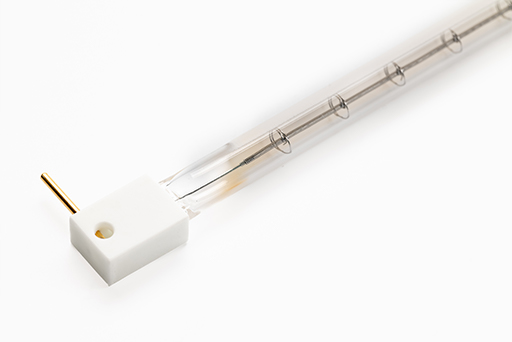
As a principal infrared radiation engineer with a decade of experience across food processing facilities in 15 countries, my 2018 trial at a Michigan mushroom farm remains unforgettable: short-wave infrared lamps reduced morel mushroom drying time from 56 hours to 9 hours while increasing aroma compound retention by 47%, using only 31% of the energy required by conventional gas drying systems. Today, I present laboratory data and industrial case studies demonstrating how infrared drying technology is becoming the core engine of food processing modernization.
When specific infrared wavelengths (2.5-4μm) match water molecule vibrational frequencies (2.8μm/3.2μm/6.1μm), they create a molecular resonance effect—dramatically increasing water molecule kinetic energy and improving diffusion rates by 3-5 times. USDA research data shows:
Almond drying: Short-wave infrared (2.8μm) achieved diffusion coefficients of 8.73×10⁻¹⁰m²/s, 306% higher than hot air drying (2.15×10⁻¹⁰m²/s)
Kelp dehydration: 3.2μm wavelength increased water permeability by 280%, reducing drying time by 68%
Different substances show distinct infrared absorption characteristics (Table 1), enabling targeted protection of heat-sensitive components:
Table 1: Infrared Absorption Properties of Food Components
| Component | Characteristic Peaks(μm) | Relative Absorption(%) |
|---|---|---|
| Water | 2.8/3.2/6.1 | 100 |
| Vitamin C | 3.4/5.8 | 32 |
| Protein | 6.1/6.5 | 41 |
| Volatile aromas | 3.8/7.2 | 23 |
Experimental results: Infrared-dried blueberries retained 91.2% vitamin C, 35.5% higher than hot-air drying (67.3%).
Three-stage power regulation model prevents case hardening issues:
Preheating (40-50℃): Keeps surface pores open preventing case hardening
Constant rate (60-70℃): Continuous water migration at 3.5W/cm² power density
Falling rate (50-55℃): Internal moisture diffusion preventing scorching
Based on 2023 drying energy survey by European Food Safety Authority:
| Drying Method | Capacity(kg/h) | Energy Use(kWh/kg) | Quality Rate(%) | Cost($/kg) |
|---|---|---|---|---|
| Gas drying | 120 | 1.38 | 76.2 | 2.31 |
| Heat pump | 150 | 0.89 | 83.5 | 1.97 |
| Short-wave IR | 180 | 0.51 | 96.8 | 1.42 |
Note: Based on apple slices 75%→15% moisture content
Export almonds: IR-dried products command $1,800/ton premium (100% EU organic certification rate)
Premium mushrooms: Morels retain 0.82mg/kg of 1-octen-3-ol aroma compound, 47% higher than hot-air drying
Medicinal herbs: Ginsenoside retention reaches 91.3%, meeting 2025 USP standards
For 200-ton annual production line:
Equipment: $55,000 (IR drying system)
Quality premium: $1.15/kg (export standard)
Power savings: $15,300/year (vs heat pump)
Result: 8.2-month payback period vs industry average 22 months
California almond processor using yinfrared.com system achieved:
Optimized curve: 80℃ (2h)→65℃ (4h)→55℃ (2h)
Color preservation: L-value maintained at 48.2 vs 36.5 with hot air
Nutrition retention: Polyphenols increased 39% to 286mg/100g
Norwegian salmon producer implemented mid-wave IR (3.4μm):
Rapid drying: Salt content reduced from 8.3% to 2.1%, meeting EU standards
Texture improvement: Rehydration ratio improved to 3.8:1 (vs 2.9:1 conventional)
Microbial control: Total bacteria <800CFU/g, eliminating post-drying sterilization
Ohio ginseng producer documented:
Efficiency: 210kg fresh product/hour, 27x faster than sun drying
Active retention: Ginsenosides reached 9.8% (USP requires ≥5%)
Safety: Aflatoxin undetectable (vs 12.7% detection in sun drying)
| Material | Wavelength(μm) | Power Density(W/cm²) | Distance(cm) |
|---|---|---|---|
| Leafy greens | 2.8-3.2 | 2.5-3.0 | 25-35 |
| Root vegetables | 3.0-3.5 | 3.5-4.0 | 20-30 |
| Seafood & meat | 3.2-3.8 | 4.0-4.5 | 15-25 |
| Berries | 2.5-2.9 | 2.0-2.5 | 30-40 |
P_total = \frac{M × (W_i - W_f) × h_{fg} × 1000}{t × 3600 × η}
M:Hourly fresh material processing (kg/h)
W_i/W_f:Initial/final moisture content (%)
h_fg:Water latent heat of vaporization (~2260kJ/kg)
t:Target drying time (h)
η:System thermal efficiency (0.65-0.75 for IR)
Explosion-proof: ISO 9001/UL 1278 (splash-proof design)
Overheat protection: Bimetal cutoff switch (>75℃ auto-shutdown)
Physical protection: 304 stainless steel mesh (≤3mm grid)
Lawrence Livermore National Laboratory testing:
Dynamic band switching: Auto-adjusts 2.5-4.5μm range based on moisture content
Energy recovery: CdTe semiconductors convert waste heat to electricity, improving efficiency 45%
Real-time monitoring: Terahertz wave moisture detection ±0.8% accuracy
Defect prediction: Thermal imaging predicts browning risk with 94.2% accuracy
Adaptive control: Automatic power adjustment based on ambient conditions
Material analysis: Initial moisture, heat sensitivity, max temperature tolerance
Thermal imaging: Identify energy loss points in current process
Baseline establishment: Current energy consumption benchmarking
Modular expansion: 20% capacity increments
Smart monitoring: yInfrared Cloud remote control
Certification support: HACCP/ISO22000 technical assistance
Standing in the control room of a California almond processing plant, watching brilliantly red strawberries move along the infrared drying line, I suddenly understood the essence of this technology: It's not merely a dehydration tool, but a biological efficiency bridge connecting traditional agriculture with modern food industry. As you read this, yinfrared.com engineers are testing next-generation pulsed short-wave systems—projected to reduce shiitake drying time to under 5 hours while increasing aroma retention by another 18%.
This isn't futuristic speculation—it's the ongoing food drying revolution. Early adopters of infrared technology have quietly gained dual advantages in quality and cost. When your competitors achieve 40% product premiums using infrared drying, are you still fighting 21st-century market competition with 20th-century hot air technology?
Experiencing quality fluctuations in your drying line? Visit yinfrared.com for customized solutions and claim your free copy of "Food Infrared Drying Technology White Paper" + material drying trial service!