


Author: Process Heating Engineer Publish Time: 2025-08-01 Origin: Site
Last updated: September 1, 2026
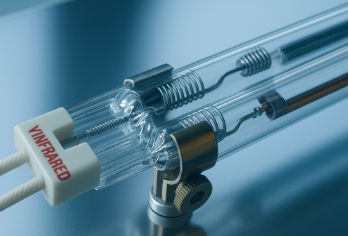
Industrial drying is not simply a matter of adding more heat. In most production lines, the real challenge is delivering the right kind of heat at the right intensity and at the right distance so the product dries faster without losing quality. That is why industrial infrared drying is widely used in coating, printing, converting, plastics, and other manufacturing processes where response speed, compact equipment layout, and controlled heating matter. Infrared can apply energy directly to the wet layer or target surface, but good results depend on process matching rather than lamp installation alone. A lamp may fit mechanically and power on correctly, yet still produce unstable drying, substrate overheating, or poor process efficiency if its wavelength, power density, and working distance do not match the application.
Hot air and infrared perform different but often complementary jobs. In thermal drying, hot air works by convection, helping remove evaporated water or solvent while also supporting temperature uniformity. Infrared works differently. It delivers energy directly into the coating film or target surface and accelerates evaporation by heating the wet layer quickly. In many industrial lines, the most stable result comes from combining these two effects rather than relying on one alone: infrared provides fast, targeted energy input, while airflow helps carry away the evaporated media and stabilize the process. That is why many industrial drying systems are designed around both radiation and convection instead of treating them as separate choices.
This distinction changes how a dryer should be selected and controlled. Convection supplies bulk-air heating and carries evaporated water or solvent away from the product. Infrared can add direct, responsive energy at the wet layer or surface. The required dryer length, airflow and radiant input depend on the evaporation load, substrate, coating and target line speed, so the correct balance should be established by measurement rather than assumed from the heat-source label.
Industrial infrared drying is especially useful when the process needs faster response, compact installation, and better local control. Published industrial references describe W/IR systems as particularly suitable when water or solvents are present, when pre-drying, intermediate drying, or final drying is required, and when the substrate is temperature-sensitive or the line needs more controlled thermal input. Typical industrial materials include paper, cardboard, wood-based materials, plastics, metals, and composite materials.
From an engineering perspective, infrared is a strong candidate when one or more of the following conditions apply. The line speed is limited by drying length. The process needs rapid on/off response and zone-by-zone control. The available installation space is limited. The coating or moisture load changes enough that slow thermal systems respond poorly. Or the product cannot tolerate excessive overall oven temperature even though the coating still needs faster evaporation. In those cases, infrared is often selected not because it is universally better, but because it can apply heat more selectively and with faster control than convection-only systems.
The first variable is the substrate itself. Metal, coated steel, paper, printed board, plastic sheet, and formed plastic parts do not absorb and tolerate radiant heat in the same way. Different materials reflect, absorb, and transmit infrared differently, which means a dryer that performs well on one product can behave very differently on another. Manufacturer guidance on industrial IR emitters repeatedly emphasizes that the wavelength must be chosen for the material being heated, because wavelength strongly affects how the process behaves.
The second variable is the coating or moisture load. Drying a light surface moisture film is not the same as drying a water-based coating, a solvent-bearing lacquer, or a thicker wet layer. Industrial drying references note that the required energy input and optimum drying distance depend on machine speed, solvent content, and film thickness. In practice, that means you cannot size an infrared drying section from voltage and wattage alone. The process load must be known first.
The third variable is wavelength selection. Industrial quartz emitters are commonly available as short-wave, fast medium-wave, and medium-wave designs, and the reason is simple: different wavelengths interact differently with different materials. Industrial emitter suppliers explicitly state that the correct wavelength must be matched to the product and process, not selected as a generic spare part category.
The fourth variable is installation geometry. Even the right lamp type can underperform if the working distance, reflector design, module spacing, airflow path, and line speed are wrong. Industrial W/IR system guidance notes that drying distance and required energy are linked to line speed, film thickness, and solvent content. This is why successful IR drying depends on system design as much as on lamp specification.
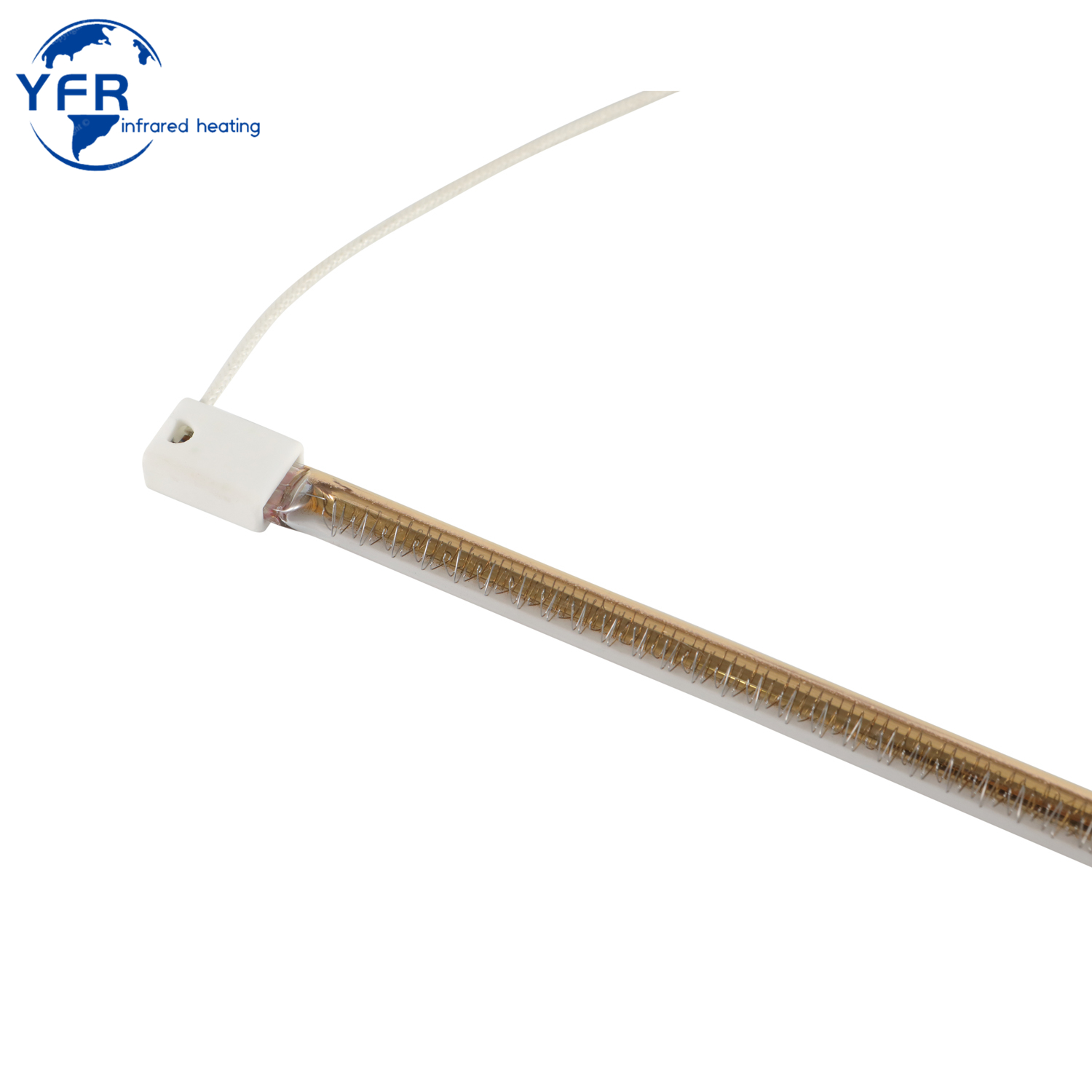
Short-wave infrared is one starting option when a line needs rapid emitter response and compact sectional control. Whether it heats the wet layer, pigment, coating or substrate most effectively depends on the complete optical and thermal system. It should not be assumed to provide deeper penetration or prevent bubbles without sample evidence.
Medium-wave and fast-medium-wave emitters provide different spectral and response characteristics. They may suit some moisture-rich coatings, polymers or temperature-sensitive products, but material labels alone are not sufficient. Absorption varies with formulation, colour, thickness, surface condition and temperature, so the starting wavelength must be validated on the actual wet layer and substrate.
In practical terms, select an emitter family only after defining the required control response, installation length, wet load, substrate limit and airflow. If the surface overheats while drying remains incomplete, investigate spectral fit, power density, working distance and vapour removal before adding more power.
One of the most common mistakes in industrial infrared drying is treating wattage as the main control variable. In production, wattage matters, but stable drying usually depends more on power density, working distance, reflector efficiency, zoning logic, and exhaust balance. Industrial references note that IR modules can be configured in different widths and arrangements, and that the optimum drying distance depends on speed, film thickness, and solvent content. That is a system-design problem, not just a lamp problem.
A better engineering approach is staged heating. Instead of applying maximum output immediately across the entire process path, divide the dryer into controllable sections. Early zones can support gentle flash-off or initial moisture release. Middle zones can provide the main drying work. Later zones can complete the process without shocking the substrate or creating a harsh surface skin before the lower layer has released enough moisture or solvent. This approach is especially useful on coated and printed products, where the real goal is not simply to make the surface look dry, but to maintain line stability and product quality at production speed. The same logic also helps when the dryer must handle more than one substrate or coating condition on the same line.
A frequent complaint is that the surface appears dry while the coating underneath is still not fully released. In many cases, this means the system is applying heat too aggressively at the surface or without enough support from airflow and exhaust. Infrared can accelerate evaporation quickly, but stable drying still depends on removing the evaporated media from the process zone. If not, drying may look better than it really is.
Another common issue is substrate overheating. This can happen when the wavelength is poorly matched, when the lamp-to-product distance is too small, when zone output is too aggressive, or when the line is trying to use radiant heat alone where a combined hot air and IR approach would be more stable. Published industrial guidance highlights that W/IR systems are often chosen specifically for sensitive substrates and for controlled thermal drying, which is a reminder that lamp output must be matched to the product rather than treated as a simple maximum-value setting.
Uneven drying across the width usually points to system layout rather than lamp failure. Reflector coverage, module spacing, airflow imbalance, edge losses, and product tracking can all produce cross-web inconsistency. Where the process requires stable drying at width, the correct solution is typically better zoning and geometry review, not random lamp replacement. That is one reason industrial IR emitters are offered in multiple lengths, wavelengths, and special shapes for edge and small-area heating.
If line speed still cannot increase after an IR upgrade, the bottleneck may be elsewhere. The limiting factor may be coating load, exhaust capacity, substrate sensitivity, or the drying profile itself. Industrial drying references explicitly connect required energy and drying distance to speed, film thickness, and solvent content, which means throughput improvement has to be evaluated as a process balance rather than a lamp-only decision.
Consider a moving coated substrate on a production line where the customer wants more speed but cannot accept discoloration, distortion, curl, or unstable finish quality. If the first response is simply to install higher-wattage lamps, the line may heat the surface faster without solving the real drying bottleneck. The result may be a dryer that looks more powerful on paper but still does not support reliable production.
A better method starts with five questions. What is the substrate, and how heat-sensitive is it? What is the wet load: water, solvent, coating thickness, or surface moisture? What line speed must be achieved? How much physical installation space is available? And what distance can be maintained between the emitter and the product? Those questions determine whether the process needs short-wave, fast medium-wave, or medium-wave output, whether airflow support is necessary, and how the zones should be staged.
For example, if the line needs fast control and compact integration, short-wave may be the starting point. If the material shows better absorption behavior in a medium-wave region or is reacting too aggressively to short-wave exposure, a different wavelength strategy may be more stable. If the coating contains water or solvent and the dryer section lacks effective removal of evaporated media, the system may need a stronger W/IR balance rather than more radiant intensity alone. The point is not to force every line into one lamp family. The point is to match the drying strategy to the product, the wet layer, and the production target.
How do I choose between short wave and medium wave infrared?
Start with the substrate, the wet load, the required response speed, and the available installation space. Short-wave is one candidate where rapid response and compact control matter, while medium-wave or fast-medium-wave may be candidates where measured absorption and process sensitivity indicate a different fit.
Can infrared drying replace hot air completely?
Sometimes, but not always. In many industrial applications, the best result comes from combining infrared with airflow so the wet layer receives direct energy input and the evaporated media is removed efficiently from the process zone.
What information is needed to select a replacement IR lamp?
At minimum, collect voltage, wattage, overall length, heated length, lead configuration, reflector type, working distance, substrate, and process purpose. Industrial emitter suppliers also emphasize wavelength selection because the same physical size does not guarantee the same heating behavior.
Why can two lamps look similar but perform differently?
Because wavelength, filament design, reflector design, response behavior, and process geometry all affect how heat is transferred to the product. Physical fit is only one part of the match.
How can I reduce overheating on sensitive substrates?
Review wavelength selection, increase zone control, confirm the lamp-to-product distance, check reflector layout, and evaluate whether airflow and exhaust are sufficient for the evaporation load. In some cases, combining IR with hot air produces a more stable result than trying to solve everything with higher radiant output alone.
Industrial infrared drying works best when the lamp, the module, and the process are matched as one system. If you are evaluating a new drying section or replacing existing infrared lamps, the most useful starting data includes the substrate, coating or moisture type, line speed, voltage, wattage, working distance, available installation space, and any current drying defects. A correct replacement should preserve the required heating behavior, not just the physical dimensions.
The engineering principles above should be checked against the coating supplier’s data, the equipment specification and controlled trials on the real product.
IST METZ — W/IR technology for industrial drying processes. Covers the role of infrared plus convection, suitable applications, substrate sensitivity, and process-level advantages.
IST METZ — THERMOcure hot air and IR drying system. Useful for the relationship between drying distance, energy requirement, machine speed, solvent content, and film thickness.
Weiss Technik / Heraeus infrared emitters. Useful for emitter categories and the principle that wavelength must be selected for the heated material and process.
Heraeus Noblelight technical press material. Useful for absorption-spectrum reasoning and why medium-wave regions can be effective for plastics, water, and glass.
Optron infrared technology reference. Useful for short-wave response behavior, lacquer-drying observations, and the importance of emitter selection and positioning in process optimization.
Share the material, process target, working distance, line speed, available installation space, voltage, power range and any existing lamp drawing or photo. YFR can review whether a lamp, replacement emitter, cassette or controlled module is the appropriate starting point.


