Author: Site Editor Publish Time: 2026-03-11 Origin: Site
Last updated: October 16, 2026
An infrared heat lamp wholesale decision usually looks simple at the inquiry stage. The buyer has a target wattage, a voltage, a lamp length, and an expected quantity. The supplier returns a price. On paper, that appears enough to compare. In industrial heating, it rarely is. U.S. Department of Energy guidance on electric infrared processing makes clear that infrared systems are selected for process tasks such as heating surfaces, curing coatings, and drying materials, and that correct performance depends on how emitted radiation matches the workpiece and the application, not only on electrical input alone.
That distinction matters even more in wholesale supply than in one-off purchasing. A first sample can look acceptable and still fail to prove what really matters in a bulk program: whether the same lamp can be repeated across later batches, whether replacement fit remains stable, and whether the next order behaves like the first one inside the actual machine. From an industrial wholesale perspective backed by manufacturing capability, the hard part is not placing the first order. The hard part is keeping the specification usable across recurring production, spare-parts demand, and retrofit cycles.
For a first bulk order, define the reference being released: the drawing revision, approved sample or specification, acceptance evidence and the conditions covered by that approval. Agree how unresolved items will be handled before the purchase order becomes a production instruction.
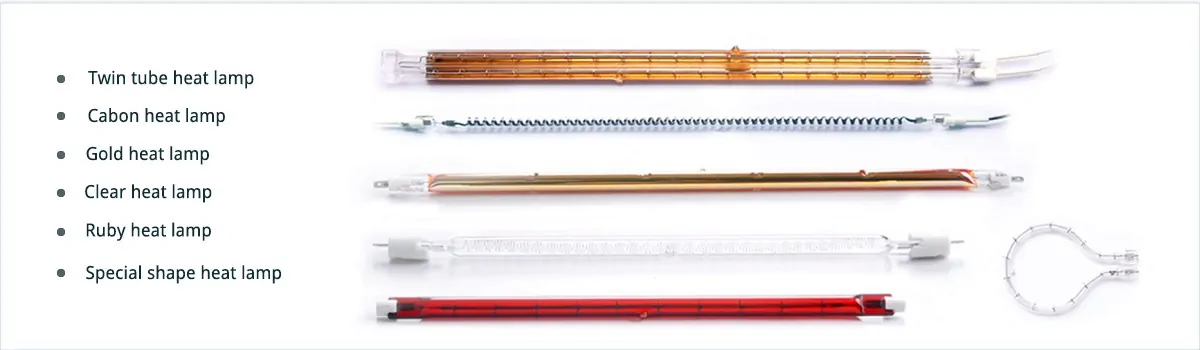
An industrial heating purchase needs a defined application as well as price and quantity. Record the material, heating task, installation and operating conditions so that the candidate lamp can be reviewed as part of the intended process.
In practical buying work, that means the easiest numbers to compare are often the least revealing. Overall length, voltage, and wattage are visible. Heated length, coating position, reflector-facing direction, end-connection orientation, and dimensional tolerance are less visible. Yet those are often the details that disturb production first. DOE’s industrial infrared guidance also notes that objects being heated generally need to be in line-of-sight of the emitters or reflectors directing the energy. A lamp can therefore fit the holder and still change the heating pattern on the line.
A first order may establish a component reference that will later be used for production and spare parts. Preserve the agreed drawing and acceptance basis with that order so later purchasing teams can identify what was actually approved.
From a wholesale-and-manufacturing standpoint, this is why the cheapest first quote often becomes the most expensive supply path. The added cost appears later through installation trouble, edge-heating inconsistency, slower commissioning, repeat-order ambiguity, or spare parts that no longer match the original machine logic. Those costs usually do not show up in the spreadsheet row that won the order. They show up when the second and third batches start exposing what the first sample did not prove.
A first sample proves possibility. It does not prove wholesale readiness.
That distinction is central for OEM buyers, project engineers, and recurring bulk purchasers. In a real industrial infrared heat lamp wholesale program, the buyer is not only approving one lamp. The buyer is approving the future behavior of a lamp family: the fit of later batches, the stability of replacement parts, and the factory’s ability to connect future POs to an approved reference without reopening basic technical questions. That is why repeatability matters more than first-sample appearance.
DOE recommends testing the application when evaluating infrared systems and reviewing the product temperature profile. For the first PO, identify the representative trial conditions and which results support release. Record what was not tested rather than treating a sample approval as evidence for every operating condition.
As an illustrative risk scenario, a sample could fit and energize correctly while a later order has a different terminal orientation or heated-zone position. It shows why the PO should identify the agreed drawing and the characteristics to be checked, rather than recording only “sample approved.”
For distributors and importers, the same problem takes a different form. A stock order is useful only when the items in stock remain compatible with the installed base. If later deliveries carry small dimensional or electrical drift, the buyer does not just have a product issue. The buyer now has a channel-support issue. The warehouse holds lamps that are close enough to confuse purchasing but not stable enough to simplify replacement.
This is why a serious wholesale partner should define the reference method for repeat orders before the volume ramps up. That reference can be a drawing revision, a confirmed sample code, an internal part number, or a controlled production file. The specific system may vary. The discipline cannot. In industrial heating, “same lamp” has to mean the same lamp in a way that survives time, personnel changes, and repeat production. That requirement is a commercial necessity, not a paperwork preference.
Confirm who is responsible for the proposed construction, inspection, packing and any subcontracted or sourced work. Ask for the actual scope and supporting information for the order instead of assuming that a wholesale or factory-direct label establishes those controls.
Where the tube or element construction is critical to the application, identify it in the approved specification and request the relevant supplier documentation. A general material property sheet is not a performance rating or an acceptance result for the finished lamp.
From a manufacturing standpoint, the wholesale outcome is shaped by quartz tube consistency, filament configuration, coating or reflector treatment, end connection stability, dimensional tolerance, electrical testing, and packaging protection. Some of those items are obvious. Others become visible only during later batches. A slight drift in heated length can alter process coverage. A small change in terminal angle can slow OEM assembly. A coating-position deviation can move useful energy away from the intended zone. A packaging weakness can turn a good batch into a transit-loss problem.
Include reflector treatment, position and intended orientation in the approved reference where applicable. Compare the candidate arrangement under the agreed installation and process conditions; a reflector name alone does not establish a percentage improvement or a guaranteed heating result.
A responsible partner should therefore be able to explain what is checked before shipment and what is tied to repeat-order documentation. Buyers should ask about critical-dimension verification, electrical confirmation, connection checks, batch traceability, and how future orders are linked to a locked reference. These are not abstract factory talking points. They are the controls that separate recurring industrial supply from repeated technical uncertainty.
A bulk quote becomes meaningful only when the application is readable. If the supplier knows quantity but not process, the commercial answer may be fast, but the technical answer is still weak.
Keep the application review tied to the first-order release. The selected emitter, reflector, controls and installation should have an agreed basis, with the material and trial record available to the people approving the PO.
List the conditions used for approval, including the material, product target, exposure time, installation arrangement and control settings. If these conditions later change, identify which part of the approval needs review rather than extending it automatically.
That list is highly relevant to wholesale inquiries. Before placing an infrared heat lamp bulk order, the buyer should not focus only on MOQ and unit price. The more useful questions are about material type, line speed, target surface temperature or process effect, installation distance, mounting space, power supply conditions, duty cycle, and replacement compatibility. If those inputs are not confirmed, the quote is being built on incomplete process assumptions.
Ask for the response and control requirements of the identified candidate assembly. Where line stops or changing duty matter, agree how the equipment response will be evaluated; do not assign a universal switch-off or residual-heat behavior from the emitter family name.
The lamp specification should therefore remain connected to the installation and process record. Keep any proposed substitution visible in the quotation and release documents.
Resolve technical open points before releasing the relevant work. The required review can be proportionate to the purchase: an established replacement and a new heating arrangement may need different evidence.
There are wholesale situations where a standard model is exactly the right answer. If the installed design is already proven, the machine layout is unchanged, the application is stable, and the buyer can provide a clear drawing or sample, then standardization helps. In that case, the goal is not redesign. The goal is disciplined repetition.
But standard stock is only useful when the specification is genuinely stable. Many industrial buyers assume that standardization is always safer in wholesale. That is only true when the same installed logic exists across the machines that will consume the stock. If the installed base varies in connector type, heated length, reflector direction, or mounting geometry, one “standard” lamp may create more support burden than it removes.
Standard stock and custom configurations should both be assessed against the identified requirement. Confirm which drawing, part number and installation the quoted item covers, and record exclusions or changes needed for the actual machine.
This matters in replacement supply and OEM batch planning. Custom length, voltage, wattage, tube diameter, ceramic end caps, cable or connector type, reflector direction, and heating-zone distribution may need to be controlled even when the order quantity is large. A controlled custom batch can be safer than a generic stock order if it reduces installation changes, keeps replacement fit stable, and protects the machine’s service logic.
The boundary is not difficult in principle. Standard stock works when the process and structure are already locked. Custom management becomes necessary when the process is tight, the installed references are incomplete, the heater assembly is non-standard, or multiple machine versions are being served through the same supply channel. In those cases, the commercial issue is not “Can we buy more at once?” It is “Can we keep the right specification stable across more than one cycle?”
Review documentation continuity alongside available production capacity. The first PO should identify the reference, release conditions and agreed records that later orders can use.
If the drawing, sample reference or critical characteristics are unresolved, record those open points and the action needed to close them. Do not allow an informal description to become the only basis for a later bulk order.
This is especially true in replacement programs. Replacement orders often reveal hidden dimensional differences that the original project tolerated by luck or by bench adjustment. Retrofit work exposes a different weakness: mounting and power mismatch issues that were never fully documented in the original build. Buyers often underestimate these problems because they do not appear in the first sample cycle. They appear when the installed machine needs the next batch quickly.
From a wholesale-and-manufacturing standpoint, documentation continuity is therefore part of product quality. Drawing control, revision discipline, repeat-order documentation, and stable part references are not administrative extras. They are the infrastructure that makes recurring supply possible.
That is also why a responsible partner should distinguish clearly between what can be customized, what must be validated, and what cannot be promised without process data. Trust in industrial supply is built less by bold claims than by clear boundaries. A partner who explains the limits of recommendation before the order is placed is usually reducing long-term risk, not being difficult.
For OEM buyers, this discipline becomes even more valuable after the machine is shipped. Once the equipment is installed, the lamp becomes a service part. At that point, wholesale reliability is measured by how easily the same part can be identified, reordered, and installed under time pressure. A strong infrared heat lamp wholesale program therefore depends as much on documentation control as on manufacturing capacity.
Before placing a bulk order, buyers should give the wholesale partner enough information to evaluate both the lamp and the application. A short approval framework is usually more useful than another round of price-only discussion.
Optional Buyer First-PO Worksheet
Use this optional worksheet to record the project’s agreed references and open points before releasing the first PO. NIST’s manufacturing research supports linking product definition with manufacturing and inspection information; select the fields that suit this purchase.
Release item | Project-specific reference | Confirmation or open point |
|---|---|---|
Application, material and intended result | ||
Part number, drawing revision and approved construction | ||
Electrical, dimensional, reflector and connection requirements | ||
Machine, installation and replacement scope | ||
Sample or trial reference and acceptance evidence | ||
Agreed inspection, marking, packing and shipment records | ||
Quantity, quoted MOQ, lead-time basis and commercial validity | ||
Approved deviations, release authority and future-order reference |
Agree the completed entries, the person responsible for each open point and the approval needed before the relevant work is released.
For subsequent orders and change notifications, see the supplier repeat-supply and change-control review. Keep this first-PO record as the baseline rather than repeating a full supplier audit each time.
Confirm the drawing or sample reference, material type, process goal, voltage, duty cycle, installation distance, mounting space, and whether later batches must match an installed machine exactly.
Ask the proposed supplier to confirm the recurring-supply scope and its method for linking later orders to the approved reference. Record the critical characteristics and any exclusions before relying on a general consistency statement.
You usually need custom management when the project involves non-standard length, voltage, wattage, tube diameter, connector type, reflector direction, or heating-zone distribution, or when one stock model cannot cover all installed machines cleanly.
The main factors are dimensional tolerance, filament configuration, connection stability, coating position, electrical verification, packaging protection, batch traceability, and how the partner controls drawings and revisions.
Provide an identified sample or detailed drawing and request written confirmation of the proposed specification and exclusions. Fit, electrical configuration and the application result still need the agreed review; a sample alone is not a promise of compatibility.
Request MOQ, lead time and validity for the specific configuration and quantity in the quotation. Keep any required buyer inputs and open technical points with that answer. This guide does not specify a universal minimum quantity or delivery duration.
Not automatically. What matters is whether the wholesale source has real manufacturing support, drawing control, and repeat-order discipline behind the quote.
Send YFR the current drawing or sample reference, material, process target, installation information and required quantity as an enquiry. Ask the reply to identify the confirmed scope, assumptions and items awaiting technical approval.
For replacement or retrofit work, include original markings, full dimensions, connection details and installation photographs. State whether the request is to restore an approved design or to evaluate a proposed change.
Review YFR industrial infrared heating lamps and heating modules and controls. Confirm emitter choice, mounting, sensing and recipes with representative product trials.
Send YFR your material, dimensions, target, cycle time and current equipment details for an application-specific review.
U.S. Department of Energy: Process Heating Sourcebook, Third Edition — application testing and infrared system considerations.
NIST: Digital Thread for Manufacturing — connections between product definition, manufacturing and inspection information.


