


Author: Site Editor Publish Time: 2025-11-03 Origin: Site


In recent years, the industrial processing of medicinal botanicals—whether herbal roots, leaves, flowers, or other plant-derived raw materials—has increasingly relied on advanced drying technologies. One of the most promising of these is infrared (IR) heating. As a manufacturer of infrared heating solutions, Huai’an Yinfrared Heating Technology is committed to helping you understand how infrared heaters can be applied in the medicinal-materials drying sector, how to choose the right equipment, and what best practices ensure high product quality.
This article offers a detailed overview for B2B stakeholders: production engineers, process designers, equipment purchasers, and quality assurance specialists in herbal-drying or medicinal-materials enterprises.
Medicinal-plant raw materials typically arrive with high moisture content and uneven distribution. The drying step is crucial to reduce moisture for safe storage, stabilize active compounds, and ensure consistent extraction performance.
Traditional drying methods—such as sun-drying, convection hot-air drying, or tray/oven drying—pose several drawbacks:
Long cycle times, especially for thicker botanical materials.
Risk of thermal damage to heat-sensitive bioactives such as volatile oils, flavonoids, and alkaloids.
Uneven heating, leading to inconsistent quality and microbial hotspots.
High energy consumption due to inefficient heat transfer.

Infrared heating offers significant advantages when properly applied in medicinal-materials drying:
Direct energy transfer: Infrared radiation penetrates the surface layer and heats the moisture directly, reducing drying times.
Improved energy efficiency: Less energy is wasted heating surrounding air, resulting in lower operating costs.
Better preservation of active ingredients: Infrared drying minimizes degradation of delicate compounds and color change.
Enhanced uniformity: Proper system design with reflectors and emitter spacing provides stable, even heating.
Infrared drying has become widely used in grain and medicinal-materials industries for its efficiency, controllability, and energy savings.
Short-wave IR (Near-IR): High-temperature filaments (>1,800 °C), deep penetration, fast heating. Suitable for robust materials but not ideal for heat-sensitive botanicals.
Medium-wave IR: Moderate filament temperature (~1,000 °C) and peak wavelengths in the 2–4 µm range. Provides balanced heating and is most commonly used for medicinal drying.
Far-IR (Long-wave): Lower filament temperatures, gentle heating, shallow penetration—ideal for surface drying of delicate herbs.
For medicinal-materials drying, medium-wave or far-IR heaters are typically preferred to protect heat-sensitive compounds.
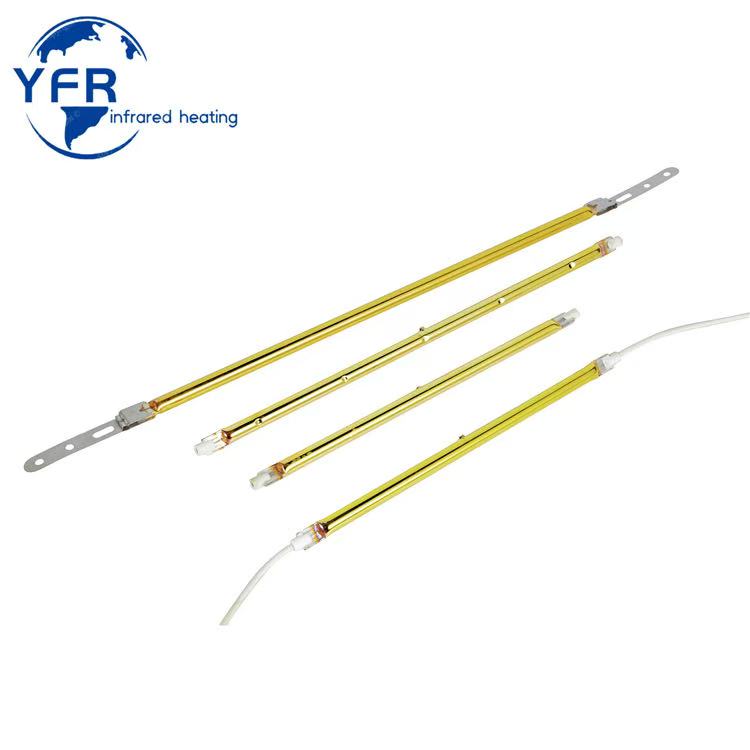
Quartz-tube emitters: Efficient, high-power density, and common in industrial IR dryers.
Ceramic IR panels: Lower surface temperature, suitable for gentle, long-duration drying.
Carbon emitters: Produce far-infrared radiation and deliver soft, even heat.
Reflectors and geometry: Reflectors enhance radiation efficiency and ensure uniform coverage across drying trays or conveyor surfaces.
Batch IR Dryers: Herbs placed in trays under IR emitters for small to mid-scale production.
Conveyor or Tunnel IR Lines: Continuous drying with adjustable conveyor speed for large-scale processing.
Hybrid IR + Hot-Air Systems: Combines radiation and convection for optimal moisture removal and compound preservation.
Wavelength and Power Density: Match IR wavelength to material thickness and moisture characteristics to avoid overheating.
Uniform Coverage: Proper emitter spacing and reflector design eliminate temperature gradients.
Temperature and Time Control: Adjustable temperature and irradiation time prevent degradation of volatile oils and color.
Airflow Integration: Ventilation removes evaporated moisture, preventing re-condensation.
Material Color and Reflectivity: Darker materials absorb IR better; reflective materials may need higher power density.
System Capacity: Ensure the system meets production throughput and moisture-reduction targets.
Target Moisture Content: Typically reduced to 10–12 % for safe storage and microbial stability.
Retention of Active Compounds: IR drying maintains the chemical integrity of valuable bioactives.
Color and Aroma Preservation: Proper IR intensity prevents browning and preserves natural fragrance.
Microbial Safety: Low moisture levels reduce microbial risk; IR radiation also contributes mild sterilization.
Uniformity: Even drying across trays or batches is essential for consistent product quality.
Energy Efficiency: Infrared heaters transfer energy more directly, lowering energy costs.
Maintenance and Durability: Choose emitters with reliable lifespan and easy replacement.
Scalability: Modular systems allow adjustments for seasonal production peaks.
Compliance: Meet GMP, ISO, and hygiene standards for medicinal-materials processing.
Integration: Seamlessly connect with upstream slicing and downstream packaging operations.
Clean and sort raw materials to remove impurities.
Slice or shred thick roots for uniform drying.
Measure initial moisture content to define process settings.
Arrange materials evenly on trays to ensure airflow.
Ramp-Up Phase – Gradual heating to avoid surface scorching.
Main Drying Phase – Maintain steady IR irradiation and ventilation to reach target moisture.
Cooling/Conditioning Phase – Controlled cooling before packaging prevents moisture reabsorption.
Monitor material temperature directly for precision.
Measure moisture content at intervals to ensure consistent dryness.
Control airflow to remove vapor and maintain stable conditions.
Adjust emitter intensity and distance for different material types.
Leaves and Flowers: Require gentle, low-temperature drying to retain essential oils.
Roots and Barks: Need higher power or longer drying duration due to density.
Slices vs. Whole Material: Sliced products dry faster and more evenly.
End-Use Purpose: Drying parameters differ for extraction vs. powder processing.
Combining infrared with hot-air convection often produces the best balance between drying speed and product quality. Such systems are widely used for delicate medicinal plants requiring both surface and internal moisture removal.
Infrared drying shortens drying time and lowers thermal exposure, reducing loss of volatile oils and flavonoids. Controlled IR intensity prevents oxidation and discoloration, preserving medicinal efficacy.
Uniform irradiation, consistent tray loading, and stable temperature control ensure reproducible product quality between batches.
Reducing moisture to below critical thresholds prevents mold or bacterial growth. Infrared radiation also aids surface sterilization without chemical treatment.
Infrared drying systems designed for medicinal use should:
Use food-grade materials and easy-to-clean structures.
Provide real-time data logging and temperature records for GMP compliance.
Offer documented validation and process reproducibility.
Appearance, aroma, and texture influence market acceptance. Proper IR heater calibration avoids scorching or uneven color changes.
Regular cleaning of emitters, reflectors, and ventilation ducts maintains heating efficiency. Periodic inspection prevents downtime.
Infrared drying often cuts total drying time by 50–70 % compared with hot-air systems, lowering overall energy use and operating cost.
Systems should allow adjustments for material variety and production scale, especially for seasonal medicinal crops.
Although initial investment is higher, faster throughput, improved quality, and reduced energy cost result in strong returns.
Modular infrared systems can easily integrate with existing conveyors, control systems, or air-handling equipment, allowing future expansion.
Define material types, moisture content, and quality goals.
Select appropriate wavelength (medium-wave preferred).
Match emitter layout, distance, and power to drying tray geometry.
Include temperature, moisture, and airflow monitoring.
Use thin, uniform layers to improve drying uniformity.
Establish standard operating procedures for loading and cooling.
Validate drying parameters for reproducibility.
Implement maintenance routines and safety inspections.
Document all process parameters for quality audits.
Periodically review energy performance and process yield.
Infrared heating technology delivers significant benefits for medicinal-materials drying:
Faster drying with reduced energy consumption.
Better retention of medicinal ingredients and sensory qualities.
Improved uniformity, consistency, and microbial safety.
Flexible integration into modern GMP-compliant production lines.
By choosing the appropriate infrared wavelength, system configuration, and control parameters, manufacturers can optimize drying efficiency and preserve the therapeutic potency of medicinal materials.
Huai’an Yinfrared Heating Technology provides tailored industrial infrared solutions designed specifically for botanical and medicinal-material processing, combining engineering expertise with energy-efficient, high-performance heater systems.
Prepared by: Huai’an Yinfrared Heating Technology
Last modified: 2025-11-03

