


Author: Process Heating Engineer Publish Time: 2026-03-16 Origin: Site


Last updated: August 30, 2026
A buyer usually searches infrared radiation lamp when the production problem is already real, but the exact lamp language is not. The line may need faster drying, more stable preheating, a replacement for an existing machine, or a more controllable heating zone. The keyword is broad, but the purchasing decision behind it is usually very specific.
That is why this term should not be handled like a textbook phrase. In industrial heating, the useful question is not simply what an infrared radiation lamp is called. The useful question is whether the lamp’s wavelength, construction, geometry, and installation details actually match the process, machine, and replacement conditions.
YFR Heating’s current site structure is relevant here because it is not limited to one lamp format. It publicly groups short wave, fast medium wave, medium wave, special heaters, replacement IR lamps, infrared heating modules, and power controls, which is the kind of product architecture industrial buyers typically need when a project moves from search intent to specification review.
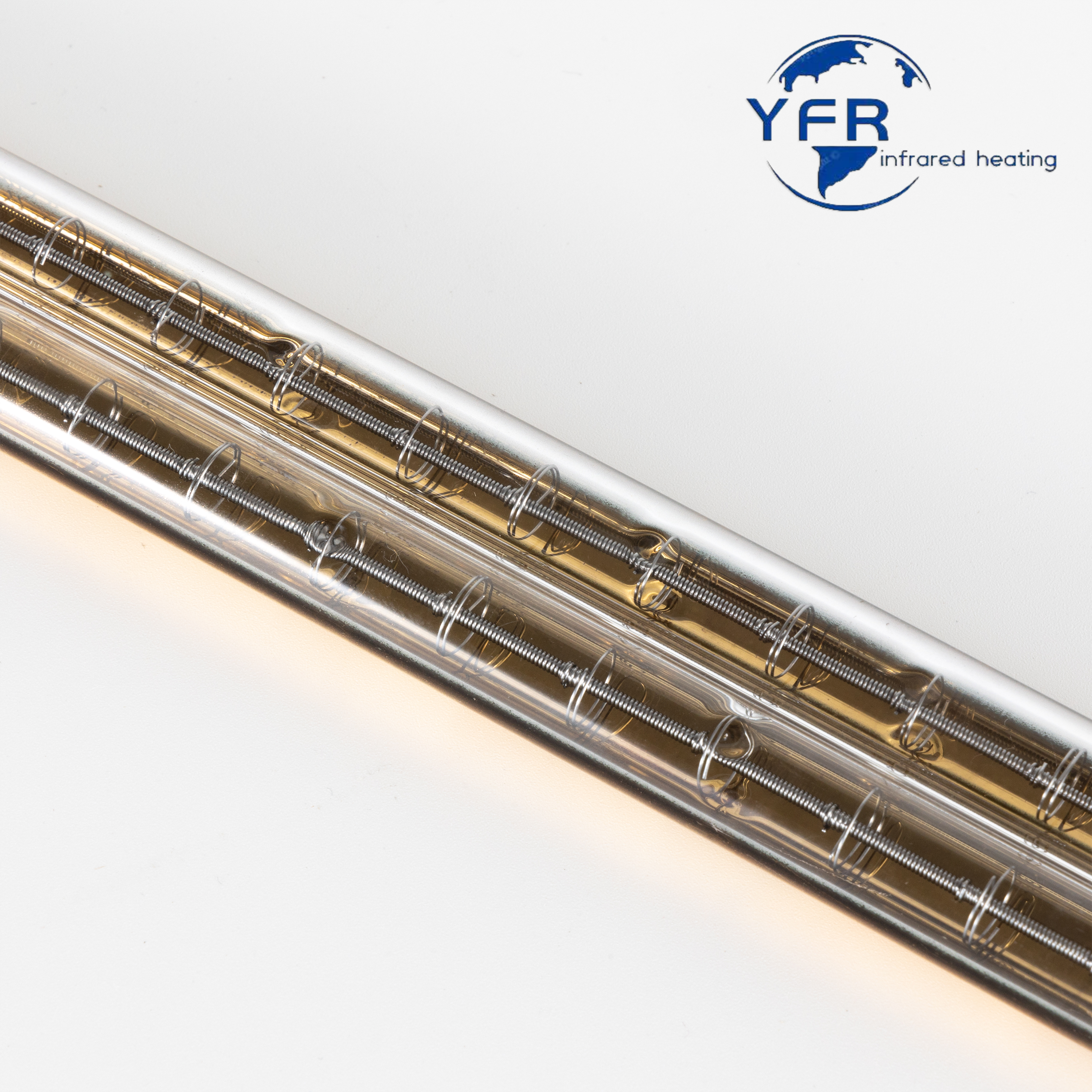
When plant teams use the phrase infrared radiation lamp, they are often dealing with one of four situations: an underperforming process, a retrofit into existing equipment, a failed replacement program, or an OEM design that still has unresolved heating logic. The broad keyword is a symptom of sourcing uncertainty, not of low technical stakes. That is why the article has to move quickly from terminology into decision control.
In practice, the wrong lamp choice does not just create a parts issue. It can change heat uniformity, cycle time, coating behavior, edge temperature, maintenance frequency, and spare-parts complexity. Noblelight’s industrial IR guide makes clear that emitter selection has to be matched to material properties, wavelength, geometry, and the heating step itself rather than treated as a generic heating part.
For readers already on YFR’s site, this is the point where internal links should narrow the conversation from the broad keyword to the Short Wave Infrared Lamp, FMW Infrared Lamp, Medium Wave Infrared Lamp, and Replacement IR Lamps pages. That mirrors the way industrial projects are actually clarified.
A lamp quote can look complete while still being wrong for the line. Two lamps with similar wattage and voltage can behave very differently if the wavelength family, heated length, reflector layout, filament configuration, or installation spacing are different. That is why price comparisons made too early often hide the real risk.
Noblelight shows that medium wave radiation is absorbed mostly at the surface and is particularly well absorbed by many plastics, glass, and especially water, while short wave radiation can support deeper penetration into some solid materials and very fast heating response. Helios places fast medium wave in the 1.4-1.6 μm region and short wave in the 1.1-1.4 μm region, with short wave response times around 1-2 seconds in its published data.
For a buyer, that means an industrial infrared radiation lamp should never be reduced to “same watts, same size.” A drying line, forming zone, adhesive activation step, or printing-machine replacement may need a different spectral and mechanical solution even when the existing lamp looks similar on paper.
If your real requirement is… | The better question is… | Why it matters |
|---|---|---|
Faster drying on a moving line | What wavelength does the coating or moisture absorb best? | Material absorption often matters more than nameplate power. |
Tight on/off control in a short zone | How fast must the emitter respond to switching? | Short wave response behavior can be critical in compact, fast-cycle processes. |
A retrofit into existing machinery | Do total length, heated length, voltage, reflector side, and terminals all match? | Replacement success depends on mechanical and electrical compatibility, not only lamp family. |
Better energy direction toward the workpiece | Is a reflector needed, and what type? | Reflector design changes where usable IR energy goes. |
Easier installation across a wider section | Would a module be better than a lamp-only purchase? | YFR’s module page shows ready-for-installation housings with emitters and controls for industrial applications. |
Industrial buyers do not need more promotional language around infrared lamps. They need a drawing package that can be manufactured repeatedly.
Helios’ IR lamp documentation is useful here because it states directly that emitters can be designed to customer instructions around total length, length of the heating part, filament and ending configuration, power, and voltage. Those are exactly the parameters that move a lamp from broad inquiry to manufacturable part.
YFR’s replacement page makes the same commercial point from the buyer side: standard and custom shortwave quartz infrared lamps in different lengths, wattages, and voltages are offered for new installations or direct replacements. That is important because most serious inquiries are not purely standard-stock purchases. They involve fit, continuity, or correction of an existing design.
Material and process target
Define whether the job is drying, curing, preheating, forming, bonding, or maintaining heat, and state the substrate or layer being heated. Wavelength fit cannot be chosen intelligently without that.
Electrical window
Confirm voltage, wattage target, control method, and whether rapid cycling matters. YFR’s power-control page shows PLC-connected regulators and SCR-based switching support for IR systems, which makes this part of the specification relevant early, not late.
Thermal geometry
Lock total length, heated length, installation spacing, reflector side, and working position. Noblelight and Helios both show that usable heating depends on spectrum plus geometry, not spectrum alone.
Lead-end and terminal details
Confirm end fittings, cable exit, ceramic ends, and machine-side mounting constraints. Helios explicitly includes ending configuration in its custom-design parameters.
Replacement intent
Decide whether the lamp should be copied exactly or corrected while keeping the same installation envelope. That distinction often determines whether a replacement program reduces downtime or repeats an old performance problem.
Reflectors matter because they change directionality, usable energy concentration, and how much radiation reaches the target instead of the surroundings.
Helios states that a gold reflector fixed directly on the quartz tube can reflect more than 90% of IR radiation, while its white ceramic reflector reflects around 70%. Noblelight similarly notes that an optional gold reflector can virtually double the amount of effective radiation reaching the product in some short-wave round-tube applications.
That means reflector selection belongs in the RFQ, not as an afterthought. YFR’s product pages show transparent, white-coated, and gold-reflector formats across its IR range, along with custom industrial heating elements and replacement tubes, so this is also a natural place to link readers toward YFR’s custom quartz heater and lamp-category pages.
Replacement buying is where many industrial teams discover that the phrase infrared radiation lamp is not nearly specific enough.
A replacement lamp has to do more than emit heat. It has to fit the machine, match the voltage and heated zone, align with the reflector direction, survive the operating orientation, and avoid shifting the effective hot area enough to alter the process. YFR’s replacement program positioning and cross-brand replacement references point directly to that reality.
This is also where manufacturers can reduce risk before a PO is issued. A capable supplier should ask for old lamp photos, markings, total length, heated length, voltage, wattage, terminal style, and the actual process problem the replacement is supposed to solve. If the old design underperformed, exact copying may not be the best outcome. A corrected replacement may be more useful than a literal duplicate. That recommendation is an inference based on the cited documentation about wavelength fit, reflector behavior, and custom design parameters.
The safest industrial purchasing conversations usually sound more technical at the start, not less.
A credible manufacturer should be able to confirm the wavelength logic, quartz format, reflector choice, heated length, electrical specification, ending configuration, working position, and whether the project needs a lamp-only solution or a module with controls. YFR’s site supports that broader solution scope through its lamp, module, and power-control pages.
Helios’ documentation also reinforces the importance of factory-level configurability, while Noblelight’s guide emphasizes that successful process heating depends on matching the emitter to the process rather than forcing the process to adapt to the emitter. Those two ideas are the core of low-risk industrial sourcing.
Evaluation point | Weak signal | Strong signal |
|---|---|---|
Process understanding | Only asks for watts and volts | Asks about material, line speed, thermal objective, and machine conditions. |
Custom parameter control | Accepts vague part descriptions | Requests total length, heated length, ending configuration, power, and voltage. |
Reflector logic | Treats reflector as optional decoration | Explains when transparent, white, or gold reflector formats change useful heating. |
System support | Sells lamp only | Can discuss modules, housings, and power controls when needed. |
Replacement competence | Offers “close equivalent” | Works from drawings, photos, and old part details to control compatibility. |
Long-term continuity | Focuses on first shipment | Frames the project around repeatability, replacement continuity, and fit control. This is an inference drawn from YFR’s replacement/module offering and the cited custom-design logic. |
A poor lamp match usually shows up downstream, not at receiving inspection.
It can create uneven temperature distribution, unstable cycle time, excessive edge heating, weak drying margins, frequent lamp changes, or unnecessary spare-part variation. Those risks follow directly from the cited technical factors: wavelength suitability, response speed, reflector behavior, geometry, and replacement compatibility.
A better-specified lamp reduces those risks before installation. That is why the procurement version of the keyword infrared radiation lamp should end at specification review, not at a generic catalog view.
On YFR’s site, the most useful next internal links after this article are typically Replacement IR Lamps, Infrared Heating Module, Power Controls, and the relevant lamp-family page. That path mirrors how real industrial decisions are made under time pressure.
Usually because the heating problem is clear before the lamp family is clear. The buyer may know the process needs drying, preheating, or replacement support, but may not yet know whether short wave, fast medium wave, medium wave, a custom quartz infrared lamp, or a module is the correct fit.
No. Published industrial IR references show that wavelength, response speed, reflector choice, heated length, and installation geometry materially affect how much usable heat reaches the workpiece. Two lamps with similar nameplate power can still perform differently in production.
At minimum, total length, heated length, voltage, wattage, terminal style, reflector side, and machine context should be confirmed. YFR’s replacement program and the Helios custom-parameter references both support that level of detail for reliable matching.
When the project needs easier installation, a more integrated housing, coordinated control, or replacement of a larger heating section rather than one bare emitter. YFR’s module page describes ready-for-installation systems that combine emitters, housing, and a suitable control unit for industrial applications.
Because reflectors change how much IR energy is directed toward the target. Helios publishes different reflector formats with different reflective performance, and Noblelight notes that a gold reflector can significantly increase effective radiation on the product in some configurations.
Yes. IEC 60519-1:2020 sets general safety requirements for industrial electroheating equipment and installations, which means lamp selection should still be considered within the broader machine and process context rather than as an isolated commodity decision.
[Specification Review Request]
If your team is searching infrared radiation lamp because a process is unstable, a machine needs a replacement, or a new design is still open on wavelength and geometry, the fastest way to reduce risk is to move from keyword-level discussion to part-level review.
Send YFR Heating the details you already have: old lamp photos, machine model, total length, heated length, voltage, wattage, reflector requirement, terminal layout, substrate, line speed, or the process problem you are trying to solve. YFR’s current product structure supports that kind of engineering conversation through its lamp-family pages, replacement-lamp program, infrared heating modules, and power controls.
That kind of review is usually more valuable than requesting another generic quote. It helps determine whether the right answer is a short wave lamp, a medium wave lamp, a custom infrared heating lamp, a replacement infrared lamp, or a modular solution that is easier to install and control.
Review YFR industrial infrared heating lamps and heating modules and controls. Confirm emitter choice, mounting, sensing and recipes with representative product trials.
Send YFR your material, dimensions, target, cycle time and current equipment details for an application-specific review.


