Author: Site Editor Publish Time: 2025-09-16 Origin: Site
Last updated: August 30, 2026
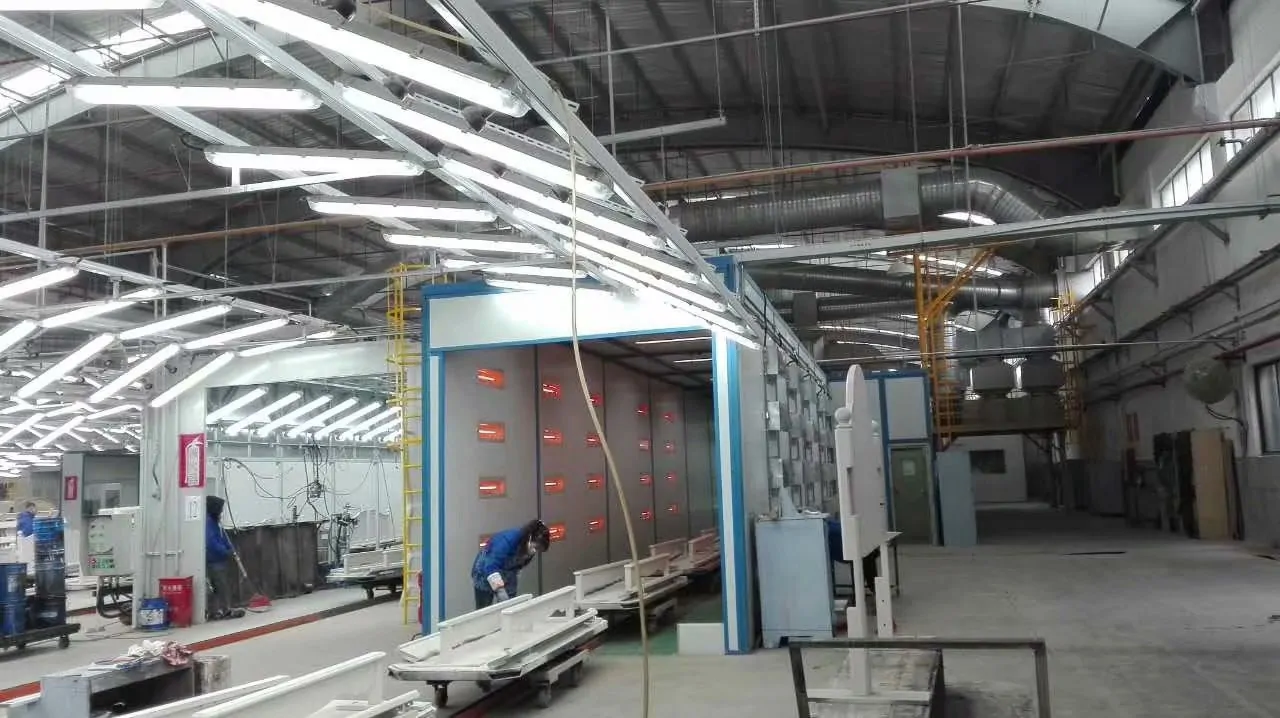
In many factories, curing is the quiet bottleneck that controls line speed, product quality, and energy bills. Whether you are drying paints, curing powder coatings, setting adhesives, or processing composites, the way heat is delivered to the product has a direct impact on scrap rate, throughput, and operating cost.
Two technologies dominate industrial curing: convection curing, which uses heated air, and infrared (IR) curing, which uses electromagnetic radiation to deliver heat directly to the product. Each approach has clear strengths and limitations. Instead of asking “Which method is universally better?”, a more useful question is:
Which curing technology is better for my parts, materials, and production goals?
This article explains how infrared and convection curing work, compares them under real production conditions, and offers a practical framework to help you choose the right approach—or combination—for your process.
Convection curing uses hot air as the medium to transfer heat to the product. A typical convection oven includes:
A heat source (electric heaters or gas burners)
A well-insulated chamber
Fans or blowers that circulate heated air
A conveyor or racks that carry the product through the hot zone
Heat transfer happens mainly by:
Convection: moving hot air flows over the surface and transfers heat
Conduction: heat moves from the surface into the interior of the part
Because the entire oven chamber and the air inside must be heated, convection systems generally:
Take longer to reach operating temperature
Have significant thermal inertia (slow to change temperature)
Provide very even, gentle heating, especially beneficial for large or complex shapes
Convection curing has been used for decades in metal finishing, automotive parts, heavy equipment, wood products, and many other industries.
Infrared curing uses IR emitters—usually electric or gas-fired—to radiate energy in the infrared spectrum. The product surface absorbs this radiation and converts it directly into heat. Key characteristics:
Heat is delivered primarily by radiation, not by the surrounding air
The air in the chamber may remain relatively cool compared with the product surface
The product can reach target temperature much faster than in hot-air ovens
Depending on the wavelength, infrared is typically divided into:
Short-wave IR
Medium-wave IR
Long-wave IR
Different coatings and substrates absorb energy more efficiently at specific wavelengths. By tuning the type of emitter and the distance to the product, IR systems can be optimized for a particular material or process.
Because energy is focused on the product rather than the air, IR curing can:
Shorten heating times dramatically
Reduce energy consumption
Allow more compact oven layouts
Infrared curing:
Delivers energy directly to the product surface
Reaches curing temperature in a fraction of the time
Allows shorter ovens or higher conveyor speeds
In many applications (e.g., powder coating on metal parts, drying water-based coatings on flat panels), IR can reduce heating time by half or more. That means more parts per hour and higher productivity on the same floor space.
Convection curing:
Requires heating the oven structure and a large air volume
Heat reaches the product indirectly, primarily via moving air
Often needs longer dwell times, especially for thick or heavy parts
If your primary objective is to increase line speed or reduce cycle time, infrared usually has a clear advantage.
Infrared systems typically send a larger share of input energy directly into the product instead of the air. They:
Reduce energy wasted heating unused space
Respond quickly to power adjustments
Can be turned down or off between batches or during idle periods
Convection ovens, especially older designs, may:
Run continuously at high temperature
Consume more energy just to maintain the oven environment
Lose significant heat through exhaust systems and leakage
For facilities focused on energy savings and sustainability, IR systems—or IR-assisted hybrid systems—often provide a more efficient path.
Convection is excellent for uniform bulk heating:
Hot air flows around and into complex geometries
Deep cavities, internal corners, and shaded regions are heated by the circulating air
Thick or high-mass parts can be soaked until the core reaches the required temperature
Infrared is strongest at surface heating:
Energy is delivered to surfaces that are in direct line-of-sight of the emitter
Shadowed areas and deep recesses heat more slowly
Highly reflective or low-absorption surfaces need careful setup to avoid uneven heating
For processes that demand deep, uniform temperatures inside large or complex parts, convection is often the safer and more predictable choice.
Infrared ovens can deliver the same or higher throughput in shorter lengths, because they need less time to raise the product to curing temperature. This is a major advantage when:
Floor space is limited
A line upgrade is needed in an existing building
The production layout is already crowded with equipment
Convection ovens usually require a larger chamber and more insulation to hold a uniform hot-air environment, which translates into a bigger footprint.
IR emitters:
React very quickly to power changes
Can be divided into zones along length and width
Allow tailored heating profiles for different products or coatings
Convection systems:
Have higher thermal inertia
Are slower to start, stop, or change setpoints
Often provide a more stable, forgiving environment once at temperature
For high-mix production with frequent changeovers, the responsiveness of IR-based systems can be very valuable.
Infrared curing stands out in the following scenarios:
Thin or simple geometries
Flat sheets, profiles, extrusions, and low-mass components are ideal for IR. The energy reaches the surface quickly, and the risk of shadowing is minimal.
Surface-driven curing processes
Many coatings, inks, and adhesives require primarily surface or near-surface curing. IR can achieve the required film properties quickly without overheating the bulk of the substrate.
Limited production space
When there is no room to install a long convection tunnel, a compact IR oven or IR module can provide the needed capacity without major layout changes.
Need for higher throughput
If curing is the bottleneck, adding IR preheating or fully IR-based curing can significantly increase line capacity and reduce lead times.
Energy efficiency and sustainability goals
Because IR delivers heat directly to the product and can be easily turned down during idle periods, it often supports corporate energy-reduction and CO₂ targets more effectively.
Sensitive substrates
Materials like plastics, wood, or composites can distort or degrade if the entire bulk is heated for too long. IR allows rapid surface curing while limiting temperature rise in the interior.
Common examples where IR is very successful include:
Powder and liquid coatings on metal parts
Drying water-based coatings on panels and profiles
Curing inks and coatings in printing and packaging
Certain adhesive and sealant curing processes
Despite the advantages of IR, convection curing continues to be the preferred solution in many applications, especially where robust uniformity is critical.
Convection is often the better choice when:
Parts are large, thick, or very heavy
Castings, large welded structures, and thick composite parts require time for heat to diffuse to the core. Convection ovens provide slow, even heating that minimizes thermal gradients and internal stress.
Geometries are extremely complex
Components with deep channels, narrow cavities, or multiple shielded surfaces are challenging for line-of-sight radiation. Circulating hot air can reach these regions more reliably.
The process demands gentle ramps and long soaks
Some chemistries require carefully controlled ramp rates to avoid defects such as blistering, cracking, or internal voids. Convection ovens make it easier to design slow, uniform heating profiles.
Strong airflow is required
When solvents, water, or other volatiles must be removed, controlled airflow and exhaust management are critical. Convection systems naturally provide this capability.
Batch curing of large loads
For large batch ovens loaded with many parts at once, convection systems can be simpler, especially when uniformity is more important than speed.
In these cases, convection curing provides a predictable, well-understood environment with a wide process window.
In many modern factories, the most effective solution is not infrared versus convection, but infrared plus convection.
A typical hybrid design might:
Use infrared zones at the entrance of the oven to rapidly raise the surface temperature or gel a coating
Follow with a convection zone to complete through-thickness cure and equalize temperature across complex geometries
Benefits of hybrid systems include:
Shorter total cure time compared with convection-only systems
Improved surface properties and appearance
Reduced risk of defects related to solvent entrapment or under-cure
Greater flexibility to handle mixed product types
Hybrid ovens are especially attractive when:
You process a wide variety of parts—from simple to complex
You need both fast surface heating and deep, uniform curing
You are upgrading an existing convection line and want more capacity without a complete rebuild
With proper control, operators can select recipes that adjust the balance between IR and convection for each product family.
Choosing a curing technology is not only an engineering decision; it is also a business decision. A realistic evaluation should consider total cost of ownership, not just the purchase price.
Key factors include:
Infrared systems may require more sophisticated emitters and power controls
Convection systems may need larger insulated chambers, ducts, and exhaust handling
The lower initial price of a basic convection oven can be attractive, but it should be weighed against long-term energy and productivity impacts.
Energy consumption: IR often uses less energy per part, especially in intermittent or variable-load production
Maintenance:
IR systems have fewer moving parts but require periodic emitter replacement
Convection systems need fan maintenance, burner tuning (for gas-fired units), filter changes, and duct cleaning
Understanding local energy tariffs, expected operating hours, and maintenance resources is essential for a fair comparison.
Any curing investment should be evaluated in terms of:
Additional throughput (parts per hour or per shift)
Reduced rework or scrap due to curing defects
Improved consistency in final properties
Often, the biggest financial benefit of IR or hybrid systems comes from extra capacity and better quality, not just energy savings.
Regardless of the technology chosen, a well-designed curing system must address:
Adequate number and placement of temperature sensors
Regular calibration of instruments
Data logging and trending to verify consistent curing conditions
Proper handling of flammable coatings, solvents, and powders
Correct design of ventilation and exhaust systems
Safety interlocks and emergency shutdown procedures
Guarding and shielding to protect personnel from hot surfaces and IR radiation
Safe access for cleaning and maintenance
Clear operating instructions and training
Depending on the sector, curing systems may need to comply with:
Environmental regulations on emissions and energy efficiency
Industry-specific standards for automotive, aerospace, food, or pharmaceutical products
Internal quality systems such as ISO-based requirements
Investing in safety and compliance from the start reduces unplanned downtime and protects both staff and reputation.

To choose between infrared, convection, or a hybrid solution, it helps to follow a structured process:
Define the product and coating system
Substrate material, thickness, and thermal sensitivity
Coating or adhesive type, required cure temperature, and dwell time
Maximum allowable part temperature
Clarify performance goals
Target line speed or batch cycle time
Acceptable defect rate and quality requirements
Energy-reduction or sustainability targets
Assess constraints
Floor space and ceiling height
Available utilities (power capacity, gas supply, exhaust)
Integration with upstream and downstream equipment
Shortlist candidate technologies
IR-dominant for thin, simple parts and surface-focused cures
Convection-dominant for thick, complex, or highly sensitive components
Hybrid for mixed product families and demanding performance goals
Run trials and collect data
Use lab-scale or pilot equipment where possible
Measure actual part temperatures, cure quality, and energy use
Adjust parameters until a robust process window is identified
Evaluate ROI and risk
Compare total cost of ownership over several years
Consider flexibility for future product changes or capacity increases
Factor in training, maintenance, and reliability
This framework helps move the decision from opinion to measurable evidence.
Q1. Is infrared curing always more efficient than convection?
Infrared curing is often more efficient, because it heats the product directly and can respond quickly to changes in production. However, efficiency depends on correct system design, good matching to the product, and proper operation. A poorly designed IR system can perform no better than an average convection oven.
Q2. Can infrared curing replace convection in every application?
No. For very thick, heavy, or extremely complex parts that require deep, uniform temperatures, convection or hybrid systems are usually more reliable. Infrared is strongest when curing is driven by surface conditions on parts that are relatively accessible to line-of-sight radiation.
Q3. What about sensitive materials like plastics or wood?
Infrared can be an excellent option for sensitive substrates, because it allows quick surface heating with limited bulk temperature rise. However, it still requires careful tuning of wavelength, emitter power, and exposure time to avoid warping or surface damage.
Q4. Are hybrid systems hard to operate?
Modern control systems make hybrid ovens straightforward to use. Operators typically select a recipe that defines power levels and setpoints for both IR and convection zones, and the control system manages the details.
There is no single “best” curing method for every industrial process. Infrared curing offers outstanding speed, compact layouts, and strong potential for energy savings, especially for surface-driven curing on simple geometries. Convection curing continues to provide robust, uniform heating for thick, complex, or highly sensitive parts, and remains a cornerstone technology across many industries.
The most successful plants do not treat this as a purely theoretical choice. Instead, they:
Analyze their parts, coatings, and quality requirements
Run trials and measure real data
Compare infrared, convection, and hybrid configurations against clear performance and cost targets
By taking this structured approach, you can design a curing solution that delivers faster throughput, lower operating costs, and consistent high-quality results—while giving your production line the flexibility it needs for future growth.
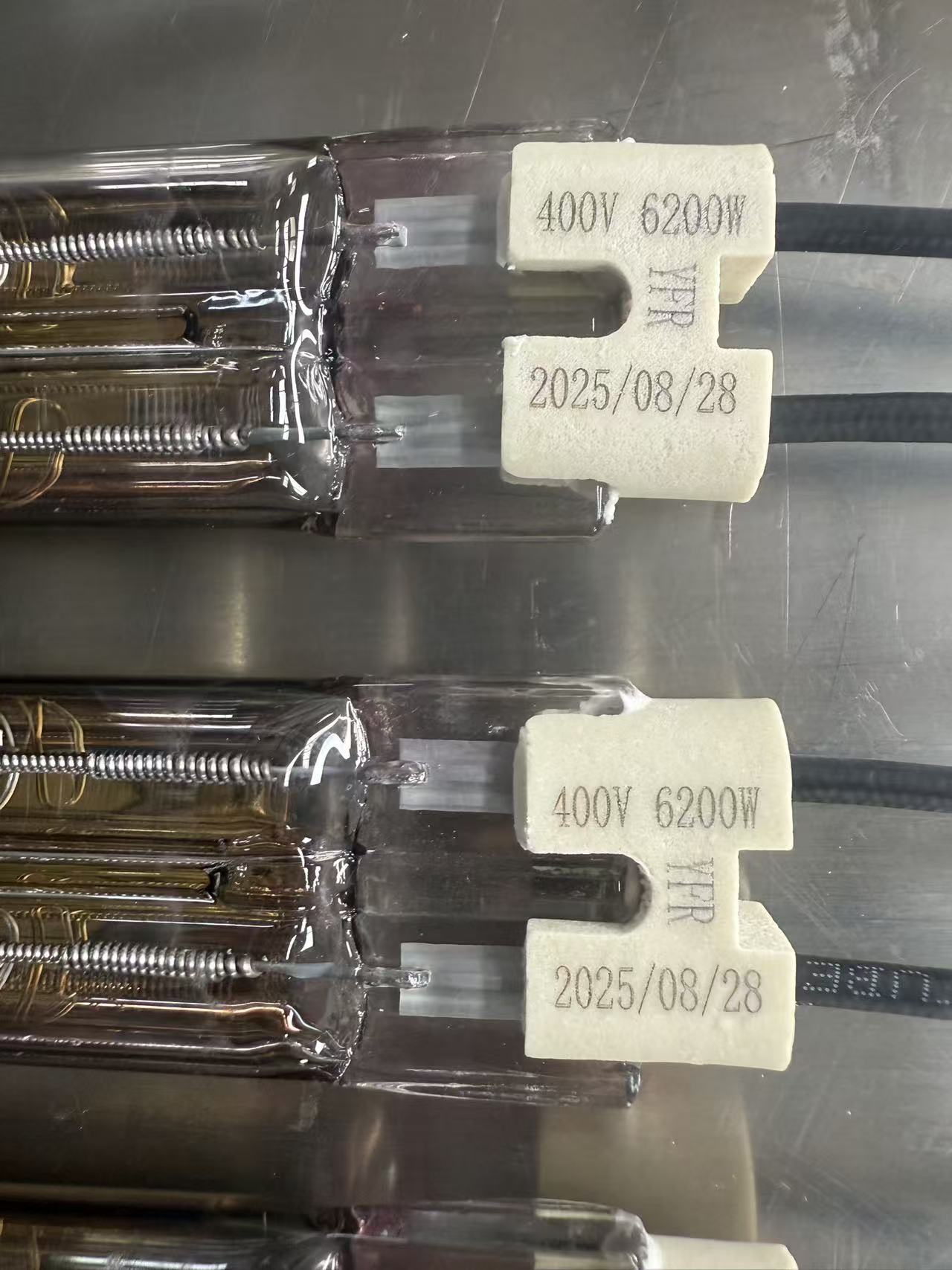
Review YFR industrial infrared heating lamps and heating modules and controls. Confirm wavelength, geometry, mounting and controls through representative trials.
Send YFR your material, dimensions, target, cycle time and current equipment details for an application-specific review.


