Home » News » Industry News » Infrared Heating And Drying for Food: A Technical Deep Dive for Industrial Applications

Infrared Heating And Drying for Food: A Technical Deep Dive for Industrial Applications

Views: 0     Author: Site Editor     Publish Time: 2025-11-03      Origin: Site

Inquire

facebook sharing button
twitter sharing button
line sharing button
wechat sharing button
linkedin sharing button
pinterest sharing button
whatsapp sharing button
sharethis sharing button

In today’s high-throughput food processing landscape, thermal treatment processes—such as drying, blanching, roasting, and sterilising—demand not just speed and capacity, but also quality preservation, uniformity, and energy efficiency. Among the available thermal modalities, infrared (IR) heating and drying has steadily emerged as a high-performance alternative to conventional hot‐air systems or more complex modalities (e.g., freeze-drying, microwave) when applied to food, medicinal materials, spices and similar agricultural products.

This article explores the application of infrared heating and drying for food, with attention to technical selection criteria, system design considerations, process categories, benefits and limitations. It also showcases how Huai’an Yinfrared Heating Technology approaches system specification and optimization for food-drying applications. Our goal is to help food processors, R&D engineers, and equipment specifiers evaluate IR solutions in a structured way.


1. What is infrared heating and how does it differ from conventional methods?

Infrared heating involves the use of electromagnetic radiation—in the IR portion of the spectrum—to deliver heat energy directly to product surfaces and, importantly, subsurface layers. Unlike convective heating (hot air) or conductive heating (contact surfaces), IR transfers energy via radiation, enabling faster response and more targeted heating.

Key points:

  • IR wavelengths typically span near-infrared (NIR: ~0.75–1.4 µm), mid-infrared (MIR: ~1.4–3 µm), and far-infrared (FIR: ~3–1000 µm) regions.

  • Infrared radiation penetrates a certain depth into food materials, heating water molecules and internal structures, driving moisture outward.

  • Heat transfer occurs rapidly since heating does not rely on surface-air convection; the product absorbs radiant energy and raises its internal temperature.

  • Because IR does not depend on heating large air volumes, it offers faster response and lower energy use.

Compared to conventional hot-air drying, which depends on heating air and transferring that heat via convection, infrared drying achieves higher efficiency, shorter cycles, and improved product quality (color, texture, nutrients).

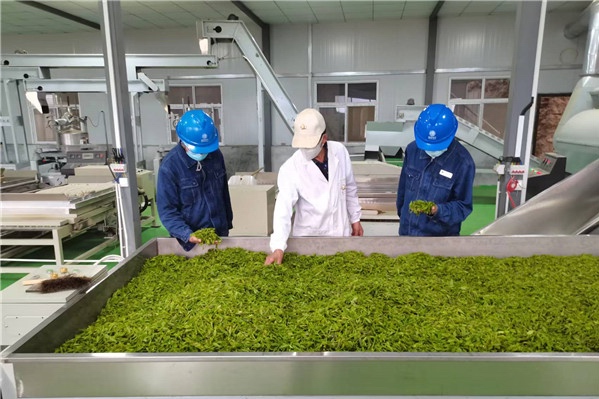
agricultural application


2. Why food processors are turning to infrared drying

2.1 Improved quality retention

Infrared drying helps preserve sensory, nutritional, and physical characteristics of food. Studies show IR drying yields shorter drying times, higher product quality, and energy savings compared to hot-air drying. This method ensures better color and nutrient retention, especially in delicate fruits, vegetables, and herbs.

2.2 Shortened drying time

Because IR energy is absorbed directly by the product, drying time can be reduced by 30–50% versus convection drying. Faster drying minimizes microbial risks and boosts productivity.

2.3 Energy efficiency

Infrared drying reduces specific energy consumption substantially—often by 40–50%—since heat is not wasted on air mass.

2.4 Compact system and operational advantages

IR systems can be compact, with fewer moving parts, offering smaller footprints, lower maintenance, and faster startup/shutdown.

2.5 Hybrid capability

Infrared systems can combine with hot air, vacuum, or microwave drying to enhance efficiency and product quality—forming hybrid drying systems tailored to the product profile.


3. Main industrial applications of infrared drying in food processing

3.1 Bulk agricultural products (grains, seeds, pulses)

Infrared drying improves grain drying uniformity, reduces moisture variation, and preserves seed germination. Proper design maintains surface temperatures below 55 °C for grains and 45 °C for seeds to ensure viability.

3.2Fruits and vegetables

Thin slices or pulps of fruits and vegetables benefit from IR’s rapid, uniform heating, resulting in good color, texture, and rehydration quality. The reduced drying time minimizes enzymatic browning and nutrient loss.

3.3 Spices and flakes

Spices such as garlic, onion, and pepper require quick drying to retain aroma and prevent microbial growth. IR drying yields better volatile compound retention and uniform color.

3.4 Processed food components

Applications include roasting nuts, cocoa, cereal bases, or snack ingredients. IR heating enhances flavor and browning while minimizing moisture and energy consumption.

Infrared drying system for food industry


4. Selection criteria for infrared heating and drying systems

4.1 Product characteristics

  • Moisture content: Initial and target levels determine drying kinetics.

  • Geometry: Slice thickness or bed depth affects penetration.

  • Thermal sensitivity: Products with heat-sensitive compounds require gentle, far-IR modes.

  • Surface temperature limits: Avoid exceeding critical temperature thresholds.

  • Final product use: Dryness, texture, and rehydration requirements dictate process parameters.

4.2 Wavelength and energy parameters

  • Wavelength selection:

    • Near/medium-wave IR for fast drying.

    • Far-IR for gentle, deep penetration.

  • Power density: Must match absorption characteristics.

  • Emitter configuration: Optimized for even exposure.

  • Residence time: Calculated using drying models (e.g., Weibull, Page).

4.3 Temperature control and airflow

Temperature uniformity and adequate airflow are essential to remove evaporated moisture. Combining IR with controlled airflow enhances drying speed and product uniformity.

4.4 Energy and cost analysis

Specific energy consumption, lamp lifetime, and ROI must be evaluated. Though initial capital cost may be higher, IR systems typically pay back via energy savings and throughput gains.

4.5 Hygiene and safety

All components in contact with food must meet sanitary standards. IR dryers should have cleanable surfaces, accessible lamps, and verified temperature profiles for microbial safety.

4.6 Maintenance and scalability

Ensure easy access to lamps and reflectors. Use modular architecture for scale-up from pilot to production level.

4.7 Process integration

Synchronize IR dryers with upstream washing/blanching or downstream cooling/packaging lines. Adjust conveyor speed and batch size for optimal throughput.


5. Practical design examples

Example A: Fruit Slices

  • Thickness: 3 mm

  • IR wavelength: Medium wave

  • Distance: 300 mm from emitters

  • Power density: 800 W/m²

  • Benefit: 50% faster drying, brighter color, crisp texture.

Example B: Herbal Leaves

  • Far-IR emitters, surface temperature below 50 °C.

  • Gentle heating preserves volatile oils and color.

Example C: Grain Drying

  • Maintain product surface under 55 °C.

  • Cooling airflow post-drying ensures quality and germination.

  • Energy savings up to 40%, with lower mold risk.


6. Challenges and mitigation strategies

6.1 Penetration depth limitations

Infrared radiation heats primarily surface layers. For thick materials, combine IR with convective air or vacuum to improve uniformity.

6.2 Overheating risk

High IR intensity can cause scorching. Use temperature sensors, pyrometers, and real-time control systems to prevent overheating.

6.3 Uniformity concerns

Uneven exposure leads to inconsistent drying. Mitigate by optimizing emitter layout, reflector geometry, and conveyor motion.

6.4 Maintenance and cost

IR lamps require periodic cleaning and replacement. Select long-life emitters and design for easy access.

6.5 Scale-up issues

Pilot testing helps identify and solve control and uniformity challenges before full-scale deployment.


7. Best practices for industrial food drying with IR systems

  • Validate processes through pilot testing before scale-up.

  • Select appropriate wavelength for each product type.

  • Optimize bed thickness, conveyor speed, and emitter distance.

  • Combine IR with convection or vacuum for thicker materials.

  • Use temperature and humidity sensors for closed-loop control.

  • Ensure hygiene and accessibility in equipment design.

  • Track specific energy use and product throughput.

  • Implement preventive maintenance and regular performance audits.


8. Summary and Outlook

Infrared heating and drying has proven to be a clean, efficient, and high-quality method for food processing. Its direct radiant heat transfer, energy savings, and rapid response make it a valuable technology for drying grains, fruits, herbs, spices, and other food components.

While challenges exist—such as penetration depth and uniformity—they can be mitigated through thoughtful system design and control. The result is consistent product quality, higher yields, and reduced energy use.

As the food industry moves toward sustainable and high-efficiency production, infrared drying will play an increasingly vital role. Huai’an Yinfrared Heating Technology continues to innovate in this field, supporting manufacturers with high-performance IR drying systems designed for precision, reliability, and efficiency.

banner

Prepared by: Huai’an Yinfrared Heating Technology

Last modified: 2025-11-03


Huai’an Infrared Heating Technology is a manufacturer of Quartz IR emitters.

Product Category

Quick Links

Contact Us

Copyright © 2022 Huai'an Infrared Heating Technology. All Rights Reserved.| Sitemap  Supported By Leadong