Author: Process Heating Engineer Publish Time: 2026-03-24 Origin: Site
Start with the industrial infrared lamp range and systems and controls, then document the machine-specific requirements below.
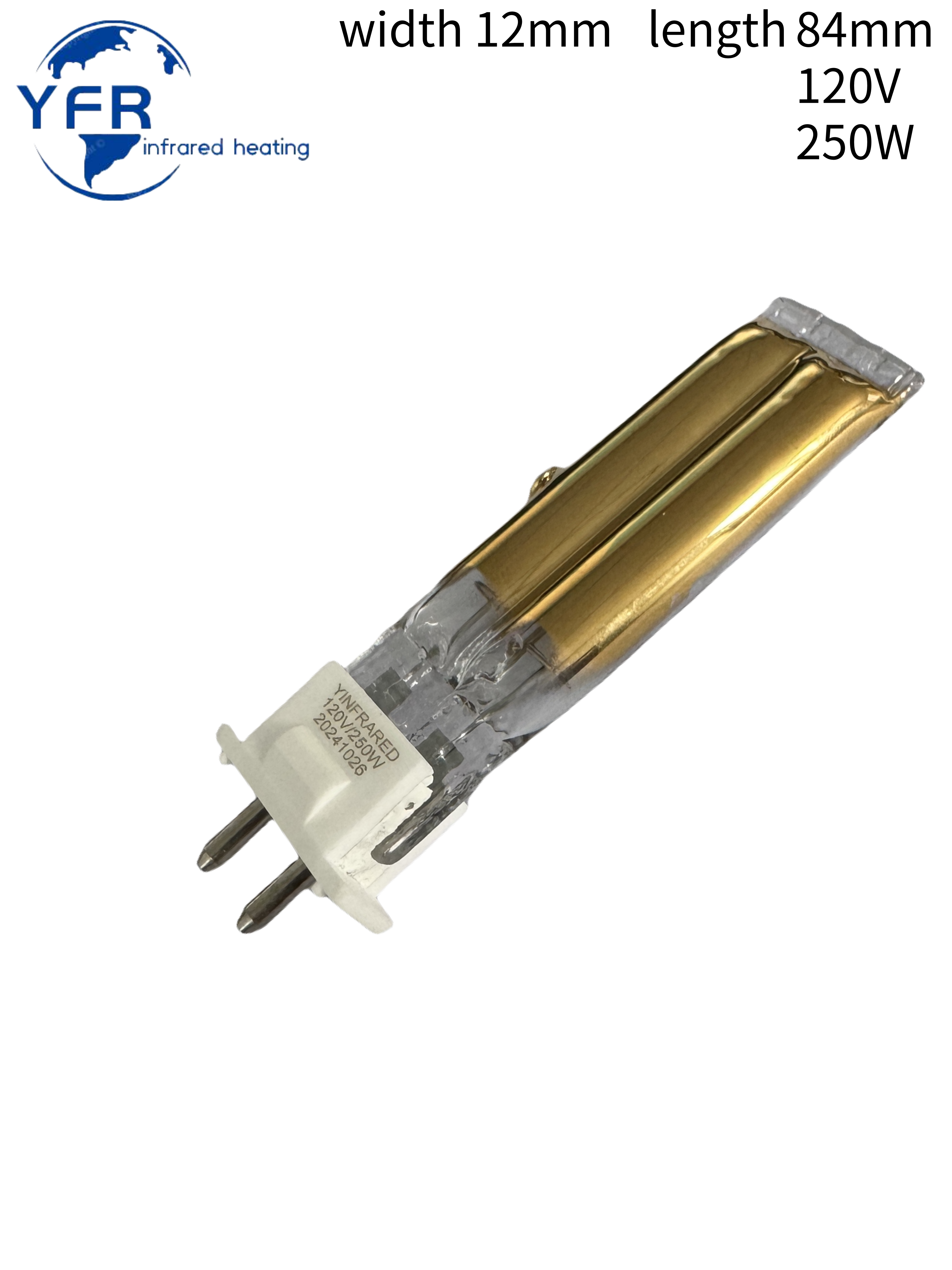
Product example. The printed ratings apply to this pictured lamp, not to every industrial application.
A buyer usually searches infrared lamps for heating when the production problem is already real, but the exact lamp language is still unclear. The line may need faster drying, better preheating, a stable cure window, or a replacement for an installed heater. The keyword is broad. The project behind it usually is not.
That is why this topic should not be handled like a generic explainer. In industrial heating, the useful next step is to move quickly from a broad search phrase to the details that actually decide whether a lamp will work: wavelength, heated length, reflector choice, lead-end layout, voltage matching, installation spacing, and machine context.
Compare the process requirements with the available emitter and system configurations. Product category names are a starting point; confirm the exact specification for the installation.
────────────────────────
In industrial settings, buyers use broad phrases because the application is often clearer than the emitter family. A team may know it needs an infrared lamp for machinery, but not yet know whether the answer is short wave, medium wave, fast medium wave, a custom quartz lamp, or a replacement matched to an existing machine.
That uncertainty matters because the wrong lamp rarely fails at the quotation stage. It fails later, through uneven heat profile, unstable cycle time, weak drying margin, extra maintenance, or spare-part confusion. Emitter choice has to be tied to product material, wavelength, geometry, and distance to the target rather than to wattage alone.
────────────────────────
Industrial buyers often compare infrared heating lamps by voltage, wattage, and overall shape. That is understandable, but incomplete. Two lamps with similar electrical ratings can still behave differently if their wavelength range, reflector format, heated length, or installation distance are different.
Short wave radiation can penetrate deeper into some solid materials, while medium wave radiation is absorbed mostly at the surface and is particularly well absorbed by many plastics, glass, and water. Different quartz emitters also operate in different wavelength ranges, so a lamp can be electrically similar and still be thermally wrong for the process.
This is why the phrase infrared lamps for heating should lead to a process conversation, not just a product comparison. The real issue is whether the emitter fits the thermal task, not whether it shares a familiar label with the previous part.
────────────────────────
A usable RFQ starts with process and geometry, not adjectives.
Industrial quartz emitters are typically defined by total length, heating-part length, power, voltage, and ending configuration. YFR’s replacement page makes the same point commercially by presenting standard and custom shortwave quartz lamps for new installations and direct replacements.
A serious manufacturer usually needs the following information before recommending or producing the lamp.
Material and thermal task
State whether the job is drying, curing, preheating, forming, bonding, or maintaining heat. Material absorption and process objective affect wavelength choice.
Electrical window
Confirm voltage, wattage target, and how the heating section is controlled. Power regulators, controllers, and infrared thermometers can all affect lamp selection.
Thermal geometry
Lock heated length, installation spacing, and the direction in which radiation must be concentrated. Shape, position, and distance are performance-critical variables.
Lead-end and terminal details
Confirm endings, cable exit, terminal type, and machine-side mounting limits.
Replacement intent
Decide whether the new part should duplicate the old lamp exactly or correct a known weakness while preserving the installation envelope.
System scope
Confirm whether the application really needs a bare lamp or whether a module would reduce integration work.
Use a dimensioned drawing to identify overall length, heated length, reflector side and terminal orientation.
────────────────────────
Industrial heating decisions become more reliable when buyers understand four variables early.
Wavelength suitability comes first. Different wavelength bands interact differently with plastics, glass, moisture-bearing materials, and coated surfaces.
Response speed matters when the line cycles fast or the heating zone is short. Fast-response emitters are often critical in compact, high-speed processes.
Distance and geometry matter because the usable result depends on where the energy lands, not only on how much power the lamp carries.
Reflector choice matters because it changes how much radiation is directed toward the workpiece. Transparent, white ceramic, and gold reflector formats do not behave the same way in production.
If your real requirement is… | The better question is… | Why it matters |
|---|---|---|
Faster drying on a moving line | What wavelength does the material absorb well? | Material absorption often matters more than nominal wattage. |
Short heated zone with frequent cycling | How fast must the emitter respond to control changes? | Response time affects controllability and throughput. |
Direct replacement in machinery | Do heated length, voltage, terminals, and reflector side all match? | Mechanical fit without thermal fit still creates downtime. |
Better direction of heat toward the product | Which reflector format is appropriate? | Reflector design changes usable heating at the target. |
Easier installation across a wider section | Would a module be more suitable than a bare lamp? | Modules can simplify installation and integration. |
────────────────────────
A new machine project allows time to refine the heating design. A replacement job usually does not.
When a maintenance team searches infrared lamps for heating, it may actually be trying to identify a failed lamp quickly enough to keep a production line running. That changes the evaluation logic. The replacement has to fit the machine, match the voltage, keep the hot zone in the right place, and avoid creating a new process drift.
This is also where broad phrase matching becomes dangerous. A lamp that looks similar can still be wrong if the heated length, reflector side, end configuration, or working distance shift the effective heating zone.
A good replacement conversation usually starts with lamp photos, old markings, total length, heated length, voltage, wattage, machine model, and a short note about the production issue. If the original design underperformed, exact copying may not be the best answer. In some cases, a corrected replacement is more valuable than a literal duplicate.
────────────────────────
Some industrial users search for infrared lamps for industrial heating when what they really need is a more complete heating section.
In some applications, buyers are better served by an assembly that already accounts for emitter arrangement, reflector housing, and integration points than by purchasing lamps one by one.
The same applies to controls. Stable industrial heating often depends on the lamp and the control method being considered together.
Review the infrared heater modules and systems and controls together with the lamp specification.
────────────────────────
The strongest signal of a credible supplier is not aggressive sales language. It is how clearly the supplier narrows uncertainty.
A serious manufacturer should be able to discuss wavelength logic, quartz format, reflector choice, heated length, ending configuration, voltage, spacing, replacement compatibility, and whether the process needs a bare lamp or a module.
Long-term reliability also depends on things many first RFQs omit: dimensional tolerances, sample confirmation, packaging protection for quartz parts, batch stability, and delivery consistency.
Evaluation point | Weak signal | Strong signal |
|---|---|---|
Process understanding | Only asks for watts and volts | Asks about substrate, line speed, thermal objective, and machine layout |
Drawing control | Accepts vague dimensions | Requests total length, heated length, terminal details, reflector side, and voltage |
Replacement logic | Offers a quick “similar lamp” | Works from drawings, photos, old markings, and machine context |
System support | Stops at lamp selection | Can discuss modules and controls where needed |
Reflector logic | Treats reflector as cosmetic | Explains when reflector choice changes usable heating |
Reorder continuity | Focuses only on first shipment | Plans around repeatability, identification, and future replacements |
────────────────────────
Even when the purchase is “just the lamp,” the system context matters.
Industrial electroheating equipment operates within a broader safety framework. That does not mean every lamp inquiry must become a compliance review. It does mean lamp selection should still be considered within the machine and process environment, not as an isolated commodity decision.
That is one more reason a broad search like infrared lamps for heating should end in a specification review, not in a generic product shortcut. The more clearly the application is described, the lower the technical and purchasing risk becomes.
Usually because the heating task is already clear but the emitter family is not. The user may know it needs drying, preheating, curing, or replacement support, but not yet know whether the solution should be short wave, medium wave, fast medium wave, or a module-based arrangement.
No. Wavelength, reflector choice, geometry, heated length, and distance to the target materially affect the heating result. Similar electrical ratings do not guarantee similar process behavior.
The most useful starting package is lamp photos, old markings, machine model, total length, heated length, voltage, wattage, terminal type, reflector side, and a short note about the production issue.
A module is often more practical when the application needs easier installation, a defined housing arrangement, or better integration with controls.
Because reflector format changes how much radiation is directed toward the target. Reflective coatings can substantially increase effective radiation on the product.
Yes. Lamp selection should still be considered within the machine and process context, not as an isolated commodity purchase.
A complete specification makes a replacement or new-system review more useful.
If your team is searching infrared lamps for heating because a machine needs a replacement, a line is heating unevenly, or a new design still has open questions around wavelength, spacing, or reflector choice, the fastest way forward is usually a part-level review rather than another generic RFQ.
Send YFR Heating the information you already have: lamp photos, old part markings, total length, heated length, voltage, wattage, machine model, process temperature target, substrate, or a short note about the heating problem.
That review usually clarifies whether the right answer is a short wave emitter, a medium wave emitter, a corrected replacement, or a more integrated heating module. It is a more reliable path than trying to force a broad keyword into a final purchase decision.
────────────────────────
Last updated: September 8, 2026