


Author: Site Editor Publish Time: 2025-11-25 Origin: Site


Last updated: August 30, 2026
Modern footwear plants, OEM shoe machine builders, and system integrators are under pressure to deliver crisp embossing and hot stamping quality on rubber and EVA soles while controlling energy costs and floor space. Specifying infrared lamps for shoe sole embossing and hot stamping allows you to preheat and press soles more consistently, shorten cycle times, and simplify machine design compared with traditional platen-only or oil-heated solutions.
This article explains how to engineer a robust shoe sole embossing heating solution using short-wave twin-tube quartz IR lamps, fast medium-wave emitters, and modular infrared heating systems for footwear manufacturing.

Process snapshot
Materials: rubber and EVA soles, typically 3–15 mm thick with patterned molds.
Equipment: existing hydraulic or mechanical embossing presses with heated upper and lower platens.
Operating mode: batch or semi-automatic, one or two pairs of soles per cycle.
Temperature window: roughly 120–180 °C depending on compound and embossing depth (indicative).
Pain points with conventional heating
In many legacy presses, platens alone must bring cold soles from ambient to embossing temperature. This leads to:
Long cycle times to ensure heat penetrates the sole thickness.
Overheating of platen surfaces to compensate, increasing energy consumption and safety risks.
Uneven temperature between sole center and edges, causing inconsistent logo depth or blurred patterns.
High standby losses because platens must be kept hot even during short stoppages.
How infrared changes the game
By adding a compact IR preheating station directly before the press, soles enter the mold already close to the required embossing temperature:
Twin-tube short-wave emitters, with radiation typically in the 1.0–1.4 μm range, reach full output in seconds and penetrate deeper into rubber and EVA prior to pressing.
Preheating reduces the temperature lift required from the platen and shortens total heating time.
Power can be modulated according to line speed and material, supporting consistent surface temperature shot-to-shot.
The press can run with lower platen setpoints, which helps reduce energy consumption and thermal stress on the machine.
Recommended Huai’an Yinfrared solution
Short-wave twin-tube quartz infrared lamps in modular cassettes sized to sole pairs, with gold or ceramic reflectors.
Zoning across toe, ball, and heel regions for finer control.
Optional fast medium-wave emitters where surface-sensitive coatings or inks are present.
This constitutes a robust, energy efficient shoe sole hot pressing concept without major mechanical changes to the press.
Process snapshot
Materials: EVA and foam soles for sandals, garden shoes, and sports footwear.
Equipment: multi-station rotary tables combining preheat, molding, and embossing in one index.
Operating mode: continuous operation with target cycle times of tens of seconds per station.
Temperature window: controlled heating to soften the EVA uniformly before pressing into the mold.
Pain points with conventional heating
Rotary table machines often rely on embedded cartridge heaters in the molds, with limited control over the surface temperature of the EVA charge:
Uneven soaking of thick EVA blocks leads to sink marks or incomplete fill in deep patterns.
Long preheat times at the first station become the bottleneck of the entire carousel.
High mold temperatures can degrade surface finishes, especially with colored or printed soles.
Retrofitting extra conduction heating can be mechanically complex and heavy.
How infrared transforms the rotary index
Adding an overhead or side-mounted IR zone at the preheat station allows you to decouple bulk heating from mold conduction:
Fast medium-wave or short-wave IR can raise the surface and near-surface temperature of EVA more rapidly and uniformly. Eco Affect+1
Power density can be tailored to achieve the desired heat penetration within the index time, not the other way around.
Zoning and shielding limit heat to the sole area, protecting machine components.
When integrated with an encoder or PLC, lamp power can be ramped in sync with table rotation.
Recommended Huai’an Yinfrared solution
Overhead fast medium-wave infrared lamps in a compact enclosure, with reflectors shaped to the rotary station footprint.
Optional custom infrared ovens for shoe soles for machines with longer preheat sections and higher outputs.
Integrated thermocouple or IR pyrometer feedback for closed-loop surface temperature control.
Process snapshot
Materials: pre-molded rubber/EVA soles, PU or TPR inserts, decorative patches.
Equipment: small presses or hot-stamping heads for logos, edges, and date codes.
Operating mode: manual or semi-automatic, often in cells or finishing lines.
Temperature window: narrower near the surface to avoid damaging color layers.
Pain points with conventional heating
Heating entire soles for a small logo wastes energy and increases risk of warpage.
Local electric pads take time to heat up and cool down, limiting flexibility.
Operators may overheat parts to “be safe,” leading to gloss changes or burn marks.
How infrared localized heating helps
Narrow-beam short-wave or fast medium-wave emitters can be focused to only the logo or edge region.
Very fast response allows emitters to be pulsed only during the relevant part of the cycle.
Reduced heated mass means shorter changeovers between products or colors.
Recommended Huai’an Yinfrared solution
Compact IR modules using industrial infrared heaters for rubber and EVA soles, with optics or masks defining the heated zone.
Closed-loop control via small IR sensors monitoring logo surface temperature.
Plug-in modules suitable for OEM integration into hot-stamp machines.
Collectively, these scenarios illustrate infrared hot stamping of shoe soles as a flexible, scalable approach for both new machine designs and retrofits.
Engineering a reliable shoe sole embossing heating solution starts with understanding the key infrared parameters and how they interact with rubber and EVA materials.
Definition: Wavelength band describes the portion of the infrared spectrum emitted by the lamp—typically short wave (~0.8–1.5 μm), fast medium wave (~1.4–2.0 μm), and classic medium/long wave (>2.0 μm).
Why it matters: Rubber, EVA, and many polymer blends have absorption peaks in the short to medium-wave region; selecting a band near these peaks increases absorbed energy and reduces reflection.
Typical choice for soles:
Short-wave twin-tube emitters where maximum power density and deep penetration are needed.
Fast medium-wave where surface finishes, inks, or thin coatings are more sensitive.
Definition: Total power (kW) is the electrical rating of the lamp set; power density (kW/m²) is power per illuminated area on the sole.
Why it matters: Too low and you miss cycle-time targets; too high and you risk scorching, uneven heating, and poor energy efficiency.
Typical ranges: For shoe sole embossing, surface power densities in the range of several tens of kW/m² are common, depending on thickness, dwell time, and target temperature (illustrative, not prescriptive).
Common emitter options in this application include:
Short-wave twin-tube quartz IR lamps
Fast medium-wave single-tube or twin-tube emitters
Long-wave ceramic or panel heaters
Pre-assembled infrared modules or cassettes
Typical construction uses high-quality quartz tubes with tungsten or specialty filaments and optional gold or oxide reflectors to increase directional efficiency.
Choose emitter lengths to cover one or two soles with small overhang to minimize edge losses.
Combine several emitters into zones (toe, midfoot, heel) so you can fine-tune energy where mass and embossing depth differ.
For rotary tables and conveyors, consider modular panels that match station or index pitch.
Surface temperature: The emitter’s surface must reach high temperatures quickly to radiate energy efficiently; short-wave halogen lamps do this within seconds.
Response time: Fast response enables power modulation during the cycle and reduces warmup losses—critical for batch or intermittent operation.
Trade-offs: Very fast systems can overshoot if control is not properly tuned; slower systems may be more forgiving but limit cycle-time gains.
Working distance between emitter and sole influences intensity and uniformity:
Short distance → higher intensity but tighter uniformity and mechanical tolerances.
Longer distance → smoother distribution but lower intensity for the same power.
Layout options: top-down, bottom-up through mesh supports, or mixed for thicker soles.
On/Off or step control: Simple, suitable for small manual stations.
SSR (solid-state relay) burst firing: Good balance of simplicity and control; works with thermostats or basic PID.
SCR/thyristor phase-angle control: Finer resolution, ideal where you need smooth power ramping and integration with PLCs.
Fieldbus integration: Enable recipe-based control for different sole types and patterns.
| Infrared Solution Type | Wavelength Band | Typical Power Density | Response Time | Recommended Applications | Control Options |
|---|---|---|---|---|---|
| Short-wave twin-tube quartz IR lamps | ~0.8–1.5 μm | High (tens of kW/m²) | Seconds | Fast embossing, deep patterns, thick rubber/EVA soles | On/Off, SSR, SCR, PLC/fieldbus |
| Fast medium-wave quartz IR lamps | ~1.4–2.0 μm | Medium–high | Seconds–tens sec | EVA preheat, sensitive surface finishes, colored soles | On/Off, SSR, SCR |
| Long-wave ceramic / panel heaters | >3 μm | Low–medium | Minutes | Slow curing, comfort heating, non-critical embossing | On/Off, basic thermostat |
| Pre-assembled infrared oven/modules | Mixed (short/medium) | Engineered per project | Seconds–minutes | Integrated preheat tunnels, multi-station rotary lines | PLC/fieldbus, recipe-based |
Pro tip for plant engineers: When comparing options, focus on delivered energy to the sole (kWh per pair) and cycle time, not just lamp wattage.
If your press cycle time is below ~30–40 s and soles are thicker than ~5 mm, prioritize short-wave twin-tube emitters with high power density.
If your soles use sensitive color films, logos, or ink layers on EVA, consider fast medium-wave emitters for gentler surface heating.
If you mainly need to preheat the entire rotary table environment, supplement IR with moderate platen heating rather than replacing it entirely.
If you run many SKUs with different colors and thicknesses, invest in zoned modules with SCR/PLC control to store recipes and reduce setup time.
If operator safety and glare are concerns, specify gold or ceramic reflectors plus shielding and guards around IR zones.
Start with material and product:
Deep embossing patterns? → Short-wave IR, higher power density
Moderate patterns, low volume? → Smaller IR cassette, on/off control
Need maximum throughput? → Short-wave twin-tube IR preheat + platen
Surface finish very sensitive? → Fast medium-wave IR + lower platen temp
EVA foam soles
Solid rubber or TPR soles
Then consider machine type:
Rotary table → Overhead IR modules with zoning
Standalone press → Compact IR preheat frame before press inlet
Finally choose control:
Few SKUs → SSR or simple PID
Many SKUs / OEM machine → PLC + SCR with stored recipes
Mains voltage & phase: Define total lamp load from your target power density and available footprint, then choose 1-phase or 3-phase wiring that fits your plant’s distribution. Keep phase currents balanced.
Protections: Use circuit breakers or fuses sized for inrush currents, plus residual current and over-temperature protection (thermostats or thermocouples on housings).
Control strategies:
Small machines: thermostats or basic PID controllers driving SSRs.
Larger systems: SCR controllers with analog or fieldbus input from a PLC.
Control cabinet layout: Separate power electronics (SCRs, contactors) from low-voltage control; provide adequate cooling and cable routing to avoid EMC issues.
Mounting:
Frame-mounted cassettes around existing presses for retrofit.
Top-mounted modules above rotary stations with adjustable brackets.
Distance & angle: Optimize emitter distance via trials—typically a few centimeters to tens of centimeters—balancing intensity and uniformity.
Line speed & dwell time: For conveyors or rotary tables, calculate dwell time in the IR zone and size total power so the required temperature rise is achievable within that time.
Reflectors & shielding: Gold-coated or oxide reflectors increase useful radiation toward soles and reduce losses to machine frames. Curtains, side shields, and guards protect operators and adjacent components.
Maintenance access: Design housings so emitters can be replaced from the front or side without dismantling the machine; plan for periodic cleaning of quartz tubes and reflectors.
Define your heating profile:
Start temperature (ambient or pre-warmed).
Target surface temperature before pressing.
Acceptable ramp rate and any soak time.
Instrumentation: Use embedded thermocouples near the embossing face and non-contact IR sensors focusing on sole surfaces for feedback.
From trial-and-error to recipes: Begin with controlled tests varying lamp power, distance, and time, then lock in successful parameter sets as recipes in the PLC.
Defect reduction: Tune to avoid:
Overheating causing gloss changes or bubbling.
Underheating causing shallow or incomplete embossing.
Temperature gradients causing warping.
Lab tests on samples
Heat representative sole samples under candidate IR configurations.
Record heating curves (temperature vs time) and power demand.
Pilot line or test station
Install a single IR module on one press or station.
Validate embossing quality, cycle time, and operator workflow.
Full-scale acceptance criteria (examples to define in contracts)
Throughput: soles per hour or pairs per minute at specified pattern quality.
Temperature uniformity: max variation across sole (e.g., ±5–10 °C target range).
Specific energy consumption: kWh per pair under defined operating conditions.
Product quality: embossing depth, pattern sharpness, adhesion for hot-stamped foils.
When integrating infrared into shoe machines, you must consider both electrical and mechanical safety, in addition to application-specific standards.
Regulatory framework examples:
CE marking under Low Voltage, EMC, and Machinery-related directives in Europe.
UL/CSA or regional equivalents for electrical and heating equipment elsewhere.
Material regulations such as RoHS and REACH for lamp and reflector composition.
Thermal safety:
High-surface-temperature warnings and guards around IR modules.
Physical barriers or interlocked doors where operators could contact hot components.
Over-temperature cut-outs on housings and around flammable materials.
Fire prevention:
Maintain adequate clearances to cables, foam blocks, cardboard, and packaging.
Interlock IR power with machine motion; lamps should turn off on line stop.
Consider smoke or heat detection near enclosed IR tunnels.
Electrical safety:
Proper earthing/grounding of frames and housings.
Residual current protection where appropriate.
Correct cable sizing, routing, and temperature ratings near hot zones.
Huai’an Yinfrared Heating Technology can support OEMs and integrators by providing technical documentation (wiring diagrams, installation instructions) and by aligning system designs with your local compliance strategy, without making specific certification claims in advance.
Standard catalog heaters/modules
Off-the-shelf short-wave and fast medium-wave lamps in common lengths and power ratings.
Suitable for spare parts, quick retrofits, and standard shoe machine sizes.
Customized emitters and panels
Tailored lengths, wattages, reflectors, and mounting options to match specific sole molds or rotary table stations.
Options to optimize wavelength and power density for your compounds.
Complete infrared heating systems
Engineered IR preheat stations or mini-ovens integrated into new or existing shoe machines.
Includes mechanics, controls, and documentation for integration.
Standard lamps:
MOQs commonly in the range of dozens of pieces, with shorter lead times for in-stock items.
Custom lamps/modules:
MOQs typically higher, depending on tooling and reflector design; lead times may range from several weeks for prototypes to more for volume batches.
Systems:
Engineering lead time followed by build and FAT; schedule agreed per project.
All values above are indicative; Huai’an Yinfrared will define exact MOQs and lead times in quotations.
2D/3D models for mechanical integration.
Wiring diagrams, load lists, and recommended protection schemes.
Application notes on embossing recipes and process optimization.
Assumptions:
Existing press uses only platens, 30 kW connected load.
New IR preheat + reduced platen temperature leads to shorter cycle time and lower average power.
16 hours/day, 300 days/year operation; electricity cost is a generic value for illustration only.
| Item | Conventional Platen Only | IR Preheat + Platen (Example) |
|---|---|---|
| Connected load (kW) | 30 | 26 |
| Average power during production (kW) | 24 | 18–20 (modulated) |
| Cycle time per pair (s) | 60 | 40–45 |
| Pairs per hour (net) | ~60 | ~80–90 |
| Estimated annual energy use (kWh) | 115,000 (illustrative) | 86,000–96,000 (illustrative) |
| Maintenance (heaters) | Higher platen wear | Shared between platens and IR |
| Indicative payback driver | Mostly energy & output | Energy, output, quality |
These numbers are not guarantees; they illustrate how energy use and throughput can shift when IR preheating reduces cycle time and average power. Real ROI depends on your tariffs, shift patterns, and product mix.
Wrong wavelength choice – Using slow long-wave panels for high-speed embossing leads to long warmup times and weak penetration into soles.
Under-sizing power – Designing for “just enough” power at nominal conditions leaves no margin for seasonal or product variation.
Neglecting insulation and shielding – Losing energy to machine frames undermines both efficiency and temperature stability.
Poor mounting and distance control – Large variations in spacing between lamps and soles cause local overheating and cold spots.
No feedback instrumentation – Operating “blind” without temperature or power monitoring makes consistent quality difficult.
Ignoring maintenance – Dirty quartz tubes and reflectors can significantly reduce effective power over time.
Inadequate safety integration – Failing to interlock IR power with machine motion and guards can create safety hazards.
Heat-up time: For many rubber/EVA soles, reaching embossing temperature from ambient in under 30–40 seconds with appropriately sized IR is a realistic target in high-performance lines.
Temperature uniformity: Aim for a maximum spread of ±5–10 °C across the embossed area for stable pattern depth.
Specific energy consumption: Compare kWh per pair across different heating concepts to choose the most energy efficient shoe sole hot pressing solution, not just the lowest lamp wattage.
Component testing: Each lamp design is validated for electrical performance, insulation resistance, and basic thermal response.
In-process inspection: Dimensional checks and visual inspection of quartz tubes, filaments, and terminals.
Burn-in / functional checks: Representative lamps and modules undergo powered burn-in to screen for early-life failures.
System-level verification (for IR stations/ovens): Power distribution, control response, and basic heating uniformity are checked before shipment, with recommended acceptance test procedures shared with customers.
1. What information do you need to size infrared lamps for my shoe sole embossing line?
We typically ask for material (rubber, EVA, blends), sole thickness and color, embossing depth, desired cycle time, press or machine type, available footprint, and target temperatures at the sole surface and mold.
2. How do I choose between short-wave and fast medium-wave emitters?
If you need maximum throughput and deeper heating into thick soles, short-wave is often the first choice. Where surface finishes, inks, or films are sensitive, fast medium-wave can provide gentler heating while still offering fast response. Both can be combined in the same system.
3. What energy savings can I expect from switching to infrared preheating?
Case studies in industrial infrared heating show that well-designed IR systems can reduce energy use compared with inefficient convection or over-heated platens, especially when combined with good insulation and control. Actual savings depend on your baseline equipment, operating schedule, and product mix.
4. How long do infrared emitters last in shoe sole applications?
Service life depends on operating temperature, switching patterns, and mechanical handling. Properly specified and cooled lamps in industrial use can operate for many thousands of hours. We help you choose lamp types and mounting that balance lifetime with response and power density.
5. Can you provide private label or OEM-specific lamps and modules?
Yes. For OEM shoe machine builders, we offer private-label lamps, customized modules with your mounting interfaces, and documentation branded to your requirements, subject to commercial agreements.
6. How complex is it to retrofit infrared onto an existing press or rotary table?
In many cases, IR retrofits can be mounted on existing frames or simple brackets with minimal changes to the machine. The main tasks are mechanical mounting, adding a small control panel or cabinet, and integrating interlocks and signals with the machine control.
7. Do you support global installation and after-sales service?
We support global customers through remote engineering, documentation, and cooperation with local partners where applicable. Spare lamps and modules are designed for straightforward replacement to minimize downtime.
If you are evaluating infrared lamps for shoe sole embossing and hot stamping or planning the next generation of infrared heating systems for footwear manufacturing, Huai’an Yinfrared Heating Technology can help. Share your basic process data—materials, thicknesses, cycle times, and available space—and our engineering team will prepare an initial sizing proposal and feasibility check.
Contact us through your preferred channel to discuss projects ranging from simple lamp replacements to fully engineered OEM/ODM infrared modules for shoe machinery.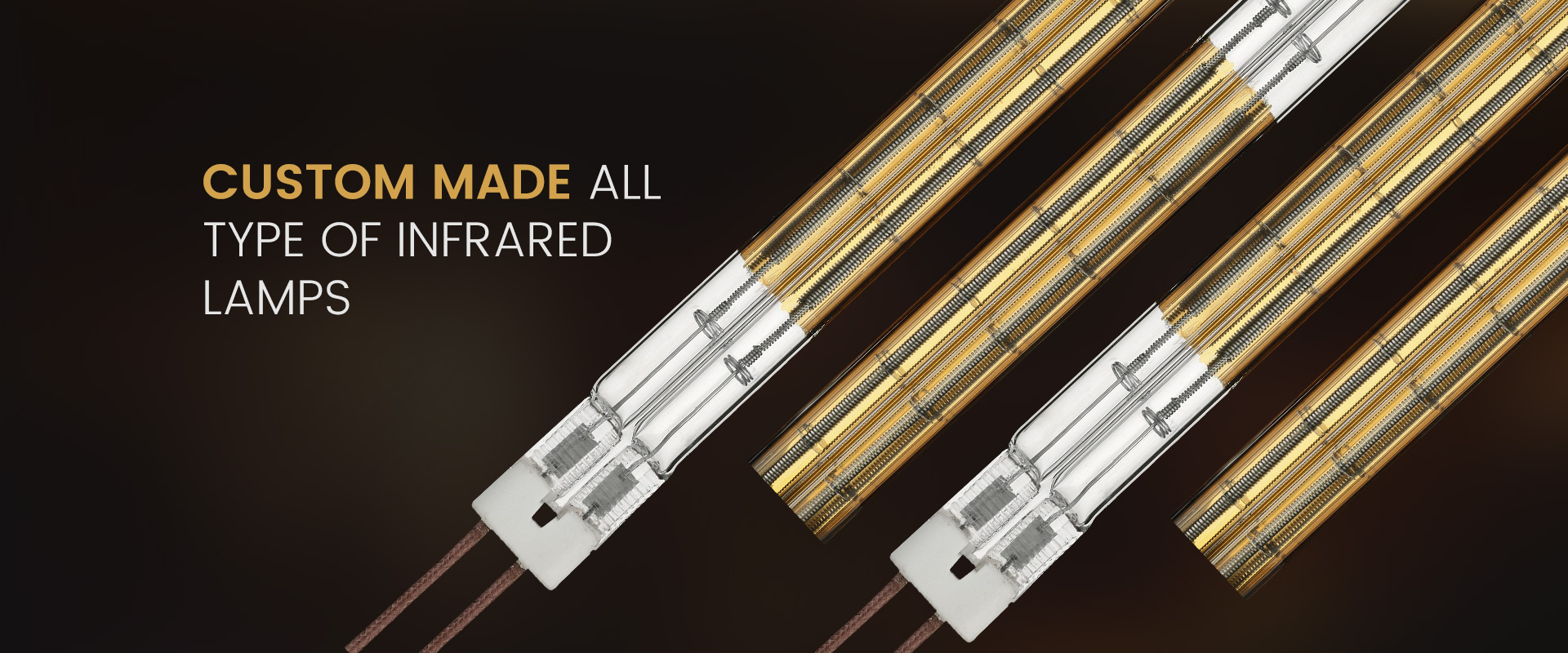
Review YFR industrial infrared heating lamps and heating modules and controls. Confirm emitter choice, mounting, sensing and recipes with representative product trials.
Send YFR your material, dimensions, target, cycle time and current equipment details for an application-specific review.


