


Author: Site Editor Publish Time: 2025-11-06 Origin: Site


In the industrial heating field, selecting the correct infrared tube specification is essential for achieving optimal performance, reliability, and cost-efficiency. At Huai’an Yinfrared Heating Technology we understand that the heart of many infrared heating systems is the emitter tube — its design defines wavelength, output power, physical size, and ultimately process results. In this article we will provide a comprehensive guide to infrared tube specifications from an experienced and technically grounded perspective. We will cover specification categories, how to interpret them, selection criteria aligned with process needs, and best practices for specifying and using infrared tubes in industrial ovens, dryers, and thermal-processing equipment.

Infrared tubes (or IR emitter tubes) are key components in systems such as industrial ovens, textile dryers, plastic thermo-forming ovens, pre-heating lines and coating curing systems. They convert electrical (or sometimes gas) energy into radiant infrared energy, which is then absorbed by materials or objects in the process. Because infrared radiation behaves differently from convective or contact heating, the details of the tube specification matter significantly.
For example, an emitter with a high surface temperature, appropriate wavelength band, and correct geometry can deliver rapid heating, efficient energy transfer, and precise control of the process. Conversely, a tube specified incorrectly may cause poor uniformity, excessive ambient heating, energy waste, or shortened lifetime. A typical supplier specification sheet lists parameters such as tube diameter, length, wattage (W/cm or W/in), operating voltage, wavelength band (short, medium, long wave), and mechanical mounting options.
From our viewpoint at Yinfrared, the ability to interpret and align such specifications with industrial process demands (substrate, geometry, throughput, reflectors, environment) is what distinguishes a capable technical dialogue from just picking a tube off a catalog.
When you define or review infrared tube specifications, you should ensure clarity across these major categories:
Infrared emitters are often classified into short-wave, medium-wave, or long-wave bands. The specific wavelength (µm) affects how quickly the emitter reaches temperature, how deeply the radiation penetrates the substrate, and how the energy is absorbed.
Short-wave tubes respond rapidly (fast heating), but may require more robust mounting and insulation owing to high surface temperatures. Medium/long-wave tubes heat more gently and may be preferred for certain substrates or coating types.
The tube diameter (outer diameter, OD) and wall thickness influence mechanical strength, allowable watt density (W/cm or W/cm²), and thermal response.
Length: Overall length (OAL) and heated length (HL) matter. The OAL includes the base and terminations; the heated portion is the active emitter length.
Custom lengths may be required depending on furnace geometry, reflector anatomy, or process width. At Yinfrared we often tailor length to suit the process.
Wattage (often in W or W/cm of heated length) represents how much electrical power the emitter can handle and thus how much infrared energy is released.
Watt density is crucial: high density means more output per unit length, but also higher surface temperature and more stringent mounting/insulation requirements.
The operating voltage and current rating also matter: many catalogues provide voltage ranges (e.g., 120 V, 240 V) and mention suitable system wiring in series or parallel.
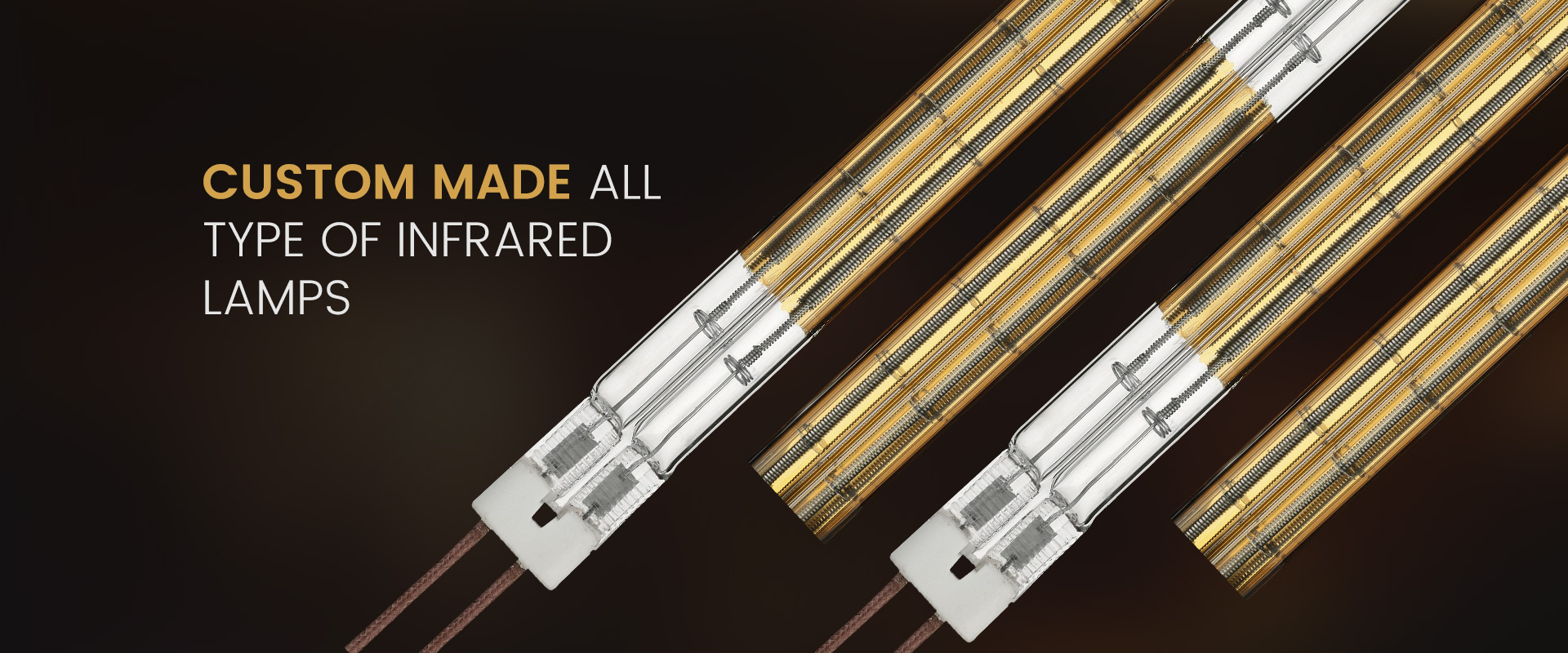
Tube envelope material: commonly quartz glass for short/medium wave IR tubes; quartz can withstand temperatures above 1000 °C and is transparent to infrared radiation.
Filament / heating element: typically tungsten filament for high temperature short-wave tubes.
Reflector coatings: gold, white oxide, or clear quartz tubes may be used, with or without reflectors to direct the radiation beam.
Mounting options and bases: horizontal or universal operation position; proper design prevents heat damage and ensures reliable operation.
Lifetime or warranty: Many industrial emitters have specified lifetimes (e.g., 5000 hours).
Operating orientation: horizontal, vertical, or universal mounting.
Maximum surface temperature: High surface temperature may impose constraints on adjacent materials (supports, insulation).
Ambient or process environment: Some tubes are designed for clean, dry atmospheres; others for harsher industrial environments (chemical, high humidity).
Infrared tube specifications must integrate with reflectors, oven or dryer chamber, conveyor/tray system, and control system (e.g., PID control, SCR/SSR, zone control). Heat pattern uniformity, emitter footprint, distance to product, and system zoning all affect how tube specifications translate into real-world performance.
Before specifying a tube, gather data on:
Material to be heated
Desired process temperature and heating rate
Geometry and movement
Ambient conditions and maintenance constraints
Energy efficiency and cost targets
Short-wave: for rapid heating and surface processing.
Medium-wave: for deeper penetration and uniform heating.
Long-wave: for gentle heating or sensitive materials.
Determine heated length, diameter, wall thickness, and watt density according to your process’s heat load and geometry. Match voltage and wiring to your system’s supply.
Choose reflectors for directional or diffuse heating. Confirm mounting orientation, spacing, and support accessories.
Select materials suitable for your ambient environment. Verify lifetime expectations and maintenance accessibility.
Define control method (On/Off, SSR, SCR, zone control) and ensure emitter placement matches process requirements.
Compare your calculated specification (diameter, length, watt density, reflector type, orientation) with manufacturer data to ensure safety margins.
Simulate or test the chosen tubes for radiation uniformity, response time, and performance before full-scale deployment.

Excessive watt density for the mounting condition can shorten life or damage tubes.
Wavelength mismatch with substrate absorption reduces efficiency.
Poor reflector design causes uneven heating.
Ignoring terminals or mounting details complicates installation.
Overlooking environmental factors leads to premature failure.
Material: Steel parts moving on a conveyor
Target: 30 °C → 180 °C in 30 s
Tube: Short-wave, diameter 12 mm, watt density 120 W/cm, gold reflector, horizontal mount, 240 V
Material: PET sheet, 2 m width
Target: 130 °C surface temperature
Tube: Medium-wave, diameter 18 mm, watt density 80 W/cm, white oxide reflector, horizontal mount, dust-resistant design
Energy Efficiency: Proper tube selection ensures most input power is converted into useful radiant heat.
Product Quality: Correct wavelength and watt density produce uniform results.
Lifecycle Cost: Appropriate specs balance performance, longevity, and replacement cost.
Compact Design: Right size allows smaller ovens and reduced ambient heating.
Process Control: Properly specified emitters enable precise temperature regulation.
Work with an experienced manufacturer for guidance.
Request detailed data sheets and verify each parameter.
Consider custom designs for unique applications.
Plan installation and replacement accessibility.
Validate through simulation or pilot testing.
Maintain performance logs for continuous improvement.
OD (Outer Diameter): Outside diameter of the emitter tube.
Wall Thickness: Thickness of quartz wall; affects power capacity.
Heated Length (HL): Active heating section length.
Overall Length (OAL): Full tube length including terminals.
Watt Density (W/cm): Power per unit length.
Wave-band: Infrared emission type (short, medium, long).
Reflector Type: Coating or finish that directs radiation.
Orientation: Horizontal, vertical, or universal mounting.
Filament: The heating wire, typically tungsten.
Lifetime/Warranty: Expected operating hours.
Mounting Accessories: Clips, brackets, and holders.
Selecting the right infrared tube specification is crucial for building efficient and reliable industrial heating systems. Understanding wavelength, watt density, size, reflector type, and environmental compatibility ensures you achieve optimal energy use, heating quality, and long-term durability.
At Huai’an Yinfrared Heating Technology, we focus on helping industries specify, customize, and integrate infrared emitters that match their process needs. Whether your goal is rapid curing, deep heating, or energy-efficient drying, a precise infrared tube specification will define your success.
Last modified: 2025-11-06


