


Author: Process Heating Engineer Publish Time: 2025-11-18 Origin: Site


Last updated: August 31, 2026
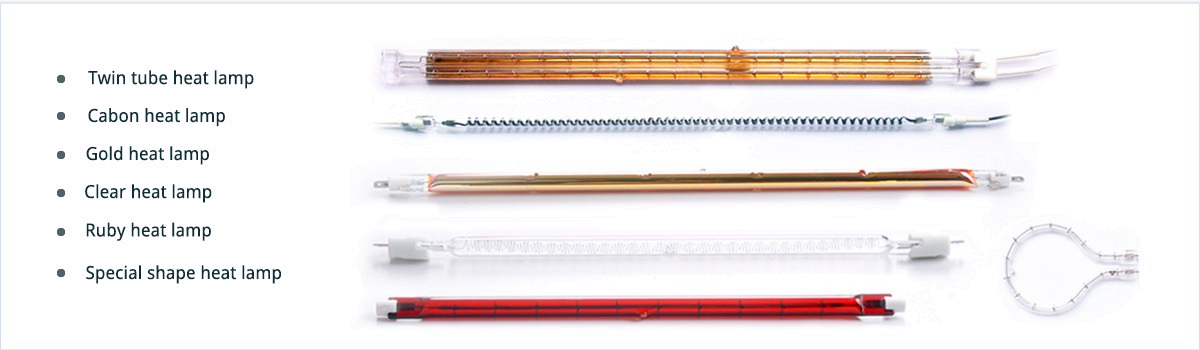
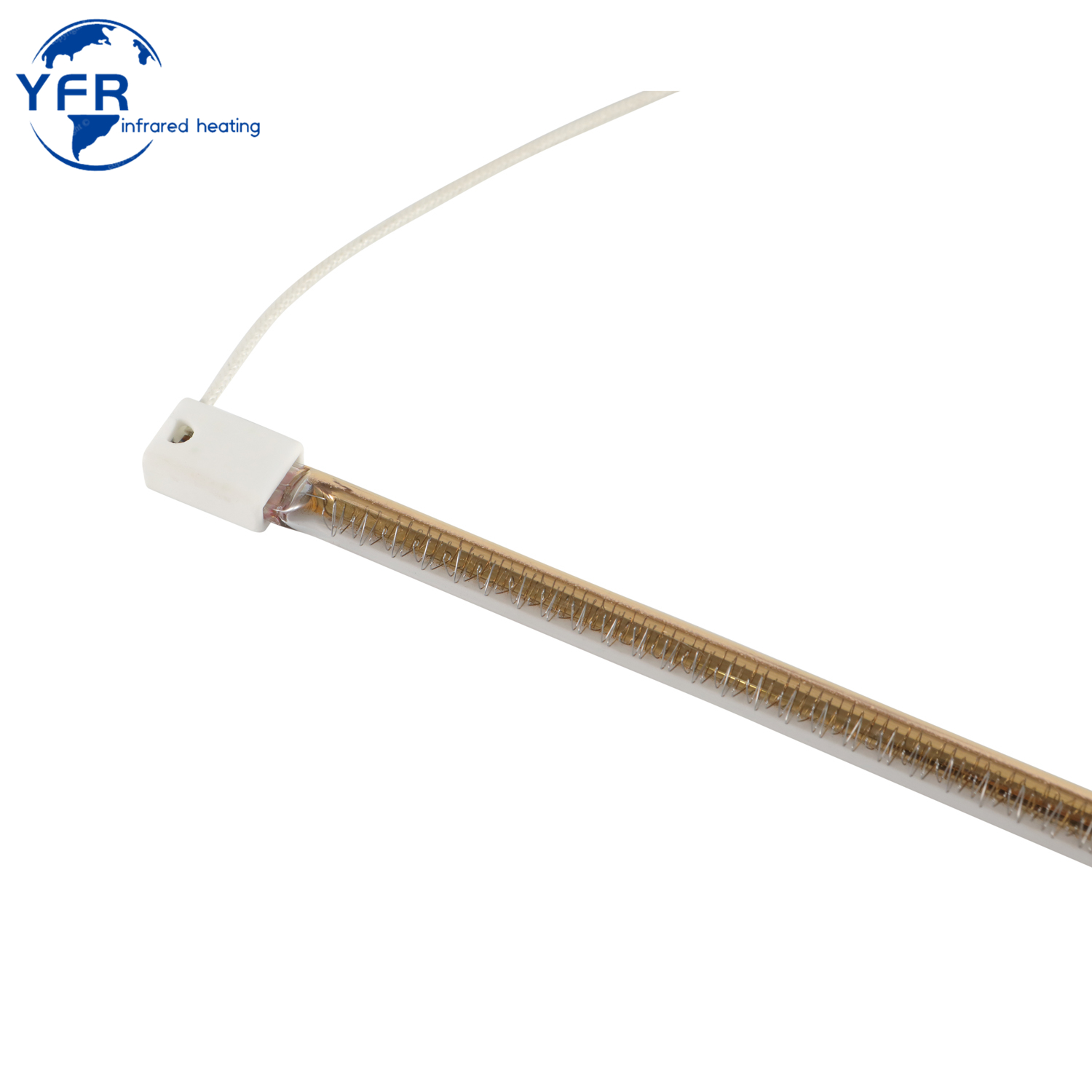
Quartz infrared lamps can be suitable for aerospace thermal testing when the objective is to apply radiant heat to a defined component, material sample or test surface.
They are especially useful when the test requires rapid power adjustment, localized heating, independent heating zones or a compact heat source that does not rely on warming a large volume of air.
Potential applications include atmospheric component testing, material coupon screening, thermal cycling support, localized heating inside environmental chambers and radiant arrays developed for thermal vacuum equipment.
However, the lamp alone does not make a system aerospace-qualified or vacuum-compatible. Suitability must be evaluated at the assembly level and confirmed by the test-equipment manufacturer.
Infrared heating is most useful when a test engineer needs to control where heat is applied rather than raising the temperature of an entire oven or chamber uniformly.
In component testing, a lamp or small array can heat an electronics housing, instrument panel, sensor enclosure, structural bracket or selected face of a test article. The heating zones can be adjusted independently to create a specified temperature profile or compensate for differences in geometry.
For material testing, infrared lamps can expose composite coupons, coatings, adhesives, insulation samples and small structural specimens to controlled heating ramps. These tests can support material comparison, process development and preliminary thermal screening.
In environmental chambers, infrared lamps may be added as localized radiant heaters or independently controlled booster zones. They should be integrated with the chamber controller, instrumentation, cooling capacity and safety interlocks.
Thermal vacuum applications are more demanding. The radiant heating principle remains valid, but every component installed inside or connected to the vacuum volume must be evaluated for its materials, insulation, temperature capability and contamination risk.
Under normal atmospheric conditions, heat can be transferred through radiation, conduction and convection. In a vacuum, convection is unavailable because there is no surrounding gas to transport heat through bulk fluid motion.
NASA’s overview of spacecraft thermal control states that heat transfer in vacuum occurs through radiation and conduction rather than convection.
This makes radiant heaters relevant to thermal vacuum equipment. The lamps can direct energy toward the test article without depending on heated airflow.
The test result still depends on more than lamp output. Heat is also transferred through the article’s mounting points, fixtures, cables and mechanical interfaces. Chamber walls and thermal shrouds exchange radiant energy with the test article as well.
An infrared array should therefore be treated as one part of the complete chamber thermal model, not as an isolated heater.
Atmospheric test rigs are generally less restrictive than thermal vacuum chambers because conventional industrial wiring, insulation and cooling methods may be available.
Quartz infrared lamps can be used for localized surface heating, programmed temperature ramps, thermal cycling assistance and comparison of different materials under controlled radiant exposure.
A small test fixture may use one lamp with a reflector and adjustable mounting distance. Larger articles may require several lamps arranged into top, bottom, center and edge zones.
The test engineer should define the target temperature, permitted gradient, required ramp rate, article dimensions and sensor locations before selecting the lamp arrangement.
The chamber or fixture must also include guarding, independent over-temperature protection and a control response for sensor failure or unexpected temperature rise.
Aerospace components often have complex shapes, different surface finishes and uneven thermal mass.
A thin panel may heat quickly, while a heavy mounting bracket or internal assembly responds more slowly. One fixed lamp output may therefore create excessive temperature at the edges before the heavier region reaches its target.
Dividing the lamp array into independently controlled zones makes it possible to adjust the heat input according to the geometry.
Thermocouples can be attached to representative points, including the center, edges, mounting interfaces and temperature-sensitive components. The readings can then be used to adjust individual lamp zones.
Infrared measurement may provide useful surface information, but reflective metals and changing surface finishes can make non-contact measurement more difficult. Critical testing should use a measurement method that has been validated for the specific test article.
Quartz infrared lamps can be used to apply controlled radiant heat to small coupons of composites, coatings, polymers, insulation materials and bonded structures.
Coupon testing is useful for comparing heating response before a larger chamber or full-component test is designed. It can help determine how quickly the surface heats, whether the material discolors, whether an adhesive softens and whether a coating remains stable under the proposed thermal profile.
The result should not automatically be interpreted as full aerospace qualification. A coupon test may reproduce a temperature ramp or radiant exposure, but it does not necessarily reproduce every aspect of the flight environment.
For very high-temperature or extreme heat-flux testing, the required conditions must be calculated and validated by a specialist facility. A conventional quartz lamp array should not be described as a complete substitute for an arc heater, plasma facility or full re-entry simulation system.
The best emitter depends on the test article, target temperature, required response and surface absorption.
| Emitter Option | Better Fit | Main Consideration |
|---|---|---|
| Short wave quartz infrared lamps | Rapid heating ramps, compact test zones, localized surface heating and fast power adjustment | High radiant intensity may increase overshoot and hot-spot risk |
| Fast medium wave IR emitters | Composites, coatings, polymers and moderate-temperature material testing | Response is slower than short wave but may provide a wider control window |
| Multi-lamp infrared module | Larger articles, multiple heating zones and repeatable mechanical integration | Requires thermal mapping, coordinated control and system-level engineering |
Short wave lamps respond rapidly and can deliver concentrated radiant energy. They are useful where a compact zone must follow a programmed temperature ramp with minimal heater delay.
Fast medium wave emitters may be more suitable for coatings, composites and polymer-based materials that require controlled heating rather than maximum surface intensity.
The final decision should be based on testing with the actual material. Surface finish, color, emissivity, thickness and mounting method can all change the heating response.
A quartz tube can generate radiant heat in a vacuum, but that does not mean the complete lamp assembly is automatically suitable for installation in a thermal vacuum chamber.
The following parts may affect vacuum suitability:
Lead-wire insulation
End caps and ceramic components
Adhesives and sealants
Electrical terminals
Reflector materials
Mounting frames
Cable harnesses
Lubricants
Protective coatings
Vacuum feedthroughs
Any organic material may release volatile compounds under reduced pressure and elevated temperature. These compounds can contaminate chamber surfaces, optical equipment or the test article.
The ECSS-Q-ST-70-02C thermal vacuum outgassing standard describes screening requirements for materials proposed for spacecraft, associated equipment and vacuum facilities used for flight-hardware testing.
This means that RoHS or REACH status alone does not establish vacuum compatibility. Material composition, outgassing performance, cleanliness and contamination limits must be evaluated separately.
Where a chamber has strict contamination requirements, the chamber manufacturer should approve the lamp assembly, reflector, wiring and mounting materials before installation.
Infrared lamps may be installed inside the chamber, outside the chamber or behind a dedicated radiation window, depending on the equipment concept.
Internal installation places the source closer to the test article and can simplify radiant access. However, all internal materials, electrical connections and support parts become part of the vacuum and contamination assessment.
External installation keeps more electrical and organic components outside the chamber. Radiant energy must then pass through a suitable window, and the window’s transmission, temperature limit, sealing and optical condition become part of the design.
There is no universal preferred layout. Chamber dimensions, required pressure, optical access, available feedthroughs, working distance and maintenance access should determine the arrangement.
YFR can supply customized lamp lengths and custom replacement IR tubes, but the chamber manufacturer remains responsible for validating the final installation method.
Working distance is the space between the infrared lamp or module and the test article.
A shorter distance generally creates higher local intensity and a smaller illuminated area. It may be useful for compact coupon tests but can also increase sensitivity to small positioning errors.
A greater distance produces a broader radiant field and may improve overlap between adjacent lamps. However, more electrical power or a larger array may be required to achieve the same surface heating rate.
Lamp spacing, reflector geometry and article shape must be considered together. A distance selected for mechanical convenience may not provide acceptable temperature uniformity.
Before the final test procedure is approved, the lamp array should be mapped using representative sensors or a validated thermal-imaging method.
Aerospace test articles often contain edges, corners, recessed areas, fixtures and components with different thermal mass.
These features can cause shadowing and uneven heating. A single large control zone cannot correct every local difference.
A zoned array can divide the heating system into center and edge zones, left and right zones, or separate top and bottom sections.
Each zone can have its own temperature input, power limit and control response. The system can then reduce output in fast-heating areas while increasing output near heavier components.
For larger fixtures, an infrared heater module can combine several lamps, reflector sections, supports and electrical groups in one structure.
The final number of zones should be based on the article geometry and required temperature profile rather than simply the number of available lamps.
Reflectors direct energy toward the test article and reduce unnecessary radiation toward the surrounding structure.
The reflector material and finish must remain stable under the operating temperature and environmental conditions. For vacuum installations, its material and surface treatment must also be reviewed for cleanliness and outgassing requirements.
Fixtures, cables and sensor wiring can block radiation and create cooler shadow regions. These effects should be considered during lamp positioning.
Radiation shields may be needed to protect chamber wiring, seals, instruments or temperature-sensitive components from direct exposure.
The most accurate arrangement is normally established through thermal mapping and repeated adjustment rather than by relying on a generic lamp-spacing rule.
A reliable test system normally uses several temperature measurements rather than one sensor.
Thermocouples provide direct contact measurements at selected locations. They are commonly used at the center, edges, mounting interfaces and critical components.
An infrared thermometer for IR heating systems can provide non-contact surface feedback when the target surface, emissivity and viewing conditions are appropriate.
Low-emissivity or reflective surfaces require particular care. Reflections from the lamps, chamber walls or nearby hot parts can affect the apparent infrared temperature.
For critical tests, non-contact readings should be checked against contact sensors or another calibrated measurement method.
Infrared lamps can be controlled by simple on/off switching, stepped power, solid-state power regulation or closed-loop temperature control.
Aerospace test profiles often require a defined ramp, soak and cooldown sequence. The controller must therefore manage both the target temperature and the permitted rate of change.
An IR lamp power controller can regulate lamp output through a suitable SCR or thyristor-based power stage.
For multiple zones, the controller should coordinate zone output, temperature limits, alarm conditions and data logging.
An independent over-temperature device should not rely solely on the primary software control loop. The complete safety strategy should also consider sensor failure, open chamber access, cooling loss and unexpected loss of communication.
Quartz infrared lamps respond rapidly, but the test article may respond more slowly.
If the controller continues applying high power until the main sensor reaches its setpoint, stored heat and delayed conduction may cause the surface temperature to continue rising after power is reduced.
This overshoot risk is higher when the sensor is located far from the illuminated surface or when the article has several materials with different thermal response.
A conservative commissioning process should begin with lower power, slower ramps and multiple sensors.
After the heating curve is recorded, the zone outputs and controller settings can be adjusted gradually.
The final profile should be validated for each significant test configuration. Changing the article, fixtures, surface finish or sensor positions may require the heating recipe to be checked again.
The following project data is needed before a lamp or heating module can be evaluated accurately.
| Required Information | Why It Matters |
| Test article material and surface finish | Affects absorption, reflection and temperature measurement |
| Article dimensions and mass | Affects heat capacity and lamp layout |
| Target temperature | Defines the required operating range |
| Required ramp and soak profile | Defines response and control requirements |
| Atmospheric or vacuum environment | Determines material and assembly restrictions |
| Required vacuum pressure | Affects component and feedthrough selection |
| Working distance | Affects intensity and illuminated area |
| Required heating zones | Determines lamp grouping and controls |
| Sensor type and location | Determines feedback accuracy |
| Chamber dimensions and drawings | Determines mechanical integration |
| Available voltage and electrical power | Determines lamp and controller configuration |
| Contamination and cleanliness limits | Determines material selection |
| Maintenance access | Affects module and lamp-replacement design |
For a replacement project, also provide the original lamp voltage, wattage, total length, heated length, tube diameter, end structure, lead wires and clear photos of both lamp ends.
For a new chamber or fixture, provide a drawing showing the article position, mounting frame, feedthroughs, sensor locations and available lamp installation area.
An infrared retrofit should begin with a clearly defined test limitation.
The objective may be to create a faster local ramp, add an independent hot zone, improve heating of one article surface or reduce reliance on a high-inertia chamber wall.
The retrofit must not interfere with chamber cooling, pressure control, sensors, door seals, shrouds or safety systems.
Available electrical capacity and cooling capacity should be checked before additional lamp power is installed.
If the retrofit is intended for a thermal vacuum chamber, the chamber manufacturer should review all added materials and internal components.
The project should proceed through small-scale testing, thermal mapping and controlled acceptance tests rather than moving directly to full-power operation.
YFR supplies infrared heating components rather than complete aerospace qualification services.
Relevant products include short wave quartz infrared lamps, fast medium wave emitters, infrared heater modules, custom replacement IR tubes, IR lamp power controllers and infrared temperature instruments.
Based on customer drawings and test requirements, YFR can evaluate lamp length, wattage, heated length, reflector arrangement, module structure and electrical grouping.
The chamber manufacturer or system integrator remains responsible for:
Vacuum compatibility
Material outgassing approval
Feedthrough design
Chamber contamination control
Instrumentation
Pressure-system integrity
Electrical safety
Thermal qualification
Final aerospace test validation
This division of responsibility is important because a suitable infrared lamp does not by itself make the complete chamber or test procedure qualified for aerospace use.
Radiant heat transfer remains effective in a vacuum. However, the complete lamp assembly, wiring, insulation, reflector, mounting parts and feedthroughs must be evaluated for the required vacuum pressure, temperature and contamination limits.
Not automatically. The quartz tube may be suitable as a radiant source, but other assembly materials may not meet the chamber’s outgassing, cleanliness or temperature requirements.
Short wave lamps are suitable for fast ramps and localized high-intensity heating. Fast medium wave emitters may provide more controllable heating for composites, coatings and polymers. The choice must be validated with the actual material and test profile.
A quartz lamp array can heat material coupons or create controlled surface-temperature profiles, but it should not automatically be described as reproducing the complete re-entry environment. Full re-entry simulation may require specialized high-heat-flux facilities.
The number of zones depends on the article geometry, thermal mass, required uniformity and sensor arrangement. Complex components normally require more zones than flat coupons.
It may be used when optical access, temperature range, target emissivity and viewing conditions are suitable. Reflective surfaces and lamp radiation can affect the reading, so validation against contact sensors may be necessary.
Provide the article material, dimensions, mass, target temperature, ramp rate, chamber environment, vacuum pressure, working distance, installation space, zone layout, voltage, available power, sensor arrangement and contamination requirements.
YFR focuses on infrared lamps, reflectors, heater modules and related control components. Complete chamber design, vacuum systems, feedthroughs, instrumentation, safety and aerospace validation should be completed by the chamber manufacturer or qualified system integrator.
Quartz infrared lamps can provide useful radiant heating for aerospace components, environmental test fixtures, material coupons and thermal vacuum systems.
Their main advantages are fast response, compact installation, local heat delivery and independent zone control.
The most important engineering limitation is that the complete assembly must be evaluated as a system. Quartz glass alone does not establish vacuum compatibility, contamination performance or aerospace qualification.
Successful integration requires coordinated selection of the lamps, reflectors, wiring, mounting structure, feedthroughs, temperature sensors, power controls and chamber materials.
Before finalizing a lamp or heating module, provide the complete test profile and chamber conditions rather than selecting the equipment from wattage and lamp length alone.
Application results depend on the material, working distance, line speed, control method and validation criteria. Contact YFR to discuss your infrared heating application.


