Home » News » Industry News » Safe, Efficient Heat Bulbs for Pets and Livestock: A Practical Guide

Safe, Efficient Heat Bulbs for Pets and Livestock: A Practical Guide

Author: Site Editor     Publish Time: 2025-09-09      Origin: Site

Inquire

facebook sharing button
twitter sharing button
line sharing button
wechat sharing button
linkedin sharing button
pinterest sharing button
whatsapp sharing button
sharethis sharing button

Comparing Heat and Light Bulbs for Home and Animal Use

Providing safe, reliable warmth is one of the most important responsibilities for anyone keeping animals, whether that means a few reptiles at home, a brooder full of chicks, or a barn of young livestock. The wrong heat source can lead to burns, stress, poor growth, or even fires. The right one can support healthy development, stable behavior, and manageable energy costs.

This guide explains how the main types of heat bulbs and related devices work, where they are most appropriate, and how to use them safely and efficiently. It is designed for pet owners, smallholders, and livestock producers who want practical, technically sound advice they can apply immediately.


1. Why Heat Bulbs Matter for Animal Welfare and Safety

Animals are far more sensitive to temperature and light conditions than many people realize. Young birds and mammals cannot regulate their body temperature well, reptiles depend on external heat to digest food and move, and many birds are easily stressed by harsh or poorly timed lighting.

Poorly chosen or installed heat lamps can cause several problems:

  • Localized hot spots that burn skin or damage feathers and fur

  • Chronic stress from bright light at night, disrupting sleep cycles and natural behavior

  • Fire hazards when lamps are too close to bedding, dust, or wooden structures

  • Sudden temperature drops if a bulb fails with no backup plan in place

By contrast, a well-chosen heat source, combined with correct mounting, thermostatic control, and regular monitoring, can:

  • Maintain species-appropriate temperature gradients

  • Preserve natural day–night rhythms

  • Reduce mortality and improve growth in young animals

  • Lower energy bills by avoiding unnecessary overheating

The following sections describe the main technologies and explain how to match them to your animals and facilities.


2. Overview of Common Heat and Light Technologies

To make the choices easier to compare, the table below summarizes the most common technologies used for animal heating.

2.1 Comparison Table: Heat Technologies at a Glance

Technology Light Output Heat Output Typical Uses Main Advantages Main Limitations
Incandescent heat bulb Bright visible light High, broad-spectrum Brooders, basking spots, small work areas Low upfront cost, easy to install, light + heat in one Shorter life, high energy use, very hot surface, fire risk
Halogen heat bulb Very bright, focused light High, focused Reptile basking, task lighting with warmth More efficient than classic incandescent, intense spot Still hot, can cause burns, needs robust fixture
Infrared heat lamp Dim to moderate High radiant heat Poultry brooders, piglet creep areas, barn pens Deep radiant warmth, effective at a distance Fire risk if poorly installed, glass can shatter
Ceramic heat emitter None (no visible light) High infrared heat Reptiles, birds, small mammals at night Does not disturb sleep, suitable for 24/7 use with control Extremely hot surface, requires ceramic fixture and guard
Clear heat lamp Bright white/yellow light High Daytime basking, visible workspaces Strong daylight signal, good visibility Can disturb sleep if used at night
Red heat lamp Dim red light High Nighttime brooding, low-light resting areas Less disruptive to sleep than clear lamps Still visible for some species, can distort natural rhythms
PAR-style reflector bulb Directional light/heat Focused in a beam Outdoor pens, damp barns, workshops Directs heat where needed, often robust housings Requires correct aiming and mounting
LED lamp Very efficient bright light Low, mostly as byproduct General room and barn lighting Very low energy use, long life Not suitable as a primary heat source
Heating plate / pad None or minimal light Gentle, localized Chicks, small mammals, recovery areas Low fire risk, stable and controlled warmth Limited coverage, usually unsuitable for large open spaces

The rest of this section briefly describes how these technologies behave in real use.

2.2 Incandescent and Halogen Heat Bulbs

Incandescent heat bulbs are traditional filament bulbs that convert a large share of input energy into heat and bright visible light. They are widely used because they are inexpensive and fit standard fixtures, but they consume more energy and have a shorter lifespan than many newer options.

Halogen heat bulbs are an updated form of incandescent lamp that use halogen gas to improve efficiency and lifespan. They provide intense, focused light and substantial heat, making them useful for basking spots and task lighting that also needs warmth. However, they still run very hot and must be handled with care.

2.3 Infrared Heat Lamps

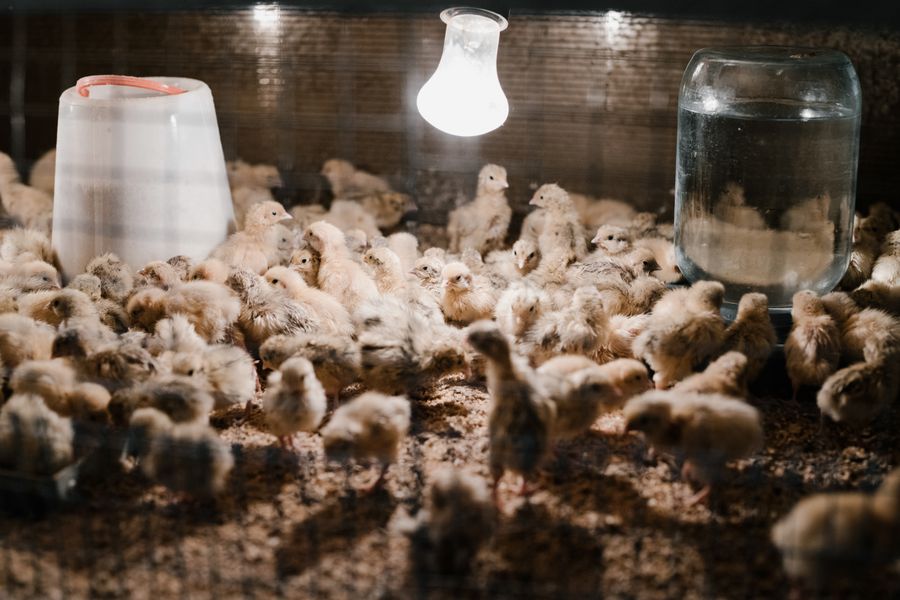
Infrared heat lamps emit a large portion of their output as infrared radiation, which warms surfaces and animals directly. They are common in poultry brooders, piglet creep areas, and pens for young or convalescent animals.

Correct fixture design and hanging height are essential to avoid unsafe hot spots and to reduce fire risk.

Animal heat lamp

2.4 Ceramic Heat Emitters

Ceramic heat emitters are screw-in devices that produce infrared heat without visible light. They are widely used where animals require stable nighttime temperatures but also need darkness, such as reptile displays, bird cages, and enclosures for small mammals.

Because the ceramic surface becomes extremely hot, these emitters must be installed in ceramic-rated fixtures with guards and kept out of reach.

Ceramic Heat Emitters

2.5 Clear vs Red Heat Lamps

Clear lamps provide strong white or yellow light plus heat, which is ideal for daytime basking and workspaces. Red lamps emphasize red and infrared wavelengths and emit less visible light. They are often used at night because they tend to be less disruptive to sleep, though some species may still perceive them as light.

quartz infrared lamp59

2.6 PAR-Style Reflector Bulbs

PAR-style bulbs include an internal reflector that focuses light and heat into a defined beam. They are useful outdoors and in damp barns where robust housings and directional output help put heat exactly where it is needed.

2.7 LED Lamps for Lighting Only

LED lamps are excellent for general lighting but are too efficient to be effective heat sources. They are best used to provide bright, low-energy light in animal spaces while dedicated heat devices handle temperature control.

2.8 Heating Plates and Pads

Heating plates and pads provide gentle, conductive warmth and are widely used with chicks and small mammals. They offer controlled temperatures and lower fire risk compared with hanging lamps, making them suitable where radiant overhead heat is not essential.


3. Safety First: Managing Fire, Burns, and Electrical Risk

Safety is the most important factor when installing any heat source around animals. The checklist below can be used during setup and regular inspections.

3.1 Heat Lamp Safety Checklist

Safety Item What to Check Frequency
Clearance from flammables Distance from straw, shavings, wood, plastics, curtains On installation + monthly
Fixture stability Lamps firmly attached, cannot be knocked loose or fall On installation + monthly
Guards and cages Bulbs protected from direct contact and accidental impacts On installation + monthly
Cord condition No cracks, fraying, chew marks, or exposed wires Monthly
Plug and socket condition No discoloration, looseness, or heat damage Monthly
Dust and cobweb buildup Fixtures, guards, and nearby surfaces kept clean Monthly
Thermostat or timer operation Turns devices on/off correctly at set points Monthly
Backup heat plan Spare bulbs or alternative heat source available Before cold seasons and high-risk periods

3.2 Temperature Monitoring and Control

Objective temperature measurement is essential:

  • Place digital thermometers at animal height, not at the ceiling

  • In brooders and reptile enclosures, measure both warm and cool zones

  • Use thermostats to cycle bulbs and heating pads on and off

  • Use timers to maintain day–night patterns where appropriate

Behavior is an important indicator. Animals that crowd under the heat source are usually too cold, while those that avoid the heated area or pant are probably too warm.

3.3 Maintenance and Inspection Routines

A simple written routine significantly reduces risk:

  • Inspect cords, plugs, and fixtures at least once a month

  • Clean fixtures and guards to remove dust and cobwebs

  • Replace bulbs before failure in critical enclosures

  • Record inspections and replacements in a logbook or digital note


4. Matching Heat Sources to Animals and Facilities

The table below provides a quick overview of typical pairings between animal types and heat solutions.

4.1 Matching Matrix: Animals and Recommended Heat Approaches

Animal / Use Case Typical Heat Source(s) Key Notes
Adult dogs and cats Pet-safe heating pads, infrared panels Usually no dedicated heat needed in normal indoor homes
Elderly or sick pets Low-wattage pads, small radiant panels Use products designed for animals, with automatic temperature limits
Reptiles and amphibians Basking bulbs, ceramic emitters, heating pads Combine heating with UVB lighting as required; provide gradient
Birds (pet) Ceramic emitters, low-wattage panels Avoid high-watt lamps pointed directly into small cages
Small mammals (indoor) Heating pads, ceramic emitters Ensure ventilation; prevent chewing on cords
Chicks Infrared lamps, ceramic emitters, heating plates Provide gradient and adjust temperature weekly
Piglets Infrared lamps, heated creep pads Lamps mounted high; creep area so sow and piglets can choose comfort
Adult livestock (barn) Localized infrared or ceramic lamps Focus on pens for newborns, sick animals, and working areas
Bathrooms/workshops Ceiling infrared lamps, radiant panels Use moisture-resistant fixtures where needed

The following subsections explain some of these use cases in more detail.

4.2 Companion Animals: Dogs and Cats

Most healthy adult dogs and cats do not need dedicated heat lamps indoors if the home is kept at a comfortable temperature. Additional warmth is helpful for elderly, underweight, or recovering animals. In these cases, pet-safe heating pads and small infrared panels are usually safer than hanging lamps.

4.3 Reptiles and Amphibians

Reptiles and amphibians depend on external heat and often on UVB light. A typical setup includes:

  • A basking spot created by an incandescent, halogen, or infrared bulb

  • A cooler zone on the opposite side of the enclosure

  • Nighttime heat from a ceramic emitter or other non-light-emitting device

Species-specific temperature gradients should be checked and maintained with thermostats and thermometers.

4.4 Birds and Small Mammals

Birds and small mammals are sensitive to drafts and overheating. For small cages, ceramic emitters or low-wattage radiant panels mounted above or beside the enclosure work well. High-wattage spot lamps pointed directly into small cages are risky because they can create extreme hot spots.

4.5 Young Livestock: Chicks and Piglets

Young livestock are particularly vulnerable to cold stress and benefit from carefully controlled heating.


5. Temperature Guidelines and Energy Considerations

5.1 Example Brooder Temperature Schedule for Chicks

Exact values vary by breed and environment, but the table below shows a common starting point for chicks:

Chick Age (Week) Target Temp at Chick Height Notes
Week 1 ~35 °C / 95 °F Observe behavior closely after placement
Week 2 ~32–33 °C / 90–92 °F Reduce temperature slightly and monitor activity
Week 3 ~29–30 °C / 84–86 °F More feathers should be visible
Week 4 ~26–27 °C / 79–81 °F Birds should be active and evenly spread
Week 5 ~23–24 °C / 73–75 °F Further weaning from supplemental heat
Week 6 and later Adjust to local conditions Many flocks no longer need direct supplemental heat

These values should always be adjusted based on chick behavior and on the specifics of the building and climate.

heat lamp for Animals

5.2 Energy Efficiency and Total Cost of Ownership

For lighting alone, LED lamps clearly outperform incandescent bulbs due to their low energy use and long service life. For heating, the main efficiency levers are:

  • Selecting appropriate wattage for the size of the enclosure or area

  • Using reflectors and placement to direct heat where animals actually are

  • Combining thermostats and timers to avoid overheating and long periods of unnecessary operation

  • Using heating plates or pads when gentle, localized warmth is sufficient

When comparing heat solutions, consider both upfront cost and long-term operating costs, including energy consumption and replacement frequency.


6. Step-by-Step Setup Examples

6.1 Chick Brooder Setup

  1. Choose the enclosure
    Use solid sides to reduce drafts and provide enough floor space.

  2. Select a heat source
    Install an overhead infrared lamp, ceramic emitter, or heating plate sized for the expected number of chicks.

  3. Install fixtures safely
    Hang the lamp from a fixed point with a guard and strain relief on the cord. Maintain a safe distance from bedding and walls.

  4. Set temperature and observe behavior
    Start around 35 °C (95 °F) at chick height and adjust down weekly, using both thermometer readings and chick behavior as guides.

  5. Plan for redundancy
    Keep spare bulbs or a backup heating plate ready in case the primary source fails.

6.2 Reptile Enclosure

  1. Research species requirements
    Check recommended basking, cool-end, and nighttime temperatures.

  2. Install basking lamp
    Use a halogen or incandescent basking bulb in a reflective fixture at one end of the enclosure.

  3. Add nighttime heat
    Use a ceramic heat emitter controlled by a thermostat to maintain minimum nighttime temperature without light.

  4. Provide UVB light if needed
    Install a UVB lamp separately and follow distance guidelines.

  5. Monitor and fine-tune
    Place thermometers in both the warm and cool zones and adjust lamp distance and wattage as necessary.

6.3 Small Barn Pen

  1. Define the heated area
    For example, a creep area for lambs or kids in one corner of a pen.

  2. Select fixtures
    Choose moisture-resistant infrared or ceramic fixtures with reflectors. Several moderate-wattage lamps distributed safely are often better than one very high-wattage lamp.

  3. Mount securely
    Fix lamps to solid beams using chains or brackets; avoid temporary clamps. Use guards and route cords out of reach.

  4. Control and monitor temperature
    Use thermostats where feasible and check thermometers daily during cold periods.

  5. Implement inspection routines
    Regularly inspect cords, fixtures, and nearby surfaces for heat damage, dust buildup, or mechanical wear.


7. Key Takeaways and Quick FAQ

7.1 Key Takeaways

  • Match the heat source to species, age, and housing conditions

  • Use non-light-emitting ceramic emitters or similar devices when nighttime darkness is important

  • Reserve LED lamps for lighting only; do not rely on them as heat sources

  • Prioritize fire safety with stable mounting, proper clearance, guards, and sound wiring

  • Combine thermostats, timers, and thermometers for consistent, safe temperatures

  • Establish regular inspection and maintenance routines to keep systems reliable

7.2 Frequently Asked Questions

Q1: What type of heat source is generally safest for animal enclosures?
Non-light-emitting ceramic heat emitters, installed in ceramic fixtures with guards and controlled by thermostats, are among the safest options when correctly sized and mounted out of reach.

Q2: Can LED bulbs be used to heat my pet’s space?
No. LED bulbs are designed for efficient light output and emit relatively little heat. Dedicated heat bulbs, ceramic emitters, or heating pads are more appropriate.

Q3: How often should I replace heat bulbs?
Follow manufacturer recommendations. Many incandescent and infrared bulbs used continuously are replaced every few months, while ceramic emitters often last longer. Replace any bulb that flickers, discolors, or shows cracks immediately.

Q4: Do red heat lamps disturb animal sleep?
Red lamps are generally less disruptive than clear lamps but can still affect sensitive species. When in doubt, use non-light-emitting heat sources at night.

Q5: How can I quickly reduce fire risk from existing heat lamps?
Improve mounting, ensure adequate clearance from flammable materials, add guards, replace damaged cords and fixtures, and consider adding thermostats or timers to limit continuous full-power operation.

— Last modified: 2025-11-18


Huai’an Infrared Heating Technology is a manufacturer of Quartz IR emitters.

Product Category

Quick Links

Contact Us

Copyright © 2022 Huai'an Infrared Heating Technology. All Rights Reserved.| Sitemap  Supported By Leadong