


Author: Process Heating Engineer Publish Time: 2026-03-26 Origin: Site
Last updated: August 30, 2026
Choosing between short wave and medium wave infrared heaters is rarely a catalog exercise. In real production, the wrong wavelength shows up as uneven heating, surface damage, unstable control, or a heater bank that looks powerful on paper but underperforms on the line. The practical question is not which emitter family sounds more advanced. The practical question is which wavelength matches the substrate, the heating window, and the machine geometry closely enough to survive specification review and run reliably after startup.
For most industrial buyers, the decision narrows to five variables: material absorption, response speed, surface overheating risk, line speed, and usable power density. That is the correct comparison frame, because infrared performance depends on how much radiation the target actually absorbs, how quickly the heater can react, and whether the delivered energy can be applied inside the available distance and dwell-time window. Reflectors, spacing, and layout then determine how much of that theoretical advantage reaches the product in practice.
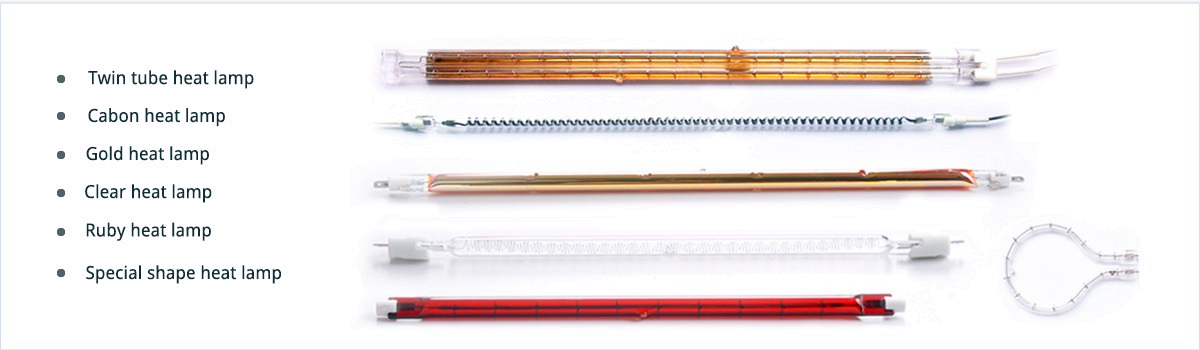
By RFQ stage, most teams already know whether they want electric infrared heating. What is still unresolved is whether the process needs a short wave emitter, a medium wave emitter, or in some cases a fast medium wave compromise. That uncertainty matters because short wave and medium wave do not couple with materials in the same way, do not respond at the same speed, and do not create the same thermal profile at the surface. A specification that ignores those differences often forces later correction through lower line speed, larger heater fields, tighter standoff distance, or unstable control tuning.
Short wave emitters are typically associated with higher filament temperatures, stronger near-infrared output, very high specific power, and very fast response. Standard medium wave emitters operate at lower emitter temperatures, shift more output into longer wavelengths, and are commonly used where surface absorption is stronger, especially with many plastics, glass, water-containing layers, and coated surfaces. Those are not marketing distinctions. They change where the energy is absorbed and how quickly the process responds.
Material absorption should be the first screen because infrared heating only works efficiently when the emitted wavelength matches the absorption characteristics of the product. Noblelight’s industrial guide states this directly: radiation matched to product absorption is converted into heat more quickly and with less unnecessary heating of the surroundings. The same guide notes that short wave radiation can penetrate more deeply into some solid materials, while medium wave radiation is absorbed more strongly near the outer surface and is particularly well absorbed by many plastics, glass, and water.
That distinction is critical in engineering selection. If the process objective is through-heating of some solid materials, short wave may be the stronger starting point because more of the energy can enter the material before converting to heat. If the objective is rapid heating of a surface layer, a thin film, a water-based coating, or a polymer surface that absorbs better in the medium-wave region, medium wave often deserves priority. The point is not that one wavelength is universally better. The point is that the product decides first.
Surface condition also changes the answer. Proheat’s technical note explains that polished aluminum is highly reflective and difficult to heat with infrared, while a painted enamel surface has much higher emissivity and is much easier to heat. In practical terms, the same base material can behave very differently after coating, printing, oxidation, or color loading. That is why wavelength decisions made from substrate family alone are often too crude for production use.
For YFR readers comparing product families, this is the point where a broad Short Wave Infrared Lamp or Medium Wave Infrared Lamp page should lead into application review rather than immediate ordering. The correct wavelength is often decided by the actual absorbing layer, not by the machine owner’s initial preference.
Response speed is the second major filter because infrared heating is often selected for processes that do not stay thermally steady. Start-stop lines, indexed motion, variable gaps, intermittent loads, and frequent product changes all penalize slow heater behavior. In one Noblelight technical table, short wave emitters are listed with a response time of about 1 second, while standard medium wave emitters are listed at roughly 60 to 90 seconds. Fast response medium wave emitters sit in between, around 1 to 2 seconds depending on design. Ceramicx similarly notes that quartz medium wave elements are favored where rapid response and zone-controlled heating are required, especially when there are long off cycles.
This matters because control quality is not just about controller tuning. It is about whether the emitter family can physically follow the process. If the line requires fast temperature recovery after gaps, quick startup, or tight cycling around a surface target, short wave usually enters the review early because its response is inherently faster. If the material clearly prefers medium-wave absorption but the process still needs faster zoning behavior, a FMW Infrared Lamp can become the more credible third option instead of forcing a pure short wave choice.
For continuous lines with stable product loading, slower response may be acceptable. For intermittent production, it can become a hidden cost in overshoot, delayed recovery, and inconsistent finish quality. That is why line behavior should be reviewed before the heater family is frozen in the specification.
Many infrared projects fail not because the heater cannot generate enough energy, but because the surface reaches an unacceptable condition before the desired internal or downstream result is achieved. Proheat’s engineering note is useful here: once infrared is absorbed at the surface, heat then travels inward by conduction. Materials with low thermal conductivity, including many plastics and wood-based materials, can develop high surface temperatures long before internal temperature rises appreciably. That behavior can be beneficial for drying coatings or evaporating solvents, but it can also create gloss change, yellowing, distortion, skinning, or surface brittleness if the wavelength and intensity are mismatched.
This is where short wave must be handled carefully. Its high intensity and rapid response can be an advantage on fast lines or harder-to-heat solids, but the same intensity can narrow the safe process window on temperature-sensitive surfaces. Medium wave often becomes more forgiving when the process target is near-surface heating, especially on substrates or coatings that absorb strongly in that region. That does not make medium wave automatically safer. It means the usable operating range may be wider when the surface is the correct place to deposit energy.
A good engineering review should therefore ask a harder question than “Which heater is stronger?” It should ask, “Where is the energy landing, and can the surface survive long enough for the desired result to occur?” That question usually produces a better wavelength decision than any generic benefit list.
Line speed is where selection becomes brutally practical. Even if a wavelength is well matched to the material, it still has to deliver the required heating effect within the available exposure time. Short wave frequently enters high-speed applications because its high specific power and very fast response let it deliver large amounts of energy in a short window. Heraeus describes short wave emitters as particularly suited for processes that need to stop and start quickly and notes their high radiation density and power intensity.
Medium wave becomes competitive when the material absorbs it more effectively, because better spectral matching can outweigh lower nominal intensity. Noblelight notes that many plastics, glass, and water-containing layers absorb medium wave well, and its carbon medium wave emitter literature reports stronger performance than conventional short wave in some water-based coating applications. That does not mean medium wave wins every drying job. It means that line speed must be evaluated together with absorption, not by wattage alone.
In specification terms, short available dwell usually pushes the review toward short wave first. Longer dwell, stronger medium-wave absorption, or a surface-focused process can shift the answer back toward medium wave. When the line target is aggressive but the surface is sensitive, the design team may need to revisit standoff distance, zoning, reflector shape, or field length before declaring either wavelength unsuitable.
Nominal wattage is one of the least useful ways to compare infrared heater families because it ignores where the energy is emitted, how tightly it is directed, and how much of it the product can actually absorb. Noblelight’s data show large differences in maximum specific power across emitter types: short wave is listed at under 200 W/cm, fast response medium wave at 80 W/cm, standard medium wave at 18 to 25 W/cm, and carbon medium wave at 60 W/cm. Ceramicx also publishes medium wave quartz element power density figures ranging upward with wattage and construction. These values matter because they describe how much energy can be packed into the available emitter area, not just how much electrical power is connected to the system.
But usable power density is still not the same as installed power density. If the surface reflects strongly, if the target absorbs poorly at the selected wavelength, or if spacing and throw distance spread the field too widely, part of the installed power becomes operationally useless. That is why the better comparison is: how much controllable energy can reach the correct layer of the product inside the available process window? A lower-temperature emitter family can outperform a hotter one if its spectral match is materially better.
This is also the reason many industrial retrofit disappointments begin with an oversimplified replacement rule such as “same length, higher watts.” Wavelength fit, optical control, and distance usually matter more than a simple wattage increase.
Even when the wavelength decision is directionally correct, layout can still change the preferred emitter family. Reflectors matter because infrared behaves like light in this respect: it can be reflected and focused. Proheat notes that polished gold is an excellent infrared reflector and polished aluminum is also effective when clean. Heraeus states that its gold reflector can direct 95% of the available radiation to the workpiece surface, while Noblelight notes that a gold coating on a twin-tube emitter can virtually double the radiation impinging on the product.
That has direct design consequences. If the machine has limited installation depth, the standoff distance is large, or the target width requires aggressive field control, reflector quality and emitter spacing become part of wavelength selection, not just mechanical detailing. A wavelength that looks ideal in a lab test can lose too much practical effectiveness when mounted too far away or in a poorly directed array. Conversely, a well-reflected and tightly spaced field can rescue performance in a constrained machine.
Heating distance also changes surface risk. As distance increases, the field spreads, local intensity falls, and the system may need more installed power or longer field length to compensate. As distance decreases, intensity rises and the risk of local overheating or stripe effects increases unless spacing, zoning, and reflector geometry are handled correctly. That is why the correct engineering input is not simply “short wave” or “medium wave,” but wavelength plus distance plus optical layout. For modular designs, this is often where an Infrared Heating Module review becomes more valuable than another catalog comparison.
Short wave is more likely to be the stronger candidate when the process has very limited dwell time, the line starts and stops frequently, rapid heater response is essential, and the product benefits from deeper penetration into some solid materials rather than immediate concentration of heat at the outer surface. It is also a common first review choice when the machine layout demands very high specific power in a compact zone.
Medium wave is more likely to be the stronger candidate when the product absorbs better in the medium-wave region, when the process objective is surface-focused heating or drying, and when the material or coating is more sensitive to the aggressive surface loading that can occur with short wave. This is particularly relevant for many plastics, glass, water-containing layers, and coated surfaces where medium-wave absorption is already favorable.
Neither rule should be treated as absolute. If the material prefers medium wave but the line behavior demands faster control, fast medium wave may deserve review. If short wave looks attractive on speed but the substrate shows surface-risk problems, the final answer may involve longer field length, larger spacing changes, different reflector geometry, or lower local loading rather than a simple one-word switch in emitter family. In industrial infrared heating, process fit usually decides the winner, not emitter category alone.
No. Short wave can offer very fast response and high specific power, but replacement only works when the substrate and surface layer can absorb that spectrum without creating unacceptable surface effects. Many plastics, glass, and water-containing layers absorb medium wave well, so spectral match can outweigh raw intensity.
Not automatically. Medium wave is often more suitable for surface-focused heating on materials that absorb it well, but safety still depends on distance, field uniformity, zoning, dwell time, and the thermal conductivity of the product. A poor layout can still overheat the surface.
Because surface condition changes emissivity and absorption. Highly reflective bare metal can be difficult to heat with infrared, while painted or coated surfaces can absorb much more readily. That changes both wavelength fit and usable power density.
They matter materially. Infrared can be reflected and focused, and gold-coated reflectors are widely used because they direct more radiation to the workpiece. In practice, reflector choice affects delivered intensity, spacing strategy, and performance at a given heating distance.
Application review input
Send these six items before final wavelength selection:
substrate or surface type
line speed or cycle time
heating distance
target surface result
existing lamp data, if available
machine layout or available installation space
Those inputs make it possible to review wavelength fit, reflector relevance, heater spacing, and practical power density at application level rather than guessing from a generic emitter comparison. That usually leads to a more defensible choice before final specification or RFQ.
If you are comparing short wave and medium wave for a live project, send the process data above for review. The right answer usually depends on the absorbing layer, the line window, the heating distance, and the available layout far more than on catalog category alone.
Review YFR industrial infrared heating lamps and heating modules and controls. Confirm wavelength, emitter geometry, mounting, sensing and recipes through representative trials.
Send YFR your material, dimensions, target, cycle time and current equipment details for an application-specific review.


