


Author: Site Editor Publish Time: 2025-10-14 Origin: Site
Last updated: August 30, 2026
A carbon fiber heating element should be selected as part of a thermal process, not from a single efficiency claim. Electrical load, heated length, emitter geometry, material absorption, mounting, cooling and control strategy all influence whether the element performs reliably in production.
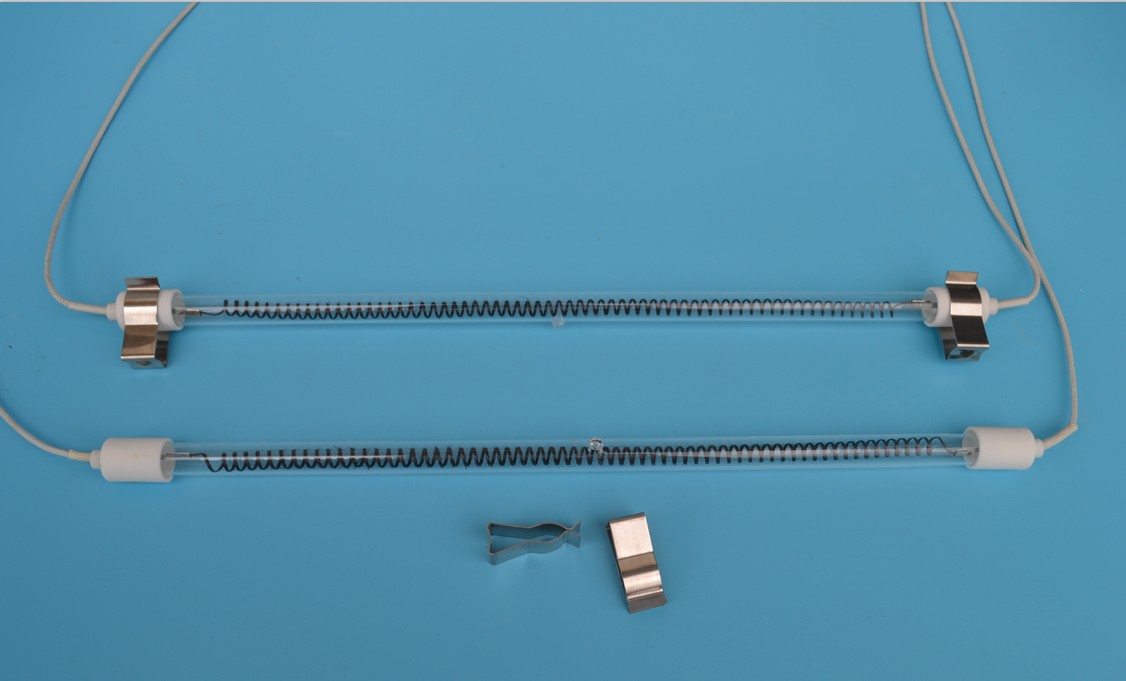
In industrial infrared equipment, carbon filaments are normally enclosed in a quartz tube and configured as an emitter assembly. The useful specification includes the complete lamp construction, not only the carbon material.
Record supply voltage, rated wattage, overall length, heated length, tube diameter, connection style, orientation, allowable envelope and reflector requirement. Replacement work should also document the installed lamp and holder.
Carbon emitters are commonly selected for medium-wave process heating, but suitability depends on how the product absorbs radiation. Validate the actual substrate, thickness, colour, moisture or coating rather than assuming one wavelength fits every job.
| Observation | Why it matters | Record or check |
|---|---|---|
| Electrical | Defines load and controller compatibility | Voltage, wattage and current |
| Geometry | Determines fit and heated coverage | OAL, heated length and diameter |
| Process | Tests real thermal performance | Material, target and cycle time |
Define start-up target, cycle time, line speed, sensing method and safe response to stops or gaps. Divide long heating zones when the product needs independent edge, centre or recipe control.
Confirm support positions, quartz clearance, seal temperature, terminal cooling, reflector cleanliness, airflow and contamination. A mechanically compatible lamp can still fail early if the surrounding equipment is unsuitable.
Compare YFR industrial infrared heating lamps and heating modules and controls. Confirm the final element through representative product trials.
No universal percentage applies. Compare accepted output, energy use and quality under the same process conditions.
No. Voltage, dimensions, heated length, connections, reflector and mounting also matter.
No. Material absorption, thickness and required response must be tested.
Include operating voltage, wattage, dimensions, photos, equipment position and process requirements.
Send YFR your material, dimensions, target, cycle time and current equipment details for an application-specific review.


