


Author: Site Editor Publish Time: 2025-10-30 Origin: Site


In today’s competitive manufacturing environment, operational efficiency, energy savings, process reliability, and product quality matter more than ever. For processes involving heating, curing, drying, or pre-heating, choosing the right heating technology is a critical decision.
This article explores the topic of the High-Efficient-Heating Lamp—with a particular focus on infrared (IR) radiant lamps—and offers a detailed, expert-level perspective on categories, selection criteria, advantages, and application considerations that every technical buyer or process engineer should know.
The term High-Efficient-Heating Lamp usually refers to an electrical radiant heating device—often an infrared lamp or emitter—engineered for rapid response, direct material heating, high conversion efficiency, and minimal energy waste.
Unlike convection or conduction heating, these lamps deliver energy through electromagnetic radiation in the infrared spectrum, targeting the workpiece directly instead of the surrounding air.
For instance, quartz infrared heaters with tungsten filaments can complete a powder-coating curing cycle in less than two minutes—compared with 15 minutes or more for conventional ovens—achieving faster cycles, lower energy use, and smaller footprints.
Key characteristics include:
Extremely fast response time (seconds from power-on to full output)
High radiant output and minimal convection loss
Wavelengths matched to material absorption characteristics
High power density and compact footprint
Precise and responsive control

Infrared lamps differ in wavelength, construction, and application. The table below summarizes the main categories:
| Type | Typical Wavelength | Main Applications | Advantages | Trade-offs |
|---|---|---|---|---|
| Short-wave (Near IR) | 0.8 – 1.4 µm | Metal pre-heating, welding, fast curing | Instant heat, deep penetration | High intensity may overheat delicate materials |
| Medium / Fast-Medium Wave | 1.4 – 3 µm | Powder coating, plastics, glass, drying | Balanced speed and absorption | Slightly slower than short-wave |
| Long-wave (Far IR) | 3 – 10 µm | Textile drying, food heating, moisture removal | Gentle, uniform heating | Larger footprint, slower heating |
| Specialized Designs (Twin-tube, Carbon, Reflector Coatings) | Variable | Custom industrial use | Higher efficiency, directional heating | Higher cost, complex installation |

Infrared lamps heat the workpiece directly, drastically reducing cycle times. Some applications achieve curing cycles in under two minutes—up to ten times faster than convection systems. Faster heating means higher productivity and shorter lines.
High-efficient heating lamps transfer up to 80–90% of input energy directly as radiant heat. Since air and enclosure heating are minimized, less total energy is consumed. A smaller heating area also translates to reduced equipment size and capital cost.
Radiant heating provides more uniform temperature profiles and excellent repeatability. Unlike convection systems that depend on air circulation, IR lamps deliver even energy to all exposed surfaces simultaneously.
Because heat is delivered by radiation, there is no physical contact or circulating air. This ensures a cleaner environment—ideal for coatings, electronics, and medical manufacturing—without dust or combustion products.
High-efficient lamps respond within seconds to power adjustments. This allows for zoned control, on-demand heating, and real-time modulation—reducing idle losses and enabling rapid production adjustments.

Choosing the right lamp is crucial to achieving performance and energy targets. Below are the most important factors to consider.
The infrared wavelength should match the absorption characteristics of the target material.
Short-wave: best for metals and dense coatings.
Medium-wave: suited for plastics, paints, and glass.
Long-wave: preferred for moisture drying or surface heating.
When the radiation spectrum aligns with the material’s absorption, thermal efficiency peaks.
Measured in watts per square centimetre (W/cm²), power density determines how much energy reaches the target. High-efficiency lamps can achieve up to 300 kW/m² surface power density. The optimal value depends on process speed, material, and distance from the lamp.
Response speed affects line flexibility.
Short-wave IR: 1–2 seconds to full output.
Medium-wave: 5–30 seconds.
Long-wave: several minutes.
Processes with frequent start/stop cycles benefit from faster response lamps.
Important design factors include:
Quartz envelope: allows high transparency and temperature tolerance.
Filament type: tungsten or carbon fibre influences heat output and longevity.
Reflector coating: gold or white oxide coatings enhance directional output.
Cooling design: effective airflow or heat sinks extend lamp life.
Ensure the lamp size, mounting configuration, and electrical ratings fit the process line. Consider environmental factors such as dust, humidity, and chemical vapors, which may affect quartz clarity and performance.
Beyond initial purchase price, evaluate:
Conversion efficiency to radiant energy.
Expected service life and maintenance frequency.
Energy consumption per unit of output.
Compatibility with automation or smart controls.
Infrared lamps produce intense radiation. Adequate shielding, operator safety gear, and electrical protections are mandatory. Proper cooling and enclosure design also reduce risks of overheating.
One of the most successful uses of high-efficient heating lamps is in powder-coating lines. Short-wave or fast-medium-wave lamps can reduce curing times from 15 minutes to under two, improve surface finish, and cut energy consumption by more than 50%.
To ensure optimal results:
Match lamp wavelength to coating absorption.
Design reflector geometry for even exposure.
Integrate real-time temperature monitoring for process consistency.
Medium-wave or fast-medium-wave IR lamps are widely used in thermoforming and PET bottle manufacturing. Their moderate penetration depth and gentle heating prevent deformation or uneven softening.
Key parameters:
Uniform distribution across plastic preforms.
Controlled heating duration to prevent overheating.
Adequate cooling of lamp ends and fixtures.
High-efficiency short-wave IR lamps are popular for annealing, bonding, and pre-heating in precision manufacturing. They offer clean, rapid, and precisely controlled heat.
Critical considerations include:
Uniformity across complex surfaces.
Compatibility with clean-room or vacuum environments.
Stable lamp operation under high duty cycles.
Long-wave IR lamps efficiently remove surface moisture while maintaining material integrity. They are used in textile finishing, drying of coatings, and gentle heating for food processing.
Benefits include reduced drying time, better color retention, and improved energy economy.
Even advanced systems can underperform if misapplied. Below are common pitfalls and recommended solutions:
| Mistake | Consequence | Correction |
|---|---|---|
| Wavelength mismatch | Poor absorption and low efficiency | Select wavelength according to material absorption spectrum |
| Insufficient cooling | Short lamp lifespan | Provide adequate airflow or cooling fans |
| Uneven lamp layout | Hot spots and poor quality | Optimize reflector design and lamp spacing |
| No modulation control | Energy waste and temperature swings | Use dimmers or PLC-based control |
| Ignoring safety | Operator injury or equipment damage | Add shielding, interlocks, and IR filters |
When specifying a high-efficient heating lamp system, review this checklist:
Define target temperature, material, and process speed.
Identify absorption characteristics of the material.
Select appropriate wavelength band (short, medium, or long).
Determine required power density and lamp arrangement.
Choose construction type (single-tube, twin-tube, reflector coating).
Verify compatibility with control systems and sensors.
Plan for cooling, maintenance access, and replacement cycles.
Evaluate energy efficiency and lifecycle cost, not just purchase price.
Incorporate operator safety and environmental protections.
Partner with a supplier experienced in industrial IR systems.
As a specialist in industrial infrared heating systems, Huai’an Yinfrared Heating Technology provides:
Deep technical expertise: Decades of experience in IR lamp design and wavelength selection.
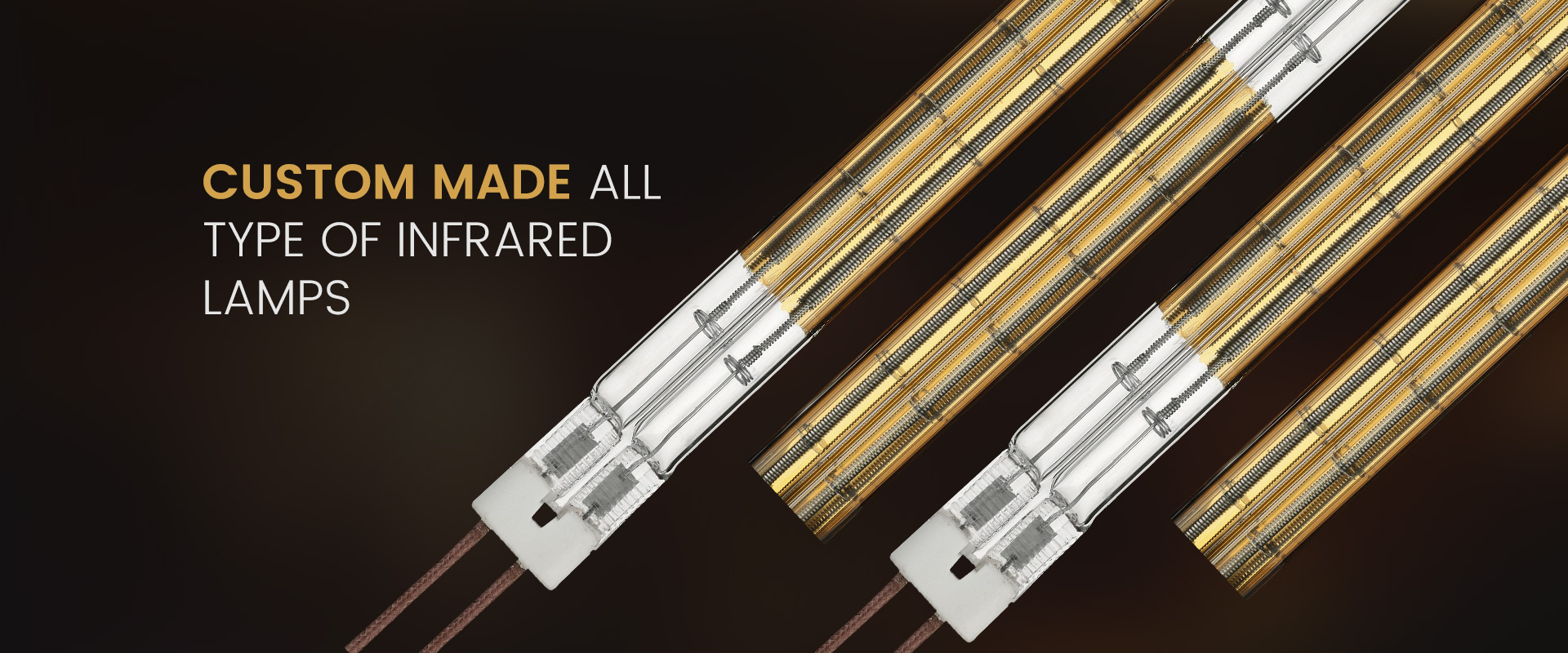
Comprehensive product range: Quartz-tube tungsten IR lamps, twin-tube types, carbon IR lamps, and reflective coatings.
Customized solutions: Tailored designs for powder coating, plastics, glass, and electronics industries.
Quality assurance: High-purity quartz, strict manufacturing standards, and long service life.
Energy optimization: Proven methods to reduce power consumption and increase production throughput.
We not only supply lamps but also help customers model heat transfer, optimise layouts, and achieve consistent, high-efficiency performance.
The High-Efficient-Heating Lamp represents the future of industrial heating—combining speed, precision, energy savings, and clean operation. Whether curing coatings, forming plastics, drying textiles, or pre-heating metals, the right infrared heating system can transform your production efficiency.
By carefully selecting wavelength, power density, and construction type—and ensuring proper control integration—you can achieve significant productivity and energy benefits.
At Huai’an Yinfrared Heating Technology, our mission is to deliver engineered infrared heating solutions that maximize both performance and sustainability for our industrial clients.


