


Author: Site Editor Publish Time: 2025-10-31 Origin: Site


In today’s high-performance industrial world, process heating demands ever-faster, more precisely controlled and energy-efficient solutions. One technology standing out in these applications is the Industrial Fast Heating Quartz Infrared Lamp (IFHQIL).
This article provides a detailed technical overview, practical selection criteria, and implementation guidance to help engineers and buyers make informed decisions.
An IFHQIL is an industrial heating element built using a quartz (fused-silica) envelope that houses a high-temperature filament. When an electric current passes through the filament, it rapidly heats and emits infrared (IR) radiation, which is directed toward materials or components to be heated.
Unlike convection ovens or hot-air heaters, the IR lamp transfers energy directly to the object, resulting in fast heating, high power intensity, and better energy efficiency.
Quartz is chosen as the envelope material because it can withstand high temperatures and transmit IR radiation efficiently. The lamp can reach full heating capacity within seconds, providing instant radiant energy directly to the target.
Key Characteristics:
Fast heating: Reaches operating temperature almost instantly.
High intensity: Enables rapid surface or bulk heating.
Direct radiant heating: Transfers heat without warming the surrounding air.
Quartz construction: Ensures durability and high IR transmission.
These features make IFHQIL ideal for applications such as softening rubber, bending plastics, thermoforming, laminating, moisture drying, and welding rubber or plastic components.
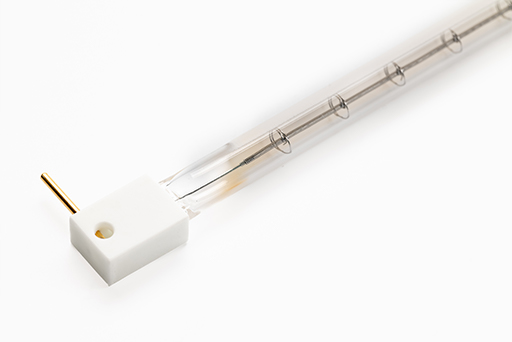
Infrared lamps can reach operating temperature and cool down almost instantly. This enables quick process startup, shorter cycles, and lower idle losses.
Because IR radiation heats materials directly rather than the air, energy efficiency improves and heating precision increases. This minimizes thermal losses and reduces environmental heating.
Quartz infrared lamps deliver very high radiant energy intensities from compact assemblies, making them perfect for tunnel-style dryers and conveyor lines.
With optimized reflector geometry and zoning, uniform temperature distribution can be achieved, which is essential for coating curing, laminating, and thermoforming.
Since IFHQILs do not require airflow or direct contact, they are suitable for clean environments and sensitive materials.
Different materials absorb infrared radiation at different wavelengths. Matching lamp wavelength to material absorption ensures high efficiency — for instance, medium-wave IR works well for plastics and coatings, while short-wave IR penetrates deeper materials.
With low thermal inertia, the lamps respond instantly to control signals, reducing overshoot and improving temperature stability.
Rubber materials are preheated or softened before forming or bonding.
Typical temperature range: 60–180 °C, depending on rubber type and process.
Infrared heating ensures fast and uniform softening of plastic sheets for molding, laminating, or bending.
Typical temperature range: 120–200 °C.
IR lamps enable precise heating of joint surfaces for uniform fusion.
Typical temperature range: 200–250 °C.
Infrared heat accelerates evaporation and curing of coatings, adhesives, or inks without overheating substrates.
Typical temperature range: 80–120 °C.
Used for pre-heating, adhesive activation, or bonding in laminates and composites where rapid, uniform heating is crucial.
Printing, packaging, glass pre-heating, and fast surface drying benefit from IR heating’s quick response and compact footprint.

| Lamp Type | Wavelength Range (µm) | Characteristics | Typical Applications |
|---|---|---|---|
| Short-Wave IR Lamp | 0.7–1.4 | Very fast response, deep penetration, high brightness | Thick materials, rapid thermal shock heating |
| Medium-Wave IR Lamp | 2.2–4.0 | Surface heating, uniform temperature control | Plastics, coatings, adhesives |
| Fast Medium-Wave IR Lamp | 1.4–2.0 | Combines speed of short-wave with gentle heating of medium-wave | Thermoforming, laminating, ink drying |
| Twin-Tube Quartz IR Lamp | Variable | Two filaments or tubes for large area coverage | Tunnel dryers, conveyor systems |
| Reflector-Coated Lamp | Variable | Enhanced radiation direction using gold or ceramic coating | Energy-focused industrial drying and curing |
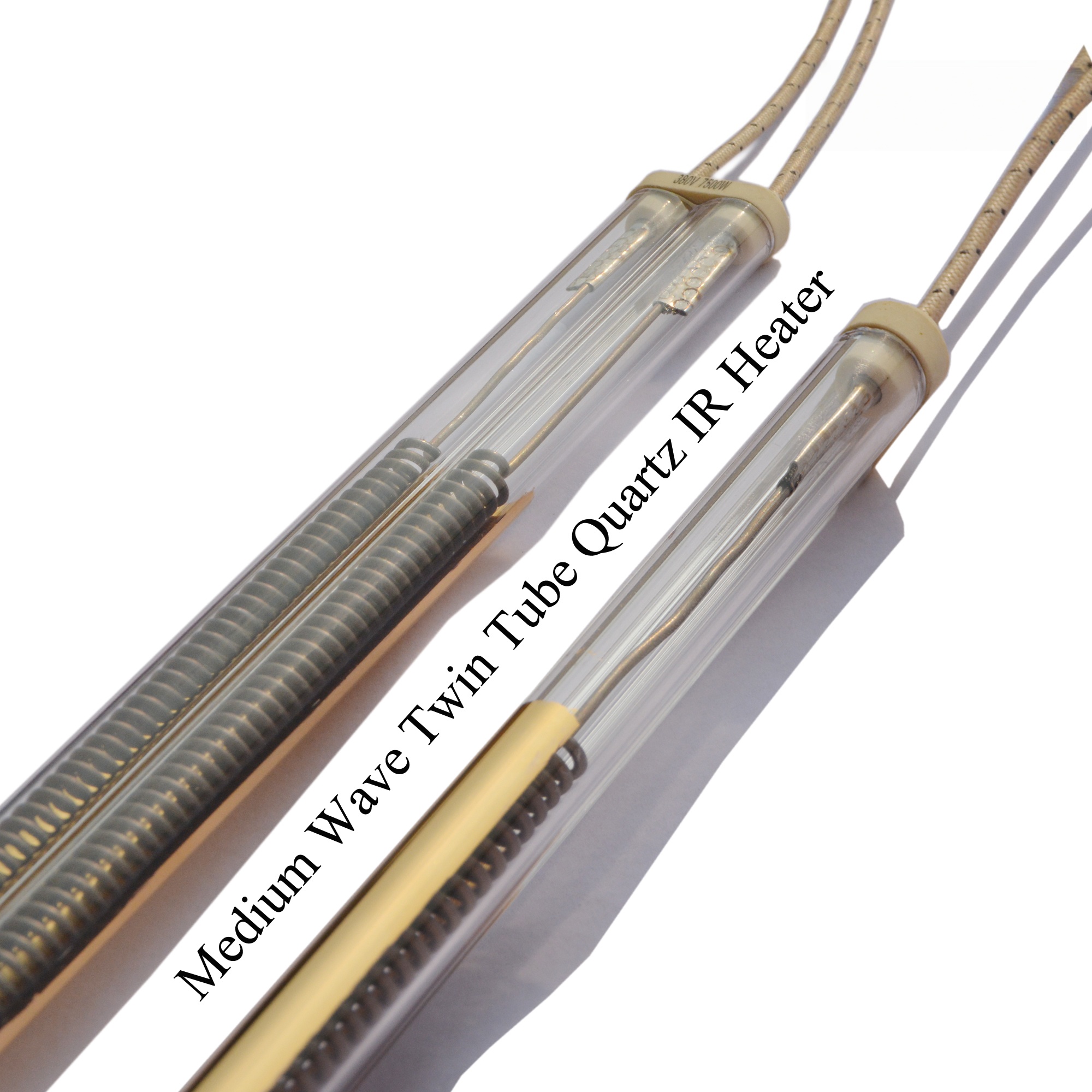

Choosing the right lamp depends on process conditions, material properties, and desired heating results.
Determine material type: rubber, plastic, composite, or coating.
Identify absorption peaks — most plastics absorb efficiently in the medium-wave region.
Specify required process temperature and desired heating speed.
Match lamp type:
Short-wave for very fast, high-temperature heating.
Medium or fast medium-wave for controlled surface heating.
Single-tube: compact applications (100–3000 mm).
Twin-tube: wider or larger heating zones (up to ~6200 mm).
Ensure correct voltage, power rating, and installation orientation.
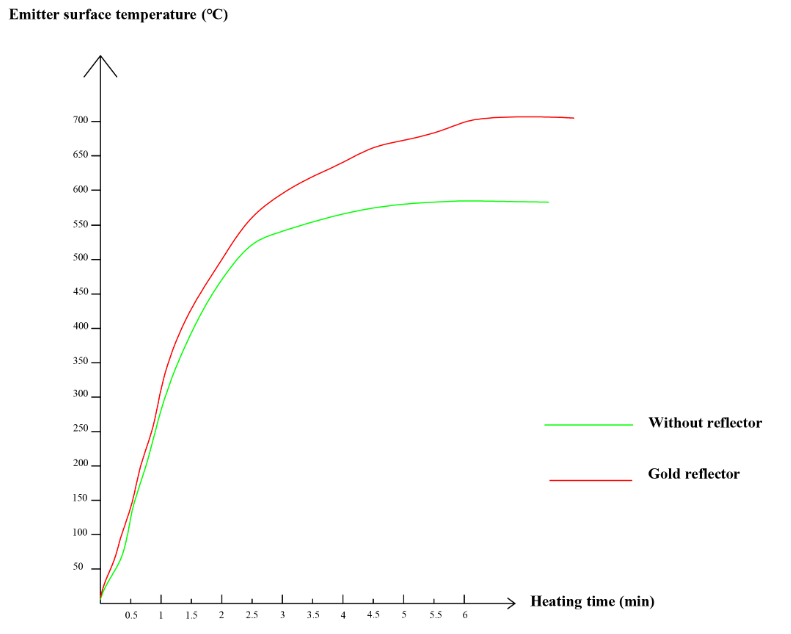
Use gold or ceramic reflectors to concentrate IR energy on the target.
Adjust distance and angle for uniform irradiation.
Integrate with sensors for real-time temperature feedback.
Use multiple zones for process flexibility and energy efficiency.
Clean quartz tubes regularly to maintain transmission efficiency.
Avoid touching quartz surfaces with bare hands to prevent contamination.
Plan replacement intervals based on duty cycles and temperature conditions.
Though initial investment may be higher than basic resistive heaters, the overall ROI improves through faster throughput, reduced energy consumption, and higher product quality.
Pre-testing: Use thermal imaging or thermocouples to verify uniformity before production.
Spacing Optimization: Adjust lamp-to-target distance for optimal heat flux.
Cleanliness: Keep quartz and reflectors free of dust and residue.
Safety Measures: Shield operators from direct IR exposure.
Thermal Zoning: Divide lamp banks for precision temperature control.
Cooling and Ventilation: Manage ambient heat to protect surrounding equipment.
Regular Inspection: Monitor lamps and reflectors for wear, discoloration, or power degradation.
Objective: Heat plastic sheets to 150 °C for lamination.
Challenge: Short cycle time and need for uniform temperature.
Solution:
Selected fast medium-wave quartz IR lamps for optimal absorption and rapid response.
Installed twin-tube lamps with gold reflectors to maximize efficiency.
Integrated surface temperature sensors for closed-loop control.
Results:
Achieved target temperature within 20 seconds (previously 45 seconds).
Reduced energy consumption by approximately 30%.
Improved bond uniformity and product quality.
Upfront system design cost – requires precise engineering for reflector geometry and control.
Variable absorption – different materials and coatings may react differently to IR wavelengths.
Heat management – ensure nearby components withstand radiant exposure.
Lamp lifetime – thermal cycling and contamination affect longevity.
Operator safety – install shielding and interlocks to prevent IR over-exposure.
Uniformity control – requires fine adjustment of lamp positioning and intensity.
✅ Identify material and absorption characteristics
✅ Define target temperature and heating duration
✅ Choose correct wavelength (short, fast-medium, medium)
✅ Determine lamp configuration (single or twin tube)
✅ Select reflector type and mounting geometry
✅ Integrate temperature control and zoning
✅ Plan for cleaning and maintenance
✅ Evaluate energy savings and cycle time improvements
✅ Ensure operator and equipment protection
The Industrial Fast Heating Quartz Infrared Lamp represents one of the most efficient, responsive, and flexible heating technologies available for modern industrial processes.
When properly matched to the application and material, it can significantly reduce energy use, accelerate cycle times, and improve heating uniformity.
For manufacturers working with rubber, plastics, composites, or coatings, this technology offers both technical and economic advantages. With correct lamp selection, precise control, and proper maintenance, IFHQIL systems can enhance productivity while delivering consistent, high-quality results.
Last modified: 2025-10-31


