


Author: Site Editor Publish Time: 2025-09-30 Origin: Site


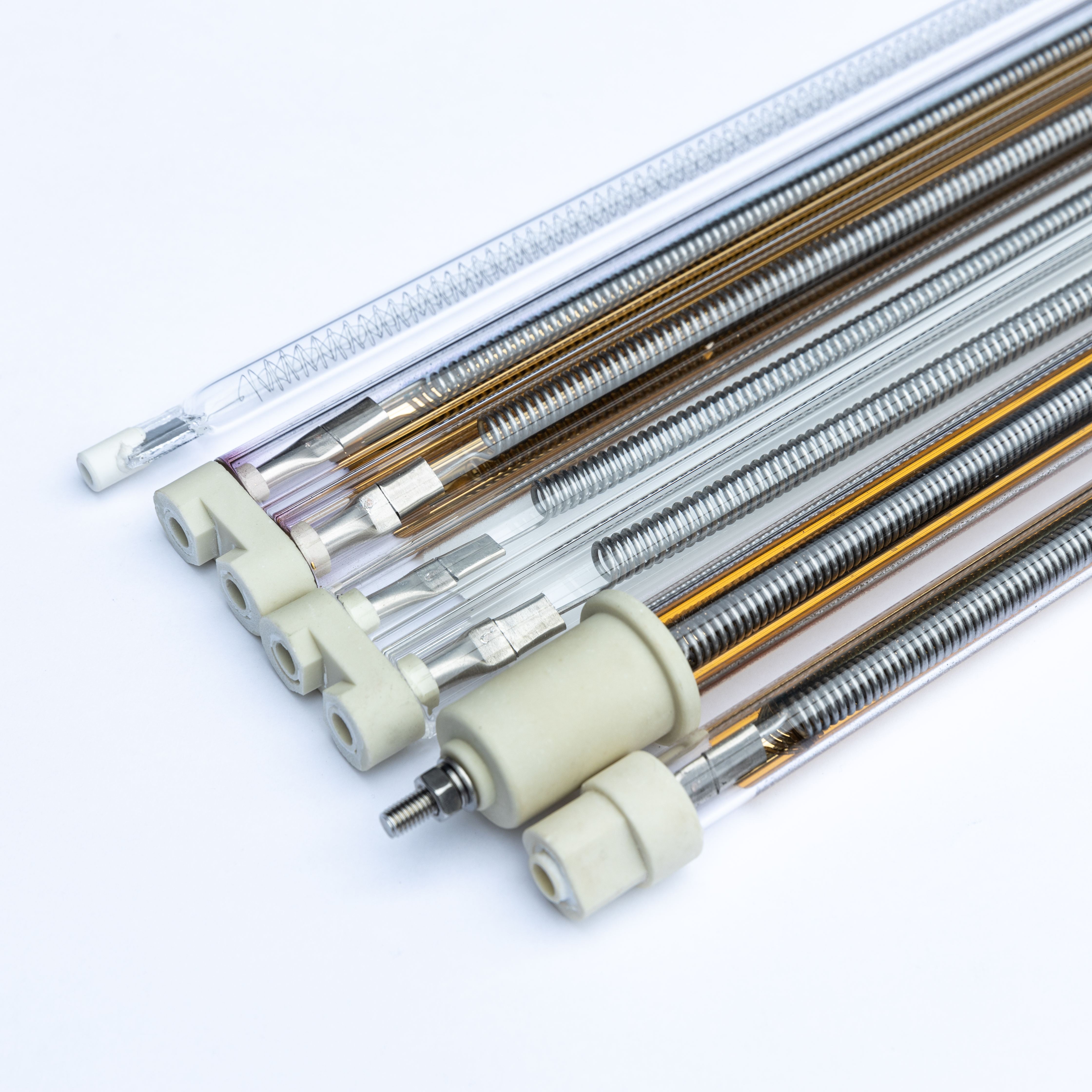
In the highly competitive plastic processing industry, efficiency, energy consumption, and product quality are core determinants of success. Traditional heating methods like convection and hot air, with their inherent drawbacks of slow response, low energy efficiency, and imprecise temperature control, have become bottlenecks to innovation. Infrared heating technology, as a direct, clean, and highly efficient form of radiant energy transfer, is leading a profound transformation in plastic heating.
The core advantages of infrared heating over traditional methods are:
Rapid Response: Achieves full power output and cooldown within seconds, significantly shortening production cycles.
High Energy Efficiency: Energy is directly radiated and absorbed by the material, with system efficiency typically reaching 60%-80%, far surpassing the 30%-50% of conventional methods.
Precise Localized Heating: Enables millimeter-level accuracy, ideal for complex parts or local heat treatment, minimizing thermal stress and deformation.
Unmatched Process Control: By adjusting wavelength, power density, and radiation distance, the heating can be precisely matched to the absorption characteristics of different materials.
Selecting the correct infrared wavelength is crucial for a successful application. Different wavelengths possess unique energy properties suited for different processing scenarios.
| Characteristic | Short-Wave Infrared | Medium-Wave Infrared | Fast Medium-Wave Infrared |
|---|---|---|---|
| Wavelength Range | 0.76 - 1.4 µm | 1.4 - 3.0 µm | 1.2 - 1.6 µm (Optimized Band) |
| Visual Color | Bright White Light | Medium to Dark Red | Bright Yellow to Orange |
| Energy Profile | High Energy Density, weaker penetration, primarily surface heating | Medium Energy Density, good volume heating and penetration | Balanced energy density and response speed between short and medium-wave |
| Thermal Response | Very Fast (< 2 seconds) | Moderate (30 - 90 seconds) | Fast (3 - 15 seconds) |
| Ideal Materials | Dark plastics, films, coatings for surface heating | Most plastics, especially thick-walled, colored, or natural materials for volume heating | Wide range of plastics, particularly efficient for universal plastics like PP, PE, ABS |
| Typical Applications | Film drying, coating curing, PET preheating, surface activation | Sheet thermoforming, thick-plate welding, baking drying, shrink film | Blow film preheating, plastic welding, lamination, package sealing |
Selection Summary:
For maximum speed and surface heating, choose Short-Wave.

For thicker materials requiring volume heating, choose Medium-Wave.

For the best balance of efficiency and penetration, Fast Medium-Wave is the ideal choice.
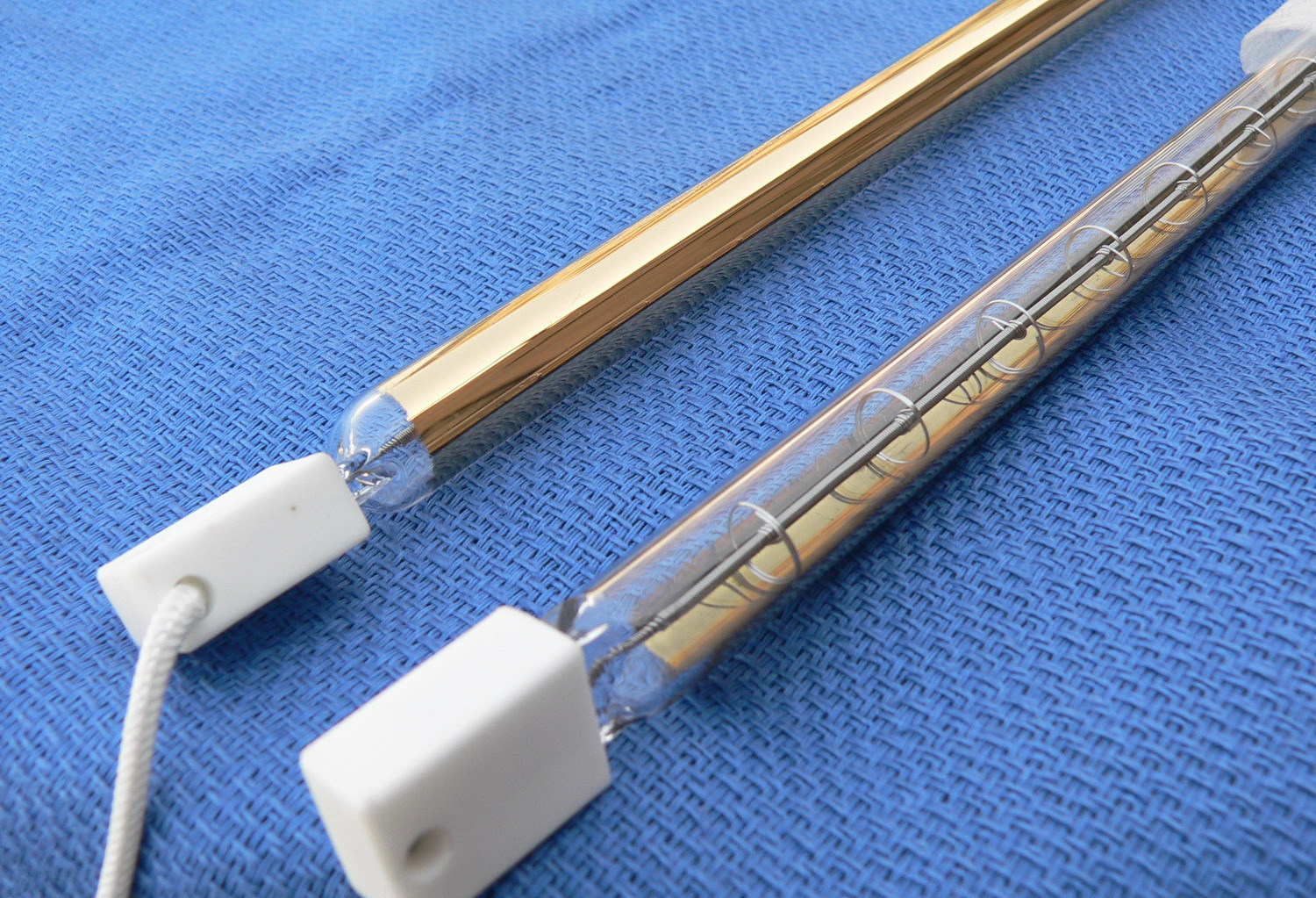
The following cases demonstrate the tangible benefits delivered by customized solutions based on different infrared wavelengths.
Case Study A: PET Preform Preheating – Short-Wave Infrared Efficiency
Client Challenge: A beverage bottle manufacturer used traditional ovens to heat PET preforms, with a long cycle time of 45 seconds. This process consumed over 35% of the production line's total energy, and uneven preform temperature led to significant wall thickness variation after blow molding.
Solution: We designed a custom short-wave infrared array heating system (peak wavelength ~1.0µm), equipped with multi-zone independent closed-loop temperature control, to directly radiate the preform body.
Quantifiable Results:
Preheat Time: Reduced from 45 seconds to 28 seconds, a 38% increase in efficiency.
Energy Savings: System power consumption lowered by 25%, saving over $20,000 annually in electricity costs.
Quality Improvement: Preform temperature consistency improved from ±5°C to ±1.5°C. Blow-molded product wall thickness uniformity increased by 20%, and the reject rate fell by 4%.
Case Study B: Automotive PP Bumper Welding – Fast Medium-Wave Infrared Depth Fusion
Client Challenge: Using hot air welding for automotive PP bumpers resulted in a long cycle time of 60 seconds, insufficient weld strength, visible flow marks, and high energy consumption.
Solution: We implemented multiple fast medium-wave infrared ceramic heaters (peak wavelength ~1.4µm). Their energy effectively penetrates PP material, generating heat at the weld interface, coupled with robotic scanning for precise heating.
Quantifiable Results:
Welding Cycle: Reduced from 60 seconds to 22 seconds, a 63% increase in efficiency.
Weld Strength: Tensile strength of the weld seam increased by 30%, reaching over 90% of the base material's strength.
Appearance & Energy Use: The weld surface was smooth and seamless, eliminating the need for post-processing. Overall energy consumption for the welding station decreased by 40%.
Case Study C: Medical Multi-Layer Coex Film Drying – Medium-Wave Infrared Gentleness and Uniformity
Client Challenge: During the production of high-performance medical multi-layer coex film, short-wave drying caused the surface to skin over too quickly, trapping internal solvents and creating "fish eyes." Traditional hot air drying was slow and caused film flutter, compromising quality.
Solution: Adoption of specific spectrum medium-wave infrared heaters (peak wavelength ~2.3µm). This wavelength is better absorbed by water-based solvents and the plastic itself, enabling gentle, uniform heating from the inside out.
Quantifiable Results:
Drying Speed: The drying tunnel length was reduced by 30%, or production speed was increased by 25%.
Quality Defects: The rate of "fish eye" defects dropped from 3% to below 0.2%.
Process Stability: Film travel became more stable, and product surface scratches were reduced by 90% due to the absence of strong air turbulence.
True value comes not just from the infrared lamps, but from the integrated system design. We provide:
Custom Design: We design linear, U-shaped, circular, or complex 3D infrared arrays based on your part geometry and process path.
Precision Control Systems: Utilizing PID+SSR closed-loop control, temperature accuracy can reach ±1°C. Supports multi-zone independent control for complex parts with differential heating needs.
Comprehensive Thermal Management: Integrated efficient air or water cooling systems ensure the equipment operates at an optimal temperature, with a lifespan exceeding 10,000 hours.
Infrared heating is not a simple replacement; it is a process upgrade. By scientifically selecting Short, Medium, or Fast Medium-Wave and combining it with precise system design, you can unlock unprecedented production efficiency, product quality, and energy savings.
If you wish to receive a preliminary data-backed solution tailored to your specific material and process, please contact our team of technical experts immediately.