Author: Process Heating Engineer Publish Time: 2026-03-24 Origin: Site
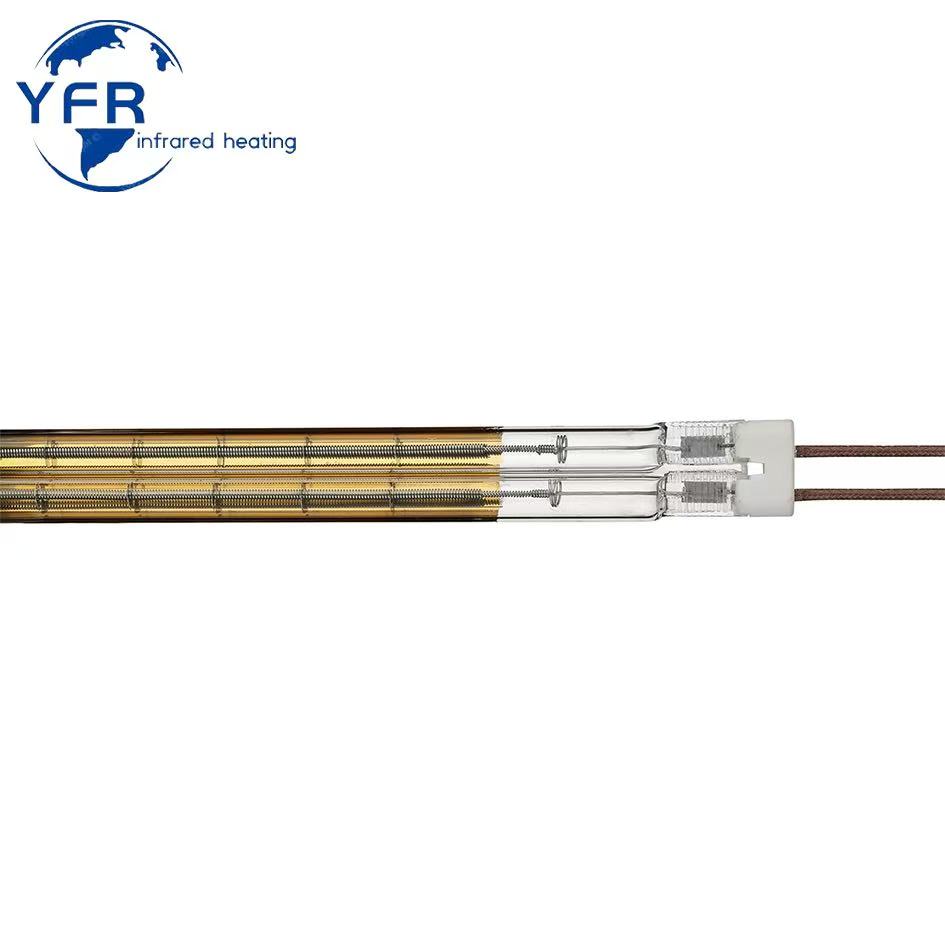
People often search infrared lamps for heating before they know whether they need a short wave emitter, a medium wave quartz lamp, a replacement part for machinery, or a complete heating module. The phrase is broad, but in industrial settings the need behind it is usually specific: faster drying, tighter thermal control, better line efficiency, or a reliable lamp replacement.
That is why this topic should not be handled like a school-science explanation. In real factories, the useful question is not only what an infrared lamp is. The useful question is whether the lamp’s wavelength, geometry, reflector, and installation conditions match the process well enough to heat the product consistently.
For YFR Heating, this is a natural educational entry point because the company’s current site already maps the subject beyond one generic lamp family. YFR groups industrial infrared lamps, heating modules, replacement lamps, power controls, and project-based applications for drying, curing, and process heating, which is how industrial users usually move from broad search to clearer specification.
It is also worth clarifying the boundary early. The keyword can appear in consumer search behavior, but this article stays strictly within industrial heating and process equipment. The selection logic for machinery, production lines, and engineered heating zones is different from consumer heat-lamp use.
When someone searches infrared lamps for heating, they are often trying to solve a process problem rather than buy a named product. A coating may be drying too slowly. A plastic sheet may need preheating before forming. A conveyor line may need faster response. A maintenance team may need a replacement infrared lamp but not yet know the exact emitter family.
That is where confusion starts. The lamp name sounds generic, but the heating result depends on factors the search term does not describe: what material is being heated, how the material absorbs infrared radiation, how far the lamp sits from the target, whether the line is continuous or indexed, and whether the lamp is bare or part of a larger module.
A manufacturer-led article should respond to that confusion by helping the reader ask better questions. It should not stop at terminology. It should bridge the search phrase to the process conditions that determine whether an industrial infrared heat lamp actually performs well.
In industrial heating, lamp selection begins with the job the radiation must do.
Noblelight’s industrial emitter guide explains that wavelength has a significant influence on the heating process. Short wave radiation can penetrate deeper into some solid materials, while medium wave radiation is absorbed mostly at the surface and is particularly well absorbed by many plastics, glass, and especially water. That means the same “infrared heating lamp” label can still point to very different process outcomes.
Helios Quartz makes the same point from a practical design angle. Its technical documentation ties IR performance to heating-element temperature, the heated body’s ability to absorb radiant heat, and the shape, position, and distance between the source and the workpiece. That is a useful reminder that industrial heating is not decided by wattage alone.
So when readers search infrared lamps for heating, the better next question is usually not “Which lamp is best?” It is “Which lamp matches this material, this line speed, this thermal task, and this machine layout?” That shift usually leads to better decisions much faster.
For readers already on YFR’s website, this is the point where internal links should narrow the topic into Short Wave Infrared Lamp, FMW Infrared Lamp, Medium Wave Infrared Lamp, or Replacement IR Lamps, depending on whether the user is solving a new-process problem or a maintenance problem.
Industrial infrared lamps are rarely selected as abstract heat sources. They are usually chosen for a place in a machine or process line where non-contact, directional, and controllable heat has a clear production purpose.
YFR’s current project pages show this context well. Public examples include a three-zone electric infrared conveyor oven, aluminum processing equipment, die-heater applications, and printing-related drying. That mix reflects how infrared lamps for industrial heating are normally used: inside equipment, not outside process context.
The same pattern appears in YFR’s product structure. Modules, replacement lamps, and power controls are presented alongside lamp families, which suggests the company expects many readers to start with a general heating question and then refine it toward a specific industrial configuration. That is exactly how many real inquiries develop.
Suggested inline image: an infrared heating zone above a moving product on a conveyor, with lamp spacing and reflector direction visible.
Suggested alt text: Industrial infrared lamps for heating installed above a conveyor for non-contact process drying and curing.
The biggest hidden variable inside the keyword is wavelength. Noblelight shows that short wave and medium wave radiation interact differently with materials, and that the correct wavelength has a major effect on heating behavior. Helios adds that IR quartz emitters commonly operate around different wavelength peaks depending on emitter family, including short wave, medium wave, and fast medium wave designs.
Some processes need heat quickly and need it to change quickly. Helios describes short wave quartz emitters as high-heating-power sources with very fast switching response, while fast medium wave designs are positioned as a compromise between medium-wave behavior and faster on/off response. That distinction matters in compact zones, high-speed lines, and processes where tight control is important.
A reflector is not decoration. Helios states that gold-reflector emitters can reflect more than 90% of radiation, while white ceramic reflector designs reflect around 70%. Noblelight likewise notes that reflective coatings can significantly increase effective radiation toward the product. That makes reflector selection part of thermal design, not a cosmetic add-on.
Emitter shape, position, and distance to the workpiece influence real heating behavior. Noblelight and Helios both emphasize this. That is why installation spacing, heated length, and whether the lamp is single-tube, twin-tube, round-tube, or part of a module can materially change the result on the line.
What the reader is really trying to do | Better question to ask | Why it matters |
|---|---|---|
Dry a coating or remove moisture | What wavelength does the material absorb well? | Absorption behavior often matters more than raw wattage. |
Heat quickly in a short zone | How fast must the lamp respond to control changes? | Response time affects control accuracy and throughput. |
Replace an installed lamp | Do heated length, terminals, reflector side, and voltage match the existing part? | Replacement success depends on compatibility, not only lamp family. |
Heat a shaped or angled target | Does the emitter geometry need to change? | Shape and radiation direction affect usable heat on the workpiece. |
Simplify installation in a heater bank | Would a pre-assembled module be better than a bare lamp? | Modules can combine emitters, reflectors, terminals, and controls in one unit. |
This kind of matrix is useful because it moves the discussion away from the broad keyword and toward process fit. It also shows why many readers who begin with infrared lamps for heating eventually need a narrower discussion about lamp family, replacement compatibility, or module design.
A common misconception is that one quartz infrared lamp can be compared with another mainly by voltage and wattage. That is not enough for industrial use.
Noblelight’s documentation makes clear that the heating effect depends on emitter wavelength, shape, and distance. Helios adds that filament configuration, ending configuration, and positioning matter in practice. That means two lamps with similar electrical ratings can still behave differently in drying, curing, preheating, or forming operations.
This is one reason industrial buyers often become interested in drawings, replacement photos, and heated-length dimensions once they get past the first search stage. The label on the lamp describes only part of the part. The usable heating result depends on geometry, spectrum, reflector behavior, and integration into the machine.
Suggested inline image: a dimensional lamp drawing that labels overall length, heated length, reflector orientation, and lead-end layout.
Suggested alt text: Quartz infrared lamp drawing with heated length, overall length, reflector side, and terminal configuration for industrial replacement matching.
A more useful question is: Which industrial infrared heating lamp is a good fit for this material, this machine, and this thermal objective?
That framing sounds simple, but it changes the whole buying conversation.
A practical checklist helps:
Identify the material
Is the process heating metal, glass, plastic, paper, coated substrate, or moisture-bearing product? Material absorption behavior affects wavelength fit.
Identify the heating task
Is the goal drying, curing, preheating, forming, bonding, shrinking, or maintaining temperature? The job defines the useful lamp behavior.
Check the line behavior
Is the process continuous, indexed, or rapidly switched? Response speed matters more in some lines than others.
Check physical constraints
What space is available? What is the heating distance? Does the lamp need reflectors, thermal breaks, or quick-connect terminals? YFR’s module page shows why packaging around the emitter can matter in real installations.
Check replacement risk
If this is a retrofit, are voltage, heated length, overall length, and terminal details already known? YFR’s replacement positioning is built around that problem.
Check whether a lamp alone is enough
Some applications are easier to manage as a module plus controls rather than as a bare lamp purchase. YFR’s site presents both paths.
Readers often encounter terms like quartz tube, twin tube, round tube, gold reflector, white ceramic coating, and special shape before they know why those terms matter.
Quartz matters in industrial IR because the lamp envelope has to support high temperature operation and good transmission of infrared radiation. Noblelight describes its emitters as being manufactured from very pure quartz tubes with good transmission and temperature resistance. That is why quartz construction is a functional part of the product, not a decorative descriptor.
Customization matters because industrial heaters often have to fit machines rather than generic catalogs. Helios explicitly states that its emitters can be designed according to customer instructions for total length, heating-part length, power, voltage, and ending configuration. YFR’s product pages likewise describe custom shapes, sizes, and reflector options across its infrared lamp range.
That is also why the most useful internal links inside an educational article are not only category pages. They are also Replacement IR Lamps, Infrared Heating Module, and relevant application pages, because those pages connect the lamp to actual machine and process constraints.
An educational article for the keyword infrared lamps for heating does not need to force the reader into a purchase. It does need to make the reader more precise.
By the end of the article, the reader should understand that the broad term is only a starting point. What matters next is wavelength relevance, response speed, reflector behavior, installation spacing, power density, voltage matching, replacement compatibility, and whether the lamp sits alone or inside a larger module or controlled system. Those are the real drivers of fit in industrial heating.
That is also where YFR Heating becomes more useful than a generic content source. Its current site structure supports the move from broad interest to technical clarification through lamp families, modules, controls, replacement options, and application examples. For industrial readers, that is the right next step after understanding the topic.
It usually means the reader understands the heating task but not yet the exact emitter family. The search often sits at the stage between general interest and specification, where the next step is to narrow the choice into short wave, medium wave, fast medium wave, a replacement lamp, or a module.
No. Noblelight and Helios both show that wavelength, geometry, reflector type, response speed, and installation distance change how the lamp behaves in practice. Similar-looking lamps can produce different thermal results in the same machine.
When the application already exists and the priority is matching an installed part or restoring machine performance. In those cases, heated length, terminal layout, reflector side, voltage, and overall geometry are often more urgent than starting with a new emitter family discussion.
A module is often more practical when the process needs faster installation, integrated reflectors, thermal breaks, quick-connect terminals, or a more complete heating section. YFR’s module page positions modules exactly that way for industrial processes.
Yes. YFR’s power-controls page shows that IR heating systems may include power regulators, PLC-connected controllers, temperature-control functions, and infrared thermometers. That means the lamp and the control method often need to be considered together.
[Application Fit Review]
If you arrived here by searching infrared lamps for heating, there is a good chance you are still narrowing the problem rather than choosing a final part number.
That is a reasonable place to start. In industrial heating, the next useful step is usually to connect the broad term to the real process: the material, the line speed, the heating distance, the required thermal effect, and whether the job is a new design or a replacement.
If you already have lamp photos, drawings, voltage, wattage, heated length, machine model, or application notes, those details can make the discussion much more precise. YFR Heating’s current site structure supports that progression through lamp families, replacement lamps, heating modules, power controls, and application-focused project pages.
For early research, that kind of technical review is usually more useful than forcing a broad keyword into a quick quote. It helps clarify whether the right answer is a lamp family, a replacement match, a custom quartz emitter, or a more integrated infrared heating solution.