Author: Site Editor Publish Time: 2025-07-15 Origin: Site
Last updated: August 29, 2026
Infrared plastic welding defects can originate before the heater is switched on. Material moisture, pigment, joint geometry, contamination, clamping, heat profile and cooling all influence the result. Troubleshooting should connect each defect to evidence instead of increasing lamp power first.
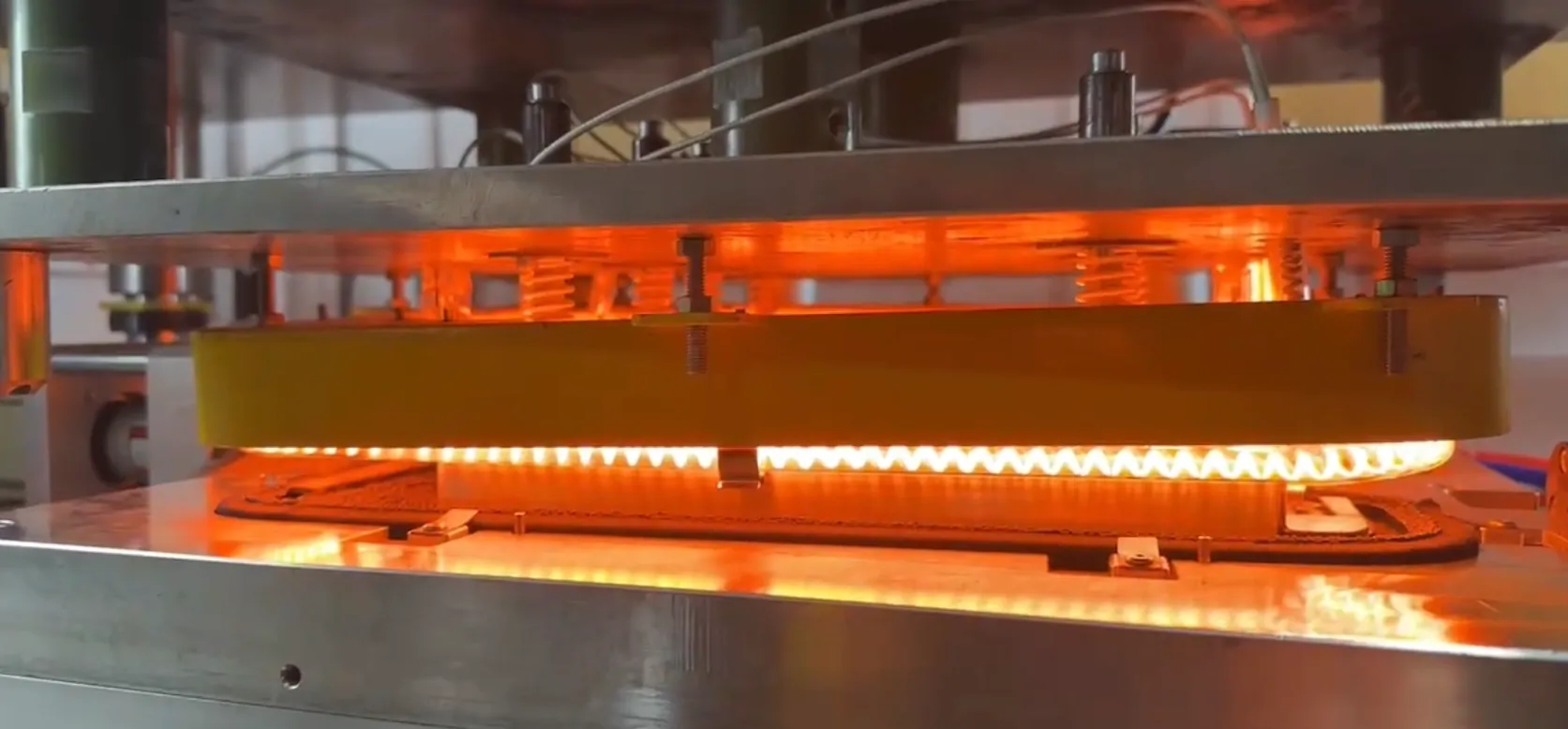
Verify polymer grade, pigment, filler, moisture condition and surface cleanliness. Check that the joint, energy director or melt allowance matches the approved part design. A material change can alter infrared absorption even when the colour looks similar.
| Defect | Possible causes | Checks |
|---|---|---|
| Incomplete fusion | Low interface temperature or short heating | Heat profile, distance and pressure timing |
| Burning or distortion | Excess surface temperature or hot spot | Zoning, shielding and part position |
| Bubbles or voids | Moisture, trapped gas or rapid heating | Material conditioning and ramp profile |
| Weak joint | Contamination, low melt or poor pressure | Surface, displacement and strength test |
| Flash variation | Uneven melt or clamping | Fixture parallelism and pressure |
A surface sensor may not represent the joint interface. Use test coupons, embedded reference sensors or section analysis where practical. Record lamp output, distance, heating time, transfer time, pressure, displacement and cooling time.
Hold material batch, part position and fixture condition constant. Adjust only one zone, distance or timing parameter, then repeat the same weld-strength and visual tests. Save an approved process window rather than a single nominal setting.
Inspect reflectors, lamp orientation, terminals, guards and part fixtures. Contamination or a shifted lamp can create a local profile change. Review YFR short-wave lamps and custom modules.
Not necessarily. Pressure, joint design, material absorption and transfer time may be limiting.
The new grade may contain more moisture or absorb radiation differently.
No. Use a defined mechanical, leak or section test appropriate to the product.
Save material, lamp zones, distance, timings, pressure, displacement, temperature evidence and test results.
Send YFR the polymer, joint and defect data for a heating-profile review.


