Author: Site Editor Publish Time: 2025-08-29 Origin: Site
Last updated: August 30, 2026
Infrared plastic welding heats thermoplastic joint surfaces without touching them, then joins the softened parts under controlled force. Reliable results depend on the complete process window: polymer compatibility, joint geometry, radiation coverage, heating gap, surface temperature, transfer time, clamping and final validation.
Identify the resin family, grade, colour, fillers, reinforcements, moisture condition and any coating or contamination. The two joint surfaces must be compatible for fusion, and the joint design must provide controlled contact, melt displacement and alignment.
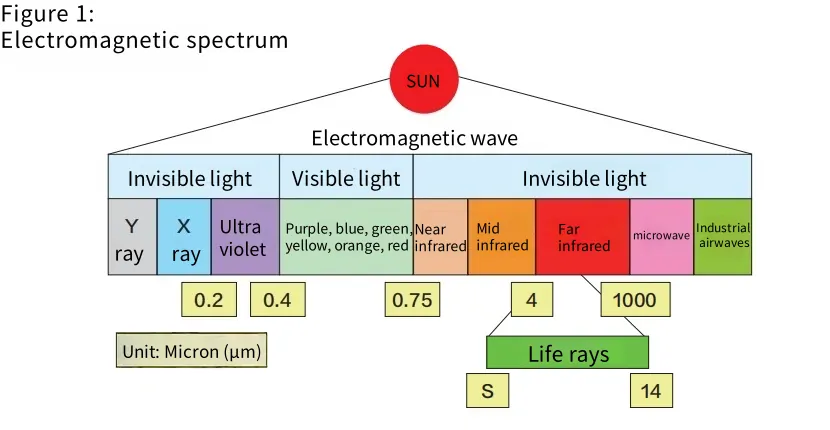
Match the emitter layout to the joint contour and shield areas that must remain cool. Record wavelength family, working distance, angle, power, zone balance and heating time instead of relying on lamp colour or a single nameplate value.
After heating, move the parts into contact within a repeatable transfer time. Control clamp force, travel, collapse or displacement, hold time and cooling before release.
| Input | Why it matters | Record |
|---|---|---|
| Material | Sets absorption and fusion behaviour | Resin, colour and fillers |
| Heating | Controls melt depth and uniformity | Distance, power and time |
| Joining | Forms and stabilises the weld | Force, collapse and cooling |
Use suitable surface-temperature or thermal-imaging methods and confirm their response on the actual polymer. Check hot and cold points around curves, ribs, edges and changes in colour or wall thickness.
Inspect appearance and flash, then test the properties that matter to the part: leak tightness, burst or peel strength, dimensional stability, vibration, pressure cycling or environmental ageing. Approve the recipe on representative production variation.
Coordinate the process with YFR industrial infrared heating lamps and heating modules and controls. Confirm the final configuration through representative product trials and documented acceptance limits.
Only when the materials are fusion-compatible or a validated intermediate layer is used.
Distance changes energy density and coverage, especially on three-dimensional joints.
No. Temperature supports control, but the finished weld must pass its mechanical and sealing requirements.
Changes in resin, colour, filler, joint geometry, emitter layout, tooling or production recipe should be reviewed.
Send YFR your material, dimensions, target, cycle time and current equipment details for an application-specific review.


