


Author: Site Editor Publish Time: 2025-11-26 Origin: Site


Last updated: August 30, 2026
Lamination engineers, OEM machine builders, and line integrators are under pressure to deliver higher throughput, tighter temperature control, and lower energy costs. This guide explains how to apply quartz infrared heat lamps for PVC, PC and PET film lamination in modern extrusion and converting lines, with practical selection rules, integration notes, and ROI pointers.
By the end, you will understand where quartz and fast medium-wave infrared emitters fit best, how to size and control them, and how Huai’an Yinfrared Heating Technology can support you from first sample to full-scale OEM integration.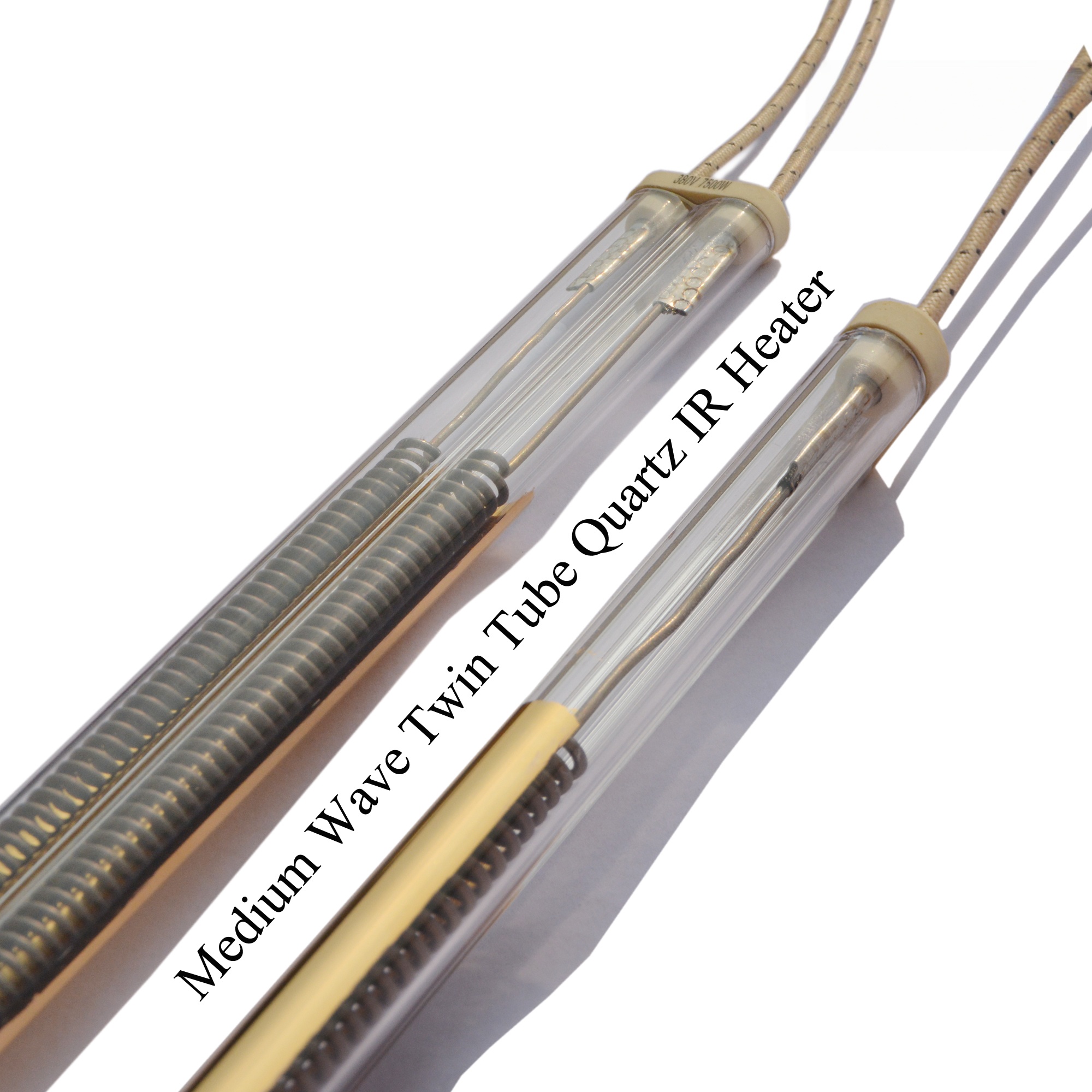
Typical process
Substrate: PVC decorative film onto wood-based boards or plastic profiles (0.15–0.3 mm film).
Line speed: 5–20 m/min.
Temperature window: Adhesive activation around 90–140 °C, PVC surface below scorching limits.
Pain points with conventional heating
Large gas or hot-air ovens heat a lot of dead air and metal, not just the film and substrate.
Slow ramp-up and cool-down cause long changeover times and wasted energy during idle.
Difficult to create a flat temperature profile: edges may stay cold while the center overheats, leading to visual defects and bubbles.
How quartz infrared heat lamps change the game
Short-wave quartz infrared heat lamps deliver high power density and penetrate thin PVC films quickly, heating in seconds rather than minutes.
Zoning across the web width allows independent control of center, edges, and profile geometry.
Compact infrared modules replace several meters of hot-air tunnel, freeing floor space and improving access for maintenance.
Recommended Huai’an Yinfrared solutions
Short-wave quartz infrared heat lamps in linear cassettes for rapid surface and near-surface heating.
Modular infrared heater assemblies designed to bolt into existing oven frames, reducing retrofit engineering effort.
Optional compact infrared preheating and lamination ovens for new lines requiring integrated web guiding and shielding.
Typical process
Substrate: PET or PC films and sheets (0.1–0.8 mm), often clear or lightly tinted.
Line: Extrusion coating, sheet lamination, or co-extruded multilayer construction.
Line speeds: 20–80 m/min or higher.
Temperature window: Preheating to 120–180 °C before nip, without distortion or optical defects.
Pain points with conventional heating
Hot-air or contact heating struggles at high speeds: either power is insufficient or the oven becomes long and space-consuming.
Contact rolls risk scratching optical films; hot-air impingement can disturb web tension.
Temperature gradients through the thickness of the film and adhesive can cause poor bonding or internal stress.
Infrared heating for plastic film lamination
Short-wave and fast medium-wave emitters can be tuned to the absorption characteristics of PET and PC, improving volumetric heating rather than just surface temperature.
Rapid infrared heating for PVC and PET films reduces dwell time; line speed can sometimes be increased on the same footprint, depending on mechanical constraints.
Narrow, zoned emitters allow precise profile control for different film widths and product formats.
Recommended Huai’an Yinfrared solutions
Fast medium-wave infrared lamps for good match with PET/PC absorption and more forgiving heating depth.
Modular infrared heater assemblies configured in multi-row arrays above and below the web for uniform through-thickness heating.
Infrared preheating and lamination ovens with integrated reflectors and insulation to minimize stray heat and energy loss.
Typical process
Substrate: PC or PET protective and optical films, adhesive tapes, or multilayer stack-ups for displays, touch panels, and electronic devices.
Line: Semi-continuous lamination, pick-and-place bonding, or indexing conveyor.
Requirements: Local adhesive activation without overheating sensitive components or optical layers.
Pain points with conventional heating
Convection or hot plates heat everything in the vicinity, risking damage to nearby components.
Slow response makes it difficult to match heat delivery to short cycle times.
Non-uniform heating leads to incomplete lamination or visible defects in optical films.
How infrared helps
Narrow quartz infrared heat lamps or small IR cassettes can deliver energy exactly where needed, over small patterns or zones.
Response times in the order of seconds (or less) allow tight synchronization with pick-and-place cycles.
Combined with IR pyrometers, temperature can be monitored without contact, ideal for delicate surfaces.
Recommended Huai’an Yinfrared solutions
Short-wave quartz infrared heat lamps in customized geometries for localized heating zones.
Small modular infrared heater assemblies with integrated reflectors and mounts for robot or gantry systems.
Optional compact infrared ovens for batch preheating or post-curing of laminates.
Wavelength band
Short-wave IR (SWIR): Approx. 0.8–1.5 μm; high power density, deep penetration into some clear plastics, very fast response.
Fast medium-wave IR (FMWIR): Approx. 1.5–2.5 μm; often a better absorption match for many polymers and adhesives.
Long-wave IR (LWIR): >3 μm; more suited to surface heating and bulky materials than high-speed film lamination.
Why it matters: Plastics absorb infrared energy differently by wavelength. Matching the dominant wavelength of the emitter to the absorption peaks of PVC, PC, or PET improves energy transfer and reduces overshoot or scorching.
Power and power density
Power (kW) is the total installed capacity.
Power density (kW/m²) is the power available per unit area of web or product.
Why it matters: Power density drives achievable heat-up rates for a given line speed and temperature rise. Too low, and you will need excessive dwell length; too high, and you risk overshoot and non-uniformity.
Typical ranges for lamination:
20–50 kW/m² for general PVC decorative lamination.
30–80 kW/m² for high-speed PET/PC film and sheet lamination, depending on thickness and starting temperature.
Heater/emitter type
Quartz tube lamps (short-wave or fast medium-wave): High intensity, fast response; ideal for compact, high-speed lamination zones.
Metal foil or panel heaters: Lower surface temperatures and slower response; more for general warming than high-speed lamination.
Ceramic emitters: Long-wave, robust; more suitable for thick materials and drying than rapid film lamination.
Emitter length, panel size, and zoning
Longer emitters reduce wiring complexity but give less flexibility.
Shorter emitters and modular panels allow fine zoning across web width (edge, center, trims).
For OEMs, zoning typically follows web lanes or standard product widths.
Surface temperature and response time
Quartz infrared heat lamps run at filament temperatures of several thousand °C, but what matters is the resulting irradiance on the web and how quickly it can be turned down.
Short-wave and fast medium-wave emitters reach working power in a few seconds, enabling fast start/stop and recipe changes.
Working distance and line layout
Typical working distances for film lamination are in the range of 80–300 mm.
Closer distances increase power density but narrow the uniform heating window; longer distances require more power and better reflectors.
Control options
On/off control: Simple, suitable for low-power zones or non-critical applications.
SSR (solid-state relay) / phase-angle SCR: Enables power modulation for each zone.
PID controllers and PLC/fieldbus: Coordinate multiple zones, recipes, and safety interlocks.
Modern industrial infrared heaters for plastic processing benefit significantly from closed-loop control using thermocouples or IR sensors for feedback.
Enclosure, insulation and IP rating
Laminator IR zones should be enclosed and insulated to reduce stray radiation, protect operators, and stabilize temperatures.
Dust, fumes, and cooling air requirements affect IP rating and enclosure design.
| Infrared Solution Type | Wavelength Band | Typical Power Density | Response Time | Recommended Applications | Control Options |
|---|---|---|---|---|---|
| Short-wave quartz IR lamps | 0.8–1.5 μm | 30–80 kW/m² | Seconds or less | High-speed PVC/PC/PET film lamination, spot heating | On/off, SSR, SCR, PLC/PID |
| Fast medium-wave IR lamps | 1.5–2.5 μm | 20–60 kW/m² | Seconds | PET and PC sheet lamination, adhesives with MW absorption | SSR, SCR, PLC/PID |
| Long-wave ceramic IR panels | >3 μm | 5–20 kW/m² | Tens of seconds | General warming, drying thicker substrates | On/off, basic SSR |
| Modular infrared preheating ovens | Mixed (SW/FMW) | Application-specific | System-dependent | Integrated preheating and lamination for OEM/extrusion lines | Full PLC integration, multi-zone |
Simple if/then rules
If your line speed is >30 m/min with thin PET or PC films, consider short-wave quartz IR lamps or fast medium-wave IR lamps with high power density.
If you are laminating decorative PVC films at moderate speeds and want a more forgiving process, consider fast medium-wave IR or mixed SW/FMW modules.
If you mainly need gentle warming or bulk heating of thick boards, long-wave panels may be sufficient, but they are rarely ideal for high-speed films.
If you expect frequent product changes, prioritize more zones and shorter emitters for flexible profiling.
If your process requires tight temperature tolerance (optical films, electronics), design for closed-loop control with IR pyrometers and SCR/PID control.
Mini decision flow (ASCII)
Start
Yes → Add multi-zone control, profile sensors, and PLC integration.
No → Basic zoned on/off or SSR control may be sufficient.
Yes →
No (thicker boards/profiles) →
Yes → Choose short-wave quartz IR or fast medium-wave IR with high zoning.
No → Choose fast medium-wave IR with moderate power density.
Is line speed >30 m/min?
Yes → Fast medium-wave IR modules with focused zones.
No → Long-wave or mixed IR panels may be acceptable.
Need fast response and compact footprint?
Is your substrate a thin PVC/PC/PET film or sheet (<1 mm)?
Do you need ±5–10 °C uniformity across the web?
Pro tip for plant engineers: Start your sizing with power density and line speed, not just “total kW”. Work backwards from your required temperature rise and dwell time to avoid underpowered systems.
Mains voltage and phase: Industrial IR systems for lamination commonly use three-phase supplies (e.g., 380–480 V), with individual zones balanced across phases to minimize neutral currents.
Wiring and protections: Each group of quartz infrared heat lamps should have dedicated breakers, contactors, and over-temperature protection (thermostats or safety thermocouples).
Control strategies:
On/off with contactors for simple zones or preheat stages.
SSR or SCR phase-angle control for precise power modulation, especially where fine temperature control is required.
PLC-based recipe control for different film types, thicknesses, and speeds, with human–machine interface for operators.
Control cabinets: Typically house power controllers, PLC/IO, safety relays, and terminal blocks. Adequate cooling and segregation between power and control wiring reduce noise and improve reliability.
Mounting options:
Frames that bolt into existing gas or hot-air tunnels.
Cassettes that slide in and out from the side for fast emitter replacement.
Modular infrared heater assemblies that integrate reflectors, lamps, and wiring.
Distance to product:
Too close and you risk uneven heating or local hot spots.
Too far and you lose intensity and efficiency.
For many laminators, 100–200 mm is a good starting range, then fine-tuned during testing.
Line speed and dwell time:
Power sizing must reflect the required temperature rise at your maximum planned speed.
For a given power density, halving dwell time approximately doubles the required irradiance.
Reflectors and shielding:
Polished metal reflectors behind the lamps increase effective power on the web and improve uniformity.
Shields and baffles protect bearings, seals, and operator positions from stray IR.
Maintenance access:
Ensure clear space to slide out cassettes and access terminals.
Design for quick emitter replacement to reduce downtime.
Define a heating profile:
Target web temperature at the lamination nip.
Ramp rate limits to avoid distortion or print defects.
Soak or equalization zones where necessary.
Sensors and feedback:
Contact thermocouples on backing rolls, where possible.
Non-contact IR sensors looking at the web surface between zones.
Data acquisition to link IR power, web temperature, and line speed.
From trial-and-error to recipe:
Start with conservative power levels and gradually increase until the adhesive is fully activated without defects.
Record settings for each product: power per zone, speed, nip pressure.
Standardize “golden” recipes so operators can switch products reliably.
Defect reduction:
Non-uniform adhesion often indicates uneven heating—use zoning and reflectors to correct.
Blisters or bubbles may signal overheating of the adhesive layer or residual moisture; adjust temperature profile and exhaust.
Lab tests:
Evaluate small samples of PVC, PC, and PET laminates under different IR wavelengths and intensities.
Measure heating curves and time to reach target temperature.
Pilot line or test zone:
Install a small infrared preheating section on an existing line or in a lab laminator.
Validate key performance parameters: line speed, temperature window, defect rate.
Full-scale acceptance criteria may include:
Throughput (m/min or units/hour) at specified quality.
Temperature uniformity across the web (e.g., ±5–10 °C).
Specific energy consumption (kWh per m² of laminated film or per kg of product).
Product quality metrics: adhesion strength, visual appearance, blister/void rate.
Huai’an Yinfrared Heating Technology can support this path with sample emitters, engineering guidance, and, where needed, modular test rigs.
Regulatory landscape:
Industrial infrared heating equipment in many markets falls under general electrical safety and machinery directives.
Examples include CE marking with Low Voltage, EMC, and Machinery directives in the EU, and UL/CSA or equivalent standards in North America.
Materials used in emitters and wiring may need to comply with RoHS/REACH or similar regulations regarding hazardous substances.
High surface temperature and burn risk:
Exposed quartz tubes run extremely hot; guards and screens are essential in operator access areas.
Clear signage and lockout/tagout procedures should be part of your safety concept.
Fire prevention:
Maintain clearances from combustible materials (films, dust, packaging).
Use over-temperature protection devices that cut power in case of airflow loss or control failure.
Electrical safety:
Proper earthing/grounding of frames and modules.
Correct short-circuit and earth-fault protections in line with local codes.
A dedicated compliance or support page can help buyers understand how Huai’an Yinfrared designs systems to fit into their own safety and regulatory frameworks.
Standard catalog heaters and modules
Off-the-shelf quartz infrared heat lamps and standard modules for fast sampling and small retrofits.
Customized emitters and panels
Tailored lamp lengths, wattages, and geometries for specific machine widths or lamination zones.
Complete infrared heating systems or retrofits
Turnkey infrared preheating and lamination ovens, including mechanics, electrical, and controls, for OEM integration into new lines.
Typical MOQs for standard lamps are modest and suitable for line upgrades or trials.
Customized emitters may require higher MOQs, reflecting special tooling or glass/filament setups.
OEMs can usually obtain a small batch of prototype lamps or modules for pilot testing before committing to series volumes.
Stock or catalog items: generally available in shorter lead times, suitable for urgent maintenance or small projects.
Custom lamps and modular infrared heater assemblies: require extra engineering and manufacturing time; lead times are typically measured in several weeks from design approval.
Full infrared preheating and lamination ovens: project-based, including design, build, and FAT, with schedules agreed case by case.
2D and 3D models for mechanical integration into laminators and extrusion lines.
Wiring diagrams, recommended protection devices, and layout guidelines for control cabinets.
Application notes on process tuning and thermal design for PVC PC PET film and sheet lamination.
Assumptions (example only, for discussion):
Line operates 4,000 h/year.
Conventional hot-air oven vs. IR preheating system for a PET lamination line.
Local energy prices and exact savings will vary by region and process.
| Item | Conventional Hot-Air Oven | Quartz IR Lamination System |
|---|---|---|
| Installed heating power | 100% (baseline) | ~70–80% of baseline power |
| Heat-up/cool-down time | Long | Very short |
| Energy use during idle | High | Low (fast on/off) |
| Approx. energy cost per year | 100% (baseline) | ~70–85% of baseline |
| Maintenance (fans, burners, etc.) | Higher | Lower (no combustion parts) |
| Indicative payback period | – | Often within a few years, depending on local tariffs and utilization |
This simplified view reflects typical trends reported in industrial case studies: electric infrared heating can improve energy efficiency by focusing heat directly on the product and enabling faster, more flexible operation.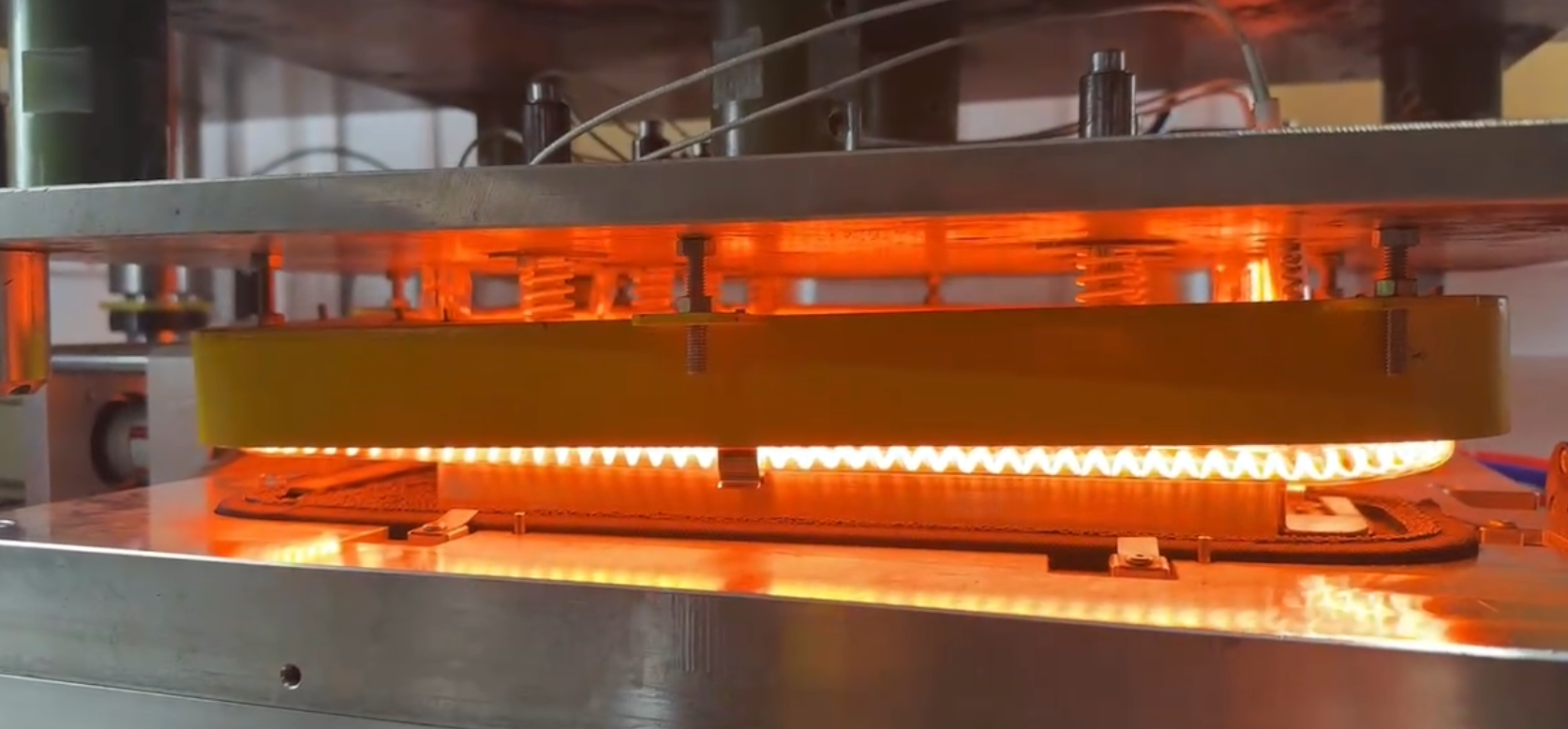
Wrong wavelength selection – Using long-wave emitters for high-speed transparent PET films can lead to poor absorption and slow heating.
Under-sizing power – Designing to average conditions rather than worst-case line speed and thickness results in operators slowing the line to maintain quality.
Neglecting insulation and shielding – Uninsulated IR zones waste energy and create uncomfortable or unsafe operator environments.
Poor mounting and alignment – Misaligned emitters produce hot and cold bands across the web.
Ignoring safety interlocks – Lack of over-temperature cut-outs or door interlocks increases risk of damage and safety incidents.
No structured recipe management – Relying on “tribal knowledge” instead of documented settings causes variability between shifts.
Skipping incoming quality checks – Not verifying lamp power, resistance, and alignment during installation can hide problems until they cause downtime.
Heat-up time: For thin PVC or PET films, reaching lamination temperature in 3–10 seconds of exposure is realistic with well-sized quartz IR systems.
Temperature uniformity: ±5–10 °C across the web is a good target for most decorative and technical laminations.
Specific energy consumption: Once optimized, expect IR systems to deliver a lower kWh per m² than poorly insulated or oversized hot-air ovens, especially in partial-load operation.
Functional testing of quartz infrared heat lamps and modules before shipment.
Visual and mechanical inspection of lamp seals, connectors, and mounting hardware.
Where needed, burn-in tests and sample measurements to verify power and uniformity for OEM projects.
1. How do I size quartz infrared heat lamps for my lamination line?
Start from your maximum line speed, required temperature rise, and available dwell length. From this, derive a target power density (kW/m²). Huai’an Yinfrared can help translate that into lamp length, wattage, and zone layout.
2. Can infrared heating really reduce my energy consumption?
In many cases, yes. By focusing energy on the web instead of the entire oven structure and air volume, industrial infrared heaters for plastic processing can improve overall efficiency. Actual savings depend on insulation, operating patterns, and local energy prices.
3. What is the typical lifetime of quartz infrared heat lamps in lamination?
Lamp lifetime depends on operating temperature, switching frequency, and mechanical handling. With proper installation and controls, lamps can run for many thousands of hours. Designing for easy access and keeping lamps clean helps maximize lifetime.
4. Do I need special controls, or is on/off switching enough?
For simple, slow processes, on/off may be acceptable. For high-speed PVC, PC and PET film lamination, phase-angle or burst-firing control with PID or PLC logic is recommended to maintain stable product temperatures and minimize defects.
5. What information should I provide to get a proposal?
Key data include: substrate material (PVC, PC, PET), thickness, line speed range, target temperatures, existing line layout, and available electrical power. Photos or drawings of current ovens and laminators are also useful.
6. Can you support custom OEM designs and private label heaters?
Yes. Huai’an Yinfrared Heating Technology offers OEM/ODM services, including custom lamp geometries, modular infrared heater assemblies designed to your mounting standards, and private label options where appropriate.
7. Do you offer global support and after-sales service?
We support customers in multiple regions via engineering teams, documentation, and remote assistance. For larger projects and systems, on-site commissioning support can be arranged where required.
If you are evaluating a retrofit of an existing gas or hot-air oven, or designing a new lamination line for PVC, PC and PET films, share your basic process data with Huai’an Yinfrared Heating Technology. Our engineering team can perform a preliminary feasibility check, suggest appropriate wavelengths and power densities, and outline a modular infrared concept tailored to your layout.
For OEM and channel partners, we can collaborate early in the design phase to define standard modules, documentation packages, and test plans that shorten your time-to-market and reduce integration risk.
Review YFR industrial infrared heating lamps and heating modules and controls. Confirm wavelength, geometry, mounting and controls through representative trials.
Send YFR your material, dimensions, target, cycle time and current equipment details for an application-specific review.


