


Author: Process Heating Engineer Publish Time: 2025-06-03 Origin: Site


Industrial heating is no longer just about “making things hot.” In modern manufacturing, heat is a production tool that affects throughput, energy use, product quality, and process stability. That’s why infrared heating for industry has become a preferred solution across drying, curing, forming, bonding, preheating, and moisture removal processes.
Unlike conventional heating methods that rely on warming air or large metal structures first, industrial infrared heating delivers radiant energy directly to the target surface. The result is typically faster response, tighter control, and less wasted energy—especially in continuous production lines where seconds and consistency matter.
This article explains how industrial infrared heating works, why manufacturers use it, where it fits best, and how to select an IR system that matches your materials and process goals.
Industrial heat transfer is usually achieved through convection, conduction, or radiation. Infrared is a form of radiation-based heating, and that changes how energy reaches your product.
| Heating Method | How Heat Moves | What It’s Good At | Common Limitations |
|---|---|---|---|
| Convection (hot air) | Air warms the part | Large enclosed ovens, bulk heating | Slow ramp-up, heat loss to air, bigger footprint |
| Conduction (contact) | Direct contact transfers heat | Heated platens, rollers, hot plates | Contact marks, uneven transfer, slower line flexibility |
| Infrared (radiant) | Energy radiates to the part | Fast surface heating, selective heating, zone control | Needs correct wavelength/material match for best efficiency |
In many industrial workflows, you don’t want to heat the entire environment—you want heat to go into a coating, film, adhesive layer, or the surface of a substrate. Infrared is often the most direct path.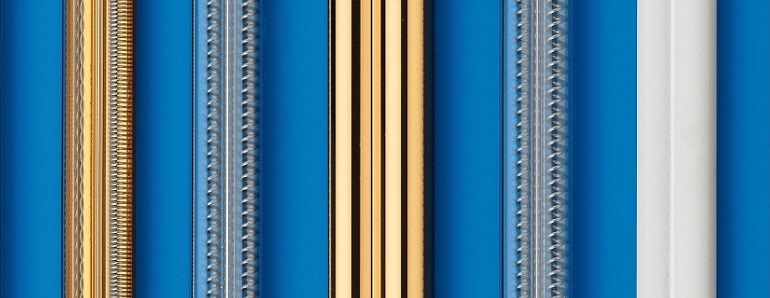
Infrared emitters generate electromagnetic radiation in the infrared spectrum. When that radiation strikes a product surface, part of it is absorbed and converted into heat. The rest may be reflected or transmitted depending on the material.
Wavelength matching
Materials absorb different infrared wavelengths differently. Choosing the right IR wavelength can improve heating speed and uniformity.
Surface properties (color, finish, emissivity)
Dark or matte surfaces often absorb better than highly reflective surfaces. This matters for metals, foils, and glossy coatings.
Thickness and thermal conductivity
Infrared is frequently used for surface-dominant heating. For thick parts, you may use IR for fast surface ramp-up and then rely on conduction through the material.
Distance, angle, and power density
Radiant intensity at the product depends on emitter power, spacing, and how the energy is directed (reflectors, geometry, zoning).
Infrared systems typically deliver usable heat quickly because the emitter can reach operating output fast and the energy goes straight to the product zone. This helps when:
you run short production cycles,
you start/stop lines frequently,
you need rapid temperature ramps without long oven warm-up.
For many lines, faster heating translates directly into higher line speed or shorter process sections.
While any heater has losses, infrared can reduce wasted energy by:
minimizing heating of surrounding air,
allowing zone heating only where needed,
improving efficiency when paired with reflectors and insulation.
If your current process heats a large chamber just to treat a thin coating layer, IR often provides a more targeted approach.
Industrial infrared heating is well-suited to controlled processes because it can be:
zoned across width/length for uniform results,
adjusted quickly to match line speed changes,
controlled via feedback (temperature sensors, pyrometers, PLC logic).
This level of control is valuable in drying, curing, annealing, and bonding processes where time-temperature profiles affect final performance.
Infrared can improve quality by enabling:
more uniform surface heating (when properly designed),
reduced risk of solvent trapping or uneven cure in coatings,
non-contact heating that lowers contamination risk for sensitive products.
For finishing lines, this can mean fewer defects such as blistering, pinholes, incomplete cure, or inconsistent gloss.
Compared with large convection ovens, infrared modules can often be:
installed in shorter footprints,
integrated into existing conveyors,
used for retrofits where space is limited.
This is one reason IR is common in upgrades where production must continue with minimal layout disruption.
Many infrared systems have no moving parts like blowers or circulating fans (depending on configuration). Maintenance often focuses on:
keeping emitter surfaces and reflectors clean,
inspecting electrical connections and controls,
replacing emitters at end of life.
When maintenance is planned and predictable, uptime improves.
With electric infrared heating, there is no on-site combustion at the heat source. Also, less hot-air circulation can mean:
reduced dust movement in some environments,
more comfortable local working zones near the line,
cleaner thermal processing for certain products.
A common reason IR projects underperform is not “infrared doesn’t work,” but rather the wavelength, emitter type, and layout didn’t match the material and objective.
Industrial infrared systems are often described as:
Short-wave IR: very fast response, high intensity; often used for rapid surface heating and high-speed lines.
Medium-wave IR: balanced response and penetration; widely used for drying/cure processes.
Long-wave IR (far infrared): gentler surface heating; often chosen for moisture-related processes and temperature-sensitive materials.
Rule of thumb: Start by defining your target layer (coating, adhesive, film, substrate surface) and then select wavelength and power density that deliver the needed thermal profile without overheating.
Depending on your installation, you may see:
quartz-tube style emitters (fast response, high power density),
ceramic emitters (robust, steady output),
carbon-based emitters (often used where a softer heating profile is desired),
modular panels and arrays (for wide web materials and uniformity).
The “best” option depends on line speed, substrate type, temperature window, and control requirements.
Infrared is widely used to accelerate drying and curing because it can deliver energy into the functional layer quickly. Typical benefits include:
shorter drying tunnels,
faster solvent or water evaporation (when managed correctly),
improved cure consistency with zoning control.
It’s commonly applied in printing, coating, packaging, automotive finishing, and metal coil processes.
Plastic sheets and components often require fast, controllable surface heating before forming or joining. Infrared helps by:
heating only the required zone,
improving cycle time,
supporting uniform preheat across sheet width (with correct zoning and spacing).
Applications include thermoforming, preheating before bending, and certain plastic joining workflows.
Metals can be challenging because reflective surfaces may reduce absorption. However, IR is still used effectively for:
preheating before coating, bonding, or forming,
temperature staging before a downstream process,
localized heating where a full furnace is unnecessary.
Design details (distance, angle, reflectors, surface condition) matter greatly for metals.
For web-based materials, infrared provides:
responsive zone heating,
rapid moisture removal,
process stability during speed changes.
It is often integrated with airflow management to carry away moisture efficiently, especially in high-throughput lines.
Infrared can be used where controlled surface heating is desired—such as browning, roasting stages, or dehydration support—because it can apply heat rapidly to surfaces. Food processes require careful temperature management and hygiene-focused equipment design.
Some production environments use infrared as part of controlled thermal steps (for example, preheating or drying coatings). The key is repeatable control and avoiding thermal shock to sensitive components.
If your goal is reliable results—not just heat—use this checklist during planning:
Define the process objective
Drying time? Cure degree? Surface temperature? Throughput target? Quality limits?
Identify the heated layer
Are you heating a coating, adhesive, film, or substrate surface?
Match wavelength to material behavior
Consider absorption tendencies and surface reflectivity.
Design for uniformity
Use zoning, proper spacing, and reflector geometry to avoid stripes and hot spots.
Select a control strategy
Consider zoned control, feedback sensors, and recipes for different products.
Validate with trials
Run tests to confirm temperature profiles, quality outcomes, and line stability at full speed.
Plan safety and maintenance
Include shielding, interlocks where needed, and a cleaning schedule for reflectors and emitter surfaces.
Common performance issues are often practical rather than “technology problems”:
Reduced output due to dirty reflectors or emitter surfaces
Non-uniform heating from misalignment or incorrect spacing
Inconsistent results from unstable voltage or poorly tuned controls
Overheating sensitive surfaces due to excessive power density
Preventive maintenance basics:
Keep reflectors clean and properly positioned
Inspect wiring/terminals for heat damage
Verify zoning output periodically
Replace emitters before end-of-life failure in mission-critical lines
When engineered correctly, infrared systems are widely used in industry. Safety depends on proper shielding, guarding, temperature control, and electrical compliance—just like any industrial heating equipment.
Infrared primarily heats surfaces it strikes. Air can warm indirectly after surfaces heat up, but IR is valued because it does not rely on heating large volumes of air first.
It can, but IR is often strongest for surface heating and thin-layer processes. For thick parts, IR may be used as a rapid preheat stage combined with other heat transfer methods.
Start with material behavior and process objective. Fast, high-intensity needs often point to shorter wavelengths, while gentler surface heating or moisture-related processes may favor longer wavelengths. Testing and measurement are the fastest path to the right answer.
Selecting emitters without considering material absorption, uniformity design, and control strategy. Most successful systems treat IR as a process tool, not a generic heater.
Infrared heating for industry is popular for a simple reason: it supports fast, targeted, controllable heat that helps manufacturers improve throughput, reduce wasted energy, and stabilize product quality.
Whether your process involves drying coatings, curing adhesives, preheating substrates, thermoforming plastics, or removing moisture from continuous web materials, industrial infrared heating can be a high-performance solution—especially when wavelength selection, layout uniformity, and control strategy are planned from the start.
Last modified: December 31, 2025


