Author: Site Editor Publish Time: 2025-07-30 Origin: Site
Last updated: August 29, 2026
A reflector coating on a twin-tube or single-tube infrared lamp directs more radiation toward the process and reduces rearward exposure. Gold and ceramic reflector options are not simply different colours: their optical behaviour, visible-light appearance and suitability for the operating environment can differ.
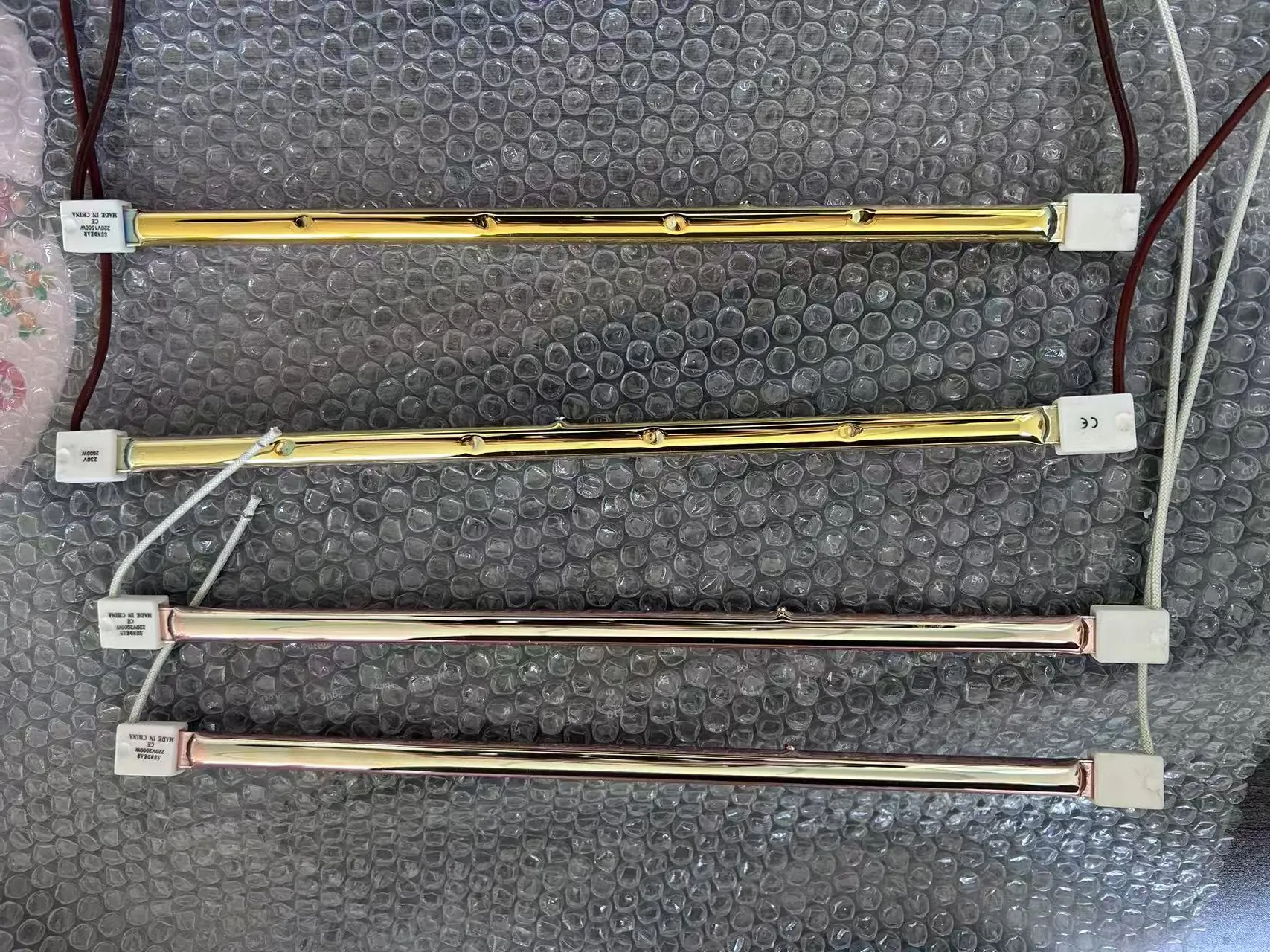
A reflector redirects radiation that would otherwise travel away from the product. It can improve directional use of the lamp and protect nearby components from some rearward radiation. Performance still depends on coating coverage, lamp geometry, wavelength, temperature and the surrounding fixture.
The coating does not remove the need for guards, clearances or fixture cooling.
| Selection factor | Gold reflector | Ceramic reflector |
|---|---|---|
| Optical behaviour | High reflectance over useful infrared ranges | Diffuse reflective coating suited to many heater designs |
| Visible appearance | Metallic rear coating | Opaque light-coloured rear coating |
| Environment | Review exposure to aggressive chemicals | Review thermal cycling and coating condition |
| Inspection | Check coating continuity and contamination | Check cracks, deposits and discolouration |
| Final choice | Confirm with lamp construction, process spectrum and environment | |
The exact limits depend on the coating system and lamp specification. Ask for application-specific guidance rather than applying one material rule to every installation.
Record cleaning chemicals, process vapours, condensation, airborne dust and expected rear-surface temperature. A coating that performs well in a clean heating module may not suit a corrosive or heavily contaminated process. Prevent fingerprints and deposits on the quartz and follow the approved cleaning method.
Specify the reflector angle and coated length as well as the overall lamp dimensions. Incorrect rotational orientation can direct energy into the fixture instead of the product. In a replacement, compare the cold ends, terminal direction and reference position of the coating.
Browse YFR infrared heating lamps and custom heating modules.
Compare reflector options at the same lamp power, spacing and working distance. Map product temperature across the heated area and inspect fixture temperature behind the lamps. A useful result balances product uniformity, lamp environment and maintenance—not only peak temperature.
No universal comparison applies to every lamp and wavelength. Evaluate the specified coating and complete heater layout.
Not automatically. External reflectors also shape the field and may provide structural or thermal functions.
Provide voltage, wattage, tube and heated lengths, coating angle, terminal details, orientation, working distance and environment.
Do not improvise a repair. Inspect the cause and replace the lamp or reflector component according to the approved specification.
Send YFR the lamp drawing and operating environment for a reflector option review.


