Last updated: August 30, 2026
A flawless paint finish is one of the most visible signs of quality in automotive repair, metal fabrication, furniture manufacturing, and many other industries. Customers notice orange peel, dust nibs, runs, and inconsistent gloss immediately—long before they see the technical details behind a process.
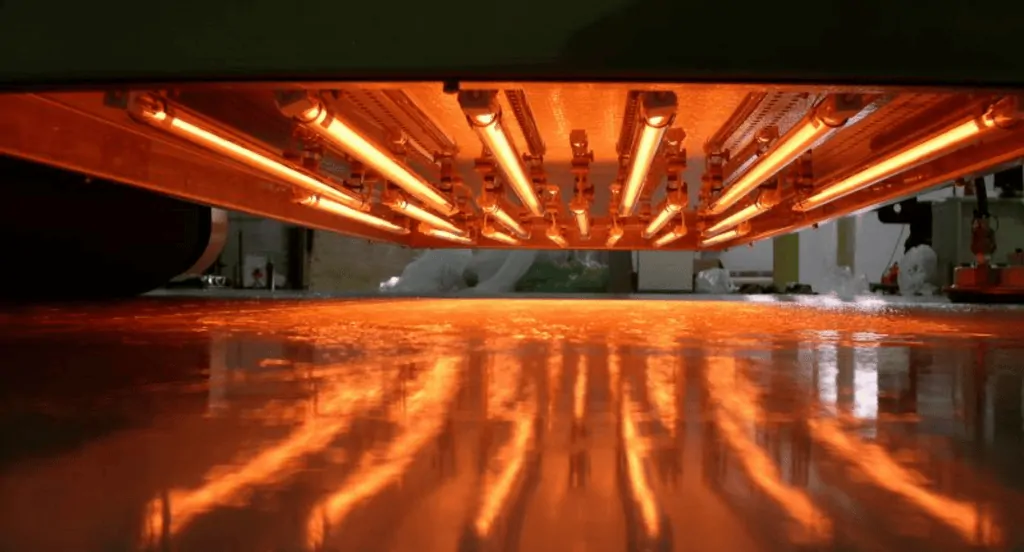
Infrared (IR) curing has become a key technology for achieving consistent, high-level finishes in less time. Instead of slowly warming the air in a large oven, infrared heaters deliver energy directly to the coated surface and its substrate. This approach shortens drying times, reduces defect risk, and can significantly cut energy consumption compared to conventional convection ovens or simple air drying.
This guide explains how infrared heaters work, when they make sense for paint curing, and how to use them step-by-step to achieve a smooth, professional finish with fewer reworks.
1. How Infrared Curing Works
1.1 Infrared vs. Traditional Hot-Air Drying
Traditional convection ovens and air-dry systems transfer heat to coatings primarily by warming the surrounding air and moving that air across the surface. In contrast, infrared heaters emit electromagnetic radiation in the infrared region of the spectrum. When this radiation hits a coated part, the energy is absorbed and converted directly into heat in the paint film and substrate.
Key differences include:
Direct heating of the part instead of just the air.
Rapid ramp-up to curing temperature because energy is applied where it is needed.
Shorter exposure window during which dust and contaminants can land on wet paint.
Smaller footprint and often lower idle energy use than large convection ovens.
This direct, controlled heating is the main reason infrared curing is so effective at improving paint quality and reducing process time.
1.2 Short-, Medium-, and Long-Wave IR
Industrial infrared heaters are typically grouped into three categories based on wavelength:
Short-wave (near IR): approximately 0.7–2 micrometers
Very high emitter temperatures and intense radiant output.
Ideal for metals, powder coatings, and applications requiring fast ramp-up.
Medium-wave IR: approximately 2–4 micrometers
Well matched to many coatings and polymer materials.
Often used for plastics, wood, and substrates that cannot tolerate very high surface temperatures.
Long-wave IR: greater than 4 micrometers
For paint curing, short-wave and medium-wave emitters are most commonly used because their emission range aligns well with the absorption characteristics of typical coating and substrate combinations.
2. When Infrared Curing Is the Right Choice
Infrared curing is not the solution to every finishing challenge, but it is extremely effective in several common situations.
2.1 Powder Coating on Metal Parts
Powder coatings require the powder to melt, flow, and cross-link at the correct part temperature. Infrared heaters can quickly bring metal parts up to the specified metal temperature and hold them there for the required dwell time. This is especially useful for thick or high-mass parts that are slow to heat in a conventional oven.
2.2 Water-Based and High-Solids Liquid Paints
Water-based and high-solids coatings benefit from uniform, controlled heating, which accelerates solvent or water evaporation without overheating the substrate. Infrared systems help eliminate extended air-dry times that keep booths blocked and make defects more likely.
2.3 Spot Repairs and Local Curing
In automotive refinishing or on large fabricated assemblies, it is not always practical to heat an entire body or structure. Mobile infrared units allow technicians to target only the repair zone, avoiding thermal stress on nearby components and reducing overall energy consumption.
2.4 Substrates with Varying Thickness
Complex parts often have a mix of thin and thick sections. Convection heating can leave thin sections over-baked while thick sections are under-cured. With properly configured infrared systems, energy can be zoned or focused to balance curing across different masses and geometries.
2.5 Energy- and Space-Constrained Facilities
Infrared systems can reduce energy consumption by eliminating long warm-up periods and focusing heat directly on parts. Because they do not require large volumes of hot air, they can also be more compact, fitting into facilities where a full-size convection oven is not practical.
If your priority is shorter cycle times, fewer defects, and lower energy use—especially on metals and coatings that can tolerate elevated surface temperatures—infrared curing is worth serious consideration.
3. Step-by-Step: Using an Infrared Heater for a Smooth Paint Finish
This section describes a practical workflow that reflects common industry practice across automotive, metal finishing, and industrial coating environments. Always adapt these steps to the technical data sheets (TDS) for your specific paint and to the instructions provided by your equipment supplier.
3.1 Prepare the Surface and Workspace
A good finish starts long before the heater turns on.
Surface cleaning
Remove dust, oil, and fingerprints with appropriate solvent or detergent.
Use lint-free cloths and dedicated cleaning tools to avoid re-contamination.
Mechanical preparation
Control the environment
Keep the booth or work area clean and free from loose dust.
Avoid painting immediately before or during extreme humidity swings if the area is not climate-controlled; moisture can affect film formation and adhesion.
Maintain ambient temperature and humidity within the range recommended by the paint manufacturer.
Organize tools and safety equipment
Position stands, infrared units, thermometers, spray guns, and masking materials so operators do not need to cross the sprayed area during curing.
Ensure appropriate personal protective equipment (PPE) is available: gloves, eye protection, masks or respirators, and protective clothing.
Well-executed preparation reduces rework and lets the infrared system focus on curing instead of compensating for environmental issues.
3.2 Configure the Infrared Heater
Correct heater selection and setup are critical to both finish quality and safety.
Select a suitable wavelength and power level
Use short-wave emitters for high-temperature, fast-cycle curing of metals and many powder coatings.
Use medium-wave emitters where substrates are more temperature sensitive or where a gentler heat profile is required.
Set distance and angle
Follow the heater manufacturer’s recommended distance range. Too close and the coating may blister or discolor; too far and curing may be incomplete.
Adjust the angle so the beam covers the entire coated area evenly, minimizing shadows cast by part geometry.
Plan coverage for complex parts
For parts with deep recesses or multiple planes, plan a sequence: cure one side or section at a time, rotating the part or repositioning the heater between stages.
For large surfaces, multiple heaters or emitter modules may be needed to avoid cold spots.
Verify safety clearances
Keep flammable materials, masking paper, and overspray collection media outside the heater’s high-intensity zone.
Check all power connections, cord routing, and mechanical stability before starting.
3.3 Control Timing and Temperature
The single most important factor in reliable curing is controlling part temperature and dwell time, not just the air temperature.
Respect flash-off time
Many liquid coatings require a short flash period before infrared exposure to allow solvents to begin evaporating evenly.
If infrared is applied too early, solvents can boil in the film and cause pinholes or bubbles.
Measure substrate temperature
Use contact thermocouples, magnetic sensors, or surface thermometers to monitor the actual metal temperature on representative points of the part.
For powder coatings, curing schedules such as specified minutes at certain metal temperatures are common, but always follow the powder supplier’s documented requirements.
Use timers and process logs
Start timing once the part reaches the target temperature, not when it enters the heated zone.
Record setpoints, dwell times, and observations in a log; this supports process optimization and troubleshooting.
Adjust heater output as needed
If the surface temperature rises too quickly, reduce the power level or increase distance.
If the part struggles to reach target temperature, verify heater output, distance, environmental conditions, and coating thickness.
3.4 Post-Curing Checks and Handling
Once the cure schedule is complete, a few simple checks help ensure the finish will perform in service.
Visual inspection
Look for gloss variations, mottling, dust inclusions, sags, or runs.
Check edges and recesses carefully; these are common weak points.
Simple mechanical tests
After cooling to room temperature, lightly press a fingernail into an inconspicuous area. A properly cured film should resist indentation.
Where appropriate, use a solvent rub or simple adhesion test according to your internal specifications.
Cooling and assembly
Allow the part to cool to ambient temperature before handling, masking removal, or assembly.
Handling parts while they are still hot can cause imprints, gloss changes, or minor distortions in soft substrates.
Documentation
4. Using Infrared Curing to Reduce Defects
Infrared heaters, when used correctly, help eliminate several common finishing problems.

4.1 Orange Peel
Orange peel—a textured, bumpy surface resembling citrus skin—can be caused by poor atomization, incorrect viscosity, or uneven curing.
How infrared helps
Uniform, stable heating allows the coating to flow out properly before it fully cross-links.
Controlled ramp-up prevents the top layer from “freezing” while the lower film is still moving.
Practical tips
Use thin, even coats rather than one heavy layer.
Verify gun setup and spray technique; curing cannot compensate for application defects.
Ensure the infrared heater covers the entire surface evenly, without cold corners or hot spots.
4.2 Bubbling and Blistering
Blisters often come from trapped solvents, residual moisture, or overly aggressive heating.
Avoid applying infrared heat too early in the flash-off stage.
Reduce power or increase distance if the film visibly boils or “craters” during ramp-up.
Check for contamination from oils, silicones, or water in compressed air; curing will exaggerate these problems.
4.3 Cracking and Brittleness
Over-curing can make coatings brittle, especially on flexible substrates or in high-build films.
Verify that the part is not exceeding the maximum recommended temperature for the coating and the substrate.
For multi-coat systems, ensure each layer is within the cure window; repeated over-baking can degrade performance.
4.4 Dust and Inclusions
One of the advantages of infrared curing is a shorter window during which the coating is wet and tacky, which reduces time for dust to settle.
Keep floors swept and filters maintained to avoid introducing debris.
Minimize foot traffic and unnecessary movement near freshly sprayed parts.
Position ventilation so that airflow does not blow directly onto the wet coating.
A simple defect–cause–prevention checklist can be incorporated into standard work instructions to support consistent quality.
5. Safety and Reliability When Working with Infrared Heaters
Any system that combines high temperatures, electrical power, and solvents requires a disciplined safety approach.
5.1 Personal Protection
Wear heat-resistant gloves when adjusting or moving heaters that may have hot housings or guards.
Use safety glasses or face shields to protect against accidental contact with hot surfaces or hardware.
Ensure appropriate respiratory protection for the paint system in use, especially in enclosed spaces.
5.2 Fire and Electrical Safety
Keep rags, solvents, powder dust, and masking materials outside the high-heat zone and away from heater surfaces.
Inspect power cords, plugs, and connections regularly; replace damaged components immediately.
Do not leave operating heaters unattended. Turn off power during breaks, setup changes, or any period without parts in front of the heater.
Keep suitable fire extinguishers accessible in all curing areas, and train personnel in their use.
5.3 Routine Maintenance
Regular maintenance improves both safety and finish quality:
Clean reflectors and lamp covers to maintain consistent output.
Check mounting hardware and bases for stability and tighten as needed.
Inspect intensity controls, timers, and safety interlocks according to the manufacturer’s schedule.
Keep a maintenance log so any performance changes can be traced and corrected early.
Well-maintained infrared systems not only last longer but also deliver more predictable curing, which directly supports consistent finish quality.
6. Choosing an Infrared Heater for Paint Curing
Selecting the right infrared system depends on your products, volume, and process constraints. Consider the following points before investing.
6.1 Project Size and Layout
6.2 Paint and Substrate Types
Confirm that the heater’s wavelength and power output are compatible with the coatings and substrates you use most frequently.
For powder coatings on steel or aluminum, short-wave or high-power medium-wave emitters are common.
For composites, plastic parts, or wood, pay careful attention to maximum allowable substrate temperatures and choose configurations that provide gentler heating.
Always cross-check selected equipment settings with the paint supplier’s recommended cure schedules.
6.3 Control Features and Monitoring
For consistent, repeatable results, look for systems that provide:
Adjustable output levels or multi-stage intensity control.
Integrated timers or programmable recipes for different coating systems.
Clear status indicators and accessible shut-off switches.
Compatibility with temperature measurement devices such as thermocouples, data loggers, or surface infrared thermometers.
These features make it easier to implement standard operating procedures and train operators to run the process the same way every time.
6.4 Standards and Compliance
To support a trustworthy, professional operation:
Choose equipment that conforms to relevant electrical and safety standards for your region.
Maintain documentation of safety certifications, installation records, and periodic inspections.
Ensure that local ventilation, electrical, and fire safety regulations are followed when installing and operating infrared systems.
Visible compliance and robust documentation help demonstrate that your curing process is not only efficient but also safe and well-controlled.

7. Quick FAQ on Infrared Paint Curing
Q1. How does an infrared heater speed up paint drying?
Infrared heaters deliver radiant energy directly into the paint film and substrate instead of relying only on warmed air. This accelerates solvent evaporation and the chemical reactions involved in curing, which shortens overall process time compared with air-dry or purely convection systems.
Q2. Which coatings benefit most from infrared curing?
Powder coatings, water-based paints, and many high-solids liquid coatings respond very well to infrared curing, especially on metal parts. The key is matching the heater’s wavelength and power level to the coating and substrate so that the film reaches the correct temperature profile.
Q3. Can infrared curing reduce energy costs?
Yes. Because infrared systems generally have shorter warm-up times and apply heat directly to the coated parts, they can reduce energy consumption significantly compared with large convection ovens, particularly in intermittent or variable-load operations.
Q4. Is infrared curing suitable for all substrates?
Most metals and many heat-resistant plastics, composites, and woods can be cured with infrared, provided the process parameters stay within their allowable temperature range. For heat-sensitive materials, medium-wave or lower-intensity configurations and careful temperature monitoring are essential.
Q5. How should heaters be positioned for best results?
Heaters should be positioned at the recommended distance and angle to cover the entire coated area evenly, avoiding shadows and cold spots. Complex shapes may require repositioning the heater or rotating the part during curing. Temperature measurements at several points on the part help confirm that all critical regions reach the correct cure temperature.
By combining solid preparation, correct heater configuration, accurate temperature control, and disciplined safety practices, infrared curing can deliver smooth, durable paint finishes with less downtime and lower energy use. When implemented as part of a controlled, well-documented process, it becomes a powerful tool for upgrading both quality and productivity in modern finishing operations.
Related Infrared Heating Resources
Review YFR industrial infrared heating lamps and heating modules and controls. Validate film temperature, flash-off and cure through representative coated-part trials.
Review Your Heating Application
Send YFR your material, dimensions, target, cycle time and current equipment details for an application-specific review.


