Author: Site Editor Publish Time: 2025-08-11 Origin: Site
Last updated: August 28, 2026
There is no universally “best” industrial infrared lamp supplier. The right supplier is the one that can translate your process data into a compatible emitter, document what will be supplied and support validation before a production change. This checklist focuses on the evidence engineering and purchasing teams should request when comparing manufacturers.
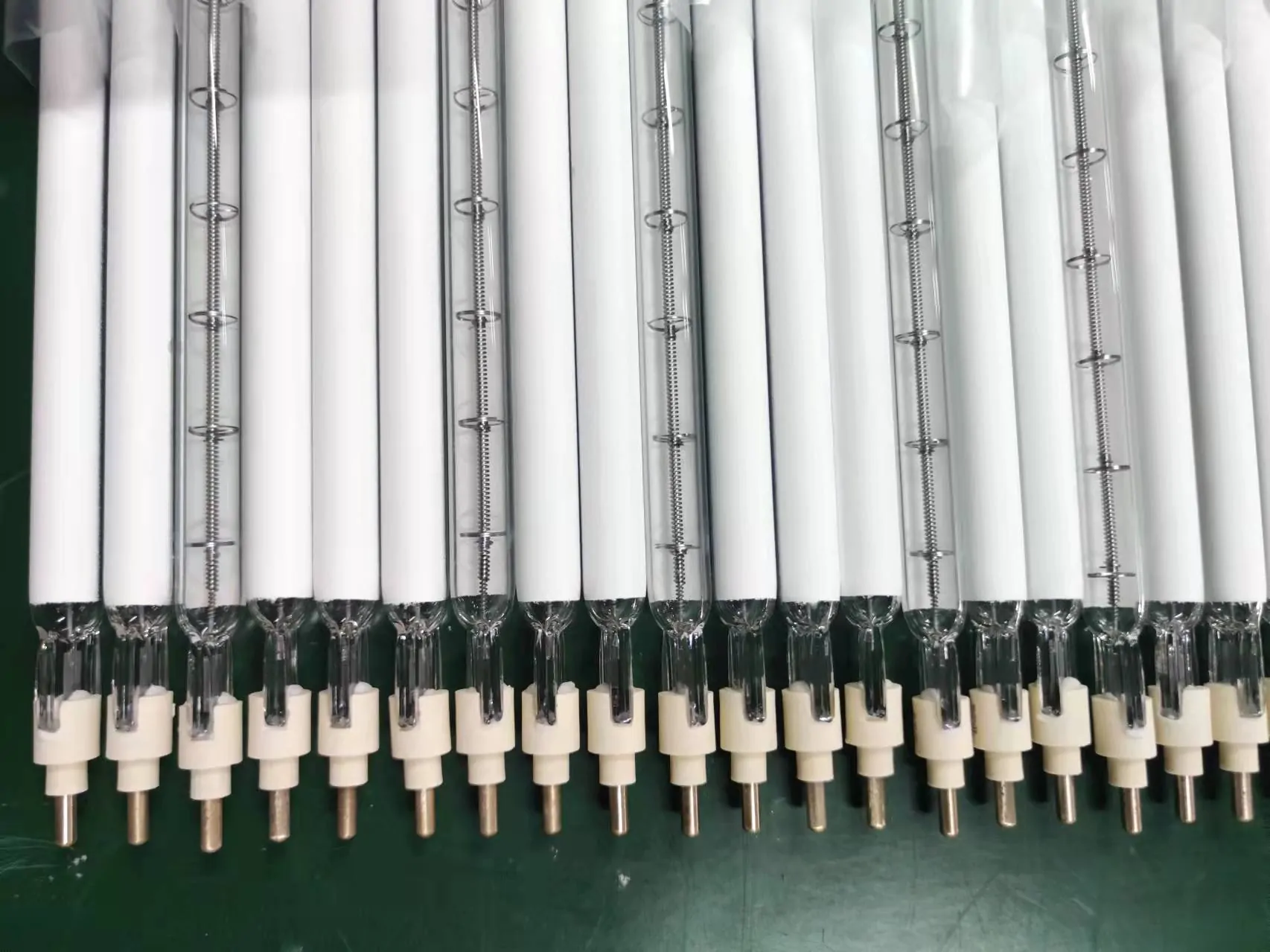
A supplier comparison is meaningful only when every candidate receives the same operating information. Define the material, target temperature, available heating time, working distance, heated width, line speed and control method. For replacement lamps, include the original lamp marking and dimensional drawings or clear photographs.
Without this information, quotations may describe products that look similar but differ in wavelength, heated length, electrical load or mounting details.
| Evaluation area | What to request | Why it matters |
|---|---|---|
| Electrical specification | Rated voltage, wattage, current and approved operating orientation | Prevents overload, underheating and shortened service life |
| Dimensions | Overall length, heated length, tube diameter, end details and lead length | Confirms mechanical fit and heat-zone alignment |
| Emitter type | Wave range, response class, filament or heating element and reflector option | Connects the lamp to material absorption and cycle time |
| Quality control | Incoming-material checks, electrical tests, dimensional checks and traceability | Shows whether repeat orders can remain consistent |
| Documentation | Drawing, label format, packing method and change-control process | Reduces ambiguity between approval and production supply |
Replacement work requires more than matching the printed wattage. A capable supplier should review overall length, heated length, cold zones, tube shape, end seals, ceramic parts, leads, connectors, reflector position and installation orientation. When the old marking is incomplete, the supplier should identify which measurements or photographs are still required rather than guessing.
Ask for a drawing or written specification before ordering a new or unfamiliar replacement. This creates an approval record and makes later repeat orders easier to verify.
A long catalogue does not necessarily indicate strong application support. More useful questions are whether the manufacturer can provide short-wave infrared lamps, fast or conventional medium-wave emitters, carbon emitters, single- and twin-tube designs, reflectors and suitable end configurations—and whether it can explain when each option should be used.
For a complete heating assembly, confirm whether the supplier can also support reflectors, cooling, temperature feedback, power control and heating-system integration.
Ask how incoming quartz, filament materials, seals and ceramic components are checked. Finished-lamp verification should cover the electrical rating and the dimensions that affect fit. For customised emitters, a controlled drawing or reference sample should identify the approved construction.
Traceability is especially important when several lamp variants share a similar appearance. The label, order code or drawing revision should allow both parties to identify exactly what was produced.
For a new process or a major specification change, validate a sample before converting the full line. Record warm-up behaviour, workpiece temperature, uniformity across the working width, control response and product quality. A supplier should be willing to review the results and adjust wavelength, power density, spacing or zone arrangement where necessary.
A successful sample is more useful than a broad efficiency claim because it reflects your material, equipment and production target.
A quotation is issued without confirming voltage, dimensions or application.
Different wave types are presented as interchangeable without process review.
No drawing or specification can be supplied for a customised lamp.
Performance or lifetime is guaranteed without defining operating conditions.
Changes to connectors, reflectors or heated length are treated as cosmetic.
Unit price is only one part of the comparison. Include fit risk, line downtime, repeat-order consistency, documentation and the cost of validation or rework.
Provide voltage, wattage, overall length, heated length, tube diameter, end details, lead or connector information, reflector position, operating orientation and clear photographs.
No. The correct power depends on absorption, exposure time, distance, cooling and control. Excess power can create surface damage or poor uniformity.
Use a sample test for new materials, new processes, major dimensional changes or any replacement where the original data is incomplete.
YFR supplies industrial infrared lamps, replacement emitters, heating modules and controls. Send your application data or existing lamp specification for a documented compatibility review.


