Author: Site Editor Publish Time: 2025-07-11 Origin: Site
Last updated: August 31, 2026
Infrared heating can support coating lines by transferring energy directly to the coating and substrate. However, a successful paint-curing process depends on more than installing a high-output lamp. Coating chemistry, solvent or water release, substrate response, film temperature, line speed, airflow and zone control must be evaluated as one process.
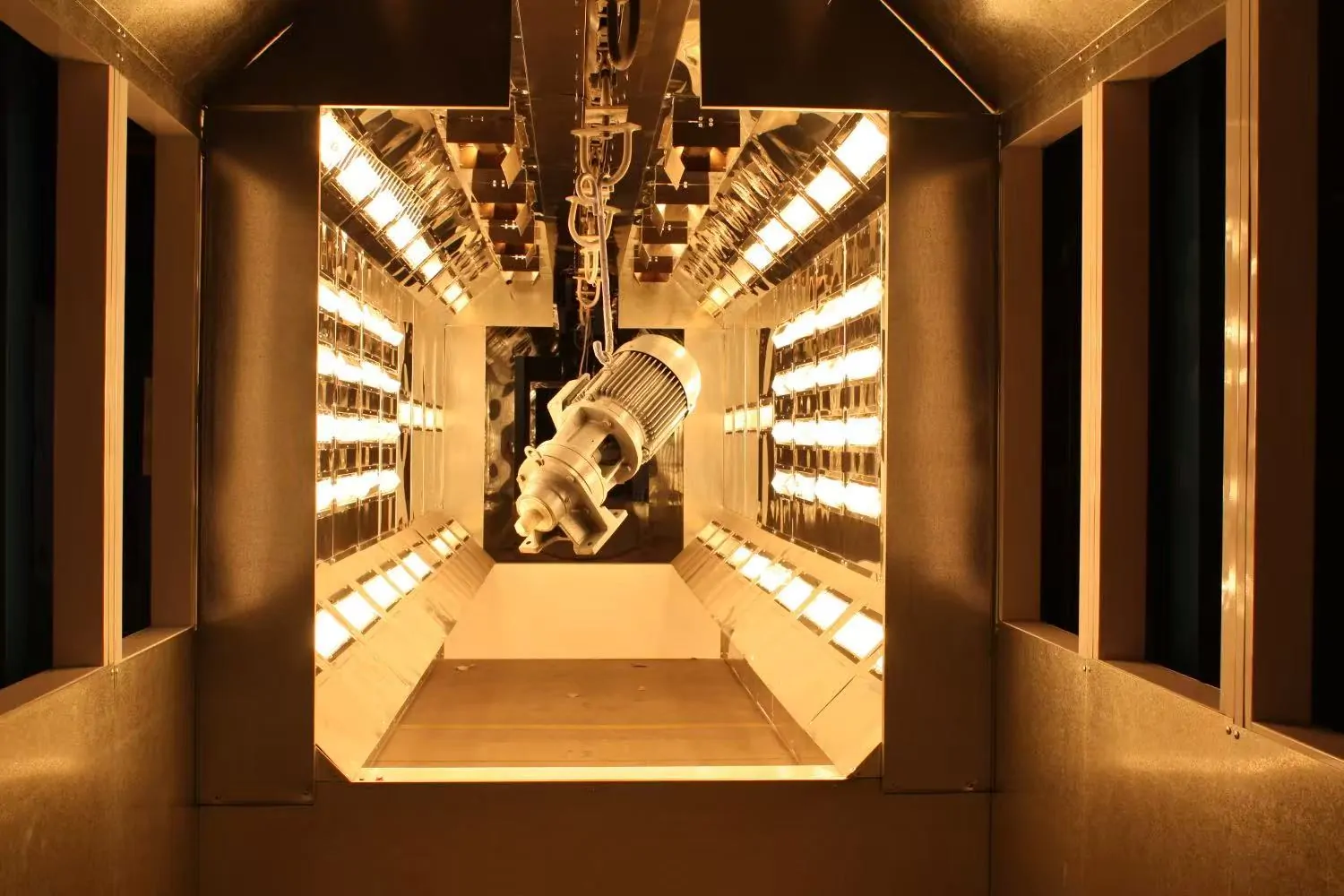
Infrared emitters can be arranged in controlled zones for paint flash-off, heating and final cure.
The coating supplier's technical data sheet should define the required cure condition and any flash-off restrictions. Waterborne, solvent-borne, powder and other coating systems respond differently to heat. Film thickness, color, gloss, pigment and application method can also change the rate at which the coating absorbs energy and releases volatile components.
A thin film may heat and release moisture or solvent differently from a heavy or multilayer coating. Excessively rapid surface heating can form a skin before material below the surface has escaped, which may contribute to blistering, pinholes or trapped solvent. The heating profile should follow the coating's process requirements instead of targeting the shortest possible exposure.
Steel, aluminum, plastic, wood, glass and composite parts differ in thermal mass, conductivity and temperature limits. A heavy metal part may require more time for the complete assembly to reach the specified condition, while a thin or heat-sensitive substrate may respond quickly. Part geometry, shadows, cavities and changes in thickness can create temperature differences that require separate heating zones.
Flash-off and cure are related but distinct stages. Flash-off allows water, solvent or other volatile material to leave the wet coating before the film is exposed to a more demanding cure condition. Treating both stages as one undifferentiated heating step can make the process difficult to stabilize.
The initial zone should provide controlled energy and suitable airflow without sealing the coating surface too quickly. Required residence time depends on the coating formulation, film build, ambient conditions and part geometry. Infrared power, air movement and conveyor speed should be developed together because each can influence evaporation.
Final cure should be evaluated against the coating supplier's specified film or substrate-temperature history. Air temperature alone does not show whether the coating reached the required condition. The process should achieve sufficient cure without overheating sensitive parts, seals, adhesives or areas with low thermal mass.
Short-wave quartz lamps offer rapid response and can suit lines that require fast changes, frequent starts or tightly controlled heating zones. Medium-wave and carbon emitters can provide a different heating response that may suit particular coating and substrate combinations. The emitter should be selected through trials using actual coated parts.
Reflectors, lamp spacing and installation distance influence the energy distribution at the workpiece. A technically appropriate lamp can still produce poor results if the optical arrangement creates hot spots or uncovered areas. For an overview of available configurations, see the industrial infrared heat lamp guide.
| Selection Variable | Process Question | How to Validate It |
|---|---|---|
| Coating formulation | How should volatile material leave the film? | Follow supplier data and inspect trial panels |
| Substrate and geometry | Where will thermal mass or shadowing vary? | Map temperatures on representative parts |
| Emitter type | What response and heating profile are required? | Compare controlled heating trials |
| Lamp spacing and distance | Is energy distributed uniformly? | Measure edge, center and recessed areas |
| Line speed | Is residence time sufficient for flash-off and cure? | Record the complete time-temperature history |
Oven setpoint, lamp percentage and air temperature are control inputs; they are not substitutes for measuring the coated part. Development trials should use suitable thermocouples, infrared sensors, thermal imaging or a combination of methods. Sensor placement should cover both the easiest and most difficult areas to heat.
Non-contact measurements require attention to emissivity, reflected radiation, viewing angle and changes in surface gloss. A shiny metal area and a dark coated area may not produce comparable readings without correct instrument settings. Contact measurements can also affect thin parts, so the method should be checked against a known reference.
The target is a stable process window across the full part and production run. A single peak reading does not demonstrate that the coating experienced the required time at temperature.
A zoned infrared oven allows the heating profile to be adjusted by process stage or part geometry. An entry zone can begin flash-off gently, intermediate zones can raise film temperature, and a final zone can complete the specified cure. Independent control can also compensate for heavy sections, edges or shadowed features.
Lamp arrangement should follow the actual product envelope. Side emitters, overhead emitters or shaped reflector systems may be required when parts present several orientations to the source. Shielding can protect temperature-sensitive components and prevent unnecessary exposure outside the coated area.
Rapid-response emitters may be coordinated with part-detection sensors so lamps operate only when a workpiece is present. For further selection context, review the short-wave infrared heat lamp guide and the quartz versus ceramic infrared heater comparison.
Validation should combine process measurements with coating-performance tests appropriate to the product. Depending on the specification, these may include adhesion, hardness, solvent resistance, appearance, color, gloss, impact performance or corrosion testing. The coating supplier and end-product requirements should determine the acceptance criteria.
Trials should include realistic variations in part loading, line speed, film thickness, substrate condition and ambient temperature. Record the lamp settings, zone temperatures, airflow, conveyor speed and measured part-temperature history for each accepted condition. This creates a usable operating window rather than a single laboratory setting.
Routine maintenance should include reflector cleaning, ventilation checks, lamp inspection and confirmation that replacement emitters match the qualified electrical and optical specification. A change in heated length, filament position, reflector geometry or installed distance may alter the temperature profile even when nominal wattage appears similar.
Can infrared heating replace a convection oven?
Sometimes, but the correct system depends on the coating, substrate and required temperature history. Other lines use infrared as a booster, flash-off stage or zoned preheating section together with convection.
Does a higher lamp setting always cure paint faster?
No. Excessive surface heating can disturb solvent or water release, overheat thin sections and create an uneven film. Lamp output must be coordinated with residence time, airflow and coating requirements.
Should oven air temperature or coating temperature be controlled?
Both may be useful, but the coating and substrate temperature history is the more direct evidence of what the part experienced. Measurement methods must be appropriate for the surface.
Why do different colors behave differently under the same lamps?
Pigment, gloss and film build can affect infrared absorption and temperature measurement. Color changes should therefore be included in process qualification rather than treated as a purely visual change.
YFR can review your coating type, substrate, part dimensions, line speed, target temperature profile and available oven space to support lamp and zone selection. Contact YFR to discuss your infrared paint-curing application.


