Home » News » Industry News » Quartz IR lamps for electrostatic powder coating drying

Quartz IR lamps for electrostatic powder coating drying

Views: 0     Author: Site Editor     Publish Time: 2025-12-01      Origin: Site

Inquire

facebook sharing button
twitter sharing button
line sharing button
wechat sharing button
linkedin sharing button
pinterest sharing button
whatsapp sharing button
sharethis sharing button

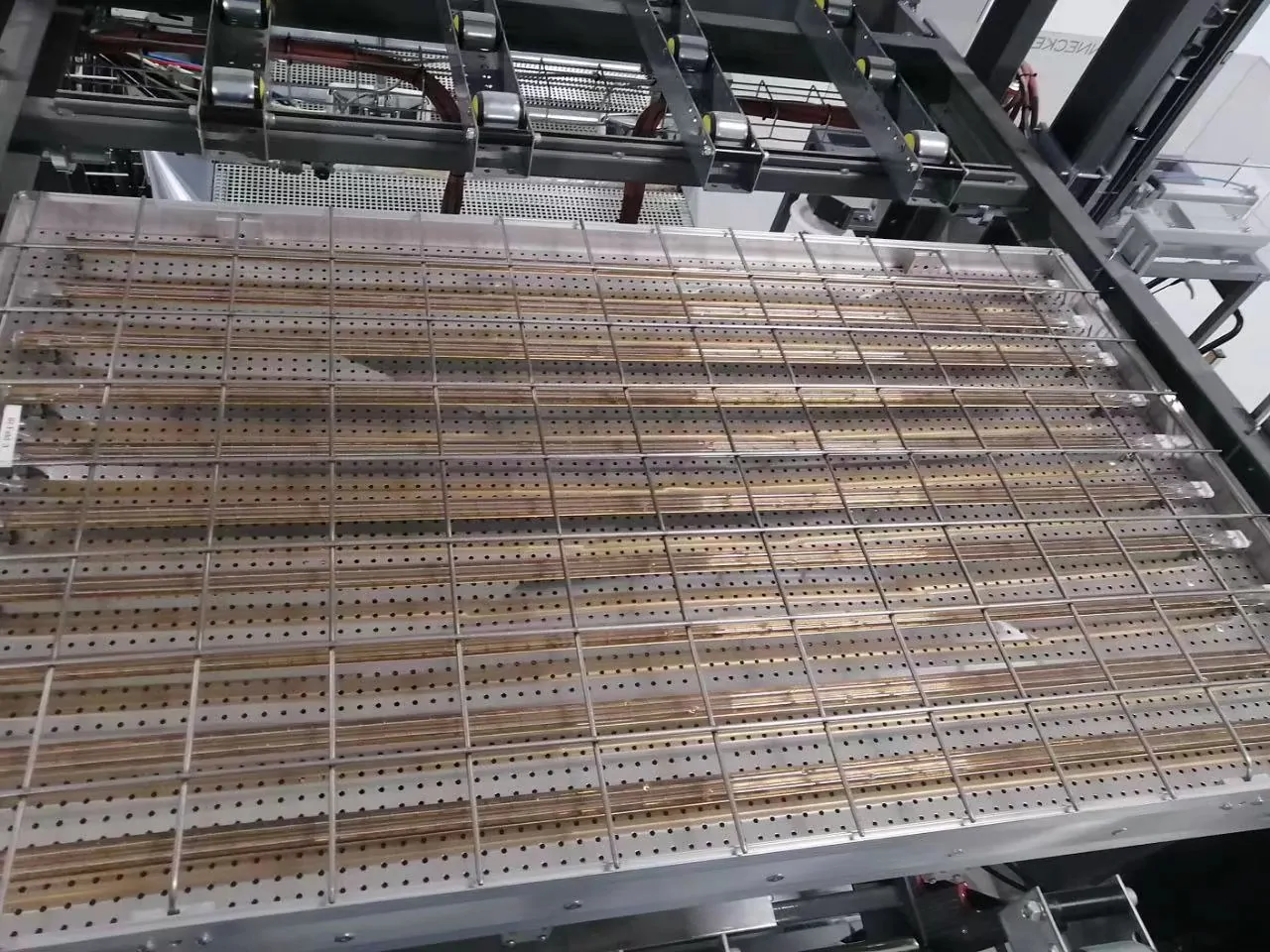
Electrostatic powder coating lines are under constant pressure to cure faster, use less energy, and deliver consistent film properties. This article explains how plant engineers, OEM designers, and system integrators can use quartz IR lamps for electrostatic powder coating drying to increase throughput, stabilize quality, and support decarbonization goals—often without completely rebuilding existing lines.
fast medium wave infrared lamp


Executive Summary

  • Powder coating lines are energy- and space-intensive. Ovens and dryers are among the largest energy consumers in many coating plants, especially when they rely on long gas-fired convection tunnels.

  • Infrared powder coating drying fits best where parts can “see” the heaters: metal components, profiles, racks, and assemblies in automotive, metal furniture, appliance, agricultural machinery, and aluminum extrusion lines.

  • Properly engineered quartz infrared heating lamps and infrared powder coating ovens can significantly shorten gel and cure times compared with purely convective curing. This can translate into higher line speed, smaller ovens, or both.

  • Key technical decision points include wavelength band, power density, heater type (single/twin-tube quartz), working distance, and closed-loop control to avoid under-cure or scorching.

  • Huai’an Yinfrared Heating Technology supports customers with modular short-wave quartz IR lamps, fast medium-wave IR heaters, cassette-style modules, and complete infrared powder coating oven designs for OEM integration or retrofit.

Key takeaway: For many existing powder coating lines, adding a compact IR pre-gel zone is one of the fastest ways to increase throughput and reduce energy use without replacing the entire oven.


Use Cases & Buyer Scenarios

Retrofitting gas convection ovens in powder coating lines with quartz IR modules

Typical process

  • Substrate: mild steel or aluminum parts, 1–4 mm thick.

  • Coating: polyester, epoxy, or hybrid powder systems.

  • Line speed: 2–6 m/min on overhead conveyor.

  • Temperature window: metal temperature around 160–200 °C and a 10–15 min cure in a convection oven, according to powder supplier data.

Pain points with pure convection

  • Long oven length to achieve required metal temperature and cure time.

  • High gas consumption and long warm-up times.

  • Temperature stratification and difficulty curing heavy and light parts in the same rack.

  • Limited ability to increase line speed without under-cure and quality complaints.

How quartz IR changes the game

Installing a compact short-wave quartz IR module between the booth and the existing convection oven preheats the powder coating and starts gelation almost immediately. Industrial case histories show that adding IR in front of a convection oven can increase production while reducing fuel consumption, with simple payback often within a few years, depending on local energy costs and utilization.

Benefits:

  • Metal and coating surface reach gel temperature in 60–120 seconds instead of several minutes.

  • Convection oven can run at a lower setpoint or with shorter dwell time.

  • Potential to increase conveyor speed or free up oven length for additional zones or new products.

Recommended solution types

  • High-intensity short-wave quartz IR lamps with gold or ceramic reflectors.

  • Twin-tube quartz IR heater modules in plug-in cassettes for easy maintenance.

  • Integration into a wider infrared heating system with thyristor control and temperature feedback.


High-speed infrared drying for metal furniture and profile powder coatings

Typical process

  • Substrate: steel or aluminum furniture frames, shelving, and architectural profiles.

  • Coating: thin-film decorative powder, often low-cure or fast-cure formulations.

  • Line speed: 3–10 m/min on continuous lines.

  • Temperature window: metal temperature around 160–190 °C, with tight aesthetic and gloss requirements.

Pain points with conventional ovens

  • Long tunnels occupy valuable floor space and limit line layout flexibility.

  • Risk of “orange peel” or gloss inconsistency if temperature distribution is poor.

  • Changeover between dark and light colors can expose weaknesses in control and uniformity.

  • For aluminum profiles, managing temperature along very long parts is challenging.

How infrared powder coating drying helps

Fast medium-wave and short-wave quartz IR modules focus energy directly into the coating layer and the top surface of the metal. Because the energy transfer is radiative rather than purely convective, properly matched wavelengths can be absorbed very efficiently by the powder and substrate.

Benefits:

  • Shorter heat-up zone and increased line speed for the same cure quality.

  • Better color stability and gloss when zones are well controlled and recipes are defined.

  • Flexibility to operate IR-only for thin, low-mass parts or IR plus convection for heavier loads and complex assemblies.

Recommended solution types

  • Fast medium-wave quartz IR heaters for good absorption in common powder coatings.

  • Zoned IR cassettes with profile-specific arrangements (for example, side/top/bottom arrays for architectural profiles).

  • Integration of industrial infrared drying concepts into the line PLC and recipe management.


Spot preheating and gel-time control for complex geometries and heavy parts

Typical process

  • Substrate: heavy steel fabrications, castings, or complex 3D assemblies with different section thicknesses.

  • Coating: anti-corrosion primers or thick functional powders.

  • Line speed: low to moderate, but with high part mass and thermal inertia.

  • Temperature window: typically 170–220 °C on steel, with long soak times required in convection ovens.

Pain points with conventional ovens

  • Thicker sections lag in temperature, leading to under-cure in recesses and joints.

  • Light and heavy parts on the same carrier cure very differently.

  • “Shadow zones” behind brackets or inside pockets never see sufficient hot air.

  • Attempts to cure heavy parts properly may over-bake thinner parts.

How spot infrared preheating solves it

Local quartz infrared heating lamps can be applied to:

  • Preheat thick sections before entering the main oven.

  • Gel powder on shadowed or recessed areas.

  • Compensate for thermal lag without overheating the rest of the part.

Benefits:

  • Reduced rework due to under-cure or poor adhesion in difficult locations.

  • Improved capability to cure mixed loads with more confidence.

  • Better utilization of existing convection oven capacity.

Recommended solution types

  • Compact single- or twin-tube quartz IR emitters in adjustable brackets.

  • Custom “spot heater” modules that can be repositioned as the product mix changes.

  • Integration with local temperature sensors and simple on/off or phase-angle power control.

Pro tip for plant engineers: Start by instrumenting your most problematic parts with thermocouples or IR sensors. The data will show exactly where targeted IR can eliminate cold spots and allow you to shorten overall oven time.


Spec & Selection Guide (the heart)

Designing an effective infrared powder coating oven requires a structured look at the main IR parameters and how they interact with your powder, substrate, and line layout.

Wavelength band and material absorption

  • Definition: IR wavelength band refers to the dominant emission wavelength of the heater:

    • Short-wave (near IR): roughly 0.8–1.5 µm

    • Medium-wave: roughly 1.5–3.0 µm

    • Long-wave: above 3.0 µm

  • Why it matters: Powder coatings and metals absorb IR differently at different wavelengths. Medium-wave IR is often close to absorption peaks of many organic coatings, which can make it efficient for curing, while short-wave can penetrate deeper and brings very high power density.

  • Trade-offs:

    • Short-wave: fastest response and highest power density, good for high-speed lines and small parts.

    • Medium-wave: more forgiving and often efficient for standard powder chemistries on steel and aluminum.

    • Long-wave: softer heating, more suited to certain plastics or low-temperature cure systems.

Power and power density

  • Definition: Total power (kW) and power per unit area (kW/m²) incident on the part surface.

  • Why it matters: Too low, and you never reach metal temperature; too high, and you risk yellowing, orange peel, or overheating edges.

  • Typical practice: For powder coating pre-gel zones, engineers often work in a broad range around 20–60 kW/m² at the heater face, depending on distance, geometry, and reflectors. The real absorbed power at the part is lower and must always be validated by testing.

Heater/emitter type

  • Quartz tube: Single- or twin-tube quartz IR, often with a reflective back.

  • Ceramic: Long-wave, slower response, used more for gentle heating and some low-temperature processes.

  • Metal foil/panel: Uniform panels, typically medium/long-wave, suitable where very smooth distribution is needed.

  • Cassette modules: Pre-assembled arrays of quartz tubes in metal housings with connectors and reflectors.

Why it matters

  • Quartz tubes give fast response and compact form factor—ideal for high-speed lines and hybrid IR plus convection systems.

  • Cassette modules simplify mounting, wiring, and replacement, which is important for maintenance and uptime.

Emitter length, panel size, and zoning

  • Definition: Physical length of tubes and modules, and the segmentation of the heating area into independently controlled zones.

  • Why it matters: Zoning allows you to adapt power to part geometry and color, improving quality and saving energy.

  • Rule-of-thumb: Use smaller modules (for example 300–500 mm width) for flexible, mixed-production lines; larger modules for dedicated high-volume parts with stable geometry.

Surface temperature and response time

  • Definition: Heater surface/emitter temperature and time needed to reach operating temperature after power is applied.

  • Why it matters: Faster response supports on-demand heating, reduced standby losses, and better line control for start–stop operation.

  • Quartz IR: Typically reaches operating output in seconds; suitable for dynamic lines where production speed and product mix vary.

Working distance and line layout

  • Definition: Distance between the IR emitter face and the coated surface on the moving part.

  • Why it matters: IR intensity drops with distance; too short a distance raises risk of hot spots and uneven heating, especially on edges and corners.

  • Typical practice: 150–400 mm working distance for many quartz IR powder applications, adjusted during testing for each product family.

Control options

  • On/off contactors: Simple and low-cost, but with limited granularity and more temperature swing.

  • Solid-state relays (SSR) or SCR (thyristor) control: Phase-angle or burst firing for smooth power modulation.

  • PID loops: Closed-loop control based on temperature feedback from thermocouples or pyrometers.

  • PLC/fieldbus: Integration with plant-wide control, recipes, alarms, and data logging.

Enclosure, insulation, and IP rating

  • Enclosures protect emitters from powder overspray and dust, and help manage airflow.

  • Proper insulation keeps heat where it is needed and significantly improves energy efficiency.

  • IP rating must match the plant environment (dust, humidity, possible washdown) and local standards.


Comparison Table: Typical IR Solutions in Powder Coating

Infrared Solution Type Wavelength Band Typical Power Density (at heater face) Response Time Recommended Applications Control Options
Short-wave quartz IR lamps ~0.8–1.5 µm High to very high Very fast (seconds) High-speed pre-gel, spot heating, compact retrofits On/off, SSR, SCR, PLC
Fast medium-wave quartz IR heaters ~1.5–3.0 µm Medium to high Fast (seconds–tens s) General powder cure on metals, profiles, furniture On/off, SSR, SCR, PLC
Long-wave ceramic IR panels >3.0 µm Low to medium Slow (minutes) Gentle heating, certain plastics or low-temp substrates On/off, SSR
Hybrid IR + convection powder coating system Mixed (IR) + hot air Medium (IR zone) Fast overall Upgrades of existing lines, balanced cure and temperature Integrated PLC with IR and fans

(Values are indicative; final selection always requires testing with your specific powder and parts.)
wavelength


Selection Logic: If/Then Rules

  • If your main constraint is line speed or oven length, then consider short-wave quartz IR modules as a pre-gel or booster stage.

  • If you run standard polyester or epoxy powders on steel or aluminum with mixed colors, then a fast medium-wave quartz solution is often a good starting point.

  • If you process heavy parts or mixed-mass racks, then design a hybrid IR plus convection configuration so IR handles rapid surface heat-up while convection finishes through-heating.

  • If your substrates are temperature-sensitive, then favor lower power densities, longer working distances, and possibly medium- or long-wave emitters with tight control.

Mini Decision Flow

Start
 ├─ Is substrate temperature-sensitive or includes plastics?
 │    ├─ Yes → Prefer medium-/long-wave IR, lower power density, longer distance.
 │    └─ No  → Go to next step.
 ├─ Is your primary goal higher line speed / shorter oven?
 │    ├─ Yes → Consider short-wave quartz IR pre-gel or full IR cure.
 │    └─ No  → Go to next step.
 ├─ Do you have an existing convection oven you want to keep?
 │    ├─ Yes → Design hybrid IR + convection (IR at entry or exit).
 │    └─ No  → Design a fully IR-based infrared powder coating oven.
 └─ Do you run many different part geometries and colors?
      ├─ Yes → Increase zoning; smaller IR modules, advanced PLC recipes.
      └─ No  → Larger modules and simpler control may be sufficient.

Integration & Engineering Notes

Power & Control

  • Mains voltage and phase: Most IR modules for industrial lines are designed for three-phase supply (for example 380–480 V). Check available capacity, transformer configuration, and balance loads across phases.

  • Wiring and protections:

    • Use appropriate cable types and sizing for high temperatures near ovens.

    • Provide branch circuit protection, disconnects, and emergency stops according to local electrical codes.

  • Control strategies:

    • Smaller zones can use SSR control; larger banks with higher power often use SCRs with analog commands (0–10 V or 4–20 mA).

    • PID temperature controllers or PLC function blocks can modulate IR power to maintain target part temperature.

  • Control cabinet layout:

    • Group zones logically (by height, side, length, or product family) for simple troubleshooting.

    • Separate power electronics from high-heat areas; ensure proper ventilation or cooling.

Mechanics & Installation

  • Mounting options:

    • Frame-mounted cassette modules above and beside the conveyor.

    • Swing-out or slide-out frames for easy access and cleaning.

    • Retrofit brackets designed to bolt into existing oven structures or booth exits.

  • Distance and uniformity:

    • Maintain consistent working distance across the part width to avoid hot and cold edges.

    • Account for swinging or part oscillation on overhead conveyors and clearances when loading.

  • Line speed and dwell:

    • IR dwell time is a function of line speed and heated zone length.

    • Example: a 3 m IR zone at 3 m/min gives only 1 minute of exposure; power density must be sized accordingly.

  • Reflectors and shielding:

    • High-quality reflectors (polished aluminum or gold) improve efficiency and direct IR onto the parts.

    • Shields and baffles protect sensitive components and prevent uncontrolled heating of the conveyor or building structure.

  • Maintenance:

    • Design modules for quick lamp replacement from the aisle side, without removing large panels.

    • Provide inspection windows or ports to verify lamp operation without opening hot enclosures.

Thermal Process & Tuning

  • Defining a heating profile:

    • Start from powder supplier data for metal temperature and cure time.

    • Decide on ramp shape: fast surface gel with IR followed by convection soak, or a full IR cure where appropriate.

  • Instrumentation:

    • Use part-mounted thermocouples for initial trials to record actual metal temperature.

    • Combine with IR pyrometers for non-contact measurement of moving parts once the profile is established.

  • From trial-and-error to recipes:

    1. Start with conservative power and longer dwell.

    2. Step up IR power and/or line speed while monitoring temperature and coating appearance.

    3. Freeze successful settings as “recipes” in the PLC for each product family and color.

  • Optimizing quality:

    • Tune to avoid under-cure (poor adhesion, low gloss) and over-bake (discoloration, brittleness).

    • Record defects against process parameters to correlate issues with temperature and time and continuously improve.

Testing & Validation (lab → pilot → full-scale)

  • Lab tests:

    • Use flat panels of representative material and coating.

    • Measure heating curves and minimum energy required for full cure under IR.

  • Pilot or test zone:

    • Install a temporary IR frame in an existing line to confirm behavior on real parts.

    • Adjust zoning and reflectors before committing to full-scale hardware.

  • Full-scale acceptance criteria:

    • Throughput: defined line speed or parts per hour at the specified product mix.

    • Temperature uniformity: maximum allowable spread (for example ±10–15 °C) across critical surfaces.

    • Specific energy consumption: kWh per square meter or per part, compared with the baseline convection-only operation.

    • Quality metrics: adhesion, gloss, hardness, and impact according to the powder supplier’s standards and internal QA requirements.


Compliance, Safety & Certifications

  • Standards and directives (examples):

    • In many regions, IR equipment for powder lines will fall under general electrical equipment and machinery frameworks such as low-voltage and electromagnetic compatibility regulations, with additional safety requirements for moving machinery where applicable.

    • Material and environmental regulations, such as restrictions on hazardous substances and chemical registration frameworks, may apply to components and finishes.

  • High-surface-temperature risks:

    • Emitters and metal housings can reach several hundred degrees Celsius; guard hot surfaces where operators may pass, and use clear warning labels.

    • Interlock doors and access panels to cut power to IR zones when they are opened.

  • Fire prevention:

    • Maintain proper clearances to combustible materials (powder deposits, masks, packaging, etc.).

    • Use over-temperature protection (thermostats or thermocouples with trips) on heaters and enclosures.

    • Keep the IR zone clean and remove accumulated powder deposits on a regular schedule.

  • Electrical safety:

    • Ensure proper grounding of all metallic structures and enclosures.

    • Coordinate short-circuit and ground-fault protection with plant electrical standards and breakers.

  • Documentation:

    • Provide operator manuals, maintenance instructions, and safety procedures in the local language where necessary.

    • A clear technical file and support from the supplier help purchasers demonstrate equipment conformity to their own customers and auditors.


Business Model, MOQ & Lead Time (OEM/ODM)

  • Engagement models:

    • Standard catalog heaters and modules: Suitable for integrators and smaller OEM lines that design their own enclosures and controls.

    • Customized emitters and panels: Tailored lengths, power ratings, connector types, and reflector geometries to fit specific ovens or lines.

    • Complete infrared heating systems or retrofits: Enclosures, mechanics, heating elements, and control cabinets engineered as a package, ready for integration into a coating line.

  • MOQ and samples:

    • For catalog lamps and common modules, orders can typically start from relatively small batches, allowing gradual adoption.

    • Custom designs may require higher minimum order quantities to cover tooling and engineering, but engineering samples are usually available in low quantities for validation and line trials.

  • Lead times:

    • Sample or prototype emitters are normally delivered in weeks rather than months, depending on customization.

    • Full system deliveries depend on project size and scope, and usually include stages such as concept design, detailed engineering, drawing approval, manufacturing, factory testing, and on-site commissioning where required.

  • Private label and co-branding:

    • OEMs and system builders can integrate Huai’an Yinfrared emitters and modules into their own branded ovens or powder lines, with neutral labels and documentation aligned with the OEM’s style and language.

  • Documentation and support:

    • 2D and 3D models for integration into machine designs.

    • Wiring diagrams, connection schedules, load lists, and recommended spare parts.

    • Application notes for key markets such as automotive components, metal furniture, appliances, and architectural profiles.

Example ROI Model (Indicative)

Assumptions:

  • Existing gas convection oven, upgraded with an electric IR pre-gel section.

  • Energy prices and workloads are generic and for illustration only.

  • Savings come from reduced gas consumption, better heat targeting, and increased throughput.

Item Baseline: Convection Only Retrofit: IR + Convection
Relative energy use per part 100 70–80
Relative energy cost per year 100 70–80
Production capacity (parts/hour) 100 Approximately 130–150
Estimated annual maintenance cost 100 90–100
Indicative simple payback Roughly 2–3 years

This simplified model is consistent with many industrial experiences where IR pre-gel ovens increase line speed and reduce fuel use, but actual results depend on part mix, operating hours, and local energy tariffs. Each project should be verified with a dedicated ROI analysis.
infrared heating module


Pitfalls, Benchmarks & QA

Common pitfalls

  1. Wrong wavelength selection: Choosing long-wave heaters for processes where powders absorb better in the medium-wave range, leading to slow heating and poor efficiency.

  2. Under-sized power density: Not enough kW/m² to reach target metal temperature at the planned line speed, causing under-cure and low gloss.

  3. Ignoring insulation and sealing: Losing a large share of energy in hot air leaks and uninsulated panels, which undermines the benefits of IR.

  4. Poor mounting geometry: Parts swinging too close or too far from IR modules, causing hot spots or cold zones and variable film properties.

  5. Missing safety interlocks and over-temperature protection: Increasing the risk of damage to parts, equipment, or building structures.

  6. Insufficient process testing: Jumping straight to production without structured trials, temperature mapping, and validation of recipes.

  7. No maintenance plan: Running lamps and reflectors until performance is obviously degraded, instead of scheduled cleaning and inspection.

Practical benchmarks (directional)

  • Heat-up time: For many standard powders on metal, IR-based pre-gel can often bring the surface into the gel window in about 1–3 minutes, depending on part geometry and coating thickness.

  • Temperature uniformity: Targets of roughly ±10–15 °C across critical areas are common for quality coating results; tighter targets may be required for demanding appearance parts.

  • Specific energy consumption: IR-assisted systems frequently achieve lower kWh per square meter of coated surface compared with purely convective systems, especially when combined with modern energy management and electrified heat sources.

QA philosophy at Huai’an Yinfrared Heating Technology (general)

  • Incoming inspection of quartz tubes, connectors, and critical components.

  • Burn-in and functional testing of heater modules before shipment.

  • Optional factory acceptance tests for complete systems, including power checks, safety tests, and basic thermal trials on representative parts or dummies.

  • Clear recommendations for commissioning checks, operator training, and preventative maintenance.


FAQs

1. How do I size quartz IR lamps for my powder coating line?

Start from the target metal temperature, powder cure schedule, line speed, and available oven length. A process engineer will estimate the required kW/m² based on these inputs and then refine it with sample tests. Sharing drawings, photos, and powder technical data sheets with the heater supplier helps develop a realistic first sizing proposal.

2. How much energy can infrared powder coating drying save?

Infrared powder coating systems often reduce total curing energy versus convection-only ovens, mainly through direct heating of the part and coating, shorter warm-up, and shorter dwell times. Many plants report meaningful energy savings and faster throughput, but the exact numbers depend heavily on part mix, operating hours, oven design, and local energy prices.

3. What information do you need from us to design an IR solution?

Key inputs include:

  • Substrate material and thickness range.

  • Typical part dimensions and representative geometries.

  • Powder type and recommended cure schedule from the supplier.

  • Current oven type, size, and line speed.

  • Available electrical power, gas supply, and space for retrofit.

4. How long do quartz IR lamps last, and what maintenance is required?

Lamp life depends on operating temperature, on/off cycling, mounting, and environmental conditions. In clean, well-controlled industrial installations, quartz IR emitters typically provide long service life. Regular cleaning of reflectors and glass covers, inspection of electrical connections, and recording of operating hours help plan preventive replacement and avoid unexpected failures.

5. Can I retrofit IR into my existing powder coating oven?

Yes. Many projects use modular IR sections added before or after an existing convection oven. Retrofit designs must consider available space, electrical capacity, ventilation, and safe integration into the existing control system. A careful survey and thermal study are recommended before final design.

6. Do you support OEM/ODM and private-label projects?

Huai’an Yinfrared frequently works with OEMs and system integrators to supply emitters, modules, or complete IR assemblies that can be integrated into branded equipment. Support includes engineering collaboration, 2D/3D data, electrical documentation, and flexible labeling options.

7. Is infrared powder coating drying compatible with decarbonization goals?

Yes. Electric IR systems can take advantage of increasingly low-carbon electricity as grids decarbonize, reducing reliance on fossil-fuel-fired ovens. They also support broader industrial electrification strategies and can be combined with energy management systems, demand response, and on-site renewables.


Call-to-Action (CTA)

If you operate electrostatic powder coating lines and want to increase throughput, reduce energy costs, or solve difficult curing problems, a tailored infrared concept may be one of the most effective levers available. Sharing basic process data—substrate, coating, line speed, and quality targets—allows an engineering team to prepare a preliminary sizing and layout proposal.

Whether you need single quartz IR lamps, modular cassettes, or a complete infrared powder coating oven as part of a new or retrofit project, Huai’an Yinfrared Heating Technology can work with your OEM, integrator, or plant engineering group to define a robust, scalable solution that fits your production strategy and budget.

Infrared Lamp

Last modified: 2025-12-01


Huai’an Infrared Heating Technology is a manufacturer of Quartz IR emitters.

Product Category

Quick Links

Contact Us

Copyright © 2022 Huai'an Infrared Heating Technology. All Rights Reserved.| Sitemap  Supported By Leadong