


Author: Site Editor Publish Time: 2025-10-24 Origin: Site


Across today’s industrial landscape, heating systems are vital to the efficiency, productivity, and reliability of manufacturing operations. From curing coatings and drying paints to plastic forming and food processing, precise and consistent heat determines both product quality and process stability.
“Industrial heating solutions” is a broad term encompassing a range of technologies—such as infrared heating, convection heating, induction heating, and resistance heating—each suited to different operational needs. Choosing the right system requires a deep understanding of how heat is transferred, how materials respond, and what energy efficiency goals are targeted.
This article explores the major categories of industrial heating technologies, their advantages and limitations, and the key factors businesses should consider when designing or upgrading their heating systems.
Industrial heating is essential to transforming raw materials into usable products. Whether softening metals for forging, evaporating moisture from coatings, or sterilizing food packaging, heating enables the physical or chemical changes needed for production.
Key roles of industrial heating include:
| Function | Typical Process | Desired Outcome |
|---|---|---|
| Drying and Curig | Paints, coatings, inks | Moisture removal, surface hardening |
| Forming and Shaping | Plastics, glass, metals | Softening materials for molding |
| Bonding and Sealing | Laminates, adhesives | Improved adhesion and durability |
| Sterilization and Sanitation | Food, pharmaceuticals | Eliminating microorganisms |
| Thermal Processing | Metal treatment, composites | Strength, hardness, and dimensional stability |
These diverse needs have given rise to a variety of heating technologies, each delivering energy through different mechanisms—radiation, convection, conduction, or electromagnetic induction.

Industrial heating systems can be broadly grouped into four core categories based on their heat transfer method.
Infrared (IR) heating relies on electromagnetic radiation to transfer energy directly to the surface of a material without heating the surrounding air. This direct, line-of-sight transfer makes IR heating highly efficient for processes that require rapid surface heating.
Types of Infrared Heating:
Short-wave (Near Infrared): High intensity and deep penetration; suitable for metal or glass heating.
Medium-wave (Mid Infrared): Balanced heat for coatings, textiles, and plastics.
Long-wave (Far Infrared): Gentle surface heating for drying, paper, or food applications.
Advantages:
Fast response time and precise control
High energy efficiency due to direct radiation
Compact equipment footprint
Clean and silent operation
Typical Applications:
Paint and powder coating curing
Plastic thermoforming
PET bottle preheating
Print ink and textile drying
Infrared heating’s growing adoption in Europe and Asia is driven by sustainability trends and energy optimization goals, especially in sectors transitioning to electrified, low-emission heating.
Convection heating transfers heat through a moving fluid—usually air or gas—that circulates around the product. Hot-air ovens, drying tunnels, and fluidized beds all use this principle.
Advantages:
Uniform temperature distribution
Effective for bulk drying or heating large volumes
Suitable for irregular shapes or multiple layers
Limitations:
Slower heating rates compared to radiation systems
Higher energy consumption when heating ambient air
Typical Applications:
Food and beverage drying
Paint and coating ovens
Ceramics and glass annealing
Convection heating remains indispensable for applications requiring even temperature gradients, particularly where internal moisture removal is key.
Induction heating uses electromagnetic fields to generate heat within a conductive material itself. It is a contactless process—no open flame or direct element contact is required.
Advantages:
Very fast heating with precise zone control
High efficiency for conductive materials (metals)
Clean and repeatable process
Typical Applications:
Metal forging and hardening
Brazing, welding, and soldering
Heat treatment and shrink fitting
Limitations:
Limited to conductive materials
Requires precise coil design and power tuning
Induction technology is highly valued in high-performance metalworking and automotive component manufacturing, where precision and repeatability are essential.
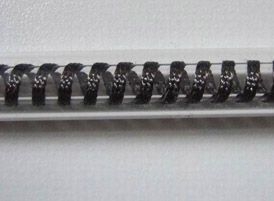
Resistance heating converts electrical energy into heat via the resistive properties of a conductor. Examples include ceramic elements, wire coils, and carbon fiber heaters.
Advantages:
Simple design and low maintenance
Precise temperature control with electronic regulation
Suitable for both air and vacuum environments
Typical Applications:
Industrial furnaces
Laboratory heating chambers
Molding and composite curing
Resistance heating provides steady, controllable heat ideal for processes requiring long heating cycles or stable thermal environments.
Selecting the right industrial heating solution requires evaluating performance trade-offs across several dimensions—efficiency, heat uniformity, process speed, and material compatibility.
| Technology | Heat Transfer Method | Efficiency | Response Time | Suitable Materials | Key Industries |
|---|---|---|---|---|---|
| Infrared Heating | Radiation | High | Fast | Plastics, coatings, glass | Printing, packaging, automotive |
| Convection Heating | Airflow (convection) | Moderate | Moderate | Food, ceramics, textiles | Food, ceramics, textiles |
| Induction Heating | Electromagnetic induction | Very High | Instant | Metals only | Automotive, aerospace, metallurgy |
| Resistance Heating | Conduction (direct contact) | High | Slow-Moderate | Metals, ceramics, composites | Furnace, composites, R&D |
A careful balance between energy efficiency, process quality, and operational flexibility ensures optimal system design. For example, manufacturers looking to accelerate drying without overheating substrates often combine infrared pre-heating with convection ovens for hybrid efficiency.
In the face of tightening energy regulations and rising energy costs, industries are rapidly moving toward electrified heating systems. These systems—powered by renewable electricity—offer several sustainability advantages:
Lower CO₂ emissions compared to fossil-fuel burners
High electrical-to-thermal conversion efficiency (up to 90%)
Precise temperature control, reducing waste and overheating
Improved workplace safety by eliminating combustion gases
Modern facilities are integrating smart controls, sensors, and predictive maintenance algorithms to ensure energy is delivered exactly where needed.
Infrared and resistance heaters, in particular, have become key enablers of decarbonized industrial heating, supporting the transition to net-zero production environments.

When engineering a heating system for industrial use, selection involves more than choosing a technology. Engineers must balance thermal performance, mechanical integration, and lifecycle cost considerations.
Define target temperature, heat-up rate, and uniformity. Infrared is ideal for surface or thin materials, while convection and resistance systems suit bulk heating or large volumes.
Different materials absorb and respond to heat differently. Metals conduct heat quickly; polymers require controlled exposure to prevent deformation. Matching the heating wavelength or method to material properties ensures energy efficiency.
Energy audits can reveal waste points such as heat losses through poor insulation or oversized equipment. Selecting high-efficiency emitters or optimized reflectors improves performance.
Compact, modular systems can be easily integrated into production lines. For example, infrared modules can retrofit into existing drying tunnels without major layout changes.
Systems with fewer moving parts—such as IR or resistance heaters—typically offer lower maintenance overhead compared to combustion-based systems. Evaluate total cost of ownership, not just upfront cost.
Electrical, thermal, and environmental standards must be met. Systems should include protective housings, temperature monitoring, and fail-safe cut-off mechanisms.
Infrared and induction heating play crucial roles in drying coatings, curing adhesives, and hardening metals. Energy-efficient heating reduces cycle time and ensures surface quality.
Infrared preheating optimizes PET bottle forming, while convection ovens maintain uniform heating for multilayer films. These systems improve throughput and reduce waste.
IR lamps and resistance elements accelerate ink drying and powder coating curing. Rapid response ensures consistency and color accuracy.
Infrared dryers and hot-air systems remove moisture efficiently from fabrics and coatings, maintaining color stability and preventing fiber damage.
Convection and infrared heating support dehydration, sterilization, and baking. Energy-controlled systems ensure safety and product consistency.
Precision heating through resistance or IR modules enables solder reflow, epoxy curing, and wafer processing with high uniformity and low contamination.
Composite panel and wind blade manufacturing rely on resistance and infrared systems for uniform resin curing and bonding.
The next generation of industrial heating technologies will emphasize intelligence, sustainability, and precision.
Key trends include:
Smart Sensors and Automation – Real-time feedback enables automatic power modulation and predictive maintenance.
Hybrid Heating Systems – Combining IR and convection enhances efficiency and control.
Carbon Fiber Heating Elements – Lightweight, durable, and energy-efficient replacements for traditional metal elements.
Electrification and Heat Recovery – Integration of renewable electricity and recovery of waste heat to reduce carbon footprints.
Compact Modular Design – Easily scalable systems for custom production lines.
The industrial sector’s path forward is clear: cleaner, faster, and smarter heating systems that align with both operational efficiency and environmental responsibility.
To select an appropriate system, engineers and procurement teams should evaluate the following checklist:
| Selection Criterion | Description |
|---|---|
| Process Type | Drying, curing, melting, forming, or sterilizing |
| Material Properties | Thermal conductivity, reflectivity, moisture content |
| Target Temperature | Determines heating element and insulation design |
| Throughput Requirements | Continuous vs batch processing |
| Available Energy Source | Electricity, natural gas, or hybrid |
| Space Constraints | System footprint and integration flexibility |
| Maintenance and Reliability | Component lifespan, downtime tolerance |
| Environmental Impact | Emission control, energy efficiency, recyclability |
By comparing these criteria across available technologies, manufacturers can choose a solution that delivers the ideal balance between productivity and sustainability.
Industrial heating solutions have evolved dramatically from simple flame-based systems to advanced, sensor-driven electric technologies. Each category—infrared, convection, induction, and resistance—has distinct advantages and ideal applications.
Modern industrial operations must consider not only the heating performance but also energy efficiency, carbon reduction, and system integration. The future belongs to flexible, electrified systems that can adapt to new materials and sustainability goals.
By understanding these technologies and their selection principles, businesses can design or retrofit heating systems that improve product quality, reduce energy costs, and enhance overall competitiveness in the global manufacturing market.


