Author: Process Heating Engineer Publish Time: 2026-03-26 Origin: Site
Last updated: September 1, 2026
On a flexo line, drying failure rarely stays in one place. The first sign may be light set-off on rewind. A few minutes later it becomes smudging under the next color, then ghosting or unstable print appearance at speed, and finally register drift after operators add more heat or air to rescue throughput. In flexographic printing, water-based and solvent-based inks commonly rely on evaporation, absorption, or both; on film and other non-absorbent surfaces, the process depends heavily on removing the vehicle fast enough without damaging the web.
That is why choosing an infrared dryer for flexo printing is not really a heater-selection exercise. It is a process-intervention decision. The better question is where infrared should enter the line so wet ink stops creating downstream defects before substrate temperature, web shape, or dimensional stability start creating a second problem.
────────────────────────
A converter does not usually buy a dryer because “drying is interesting.” The trigger is production pressure. The press is being pushed harder, a water-based system is running close to its limit, a film job is less forgiving than paper, or a retrofit line no longer has enough drying margin after a speed increase.
At that point, the defect chain matters more than the heater brochure. Holmen notes that printed surfaces need to be fully dry to avoid marking, scuffing, rubbing, and smearing in handling and finishing. Sun Chemical’s flexo troubleshooting guide is even more direct: one common cause of ink smearing or bleeding is that the first-down ink is not fully dry.
That sequence is familiar on flexo presses:
Ink leaves the station with too much remaining vehicle.
The next contact point turns that into set-off or smudging.
Operators add heat or air unevenly to recover.
The web temperature rises faster than expected.
Register stability or print consistency starts to move.
Ghosting does not always come from drying alone, but unstable drying conditions can make it easier for ghost-like density variation and print inconsistency to show up when the process window is already narrow. In real production, that is why drying must be judged as part of the full defect chain, not as an isolated utility.
────────────────────────
A common mistake is to frame every drying problem as a shortage of temperature. That is too crude for flexo.
The real issue is usually evaporation balance. FTA notes that flexo inks can dry by evaporation, absorption, or a combination of both. Holmen adds that on non-absorbent surfaces such as plastic, metal, or glass, satisfactory drying requires removing the vehicle by evaporation or changing it chemically, and that hot air is used on gravure and flexo presses after each printing unit to remove solvent quickly.
This matters because paperboard and film do not behave the same way. Absorbent stocks can help the process through some vehicle uptake. Films do not. On non-absorbent webs, more of the vehicle-removal burden remains with the dryer; the actual response still depends on ink, coating weight, surface treatment and airflow. That is why a flexo line can appear to have enough installed heat yet still suffer from wet-trap problems, surface smear, or uneven drying at higher speeds.
Water-based systems make the point even sharper. Fujifilm’s aqueous coating guide notes that heat and air are the two main components used for drying, but also stresses that water evaporates best in contact with low-humidity air and that successful printers emphasize air flow rather than simply adding more heat.
So the diagnosis should not be “we need a hotter dryer.” It should be:
Is the ink film leaving the station with too much evaporation burden?
Is the line limited by dryer length or poor energy placement?
Is the hot-air section moving enough low-humidity air?
Is the web absorbing too much thermal load before the ink is actually safe?
That is the decision point where infrared becomes relevant.
────────────────────────
Infrared helps most when the line does not need vague additional heat, but a faster and better-positioned energy input.
In practical flexo terms, that usually means one of three intervention modes:
Press symptom | Likely drying imbalance | Possible IR evaluation point | What must be controlled |
|---|---|---|---|
Set-off or smudging after an early deck | First-down ink still too wet | Short, responsive IR boost immediately after the critical print unit | Web temperature rise, not just lamp power |
Print inconsistency or ghost-like density shift at higher speed | Drying margin collapses as dwell time falls | Zoned IR support on the most speed-sensitive zone | Cross-web uniformity and reflector focus |
Register movement after operators “turn up the dryer” | Recovery method overheats the substrate | Tighter IR zoning with lower total thermal spill | Distance, line speed input, and feedback control |
Topcoat, adhesive, or second-down color disturbs earlier print | Earlier layer not stabilized enough | IR used to get the first layer past the smear threshold before the next process step | Ink compatibility still must be checked |
Existing hot-air section is too long to rebuild but too weak to keep up | Dryer layout bottleneck | Hybrid IR + hot air retrofit | Solvent or water removal still needs adequate air management |
IR is especially useful when the failure is local and time-sensitive. A flexo line may only need more drying authority after one specific color, one heavy laydown station, or one section where line speed starts outrunning dwell time. In that case, a zoned infrared module can be more intelligent than raising the thermal load everywhere.
This does not mean IR should replace hot air in every case. Holmen’s overview of flexo and gravure drying, plus Fujifilm’s guidance on water removal, both point back to a core reality: drying still depends on removing the vehicle, and air management remains critical, especially for water-based systems.
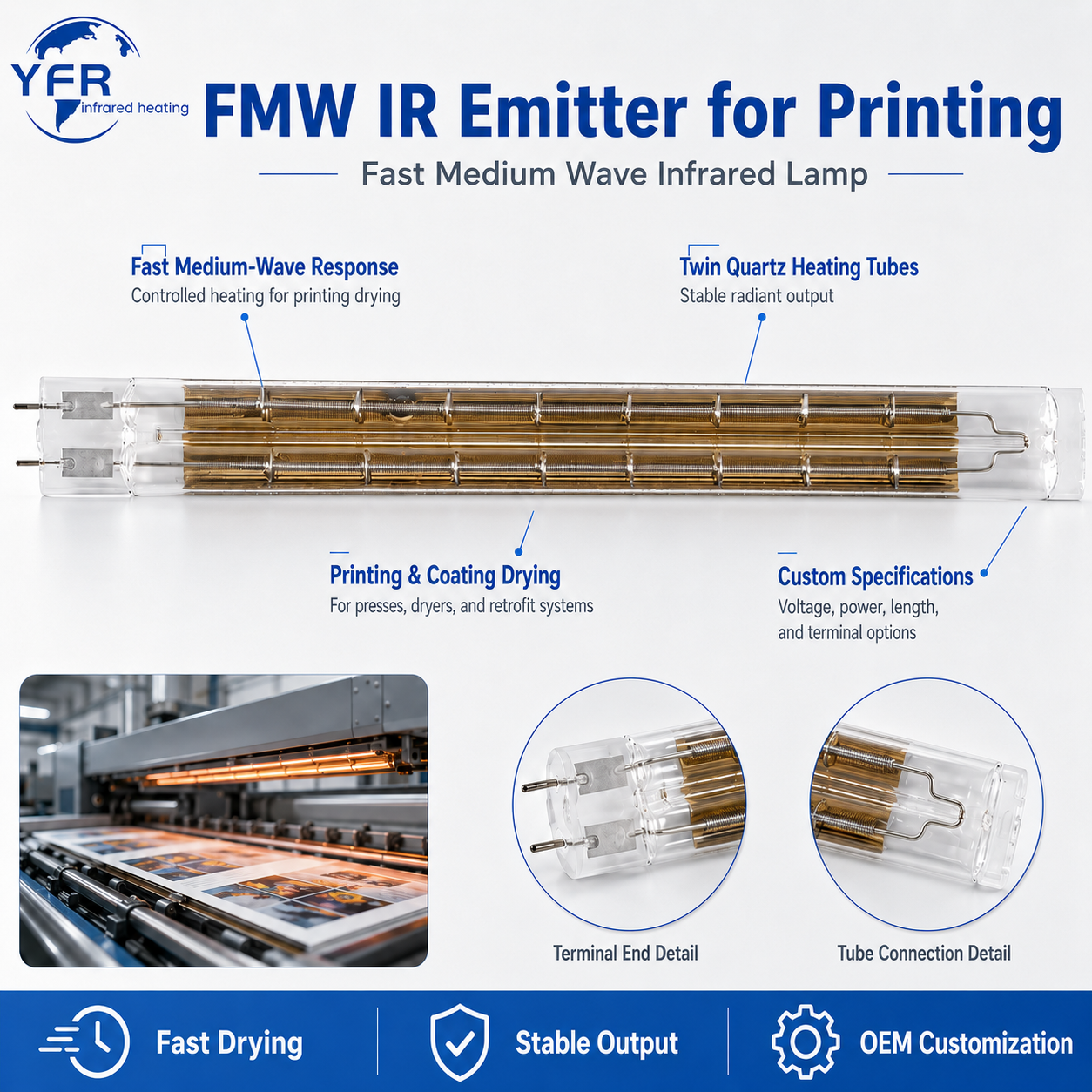
A practical internal link here is your quartz infrared heater page or infrared heating module page. At this stage, the reader is no longer asking whether IR exists. They are asking what kind of emitter and module layout can solve one exact defect chain.
────────────────────────
This is where many retrofits go wrong. They solve wet ink by overheating the substrate.
Advansix’s film handling guide warns that excessive web exit temperatures can affect dimensional stability and distort the printed image. That is exactly why a flexo dryer cannot be judged only by whether the print looks dry at the exit point. A dryer can eliminate smear and still quietly introduce movement that later shows up as register instability, curl, or conversion trouble.
For that reason, the right question is not “How much power can this dryer deliver?” It is “How narrow can this dryer keep the thermal window while still moving the ink film past the failure point?”
In practice, that pushes attention toward five design controls:
Heating distance: Too close, and the web sees a harsh temperature spike. Too far, and the response becomes weak or uneven.
Reflector relevance: A poor reflector wastes power outside the useful zone. A good optical layout puts energy where the ink needs it.
Cross-web zoning: Edge cooling, center loading, and local coverage differences should not be treated as one uniform condition.
Control responsiveness: Flexo lines change jobs, speeds, and coverage quickly. The dryer should follow those changes without long thermal lag.
Temperature verification: If the team cannot measure web temperature or exit condition consistently, they are tuning blind.
The safest IR retrofit is usually not the most aggressive one. It is the one that adds drying authority exactly where the defect starts while keeping substrate temperature rise inside a defined limit.
────────────────────────
Line speed changes everything because it quietly reduces available dwell time. Once dwell collapses, even a press that looked stable at one speed can become defect-prone at the next production target.
That is why flexo dryer selection should be tied to a simple process equation: the faster the web moves, the more precise the energy placement and control need to become. If the dryer length cannot grow, the energy delivery and removal strategy must improve.
Nazdar’s narrow-web water-based flexo ink data sheets emphasize fast drying, high-speed printing, and press stability, but they also still recommend testing on actual substrates because film lots and print conditions vary. That is a useful reminder for dryer selection: no catalog claim replaces press-side validation.
Three implications follow.
First, zoning matters more as speed rises. A single undifferentiated heat field is rarely the best answer when coverage, web cooling, and substrate response vary across width.
Second, response speed matters more when job mix changes frequently. A sluggish system encourages operators to overcorrect.
Third, IR and hot air should be assigned different jobs. In many flexo installations, IR can be evaluated as a responsive local assist, while hot air remains essential for vehicle removal and overall drying balance, especially on water-based work.
────────────────────────
Before requesting a quotation, the buyer should reduce the problem to a process map. That improves both equipment selection and retrofit accuracy.
Use this review matrix:
Selection variable | Why it matters | What the supplier should know |
|---|---|---|
Substrate type | Film, paper, foil, and coated stocks do not absorb or distort the same way | Exact substrate, thickness, and any allowable temperature limit |
Ink system | Water-based, solvent-based, and coated structures shift the drying burden differently | Ink family, solids behavior, coverage level, and sensitive colors |
Defect trigger point | The first visible defect is often later than the real drying failure point | Which deck or downstream step shows set-off, smear, ghosting, or register change |
Current drying setup | IR should solve the gap in the existing system, not duplicate it blindly | Existing hot air, gas, electric, UV, or mixed arrangement |
Line speed and target speed | Dwell time shrinks fast as production targets rise | Current running speed, target speed, and jobs that fail first |
Available dryer length | Retrofit geometry often decides whether IR must be compact and local | Space after each unit, web path, and guard/access limits |
Web width and coverage profile | Cross-web zoning depends on real load distribution | Width, print width, and whether heavy coverage sits at center or edges |
Temperature sensitivity | Substrate stability may be the main constraint, not ink dryness | Allowable web temperature rise or known distortion threshold |
Measurement method | Stable tuning requires real feedback | Whether you can measure web temperature, exit condition, or defect onset consistently |
A useful pre-RFQ checklist is equally simple:
Identify the first station where drying becomes unsafe, not just the station where the defect is finally seen.
Record current line speed and the speed where the defect begins.
Note whether the job is absorbent stock, film, foil, or a treated laminate.
Record whether the defect is set-off, smudging, ghosting, poor consistency, or register drift.
Note current dryer type and where operators typically increase heat or air.
Confirm any substrate temperature ceiling or dimensional-stability concern.
Capture one full-line photo and one close photo of the critical print station.
If the buyer can provide that information, the supplier can usually tell whether IR should be installed as a local boost stage, a zoned retrofit module, or a hybrid support system rather than as a full replacement.
Can infrared drying replace hot air on a flexo press?
Sometimes, but not automatically. Flexo drying still depends on removing the vehicle from the ink film, and for water-based work especially, air management remains central; IR often performs best as a fast, local assist rather than a universal replacement.
Why does the press look dry at the exit but still show set-off later?
Because “looks dry” and “is stable enough for downstream contact” are not the same thing. Holmen emphasizes that printed surfaces must be fully dry to avoid marking, rub-off, and handling defects, while Sun Chemical links smearing directly to first-down ink that is not fully dry.
Is infrared more useful on film than on paper?
Non-absorbent webs leave more vehicle removal to the dryer, so they can expose a narrow drying margin. The actual comparison with paper depends on ink, coating weight, surface treatment, absorption and airflow.
How do I know whether overheating, not wet ink, is causing register trouble?
Look for a pattern where defects improve briefly when heat is raised, then web behavior or print alignment worsens. Film-handling guidance warns that excessive web exit temperature can affect dimensional stability and distort the printed image, so web-temperature monitoring should be part of diagnosis.
What is the most useful data to send before asking for a dryer recommendation?
Send substrate type, ink system, line speed, current drying arrangement, defect symptoms, web width, available dryer length, and any temperature limit you must stay below. That lets the review focus on intervention point and control window rather than on generic lamp power.
Application Review
For flexo lines where wet ink and overheating are both risks
If your press is fighting set-off, smudging, ghosting, or register instability, the right next step is not a generic dryer quotation. It is a process review.
Send YFR Heating the following:
Substrate type and thickness
Ink system
Current line speed and target speed
Current drying setup
Defect symptoms
Web width
Available dryer length
Allowable substrate temperature rise
Current hot-air or heater configuration
Layout photos, if available
With that information, YFR Heating can review whether infrared should be integrated after a specific deck, used as a hybrid assist with hot air, or divided into zones to add drying speed without pushing the substrate out of shape.
────────────────────────
────────────────────────
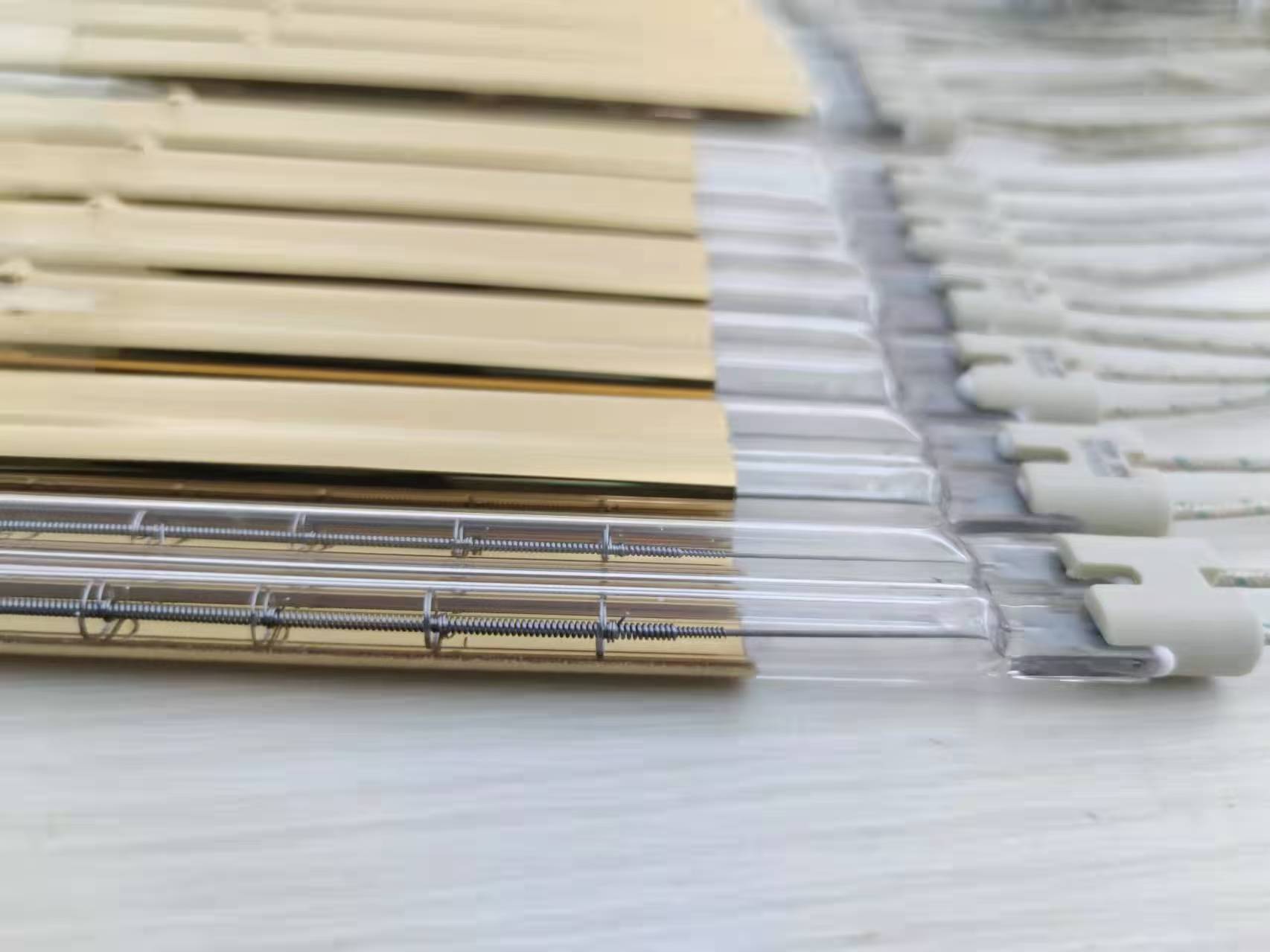
Share the material, process target, working distance, line speed, available installation space, voltage, power range and any existing lamp drawing or photo. YFR can review whether a lamp, replacement emitter, cassette or controlled module is the appropriate starting point.