Author: Site Editor Publish Time: 2025-11-14 Origin: Site
Last updated: August 30, 2026
Infrared heating lamps for food processing are becoming a strategic tool for plant engineers, OEM/ODM oven builders, and system integrators who need higher throughput, better product quality, and lower energy use from their thermal processes. Compared with purely convective or gas-fired systems, well-designed infrared solutions offer faster response, tighter control, and a compact footprint—especially when using a precisely engineered quartz infrared heating lamp array matched to the product and line.
Problem / opportunity: Many food plants still rely on oversized, slow-response hot-air or gas ovens and dryers. These limit line speed, consume significant energy, and make it hard to achieve consistent color, texture, and moisture.
Where infrared fits best: Infrared heating is especially strong for surface-driven processes and thin layers—baking and browning of snacks, infrared drying in food industry coating lines, preheating and sealing in packaging, and surface decontamination of meats and ready meals.
Typical impact: Studies consistently report shorter drying times and lower specific energy consumption compared with purely convective drying, while maintaining or improving quality—though the actual savings depend on product, recipe, and system design.
Key technical decisions: Successful projects hinge on selecting the right wavelength band (short/fast-medium/medium-wave), power density, working distance, zoning, and control strategy (from simple on/off to PLC-controlled multi-zone systems).
How Huai’an Yinfrared helps: Huai’an Yinfrared Heating Technology supports both retrofits and new OEM designs with short-wave quartz infrared lamps, fast medium-wave emitters, medium-wave panels and cassettes, and custom infrared ovens and tunnel systems, plus engineering support for sizing, integration, and validation.
Bakeries and snack manufacturers often run multi-zone tunnel ovens for breads, buns, crackers, chips, and coated snacks. Critical steps include:
Crust formation and color development on breads.
Surface browning of toppings (cheese, seeds, glazes).
Final drying of low-moisture snacks to tight water activity targets.
Pain points with conventional heating:
Large, slow-response ovens with long warm-up times.
Uneven color and texture across belt width.
Limited ability to adjust for different recipes without long changeovers.
High gas consumption and difficulty when turndown is needed.
How infrared changes the game:
Adding one or more short-wave quartz infrared lamp modules above the product—either as a final “finishing zone” or as a retrofitted section inside the existing tunnel—allows:
Very fast surface heating and color development with 1–2 s response.
Recipe-based control of lamp zones for different products.
Reduced need to overheat the whole oven volume.
Potential to shorten the overall oven or increase line speed.
Typical Huai’an Yinfrared solution:
Modular short-wave lamp arrays mounted in stainless-steel cassettes.
Optional combination of IR + hot air for uniform moisture removal.
Integration with the plant PLC to select IR profiles per SKU.
For OEM oven builders, these lamp cassettes can be designed-in as standard options, improving the oven’s performance envelope without dramatically increasing footprint.
In food packaging and printing, production lines must dry inks, primers, and functional coatings on:
Flexible films and laminates.
Cartons and corrugated board.
Labels and shrink sleeves.
Pain points with conventional hot-air or gas systems:
Long dryers consuming significant energy and floor space.
Limited line speed due to drying bottlenecks.
Potential web distortion or curl from excessive hot air temperatures.
Complex exhaust systems for volatile components.
Infrared drying in food industry packaging lines:
By focusing energy directly into the ink or coating, infrared drying can reduce drying time and dryer length while maintaining substrate stability. Fast medium-wave emitters are often a good match to many inks, coatings, and polymer films, as their wavelengths align reasonably well with absorption bands in these materials.
Benefits include:
Higher permissible line speeds for the same residual solvent or moisture limit.
More compact drying tunnels, freeing up valuable floor space.
Better control of substrate temperature and reduced web deformation.
Easier zoning by print deck or coating station.
Suitable Huai’an Yinfrared solutions:
Fast medium-wave IR lamp systems in modular housing over or under the web.
Medium-wave IR panels for gentler, more uniform heating of thicker boards.
Custom infrared drying oven modules with combined IR + hot air and integrated exhaust.
Infrared heating for food packaging is particularly attractive where line speed and footprint are key economic drivers and where electric process heat supports decarbonization strategies.

Meat, poultry, and ready-meal processors use heat for:
Preheating trays and products before grilling or searing.
Heating sealing flanges before lidding.
Surface microbial reduction on products or packaging (e.g., decontamination of skin or film).
Challenges with traditional methods:
Slow response from steam or hot-air systems.
Overcooking or drying of sensitive products when trying to achieve surface kill.
Complex piping and hygiene issues with steam or hot water.
Difficulties maintaining consistent surface temperature at high line speeds.
Infrared preheating and infrared surface sterilization:
Short-wave and fast medium-wave infrared arrays can deliver high-intensity surface heating to products or packaging in seconds. When time/temperature exposure is carefully validated, IR can support surface microbial reduction while preserving sensory quality.
Advantages include:
Compact IR tunnels installed over conveyors or in existing line gaps.
Fast start/stop, aligning heat precisely with product flow.
Reduced risk of overcooking core regions compared to long-contact hot-air systems.
Easier cleaning around simple lamp frames and guards.
Typical Huai’an Yinfrared solution:
Short-wave or fast medium-wave arrays inside stainless enclosures.
Adjustable working distance to tune intensity.
Optional integration of temperature sensors and interlocks for hygienic food environments.
For fruits, vegetables, and inclusions, gentle yet efficient dehydration is critical for shelf-life and texture. Infrared has been extensively studied for drying high-moisture fruits and vegetables, often showing shorter drying times and improved quality versus convective-only systems.
Medium-wave and fast medium-wave IR panels or tunnels can:
Reduce drying time for slices or dices.
Improve color retention and nutrient preservation when process conditions are optimized.
Be combined with hot air or vacuum for advanced drying concepts.
Correctly specifying infrared heating lamps for food processing is about matching wavelength, power density, geometry, and control to the product and process.
Short-wave (SW, ~0.9–1.4 µm): High filament temperature, strong surface penetration, particularly suitable for thin products, browning, and rapid surface heating.
Fast medium-wave (FMW, ~1.4–2.0 µm): Slightly lower filament temperature, better coupling to moisture and many coatings; still fast response.
Medium-wave (MW, ~2.2–4.0 µm): Often better matched to water absorption; suitable for gentle drying and tempering of thicker or more delicate products.
Food products contain water, proteins, carbohydrates, and fats—all with characteristic absorption bands in the infrared region. Matching emitter wavelength to dominant absorbers helps maximize energy absorbed in the food rather than in the surrounding air, improving energy efficient food processing heating.
Power (kW): Total installed capacity per zone.
Power density (kW/m²): Power delivered over the illuminated area; a key variable for sizing.
Typical ranges:
15–40 kW/m² for gentle drying or tempering.
30–80 kW/m² for higher-intensity surface heating or browning.
Higher values are possible for short contact times in fast lines, but require precise control and validation.
Power density must be balanced against product sensitivity and line speed. Under-sized systems will force slower lines; over-sized systems increase risk of scorching.
Common types in food processing:
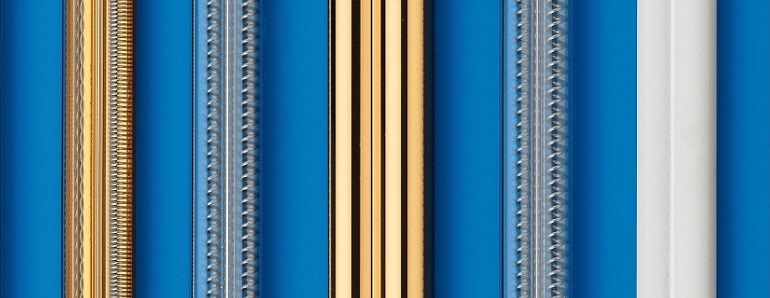
Quartz tube lamps (SW, FMW): Fast response, high power density, compact; often used in modules or cassettes.
Medium-wave IR panels/cassettes: Longer response time, more diffuse radiation; good for gentle heating and uniformity.
Custom modules/tunnels: Combine multiple lamp banks, reflectors, and sometimes hot air.
A quartz infrared heating lamp is typically the preferred choice where response time, compact design, and high-intensity surface heating are critical.
Shorter lamps/panels allow finer zoning across belt width.
Longer units minimize cabling and components but may compromise control granularity.
For wide belts, modular cassettes (e.g., 300–600 mm) arranged in rows offer a practical compromise.
Zoning strategies:
“Lane-based” zoning across belt width.
Longitudinal zoning (in direction of travel) for ramp/soak profiles.
Independent control of top vs bottom emitters where applicable.
SW and FMW quartz lamps reach operating temperature in 1–2 s; MW panels take tens of seconds.
Surface temperatures of emitters can exceed several hundred °C; actual product temperatures are much lower and controlled by exposure time and distance.
Fast response allows dynamic adjustment for recipe changes, gaps in production, and start/stop without long warm-up periods.
Shorter distance → higher intensity and tighter focus, but reduced uniformity and more sensitivity to belt tracking.
Longer distance → more uniform, but lower intensity and more stray heat.
Hygienic design must respect clearances for cleaning tools, product build-up, and wash-down, while avoiding product contact with hot surfaces.
On/off switching: Suitable for simple, slow processes or MW panels.
SSR/SCR phase-angle control: Allows smooth power modulation; common for quartz lamp arrays.
PID loops: Maintain product or zone temperature using thermocouples or IR sensors.
PLC/fieldbus integration: Essential for complex multi-zone ovens, recipe management, and data logging.
In food plants, enclosures often must:
Use stainless steel and food-grade gaskets.
Provide appropriate IP rating for splashes or wash-down zones.
Incorporate insulation and reflectors to direct IR toward the product.
Include guards and interlocks to prevent access to hot and live parts.
| Infrared Solution Type | Wavelength Band | Typical Power Density | Response Time | Recommended Applications | Control Options |
|---|---|---|---|---|---|
| Short-wave quartz IR lamp | 0.9–1.4 µm | High | 1–2 s | High-speed surface heating, browning, searing, thin products, sealing flanges | SCR/SSR, PID, PLC/fieldbus |
| Fast medium-wave quartz IR lamp | 1.4–2.0 µm | Medium–high | 1–2 s | Moisture removal, coatings, food packaging films and cartons | SCR/SSR, PID, PLC/fieldbus |
| Medium-wave IR panel / cassette | 2.2–4.0 µm | Medium | Tens of s | Gentle drying, tempering, thicker or delicate food products | On/off, SSR, PID |
| Custom infrared tunnel / oven system | Mixed (short–medium) | Application-specific | Application | Integrated food processing & packaging lines, multi-zone lines, combined IR + hot air | Full PLC/fieldbus multi-zone control |
Key takeaway: Treat wavelength, power density, geometry, and control as a single system. Small compromises in one area can be offset by smarter zoning and control logic.
If you need very fast surface heating or color development on thin products → prioritize short-wave quartz infrared lamps.
If your main goal is moisture removal from foods or coatings with significant water content → design around fast medium-wave or medium-wave IR.
If you need gentle, uniform heating and longer dwell times → consider medium-wave IR panels or combined IR + hot air systems.
If you are integrating into a complex multi-zone line with many SKUs → use custom infrared ovens or tunnels with PLC/fieldbus control and recipe management.
If hygiene and wash-down are critical → prioritize stainless-steel enclosure designs with protected lamps and easy-access mounting.
Start →
Main objective?
Drying / dehydration → medium- or fast medium-wave IR → size power density by line speed and moisture load.
Surface browning / crust / color → short-wave IR → design zoning for precise top heating.
Sterilization / surface decontamination → short-wave or fast medium-wave IR + validated time/temperature profile.
Can you adjust line speed?
Yes → optimize dwell time first, then select power density and lamp count.
No → fix line speed and belt width, then back-calculate required kW and number of lamps/panels.
Product sensitivity and target temperature window?
Heat-sensitive (high sugar, delicate fruits, coated snacks) → medium-wave or fast medium-wave, lower power density, more zones.
Robust (baked products, low moisture snacks) → short-wave or fast medium-wave with higher power density acceptable.
Most food plants provide three-phase supplies (e.g., 380–480 V). Key considerations:
Load balancing: Distribute IR lamp loads evenly across phases to avoid neutral and transformer overload.
Protection: Use appropriate breakers, fuses, and earth leakage protection sized for inrush and continuous current.
Control strategy:
Simple zones: on/off or time-proportioning SSR control.
Advanced zones: SCR phase-angle or zero-cross firing for smooth power control and lower flicker.
Multi-zone ovens: PLC or IPC as master, with temperature controllers or integrated PID blocks.
Control cabinet layout:
Separate power electronics and low-voltage control wiring.
Provide forced cooling for SCR/SSR units.
Use shielded cables and proper earthing to minimize EMC issues.
Mounting options:
Stainless steel frames or rails for lamp cassettes.
Drop-in modules for retrofits inside existing ovens.
Standalone IR tunnels installed over/under conveyors.
Distance from heater to product:
Typical 100–400 mm depending on wavelength and power density.
Closer distances for high-intensity finishing or sterilization.
Greater distances for uniform drying of sensitive products.
Line speed and dwell time:
Power sizing for infrared heating lamps for food processing is directly tied to dwell time.
Short dwell times require higher power density, more zones, or both.
Reflectors, shielding, insulation:
Polished metal or ceramic reflectors behind lamps to direct IR onto product.
Side shields to minimize edge losses and protect adjacent equipment.
Insulation in the enclosure to reduce heat loss to the environment.
Maintenance and access:
Design lamp cassettes for quick-release replacement.
Maintain clear access paths for cleaning tools and inspection.
Consider contamination risks (powder, oil, fat splashes) and add protective glass or quartz covers where necessary.
Define the heating profile:
Target product temperature (core and surface).
Allowable ramp rates (to avoid cracking, blistering, or texture defects).
Soak times where needed (e.g., equalizing moisture).
Measurement tools:
Thermocouples on or inside the product.
Infrared pyrometers for surface temperature.
Periodic product sampling for moisture content and quality attributes.
From trial-and-error to structured testing:
Start with conservative power and dwell time.
Increase IR power or adjust zones while monitoring quality.
Document each combination as a candidate “recipe.”
Tuning examples:
If burn marks appear on toppings → reduce short-wave power in the final zone or increase distance.
If snacks are over-dried in the center but under-dried at edges → adjust side-zone power or optimize reflectors.
If blistering occurs on films → reduce peak surface temperature and extend dwell time slightly.
Lab tests:
Benchtop IR emitters to measure heating curves for small samples.
Determine time to reach target temperature and moisture loss vs energy input.
Pilot line / test zone:
One or two IR zones installed in a real production environment.
Evaluate product quality, throughput, and basic energy consumption.
Full-scale acceptance criteria:
Throughput (units/h or m/min) at target quality.
Temperature uniformity across belt width and along the line (e.g., ±3–5 °C, depending on process).
Specific energy consumption (kWh per kg or m²) compared with baseline.
Quality metrics (e.g., baking score, adhesion of coatings, microbial reduction results for sterilization).
Pro tip for plant engineers: Save your validated test recipes and parameter sets as standard “IR profiles” in your PLC or HMI so operators can reliably recall settings for each product family.
Industrial infrared systems for food processing must comply with applicable electrical and machinery regulations in the target market. Typical frameworks include:
CE marking (where applicable):
Low Voltage Directive (electrical safety).
EMC Directive (electromagnetic compatibility).
Machinery Directive (for integrated equipment with moving parts and safety functions).
UL/CSA or equivalents:
For North American installations, electrical panels and components may require UL/CSA listing or field evaluation.
RoHS/REACH and material considerations:
Avoid restricted substances in lamps, wiring, and enclosures.
Consider high-temperature cabling, insulation, and gasket materials with suitable food-plant compatibility.
Safety considerations specific to infrared heating lamps for food processing:
High surface temperatures and burn risk:
Use guards and covers to prevent accidental contact.
Provide warning labels and interlocks that cut power when access doors are opened.
Fire prevention:
Maintain clearances to combustible materials.
Implement over-temperature protection (sensors, safety relays).
Ensure adequate airflow and exhaust for high-temperature zones where needed.
Electrical safety:
Robust earthing and bonding of all metal parts.
Proper cable routing and strain relief in wash-down areas.
IP-rated enclosures suited to humidity, splashes, or cleaning chemicals.
A link to Huai’an Yinfrared Heating Technology’s compliance and documentation page would be appropriate here, e.g., for detailed information on standards considered in system design, available test reports, and support during customer conformity assessments.
Huai’an Yinfrared Heating Technology works with OEM machine builders, system integrators, and end users through several engagement models:
Standard catalog components:
Off-the-shelf quartz infrared heating lamp products and standard panels/cassettes for OEM and retrofit use.
Customized emitters and panels:
Tailored lengths, power ratings, connector types, and mounting interfaces to fit OEM ovens and lines.
Complete IR systems and retrofits:
IR tunnels, infrared heating modules, and combined IR + hot-air sections integrated into existing lines—an IR lamp system for food production lines rather than just a component.
MOQ and samples:
Catalog lamps: typically low MOQ, suitable for maintenance and smaller projects.
Custom emitters and modules: MOQs depend on complexity but may start from tens of pieces for lamps and from a few units for modules.
Samples and prototype modules are usually available for pilot lines or lab testing before committing to higher volumes.
Lead times (indicative, not guaranteed):
Standard lamps and panels: relatively short lead times.
Custom lamps/panels: moderate lead times to accommodate design and tooling where needed.
Complete systems: longer lead times for engineering, fabrication, FAT, and on-site integration.
Private label / co-branding:
For OEM oven and line builders, private labeling or co-branding of IR modules is possible, helping them differentiate their equipment without building IR technology from scratch.
Documentation and support:
3D models and dimensional drawings for mechanical integration.
Wiring diagrams and load schedules for panel and plant engineers.
Application notes, installation manuals, and recommended test protocols.
| Item | Conventional Hot-Air Oven | IR-Assisted / IR-Only System |
|---|---|---|
| Installed power (kW) | Higher (large volume of air to heat) | Lower (more direct product heating; application-dependent) |
| Specific energy (kWh per kg product) | Higher | Lower (qualitative range, depends on design and operation) |
| Maintenance intensity | Medium–high (fans, burners, ducts) | Lower (lamps, reflectors, controls) |
| Typical payback time | – | Months to a few years (indicative, not guaranteed) |
Assumptions for a typical ROI scenario:
Line operates several thousand hours per year (e.g., 4,000–6,000 h).
Energy prices are significant relative to product margin.
IR is applied to a bottleneck step (e.g., final drying or finishing), allowing either higher throughput or reduced energy use, or both.
Maintenance costs for existing hot-air or gas systems are non-trivial (fans, burners, combustion controls).
Actual ROI must be calculated from measured energy data and realistic productivity gains for each plant.
Wrong wavelength selection:
Mis-matching wavelength to product moisture or coating absorption leads to low efficiency.
Mitigation: Conduct basic absorption/temperature tests and use appropriate SW, FMW, or MW emitters.
Under-sizing power:
Attempting to compensate with slower line speeds defeats throughput targets.
Mitigation: Size power density to target line speed and moisture load; include some margin.
Neglecting reflectors and insulation:
Without good optics and insulation, a large fraction of energy heats the enclosure instead of the product.
Mitigation: Use proper reflector geometry and high-temperature insulation in modules.
Poor mounting and alignment:
Misalignment creates hot and cold zones across the belt.
Mitigation: Use adjustable mounts and follow alignment procedures during installation.
Ignoring hygiene and cleaning:
Complicated structures trap product and make cleaning difficult.
Mitigation: Favor smooth stainless surfaces, good drainage, and easy access for wash-down.
Missing safety devices:
Lack of over-temperature sensors or interlocks exposes operators and assets to risk.
Mitigation: Integrate redundant safety devices and test them regularly.
No plan for emitters and spare parts:
Unexpected lamp failures cause long downtime if spares and replacement procedures are not in place.
Mitigation: Define lamp lifetime expectations, hold critical spares, and train maintenance staff.
Heat-up time:
Thin baked goods and snacks: typically seconds to reach target surface temperature with SW/FMW IR.
Thicker products or trays: tens of seconds in MW or combined IR + hot air systems.
Temperature uniformity:
Many food processes target ±3–5 °C across belt width and along the zone, depending on product and regulatory requirements.
Specific energy consumption:
Literature indicates that IR drying often achieves lower specific energy use and shorter drying time than convective drying for many foods, though numbers vary widely by product and configuration.
A robust IR solution for food processing should include:
Incoming inspection of components and lamps.
Functional checks of each lamp, reflector, and control channel.
Burn-in or staged operation checks for lamp arrays where appropriate.
Verification of safety functions (interlocks, over-temperature).
Final documentation of wiring, settings, and acceptance test results so the end user can maintain and audit the system throughout its life.
Key data points include:
Product type, dimensions, and layer thickness.
Initial and target temperatures (surface and/or core).
Initial and final moisture content (for drying).
Line speed and belt width.
Packaging or tray materials in the IR exposure area.
Available space and allowable working distance.
Existing oven/dryer type and any constraints on utilities or controls.
Providing this information allows Huai’an Yinfrared engineers to estimate power density, lamp type, and zoning for your application.
Actual savings vary widely. In many documented cases, infrared drying or finishing reduces drying time and specific energy compared with convective-only systems because more energy goes directly into the product and less into heating air and structures.
In practice, IR is often most attractive where it can:
Replace an energy-intensive final drying step, or
Debottleneck a line so more product passes through the same installed capacity.
A realistic estimate requires baseline measurements and a tailored engineering study.
Lifetime depends on:
Lamp design and operating voltage.
Average power level vs nominal rating.
Frequency of on/off cycling.
Ambient temperature and cooling.
Under well-controlled conditions, many industrial quartz IR lamps operate for several thousand hours of effective “on” time. For 24/7 operations, plants usually plan routine inspections and replace lamps on a rotating schedule to avoid unplanned downtime.
Yes. A core part of Huai’an Yinfrared Heating Technology’s business is working with OEMs to design custom IR emitters, cassettes, and modules that:
Fit specific mechanical envelopes.
Match the OEM’s preferred electrical and control architecture.
Support private label or co-branded solutions.
Deliverables typically include 3D models, drawings, wiring diagrams, and suggested test protocols.
Common strategies include:
Protective quartz or glass covers in front of lamps.
Sloped stainless surfaces and drainage paths to avoid pooling.
Removable guards and front panels for periodic deep cleaning.
Use of IP-rated enclosures and suitable sealing materials.
Good design balances protection with sufficient IR transmission and easy access for maintenance.
For system-level projects, Huai’an Yinfrared can support:
Remote commissioning assistance via PLC/HMI connectivity and secure channels.
Structured FAT/SAT procedures and training for local integrators.
Guidance on spare parts, maintenance intervals, and troubleshooting steps.
On-site support can be coordinated with local partners or integrators where needed.
If you are evaluating infrared heating lamps for food processing, start by sharing basic process data: product type, thickness, moisture content, line speed, target temperature, and your current oven or dryer setup. Based on this, Huai’an Yinfrared Heating Technology can propose a preliminary sizing concept for lamps, modules, or a complete tunnel.
To discuss your application or request an initial feasibility assessment, contact us via the infrared heating system for food processing page and our engineering team will respond with recommendations tailored to your line.
— Huai’an Yinfrared Heating Technology Editorial Team
Review YFR industrial infrared heating lamps and heating modules and controls. Confirm wavelength, geometry, mounting and controls through representative trials.
Send YFR your material, dimensions, target, cycle time and current equipment details for an application-specific review.


