Author: Site Editor Publish Time: 2025-09-12 Origin: Site
Last updated: August 28, 2026
Infrared can accelerate ink drying, but excessive or poorly distributed heat can create set-off, blocking, surface skinning, substrate distortion or colour variation. Effective troubleshooting starts by separating evaporation, absorption and cure requirements, then checking the complete temperature and airflow profile.
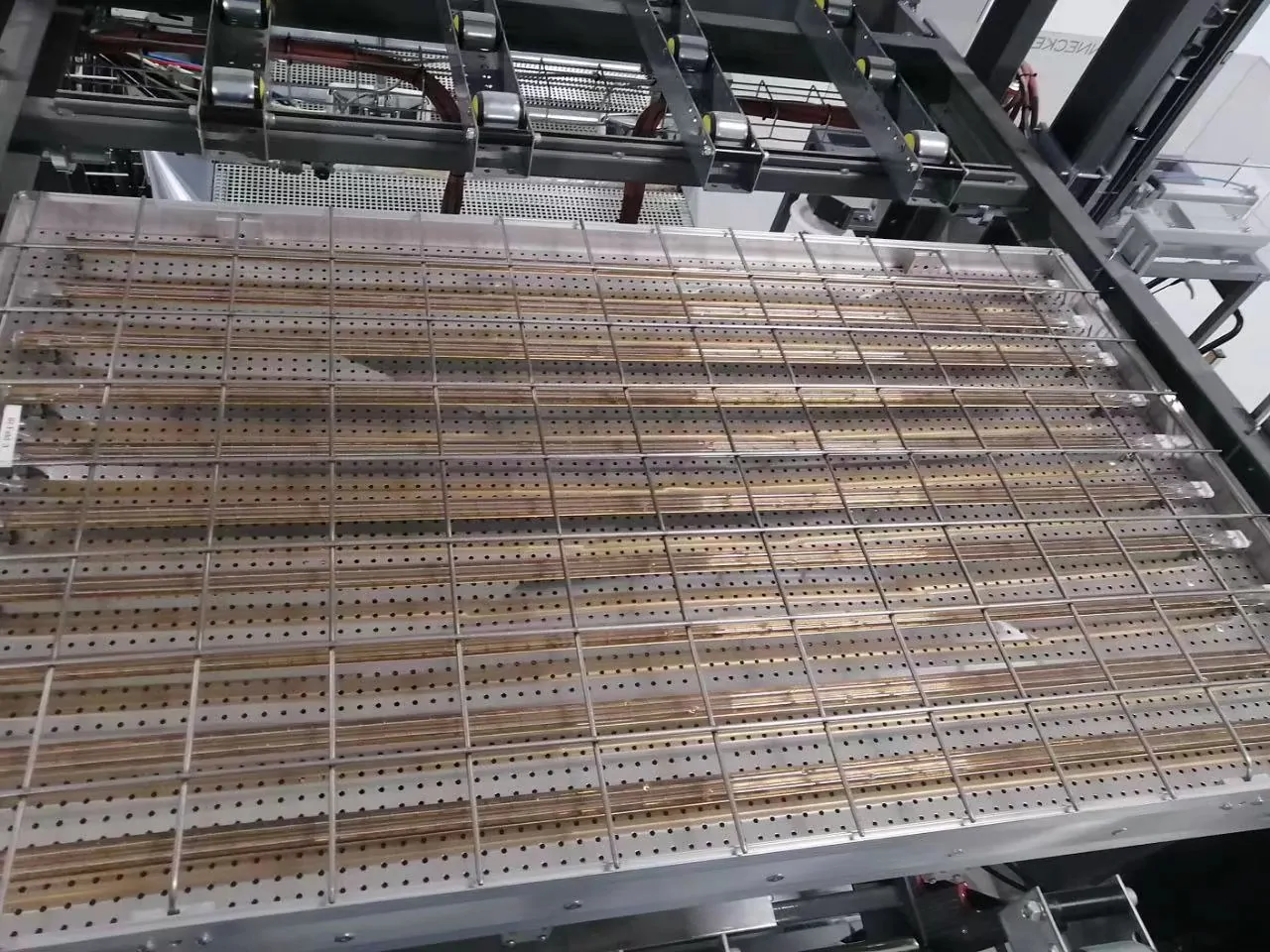
Water-based and solvent-based inks require evaporation and removal of vapour. Oxidative inks may need time and oxygen after initial setting. UV-curable inks require the correct UV system rather than infrared as the primary cure mechanism. Infrared may support preheating or evaporation, but it cannot replace a required chemical or UV cure.
Confirm the ink supplier's process window before changing heater power.
| Defect | Possible causes | Checks |
|---|---|---|
| Set-off | Insufficient drying, low exhaust, excessive ink film or short dwell | Sheet temperature, residual moisture or solvent, pile pressure and line speed |
| Blocking on a web or stack | Surface feels dry but bulk film remains soft | Cooling time, roll or stack temperature and internal dryness |
| Blistering or pinholes | Surface heating is too rapid and traps vapour | Reduce initial intensity, add flash-off and improve exhaust |
| Substrate curl or shrinkage | Excess temperature, uneven heating or moisture loss | Cross-web profile, back-side temperature and tension |
| Colour or gloss variation | Uneven temperature, ink sensitivity or inconsistent film weight | Zone output, reflector condition, ink deposit and sensor method |
| Incomplete cure | Wrong cure mechanism or insufficient post-dry reaction | Ink chemistry, UV dose where required and supplier test method |
A staged process is often easier to control than one high-intensity zone. Allow an initial flash-off where appropriate, apply infrared in one or more controlled zones, remove vapour with directed air and exhaust, then cool before winding, stacking or the next operation.
The exact sequence depends on ink chemistry, substrate and line configuration. Record the temperature at each stage.
Fast medium-wave and medium-wave emitters are often evaluated for water-based inks and coatings because their output can couple with moisture and many binders. Short-wave emitters provide fast response and high intensity where the substrate and ink can accept it.
Use a controlled test instead of assuming one wavelength is universally best. Compare process result at the same line speed and working distance, and protect heat-sensitive films, labels or plastic parts from excessive surface temperature.
Explore YFR fast medium-wave emitters and other industrial infrared lamps.
Radiant energy can increase evaporation, but moisture or solvent must still leave the boundary layer and drying enclosure. Weak or poorly directed airflow can make additional lamp power ineffective. Excessive uncontrolled air can also cool the web unevenly or disturb lightweight material.
For solvent-containing inks, ventilation and safety must be reviewed by qualified personnel against the applicable process requirements.
Use a suitable surface-temperature method and confirm emissivity, field of view and sensor position. On moving webs, compare centre and edges and record line speed. Where practical, use a defined ink dryness, rub, adhesion, residual-moisture or cure test instead of a touch-only judgement.
Brightness is not a reliable comparison between different emitter types.
Hold ink batch, film weight, substrate and line speed constant.
Record the current zone powers, distance, airflow and temperatures.
Change only one factor at a time.
Measure both dryness and substrate condition.
Check winding, stacking or downstream performance after cooling.
Save the approved recipe and maintenance condition.
No. Set-off can also result from ink film, insufficient exhaust, short dwell, poor cooling or the ink's cure mechanism.
The surface may have skinned while moisture or solvent remains in the film, or the stack or roll may be too warm.
Infrared does not replace the required UV dose for UV-curable ink. Confirm the ink chemistry and specified curing system.
Provide ink type, substrate, film weight, line speed, web width, current dryer layout, working distance, airflow, target result and defect photographs.
Send YFR the printing process and dryer data for an emitter and zone-layout review.


