


Author: Site Editor Publish Time: 2025-11-06 Origin: Site


In today’s manufacturing landscape, precision heating has become fundamental across numerous sectors—from automotive coating and food drying to semiconductor fabrication and plastic molding. Among the technologies driving this precision is the OEM quartz heating tube, a component that combines material science, infrared physics, and custom engineering.
For OEMs (Original Equipment Manufacturers) and industrial system integrators, quartz heating tubes are not off-the-shelf components—they are critical performance elements designed for energy efficiency, response speed, and durability under specific conditions. Choosing the right OEM quartz heating tube can determine not only process performance but also equipment lifespan and operating costs.
This article explores how quartz heating tubes work, what makes OEM customization essential, and what technical parameters you should evaluate before selection.

Quartz heating tubes convert electrical energy into infrared radiation. The quartz glass serves as both an insulating envelope and an optical window, transmitting infrared radiation efficiently while resisting thermal shock and chemical corrosion.
Quartz Glass Tube: Acts as the outer casing, offering high transparency to infrared radiation and resistance to oxidation.
Heating Element: Typically a tungsten, iron-chromium-aluminum (FeCrAl), or carbon filament.
Electrodes and End Caps: Provide secure electrical contact and mechanical stability.
Atmosphere Control: Many OEM tubes are filled with inert gas or evacuated to prevent filament oxidation.
Quartz tubes can emit in different infrared regions—short, medium, or long wave—depending on filament temperature and material design:
Short-wave IR (0.76–2 µm): High intensity, rapid heating, ideal for metal and glass processing.
Medium-wave IR (2–4 µm): Excellent for plastics, coatings, and water-based materials.
Long-wave IR (above 4 µm): Gentle and uniform heating, suitable for drying organic materials or food.
By adjusting filament material, tube geometry, and gas filling, OEM quartz heating tubes can be tuned precisely for each industrial need.
While standard quartz heaters are sufficient for general-purpose heating, OEM quartz heating tubes allow engineers to create performance-optimized solutions that align with unique process demands.
OEM tubes can be produced in a wide range of:
Lengths: From compact 100 mm elements to over 2000 mm long industrial lamps.
Diameters: 8–25 mm depending on watt density and mounting configuration.
Shapes: Single-tube, twin-tube, U-shaped, or custom-curved geometries.
This flexibility ensures precise fitment within proprietary equipment or constrained machine layouts.
OEM heating tubes can be specified for:
Voltage ratings from 12 V to 480 V.
Power densities up to 200 kW/m².
Different electrical terminations—ceramic caps, wires, or plug-type connections.
Electrical customization ensures compatibility with the system’s control architecture and load requirements.
Manufacturers can apply reflective coatings (gold, white, or ceramic) to direct radiation toward the target and reduce energy waste.
Gold-coated tubes: Up to 90% reflectivity, ideal for focused heating.
White ceramic coatings: Diffused heating for uniform surface temperature.
Selective coatings: Adjust emission spectra for specific material absorption rates.
For harsh environments, OEM engineers can integrate:
Quartz with high UV cut-off for light-sensitive materials.
Robust seals and high-purity gas filling for high-temperature or vacuum operations.
Explosion-proof or moisture-resistant designs for industrial safety compliance.
OEM quartz heating tubes are not merely assembled; they are engineered through controlled manufacturing stages to ensure uniform heating and reliability.
Raw Material Selection: High-purity quartz glass (>99.99% SiO₂) is selected for superior IR transmittance and low bubble content.
Filament Winding: Resistance wire or carbon fiber is precisely coiled to achieve consistent watt density.
Tube Sealing: Using precision torches and vacuum systems, the ends are sealed and filled with inert gas.
Electrode Mounting: Metal caps or ceramic insulators are attached for electrical connection.
Quality Testing: Each tube undergoes electrical resistance, insulation, and lifespan testing under simulated conditions.
A rigorous ISO or CE-compliant production process ensures repeatability and traceability for OEM clients.

Choosing the right quartz heating tube requires a holistic view of thermal, electrical, and material parameters. Below are the main criteria for engineers and buyers to consider.
Different materials absorb IR energy at different wavelengths:
Metals: Prefer short-wave IR for surface heating.
Plastics and coatings: Absorb better in medium-wave IR.
Paper, textiles, and organic materials: Long-wave IR minimizes scorching.
Aligning the emission spectrum with material absorption ensures optimal efficiency.
The target process temperature dictates filament type:
Tungsten: Up to 2500°C, short-wave emission.
FeCrAl or NiCr: 500–1000°C, medium-wave.
Carbon fiber: Rapid response, medium to long-wave spectrum.
Power density determines heating speed and energy cost. OEM tubes allow precise control of:
W/m² output according to conveyor speed or drying zone requirements.
Temperature uniformity, achieved through filament winding pattern and tube coating.
Infrared tubes can reach full temperature within seconds. For fast-cycle processes such as plastic welding or PET blowing, response time below 2 seconds is critical.
OEM design ensures easy integration:
Custom end fittings for quick replacement.
Mechanical protection against vibration and thermal expansion.
Compatibility with existing reflector assemblies.
Well-designed quartz heating tubes can exceed 5,000 to 10,000 operating hours, depending on usage conditions. OEM versions also facilitate modular replacement—reducing downtime and maintenance costs.
OEM quartz heating tubes play a central role in multiple industrial applications due to their adaptability and energy efficiency.
Used for curing paints, adhesives, and powder coatings. Medium-wave tubes ensure even drying without damaging substrates.
Short-wave or carbon infrared tubes provide rapid heat-up during sheet forming and film stretching.
Long-wave quartz tubes are used in dehydrators, toasters, and bakery equipment for uniform moisture removal and safe heating.
Medium-wave IR achieves quick moisture evaporation while preserving fiber integrity.
Cleanroom-grade OEM quartz tubes with vacuum-sealed design ensure particle-free operation and precise temperature control.
Infrared tubes accelerate ink drying and coating curing without excessive air turbulence, improving print quality.
Choosing OEM solutions over generic quartz tubes offers clear advantages:
| Parameter | Standard Tube | OEM Quartz Heating Tube |
|---|---|---|
| Emission Control | Fixed | Tunable for application |
| Mechanical Design | Standardized | Custom geometry and length |
| Power Rating | Limited | Application-specific |
| Integration | Requires adjustment | Drop-in fit |
| Efficiency | Moderate | Up to 30% energy savings |
| Lifetime | Variable | Consistent and predictable |
| Maintenance | Reactive | Preventive, supported by OEM specs |
Through customization and design optimization, OEM tubes deliver superior performance-to-cost ratio over their operational lifespan.
When sourcing OEM quartz heating tubes, collaboration and technical clarity are essential. The following steps ensure a successful partnership:
Provide data on:
Target temperature range
Heating area size and geometry
Cycle time or heating duration
Environmental conditions (humidity, airflow, vacuum)
Include mounting method, voltage supply, and controller type to allow proper design of electrical terminations.
OEM suppliers like Huai’an Yinfrared typically offer sample prototyping and performance validation to verify real-world compatibility before mass production.
Ensure products comply with RoHS, CE, UL, or local industry standards for safety and environmental performance.
Infrared heating technology contributes significantly to industrial sustainability. OEM quartz heating tubes enhance efficiency through:
Instant on/off capability: Reducing idle energy consumption.
Directional heating: Focusing energy only where needed.
Lower CO₂ footprint: Compared to convection or combustion systems.
By integrating energy-efficient IR heating systems, manufacturers can meet environmental compliance while reducing operational costs.
The future of OEM quartz heating tubes lies in smart and digital integration:
IoT-enabled heaters with temperature feedback sensors.
Adaptive control systems adjusting IR intensity based on material feedback.
Hybrid IR systems combining short and medium-wave sources for multi-layer processing.
Advanced manufacturing methods, such as precision filament alignment and nano-coating technology, will further extend tube lifespan and spectral efficiency.
OEM quartz heating tubes are not just components—they are precision-engineered energy delivery systems at the heart of modern manufacturing. By customizing the spectrum, geometry, and power configuration, OEM solutions offer unparalleled performance across diverse industries.
For engineers, integrators, and procurement specialists, partnering with a reliable OEM such as Huai’an Yinfrared Heating Technology ensures consistent product quality, tailored performance, and technical support that aligns with evolving industrial needs.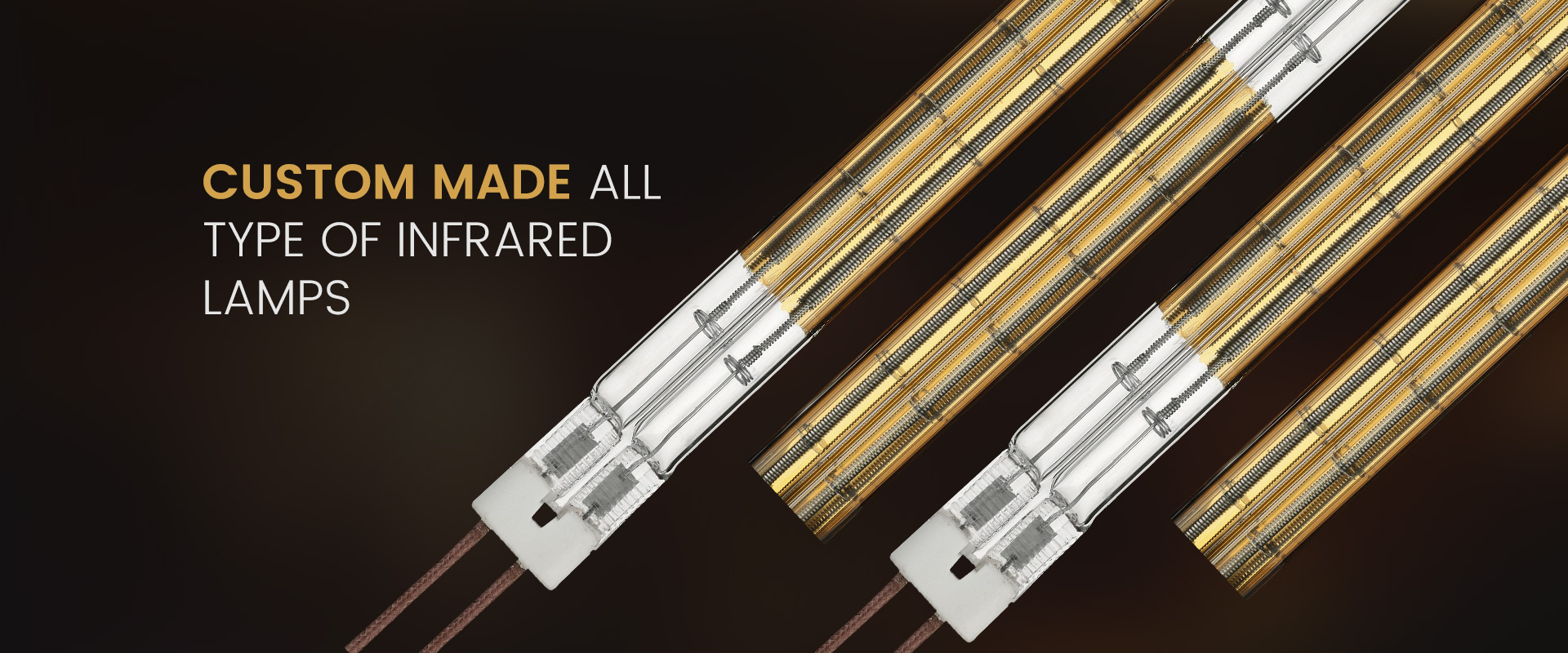
Author: Huai’an Yinfrared Heating Technology
Category: Infrared Heating Technology
Last modified: 2025-11-06


