Author: Site Editor Publish Time: 2025-11-04 Origin: Site
Last updated: August 29, 2026
Leather and coated synthetic leather can vary in thickness, colour, moisture and surface finish. Infrared can support coating drying when energy, airflow and line speed are adjusted to the coating chemistry and the substrate's appearance and temperature limits.
Record leather type, thickness range, colour, initial moisture, grain, backing and previous treatment. Include the most sensitive light, dark, thin and thick variants in trials.
Identify base, pigment, topcoat or adhesive layer, wet film weight, water or solvent content and the required flash, drying or crosslinking stage.
Radiation supplies heat while controlled air removes released vapour and stabilises the boundary layer.
| Input | Why it matters | Record |
|---|---|---|
| Substrate | Sets absorption and temperature limits | Type, colour and thickness |
| Coating | Defines evaporation and cure duty | Chemistry and wet weight |
| Finish | Confirms acceptable quality | Adhesion, gloss and handle |
Divide the heater across the web or hide width where edge losses and product variation require adjustment. Measure representative centre, edge and thick areas.
Check tack, blocking, adhesion, flexing, colour, gloss, handle and odour after conditioning. Confirm results over normal line speed and coating-weight variation.
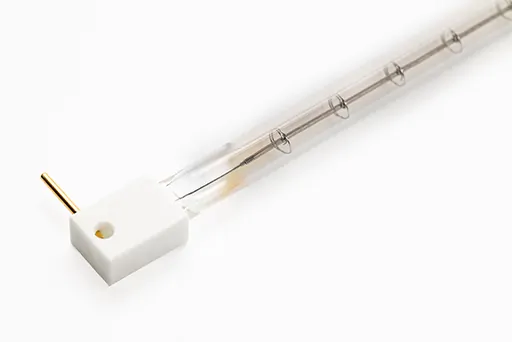
Coordinate the design with YFR industrial infrared heating lamps and heating modules and controls. Confirm the final configuration with product trials and documented acceptance limits.
No. Colour and finish can change heating response.
Yes, especially when water or solvent must be removed.
Final feel, blocking and adhesion may change after cooling and moisture equilibration.
Meaningful changes in leather, coating, film weight or line speed.
Send YFR your material, dimensions, target, cycle time and current equipment details for an application-specific review.


