Author: Site Editor Publish Time: 2025-09-11 Origin: Site
Last updated: August 28, 2026
Infrared can shorten paint drying and curing time, but faster heating only improves production when the coating releases water or solvent safely and the substrate remains within its temperature limit. The practical objective is a repeatable thermal profile that reaches the required film properties without blistering, pinholes, orange peel, discoloration or distortion.
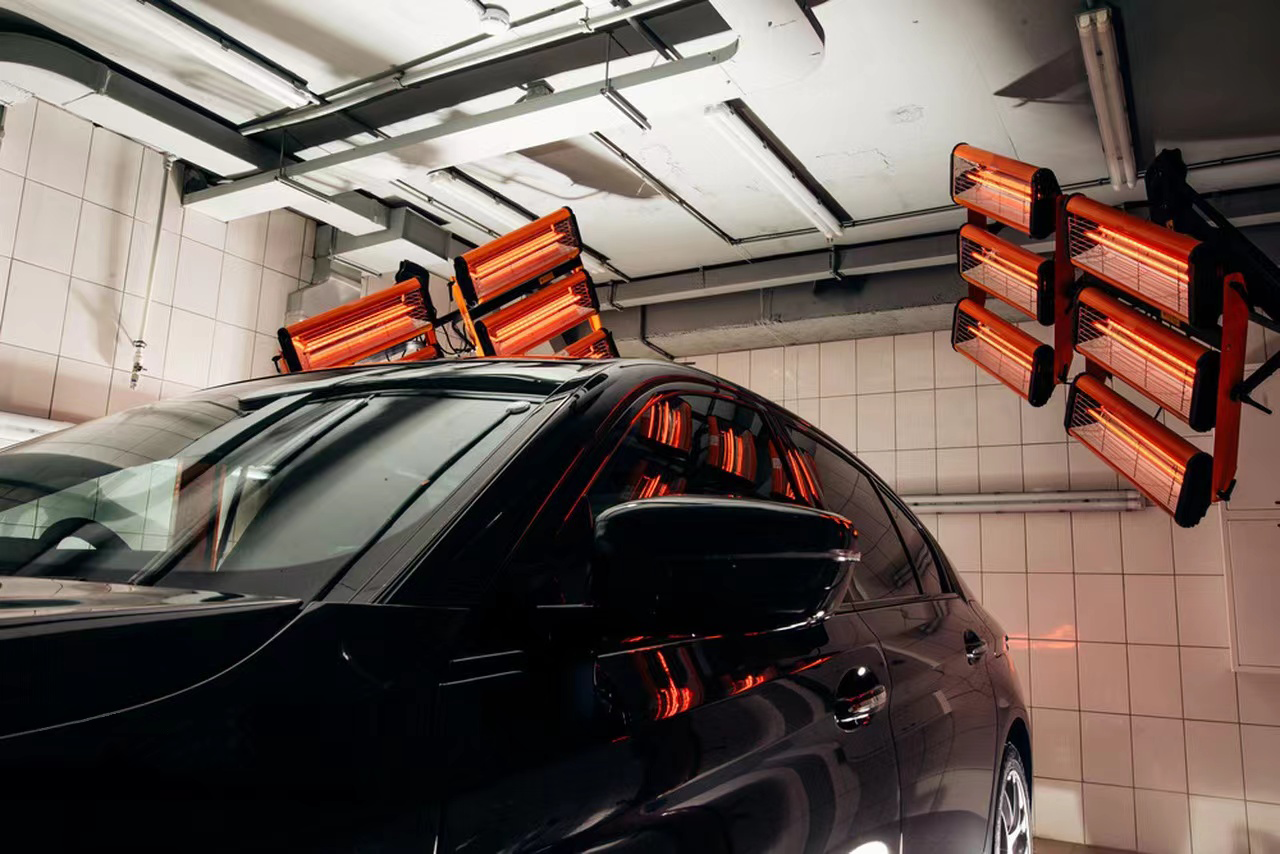
Drying normally describes the removal of water or solvent until the film is tack-free or ready for handling. Curing describes the chemical or physical development of final hardness, adhesion and resistance. A coating can feel dry at the surface while still containing volatiles or remaining under-cured underneath.
Before setting the heater, confirm the coating supplier's flash-off, temperature and cure requirements. Infrared should deliver that profile more efficiently, not replace the coating specification.
Begin with moderate energy so water or solvent can leave without sealing the surface too early. Air movement may be needed to carry vapour away from the film.
Increase energy after initial release has stabilised. The ramp should be fast enough for productivity but controlled enough to avoid a steep surface-to-substrate temperature difference.
Maintain the required temperature long enough to reach the specified final properties. A final equalisation stage can be more important than maximum peak temperature.
| Emitter range | Process characteristic | When it may help |
|---|---|---|
| Short wave | Fast response and high controllable intensity | Rapid spot repair, metal parts, high-speed lines and tight zoning |
| Fast medium wave | Responsive control with broader absorption | Mixed coatings, plastics, film and production requiring recipe flexibility |
| Medium wave | More gradual heating and useful interaction with many water-based layers | Thicker films, water-based coatings and processes needing a wider control window |
Color, pigment, film thickness and substrate reflectivity all affect absorption. Test the real coating system rather than selecting a wavelength from coating name alone.

Power density: the useful radiant energy reaching the coated surface.
Distance and angle: inconsistent spacing creates hot and cold areas.
Exposure time: line speed and active heater length determine the thermal dose.
Zone balance: edges, corners and complex geometry may need independent settings.
Airflow: removes vapour and stabilises the boundary layer without cooling the surface excessively.
Temperature feedback: use repeatable measurement points and appropriate emissivity settings.
| Observed defect | Likely thermal cause | Adjustment to test |
|---|---|---|
| Blistering or solvent pop | Early zone too aggressive; volatiles trapped | Reduce flash-zone power, extend flash-off and improve extraction |
| Pinholes | Rapid release through a surface that has already skinned | Use a gentler initial ramp and verify coating thickness |
| Orange peel or poor levelling | Surface viscosity rises before the film can flow | Lower initial intensity or provide more levelling time |
| Soft film or poor resistance | Insufficient hold time or product temperature | Extend the cure zone and verify temperature after cooling |
| Discoloration | Excess peak temperature or hot spot | Reduce power density, increase distance and rebalance zones |
| Plastic distortion | Substrate exceeds its temperature limit | Use staged power, faster feedback and a more suitable wavelength |
| Uneven gloss across width | Non-uniform irradiance or airflow | Check lamp pitch, reflectors, edge zones and nozzle balance |
During trials, change one variable at a time. Record coating batch, wet-film thickness, flash time, emitter type, distance, zone power, line speed, airflow and measured product temperature. Evaluate adhesion, hardness, appearance and resistance only after the specified cooling or conditioning period.
A stable process window is more valuable than a single fastest run. Define upper and lower settings that still produce acceptable quality, then select a production setpoint with enough margin for normal variation.
Infrared is effective for rapid, targeted energy transfer. Hot air is effective for carrying away moisture and equalising complex shapes. Combining both can improve water-based coating drying, thick films and parts with shadowed areas.
Coating chemistry and wet/dry film thickness
Substrate material, color, dimensions and maximum temperature
Required flash, dry-to-handle or final cure condition
Current line speed or cycle time
Available heated length, width and working distance
Voltage, control method, airflow and extraction arrangement
Photos of the product and existing heating stage
For a broader technology overview, read the infrared paint drying guide. You can also review short-wave infrared lamps or send your coating and process data to YFR for a heating-profile review.


