


Author: Site Editor Publish Time: 2025-12-08 Origin: Site


Vacuum drying ovens are widely used wherever moisture must be removed at low temperature, under controlled atmosphere, and with tight quality requirements. Typical examples include electronic components, battery materials, pharmaceutical intermediates, specialty chemicals, and R&D samples.
In these systems, heating is the bottleneck of the process: under vacuum, convective heat transfer almost disappears, so most of the energy must come from conduction through shelves or walls. This often means long cycle times, non-uniform temperature profiles, and oversized equipment.
Quartz infrared (IR) heating lamps offer an additional way to deliver heat inside the chamber, directly to the product surface. When engineered correctly, they can significantly shorten drying cycles, improve uniformity, and reduce energy consumption—without sacrificing product safety.
This article explains how IR integrates into vacuum drying ovens, what realistic configurations look like, and how to decide when it is the right solution.
While designs vary, a typical batch vacuum drying oven follows this sequence:
Loading
Electronic components on trays
Coated battery electrodes wound or laid flat
Powder or granulate beds in pans
Pharmaceutical or chemical intermediates in shallow containers
Trays, racks, or shelves are loaded with product:
Chamber sealing and evacuation
The door is closed and sealed.
A vacuum pump pulls the chamber down to the target pressure (for example, from atmospheric pressure to tens or hundreds of pascals, depending on product and solvent).
Heating under vacuum
Heated shelves (conductive heating)
Heated chamber walls (conductive and radiative heating)
Optional internal fixtures such as plates or rods
Heat is applied primarily via:
As pressure drops, convective heat transfer becomes negligible; most heat reaches the product by conduction and thermal radiation from the surfaces.
Drying and holding
The product is held at target temperature and pressure for a defined dwell time (for example, 60–180 minutes).
Moisture or solvent evaporates from the product surface and is carried away by the vacuum system.
Cooling and venting
Heating is turned down or off.
The chamber is cooled (often naturally, sometimes with active cooling).
The chamber is vented back to atmospheric pressure.
Unloading
Dried product is removed for further processing or testing.
Across this sequence, the most critical phase is the heating and drying step, which strongly influences total cycle time, energy consumption, and final product quality.
Because the chamber is under reduced pressure:
Convection is very weak: hot air cannot efficiently carry energy to the product surface.
Conduction is limited:
Only the product areas in good contact with trays or shelves receive strong conductive heat.
Surface layers may heat faster than bulk material; thick or poorly contacting products heat more slowly.
Radiation matters more:
Chamber walls and shelves radiate heat, but their effective radiation level depends on temperature and surface properties.
Without targeted design, radiative heating can be non-uniform.
This is precisely where quartz infrared heating lamps can be effective: IR can deliver controlled radiant energy directly onto exposed surfaces, even when convection is negligible.
Most vacuum drying ovens rely on one or more of the following methods:
Oil or electric jacket around the chamber
Heating fluid circulates around the chamber walls.
Heat transfers through the wall and then by radiation and limited conduction to the product.
Heated shelves
Electric resistance heaters or fluid channels inside shelves.
Product receives heat mainly through direct contact with the shelf.
Steam heating (in older or larger systems)
Steam coils in or around the chamber.
Similar limitations as jacket heating, with additional complexity in condensate management.
These approaches are proven and robust, but they present several practical limitations:
Slow heat-up and long cycle times
Energy must travel through structural mass (walls, shelves) before reaching the product.
Heavy metal shelves and chamber walls increase thermal inertia.
Temperature non-uniformity
Products close to heated shelves or walls heat faster.
Trays in the middle of the chamber may lag in temperature.
Differences of 5–15 °C between zones are not unusual, especially with different loading patterns.
Limited control over surface vs. bulk heating
Operators primarily control setpoint temperature and time.
It is difficult to shape heating profiles dynamically in different zones during the cycle.
Energy inefficiency and oversizing
Because heat must pass through large metal masses, systems are often oversized to achieve reasonable cycle times.
This results in higher installed power, slower response, and higher operating costs.
Constraints for sensitive products
For moisture-sensitive or thermally sensitive materials, maximum allowable product temperature may be low.
Achieving reasonable drying times at low temperature with only conduction can be very challenging.
Quartz infrared lamps do not replace the vacuum; rather, they add a fast, controllable radiant heat source inside or adjacent to the chamber.
There are three typical ways to use IR in vacuum drying ovens:
Preheating stage (front-loaded IR)
IR is applied early in the cycle to rapidly raise surface temperature and accelerate initial moisture evaporation.
Once the product approaches target temperature, IR power is reduced or switched off, and conventional heating completes the cycle.
Boosting stage (hybrid IR + conductive heating)
IR operates in parallel with heated shelves or chamber jackets.
IR compensates for slower regions or specific trays, reducing overall dwell time.
This is especially useful when retrofitting existing ovens where one cannot easily change shelves or jacket design.
Primary heat source (IR-dominant design)
Arrays of quartz IR lamps become the main energy input to the product.
Conductive shelves or walls serve as support and moderate the temperature, rather than being the primary heater.
This concept is typically considered for new oven designs or deep re-engineering of existing equipment.
Depending on chamber geometry and process constraints, IR lamps can be mounted:
On the chamber ceiling
Panels or frames of lamps arranged to illuminate all trays below.
Reflectors direct energy towards product surfaces and improve uniformity.
On chamber side walls
Vertical lamp arrays aim at the sides of trays or racks.
Useful when products have lateral surfaces exposed or when top mounting is limited.
As modular frames around trays
Lamp modules integrated into each shelf level.
Allows independent control of each level, reducing non-uniformity between trays.
Behind IR-transparent windows
Lamps installed outside the vacuum volume, radiating through specially selected windows (for example, quartz or other IR-transmitting materials).
This approach simplifies lamp replacement and electrical feedthroughs but adds complexity in window design and cooling.
For retrofits, the most common scenario is a modular IR “booster” frame that can be installed at the top or sides of the chamber, with minimal structural changes.
The exact design must be tailored to each application, but the following ranges are typical starting points for engineering discussions.
Short-wave quartz IR lamps
Thin, relatively robust parts (for example, metal components, certain electronic parts).
Processes where short, intense preheating is required.
Fast response time (on the order of seconds).
High surface heat flux capability.
Useful for:
Fast medium-wave quartz IR lamps
Battery electrode coatings and polymer-based components.
Products with temperature-sensitive binders or solvents.
Slightly longer wavelength and softer heating profile.
Better absorption for many plastics, coatings, and organic materials.
Often preferred for:
In many vacuum drying ovens, fast medium-wave lamps provide a good balance between penetration, controllability, and product safety.
Power density is typically considered at the product surface:
Gentle drying of temperature-sensitive materials
Approx. 0.3–0.6 W/cm² at the product surface.
Suitable when maximum product temperature must stay relatively low (for example, 60–90 °C) and risk of damage is high.
Moderate drying for general industrial products
Approx. 0.6–1.2 W/cm².
Appropriate for many metal parts, ceramics, and robust coated substrates.
Aggressive drying for robust, high-temperature materials
Approx. 1.2–2.0 W/cm² or higher, if the product and process allow.
Used more rarely in vacuum drying, as excessively high surface heating can cause boiling, foaming, or cracking.
These ranges are typical starting points. Actual safe and effective power densities must be validated through trials.
In a vacuum chamber, practical lamp-to-product distances often fall in these ranges:
Compact arrangements: 80–150 mm
Standard arrangements: 150–250 mm
Shorter distances increase power density and reduce losses but can exacerbate non-uniformity and local hot spots if not carefully designed.
Product: assembled circuit boards on perforated trays.
Target product temperature: 80–110 °C, under reduced pressure.
Configuration:
Fast medium-wave quartz IR lamps mounted above the trays.
Power density: around 0.4–0.8 W/cm².
Lamp distance: 150–200 mm.
Process concept:
IR preheating for 10–20 minutes until board temperature approaches setpoint.
Transition to lower IR power or purely conductive heating for another 40–90 minutes, depending on moisture target.
Expected outcome:
Reduced time to reach temperature.
Improved drying uniformity between top and bottom trays.
Product: coated metal foils (anode/cathode) on racks or spools.
Target product temperature: typically 60–120 °C, depending on binder and solvent.
Configuration:
Fast medium-wave quartz IR lamps in multiple vertical zones.
Power density: around 0.5–1.0 W/cm² on exposed coated surfaces.
Distance: 150–250 mm, optimized to avoid local overheating near edges.
Process concept:
IR applied during early-to-mid drying stages to shorten solvent removal time.
Careful zoning and control to avoid binder damage.
Expected outcome:
Shorter drying cycles at similar or lower temperatures.
Better consistency across foil width and between batches.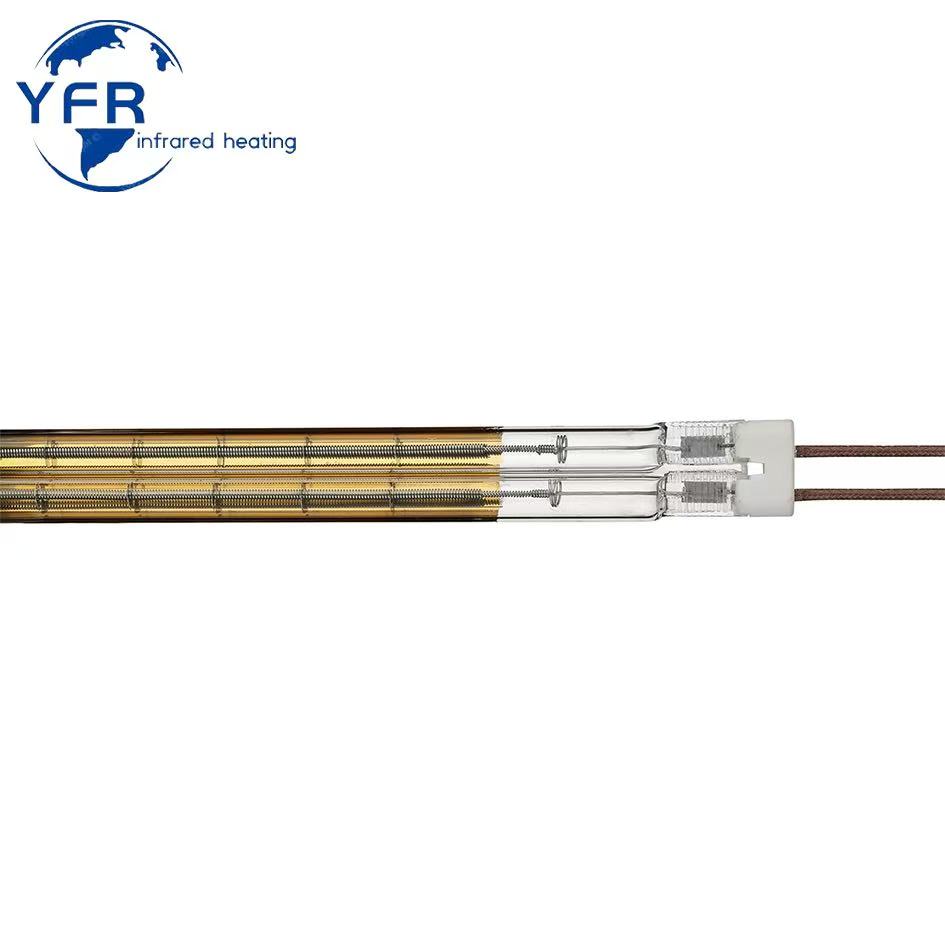
Properly engineered IR integration can:
Reduce temperature gradients in the chamber by actively heating areas that were previously cold spots.
Improve within-tray uniformity, as radiation reaches exposed surfaces more evenly than conduction through isolated contact points.
Lower risk of under-dried regions, which is critical for:
Moisture-sensitive electronics.
Battery materials where residual solvent can cause gas generation or performance issues.
Pharmaceutical intermediates where residual solvent must meet strict limits.
At the same time, IR control logic must be designed to avoid local overheating. With adequate zone control and feedback, IR can enable tighter process windows, not looser ones.
By delivering higher effective heat flux directly to the product surface, IR can:
Shorten heat-up times, bringing the product to target temperature more quickly.
Shorten drying dwell times, especially in early stages where evaporation is limited by energy input rather than diffusion.
Depending on product and baseline process, it is realistic to target:
Cycle time reductions of 15–40% when IR is used as a booster.
Higher reductions for new designs where the oven is optimized around IR from the beginning.
With shorter cycles:
Existing ovens may handle more batches per shift, increasing effective capacity without adding floor space.
New installations can often be designed more compactly, because less chamber mass and fewer oversize components are needed to achieve the same throughput.
IR delivers heat directly to the product surfaces and nearby structures, reducing unnecessary heating of bulk metal and ambient air:
Less energy wasted in heating large thermal masses.
Faster response, allowing tighter control and less overshoot.
Potential to downsize auxiliary systems (for example, heating oil circuits) in IR-dominant designs.
The net result is commonly a lower kWh per kilogram of dried product, provided the system is correctly tuned.
Infrared in vacuum ovens is a powerful tool, but it must be engineered in detail. The following guidelines help ensure successful implementation.
Dark, matte, and organic-rich surfaces generally absorb IR well, especially in the medium-wave region.
Highly reflective metal surfaces may reflect short-wave IR more strongly, requiring:
Adjusted wavelengths.
Modified surface finishes.
Different angles of incidence or reflector design.
In many vacuum drying applications where coatings, organics, or powders are involved, fast medium-wave quartz lamps are a good starting point.
IR is a line-of-sight technology:
Deep stacks of trays, high sidewalls on containers, or complex fixtures can create shadows where IR does not reach.
Solutions include:
Adjusting tray design (lower walls, perforations).
Using multiple lamp angles and side-mounted modules.
Adding internal reflectors to bounce IR into shadowed regions.
In critical applications, a combination of IR and conductive heating from shelves is often used to ensure no region is under-heated.
Reflectors and chamber surfaces affect efficiency and uniformity:
High-reflectivity, temperature-resistant reflector materials behind lamps can:
Increase effective power to the product.
Improve distribution across the tray area.
Internal surfaces should be designed with:
Appropriate reflectivity.
Good cleanability to prevent contamination accumulation, which can change emissivity and absorption over time.
Because IR changes how heat is delivered, sensing and control must also evolve:
Combine shelf thermocouples with additional sensors:
Product-surface thermocouples on representative parts.
IR pyrometers aimed at critical surfaces (where feasible).
Implement zoned power control for lamp arrays:
Independent control of top/bottom, left/right, or level-by-level modules.
Ramp profiles for IR power to prevent thermal shock or boiling at low pressures.
Coordinate IR power with pressure profile:
In early stages, when pressure is changing rapidly, moderate IR power to avoid foaming or spattering.
Increase IR power as the product stabilizes and diffusion becomes limiting.
IR integration must respect vacuum constraints:
Ensure suitable feedthroughs for lamp wiring to maintain vacuum integrity.
Provide cooling or heat sinking for lamp ends and feedthrough areas where necessary.
Design for maintenance access:
Lamps should be replaceable without major chamber disassembly.
Surfaces must be cleanable to prevent contamination on quartz tubes.
Even experienced engineers can encounter issues when adding IR to vacuum ovens. Typical pitfalls include:
Overheating of local regions
Start with conservative power levels and increase gradually.
Use more, smaller zones rather than one large zone.
Validate with thermal mapping and product testing.
Cause: excessive power density or poor zoning.
Avoidance:
Severe shadowing
Review tray and fixture design with IR in mind.
Consider side-mounted modules or additional reflectors.
Cause: product stacks, high container walls, or misaligned lamps.
Avoidance:
Wrong lamp type or wavelength
Test both short-wave and medium-wave options on real product samples.
Measure both temperature and product quality outcomes.
Cause: selecting solely based on catalog data.
Avoidance:
Contamination of quartz surfaces
Design airflow and shielding inside the chamber to limit contamination.
Define cleaning and maintenance procedures.
Consider lamp placement relative to likely condensation zones.
Cause: vapors or particles condensing on lamps in the vacuum environment.
Avoidance:
Ignoring interaction with vacuum drying kinetics
Tune IR power profiles in relation to pressure curves.
Watch for signs of boiling, foaming, or surface defects and adjust accordingly.
Cause: treating IR as if it were simply “more heat” without considering pressure and evaporation behavior.
Avoidance:
By addressing these issues in the design phase, engineers can avoid costly iterations during commissioning and production.
Implementing quartz IR in a vacuum drying oven is not a “one-size-fits-all” job. Huai’an Yinfrared typically supports projects through the following steps:
Application review
Chamber dimensions and layout.
Load configuration (tray size, number of levels, product type and thickness).
Current cycle parameters (temperature, pressure, dwell time).
Constraints on maximum product temperature and quality metrics.
Analyze existing or planned vacuum oven:
Concept development
IR booster vs. full IR integration.
Top-mounted, side-mounted, or modular frame design.
Number of zones and required power range.
Define integration concept:
Pilot testing and parameter exploration
Identify safe operating windows.
Quantify potential cycle time reduction.
Confirm product quality and uniformity improvements.
Use test rigs or pilot-scale setups with adjustable quartz IR lamps.
Vary power density, distance, and wavelength to:
Custom lamp and module design
Select lamp type (short-wave or fast medium-wave), length, and power rating to match chamber geometry.
Design reflectors, support frames, and mounting interfaces compatible with vacuum conditions.
Specify electrical components and control interfaces aligned with the customer’s automation system.
Support for integration and commissioning
Wiring routes and feedthrough selection.
Sensor placement and control strategy.
Initial test protocols and ramp-up plans.
Provide guidance on:
Assist in analyzing thermal data and batch results to fine-tune IR settings.
Long-term optimization
Confirm energy savings and cycle time improvements.
Identify opportunities for further optimization or zoning refinement.
Review operating data after start-up to:
Support maintenance and spare parts planning for quartz IR lamps and modules.
By combining application knowledge, IR heating expertise, and custom hardware design, Huai’an Yinfrared helps machine builders and end users transform vacuum drying ovens from slow and energy-intensive bottlenecks into efficient, controllable, and high-quality processes.
Last modified: 2025-12-08


