Author: Site Editor Publish Time: 2025-09-01 Origin: Site
Last updated: August 28, 2026
Round-tube quartz infrared emitters are available as straight single tubes and, for suitable designs, shaped geometries. Choosing the tube form is an engineering decision involving heated length, mechanical support, reflector geometry, working distance and thermal expansion. This guide focuses on those practical details.
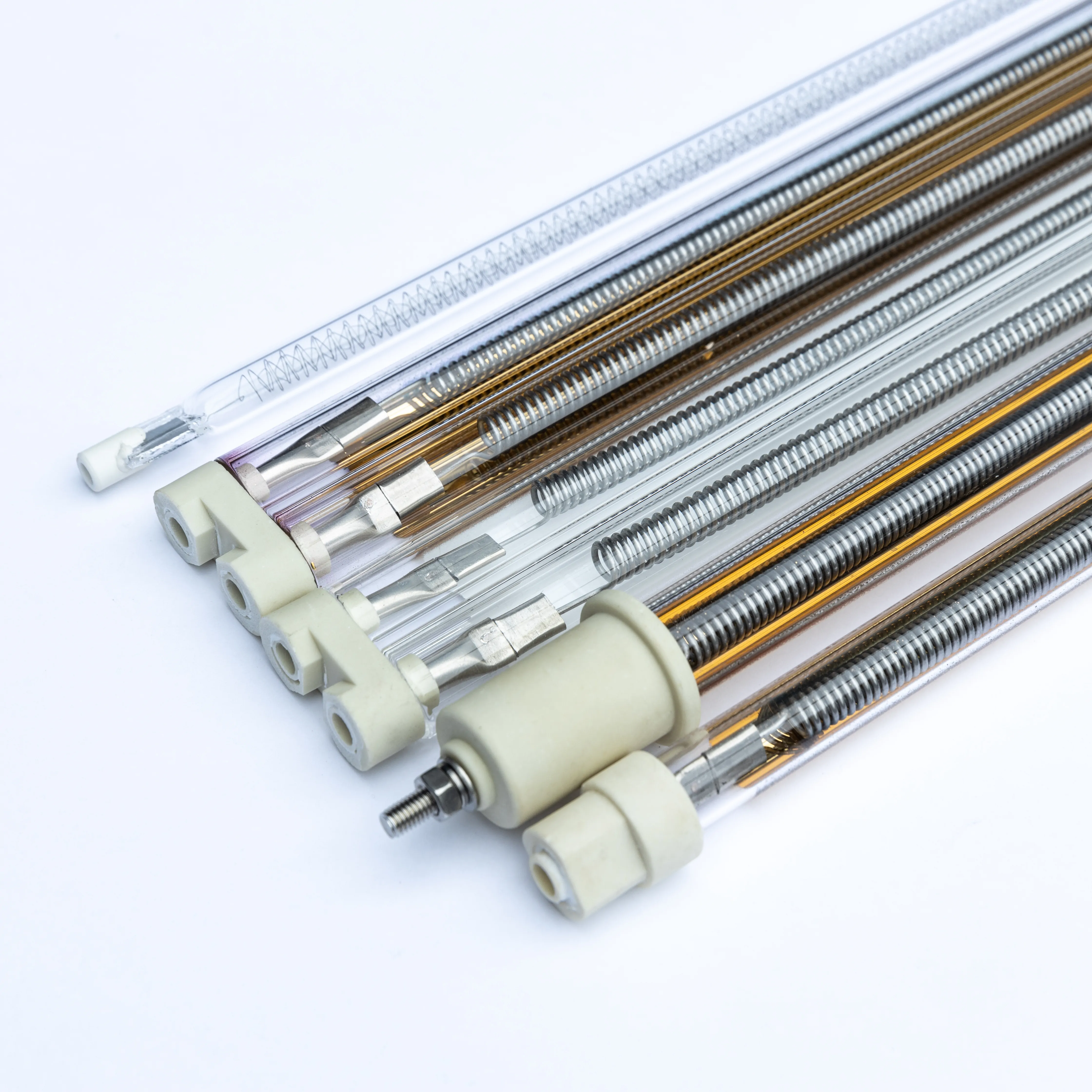
A round-tube emitter uses a quartz envelope with a circular cross-section. It may contain a tungsten filament, resistance wire or carbon element depending on the required response and wavelength. The term describes the tube construction; it does not by itself define the wave range, power or application.
Single round tubes are different from twin-tube emitters, which use a joined dual-bore quartz profile. Each construction has different mounting, stiffness and reflector considerations.
| Geometry | Useful for | Design checks |
|---|---|---|
| Straight round tube | Webs, panels, conveyor zones and replacement lamps | Heated length, spacing, edge losses and support position |
| Ring or circular shape | Heating around a central part or opening | Minimum bend radius, lead position and circumferential uniformity |
| U, L or custom bend | Localised heating around equipment geometry | Cold zones, mounting stress and reflector fit |
| Multiple straight tubes | Wide or zoned heating surfaces | Pitch, independent control and replacement access |
Not every element or reflector construction can be produced in every bend. Confirm feasibility before designing the machine around a custom shape.
Overall length determines whether the emitter fits the equipment. Heated length defines the active radiation zone. The distance between the active element and the end seal forms a cold zone that protects connections and can create a lower-temperature region at the edge of the workpiece.
Provide a drawing showing the measurement reference points, heated section, lead direction and reflector orientation. Do not infer heated length from the total length.
Quartz and internal elements expand during operation. Holders should support the emitter without clamping the tube so rigidly that expansion creates stress. Keep metal clips away from active hot areas unless the design specifically allows them.
Use the approved operating orientation.
Keep ceramic ends and seals within their temperature limits.
Prevent cables from touching hot quartz or reflector surfaces.
Allow access for cleaning and replacement.
Protect the tube from vibration and impact.
A separate reflector or an integrated gold or ceramic coating can redirect radiation toward the product. The reflector arc, clear window and orientation must match the mounting. At longer working distances, reflector geometry and emitter spacing become increasingly important for useful power density and uniformity.
Inspect reflectors during maintenance. Dust, coating deposits and surface damage can change the heat profile even when the lamp is electrically healthy.
Voltage and wattage are essential, but they are not a complete ordering specification. Include current where available, emitter type, tube diameter, overall and heated length, cold zones, ends, leads, connectors, reflector and operating orientation.
Review YFR industrial infrared lamp options and compare short-wave, medium-wave and carbon constructions according to the process.
Before approving a new layout, measure temperature across the workpiece and along the direction of movement. Check the centre, edges, gaps between emitters and areas aligned with cold zones. Record distance, power setting, exposure time and starting temperature so results can be repeated.
For a shaped emitter, also check whether the inside and outside of the bend produce the intended pattern.
No. Round quartz tubes can contain different heating elements and operate in different infrared ranges.
Not without redesign. Geometry changes heated-area coverage, mounting, element construction and reflector requirements.
Possible causes include lamp cold zones, spacing, reflector losses, airflow or the thermal mass of the product holder.
Provide a dimensioned drawing, electrical rating, required heated sections, tube diameter, lead positions, mounting orientation and application conditions.
Send YFR your heated-area drawing and emitter specification for a round-tube or shaped-emitter feasibility review.


