Author: Site Editor Publish Time: 2025-10-30 Origin: Site
Last updated: August 29, 2026
A carbon infrared lamp is often considered when a process needs a medium-wave-dominant output, controllable radiant heating and a response faster than many high-mass heaters. Selection still requires a defined material, temperature profile, heated area and installation envelope.
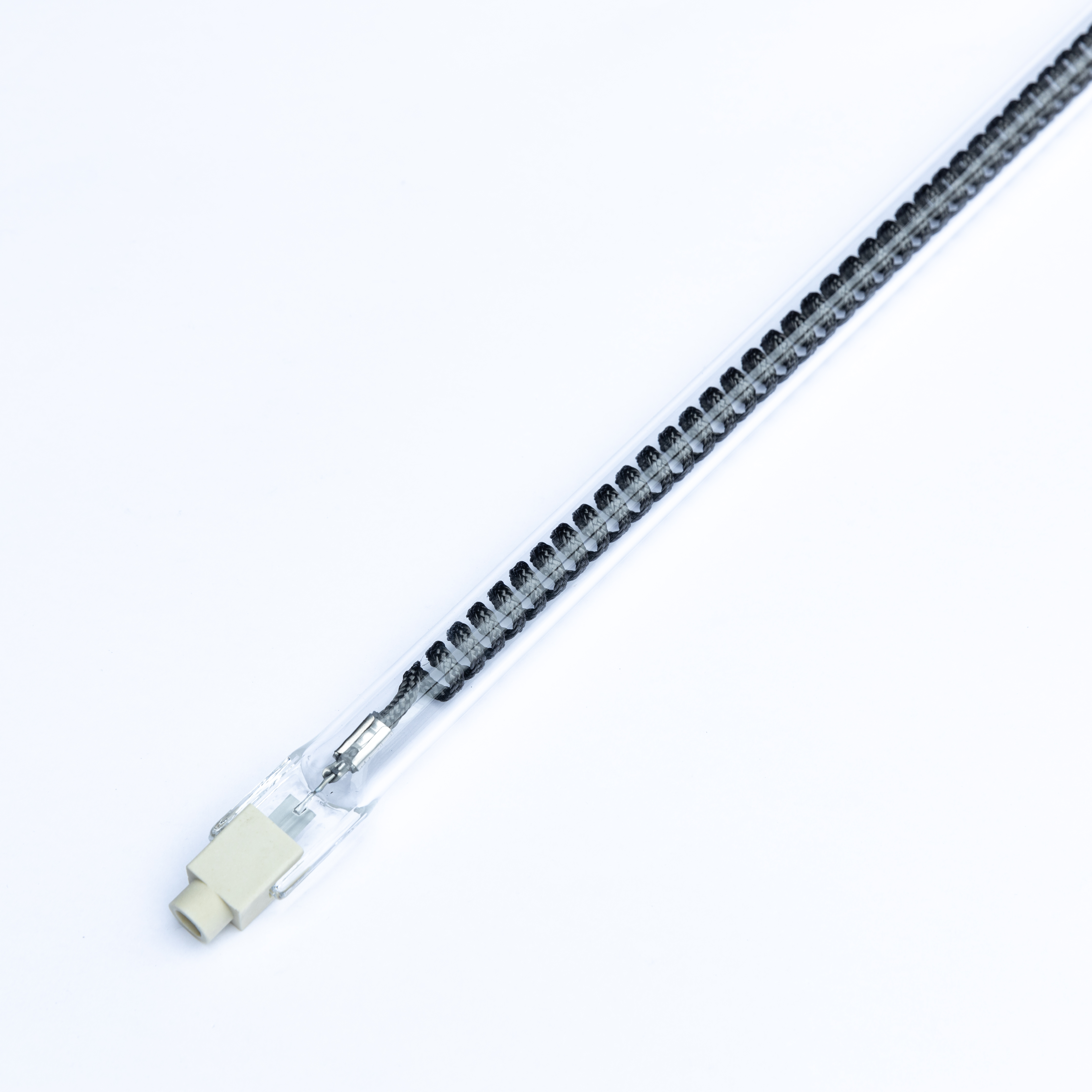
Specify whether the lamp will dry a coating, heat a web, preheat a component or support another thermal process. Record product width, line speed, initial and target temperatures, exposure time and surface sensitivity.
The carbon element and its operating condition shape the emitted spectrum and response. The useful result depends on how the target absorbs that radiation and how quickly heat and moisture move through the product.
| Item | Specify | Common risk |
|---|---|---|
| Electrical | Voltage, wattage and circuit arrangement | Incorrect load or controller sizing |
| Geometry | Tube, total length, heated length and cold ends | Poor fit or unheated gaps |
| Termination | Leads, caps, connectors and orientation | Installation mismatch |
| Optics | Clear or coated tube and working direction | Heat directed away from product |
Use appropriate power control, product-temperature sensing and line-stop logic. For drying, coordinate radiant input with exhaust so evaporated moisture leaves the surface instead of accumulating in the enclosure.
Compare YFR carbon infrared lamps with medium-wave quartz lamps.
Trial the actual material and measure temperature uniformity, accepted quality, recovery after stops and energy per accepted unit. Avoid transferring performance percentages from unrelated products or machines.
No. Absorption, thickness, moisture removal and quality limits must be tested.
No. Geometry, distance, spectrum and control are also required.
The lamp may not, but many drying processes need airflow and exhaust.
Only after electrical, dimensional, optical and process compatibility checks.
Send YFR the material, operating profile and lamp drawing for a carbon-emitter assessment.


