Author: Process Heating Engineer Publish Time: 2026-04-09 Origin: Site
Last updated: August 30, 2026
A lamp fails in the middle of production. The plant needs the press back online quickly. A replacement is sourced, installed, and powered on. Mechanically, it fits. Electrically, it runs. But a few hours later the press starts showing a different kind of problem: drying is less stable, line speed needs to be reduced, or the same print now needs more adjustment than before.
That is why how to replace IR lamps in printing presses is not really a simple spare-parts question. In printing, a replacement is only successful when the new lamp restores the same drying role inside the press, not merely when it produces heat again.
A press drying section is part of a process window. If the replacement changes where the energy lands, how concentrated it is, or how it interacts with substrate movement and ink load, the plant may get a lamp that is technically functional but operationally wrong. That is the difference between replacing a heater and preserving drying behavior.
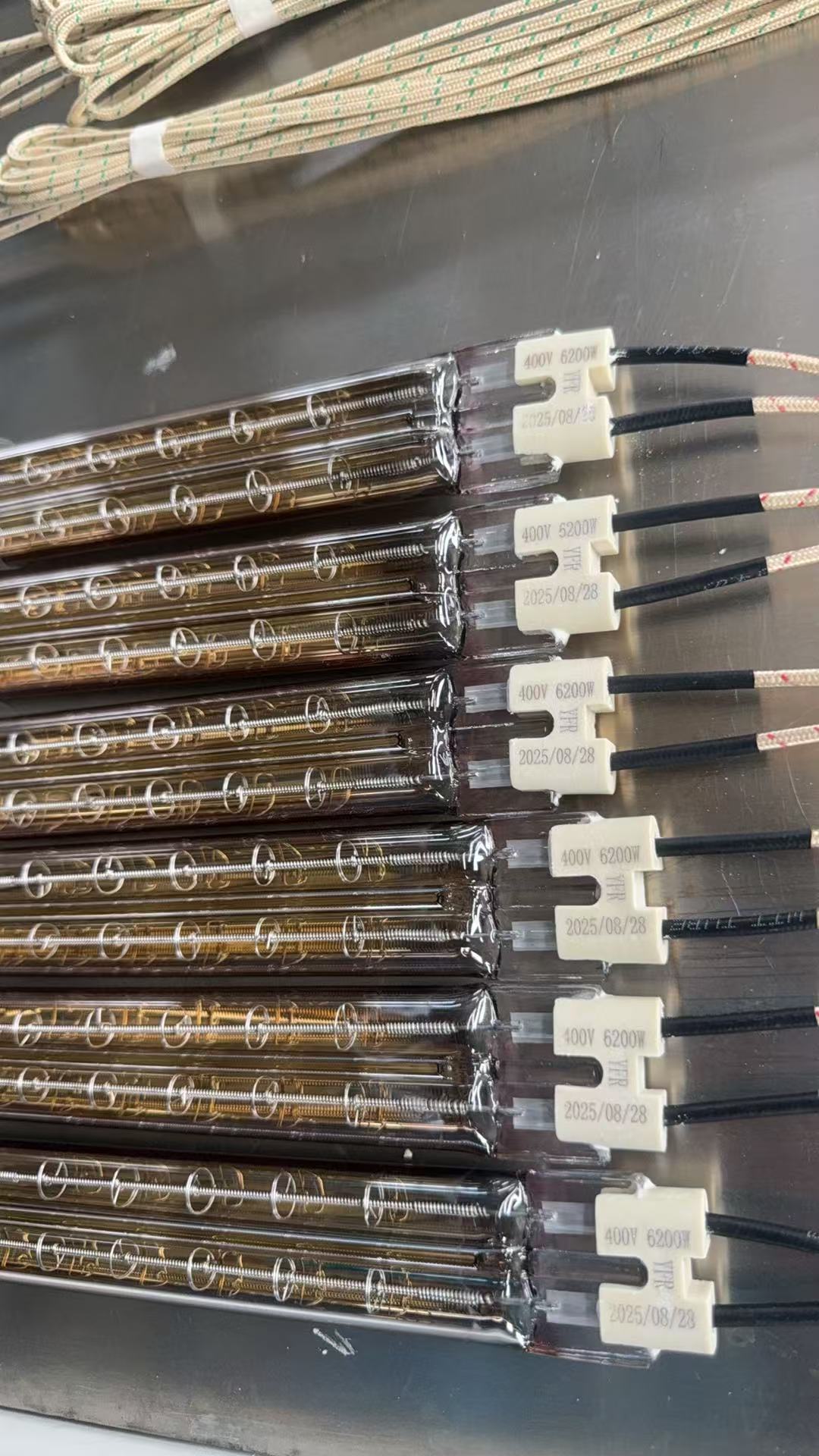
This is the mistake many plants only notice after restart. The lamp is installed correctly. The press runs. No electrical alarms appear. Yet the print no longer dries the same way.
In practice, the original lamp was not only a component. It was part of a tuned drying arrangement. Its heated length, reflector behavior, position, and output pattern all influenced how energy reached the printed web or sheet. If one of those changes, the press may still operate, but the drying window may move.
Generic heating applications often tolerate a wider performance range. Printing presses usually do not. The drying section interacts with substrate sensitivity, ink film thickness, press speed, airflow, and the location of the print zone. In real production, small changes in heat distribution can show up as setoff risk, marking, odor, curl, or reduced speed margin.
That sensitivity is consistent with how print production is treated as a controlled process rather than a loose heating task. ISO 12647 defines process-control parameters for graphic technology, and Fogra’s testing work includes practical tools and methods around print balance, heatset blistering, and other press-relevant behaviors.
A successful replacement should mean four things at the same time:
The lamp fits the assembly safely.
The lamp matches the electrical system correctly.
The lamp delivers energy to the intended drying zone in the intended way.
The press returns to stable production without needing unexpected compensation elsewhere.
That is why a proper printing press IR lamp replacement review should be based on drying equivalence, not only on whether the old lamp can be copied by appearance.
Before ordering or installing a lamp, the plant should verify the following items.
Overall length confirms whether the lamp can be mounted inside the mechanical space available. Heated length is different. It determines where the useful drying energy is actually delivered.
Two lamps may share the same overall length and still behave differently if the heated section is shorter, longer, or positioned differently. In a press, that difference can shift the effective drying zone relative to the printed area.
Voltage must match the press electrical design. Wattage must also be reviewed, but wattage alone is not enough.
Plants often use wattage as the main shortcut because it is visible on the lamp data. That is risky. The same nominal power does not guarantee the same thermal behavior if the lamp geometry, reflector, or heated length has changed.
Reflector behavior strongly affects where the energy is directed. A lamp that emits with a different reflector arrangement may still run at the correct power and still dry differently.
Tube geometry matters for installation and for the way energy is distributed across the target zone. Even a small geometry mismatch can change how the lamp sits in the assembly, how close it is to the substrate, or how it interacts with shielding and surrounding hardware.
These details are often treated as secondary until the lamp arrives. Then the service team finds that the lamp cannot be installed cleanly, lead routing becomes awkward, or the fitting orientation forces a non-original position.
That creates both maintenance and performance problems. A replacement should install without mechanical compromise.
This is the item many purchasing teams do not receive from the production side. A lamp near one print zone may not be doing the same job as a lamp in another position, even if the lamps look similar.
One lamp may be supporting surface flash-off. Another may be assisting a more difficult color deck or compensating for a known drying bottleneck. The replacement decision should reflect that real role inside the press.
Check item | Why it matters |
|---|---|
Overall length | Confirms basic fit inside the press assembly |
Heated length | Determines where useful drying energy is delivered |
Voltage | Confirms electrical compatibility |
Wattage | Confirms nominal power input, but not full process equivalence |
Reflector type | Affects how energy is directed toward the print zone |
Tube geometry | Influences installation and heat distribution |
End fittings / leads | Affects safe installation and serviceability |
Lamp position in press | Defines the real drying role of the lamp |
For plants that need a deeper parameter review before ordering, this guide on how to match IR lamp length, voltage, and wattage for printing press replacement should sit below this page in the cluster.
Mechanical fit is the first filter, not the final answer.
If the lamp does not fit, the job stops there. But if the lamp does fit, that only proves the press can physically accept it. It says nothing about whether the lamp will recreate the same drying effect.
Electrical compatibility confirms that the lamp can operate within the press power system. That is essential, but it still does not prove performance equivalence.
A lamp can match voltage and wattage and still direct energy differently, heat a different zone length, or create a different thermal profile on the substrate. In printing, those differences matter more than they might in a basic industrial heater replacement.
Drying equivalence means the new lamp does the same process job as the original lamp.
That does not require identical wording on every label. It requires the same practical outcome inside the press. If the new lamp changes the drying window, then from a production perspective it is not a true equivalent replacement.
This usually happens under downtime pressure. Someone sends a photo, measures approximate length, and asks for a quick replacement.
That may be enough to source something installable. It is often not enough to source something equivalent.
Wattage is important, but it is not a complete specification. Plants that replace by wattage alone often assume the drying result will follow automatically.
It does not. Wattage tells you the nominal input, not exactly how the lamp delivers useful energy in the press.
This is one of the most common technical errors. The lamp appears close enough. The power data looks acceptable. But the heated section is shifted or the reflector behavior is different.
The press then behaves like a lamp upgrade or downgrade was made, even though the intention was only replacement.
They are not. A replacement decision should consider press location, print process, substrate sensitivity, and the actual complaint the lamp is meant to solve.
Brand-specific pages such as Heidelberg replacement IR lamps can be useful when the press platform is known, but the replacement logic still needs to be based on application fit, not brand name alone.
Replacement mistake | Likely consequence |
|---|---|
Correct fit but wrong heated length | Drying zone shifts |
Correct voltage and wattage only | Lamp works electrically, but drying changes |
Wrong reflector type | Energy reaches the print differently |
Ignored installation geometry | Replacement fits poorly or performs differently |
Blind like-for-like replacement | Old drying limitation is simply copied forward |
If the press had a stable drying window before failure, and the plant has reliable original lamp data, a like-for-like replacement is usually the correct route.
In that case, the goal is restoration, not redesign.
If substrate types, ink systems, coating load, or line speed expectations have changed, the original specification may no longer be the best reference point.
The replacement request should then be reviewed as a process question, not only as a repeat order.
Sometimes the failed lamp only exposes a problem that already existed. The press may have been running with a narrow speed margin, uneven drying, or recurring operator adjustment.
In that situation, blindly copying the old lamp may only preserve the old weakness. A specification review is more useful than a like-for-like assumption.
A printing plant replaced a failed IR lamp during a production stoppage. The service team confirmed the overall length, voltage, and nominal wattage. The new lamp fit the existing holder and started normally after installation.
The plant did not compare heated length carefully. It also did not confirm whether the reflector behavior matched the original lamp. From a spare-parts standpoint, the replacement looked close enough. From a drying standpoint, it was not fully equivalent.
After restart, the press still ran, but drying consistency changed. Operators needed more adjustment at the same speed, and the process became less forgiving on more sensitive jobs.
Nothing was “wrong” in the narrow electrical sense. The problem was that useful energy was no longer landing in exactly the same way. The lamp replacement restored heat, but not the original drying behavior.
That is the practical difference between replacing a part and restoring a process condition.
No. Those two values are not enough to confirm true equivalence. They help with first-pass screening, but they do not confirm heated length, reflector behavior, tube geometry, end fitting details, or actual drying role inside the press.
Because physical fit only proves installability. A press can accept a lamp mechanically while still receiving a different heat pattern, different effective drying length, or different reflector behavior after startup.
Overall length is the full lamp size from end to end. Heated length is the portion that actually delivers useful process heat. In printing, that difference matters because it determines where drying energy is applied.
Order like-for-like when the original setup was stable and the original lamp data is reliable. Review the specification when production conditions changed, the old drying window was already weak, or the replacement request is based on incomplete data.
Prepare overall length, heated length, voltage, wattage, reflector type, tube geometry, end fitting details, lead direction, lamp position inside the press, and any production symptoms observed before or after failure.
If your plant is replacing a failed lamp, the safest approach is to check three things before ordering: physical fit, electrical compatibility, and drying equivalence.
That means reviewing more than a photo and more than a wattage label. It means checking where the lamp works inside the press, what drying role it serves, and whether the new lamp is likely to preserve the same process window after restart.
For maintenance teams, that reduces avoidable repeat downtime.
For purchasing teams, it reduces the risk of buying a lamp that is technically acceptable but operationally wrong.
For service managers, it makes replacement decisions easier to defend because the decision is tied to press performance, not only to part similarity.
If you are evaluating a replacement, prepare the lamp data, installation details, and any production symptoms seen on press. A proper review before ordering is usually less expensive than troubleshooting drying instability after installation.
ISO 12647 series — Used as a reference point for print process control and the idea that printing conditions are defined by controlled parameters rather than by rough approximation.
Fogra offset-printing resources — Useful for practical press-control tools such as dampening balance and print evaluation methods relevant to stable production behavior.
Fogra paper testing for heatset printing — Relevant for understanding heat-related print issues such as blistering and other substrate-response checks under defined drying conditions.
OSHA lockout/tagout guidance — Relevant when servicing or replacing electrically powered press components during maintenance work. OSHA states that proper lockout/tagout practices and procedures safeguard workers from hazardous energy releases.
NFPA 70B and NFPA 70E materials — Useful for the safety side of electrical maintenance, including performing maintenance safely and framing maintenance requirements as safety-related work.
Review YFR replacement infrared lamps for printing equipment and heating modules and controls. Confirm compatibility and dryer performance through press trials.
Send YFR your material, dimensions, target, cycle time and current equipment details for an application-specific review.