


Author: Site Editor Publish Time: 2025-11-26 Origin: Site


Infrared heating lamps for car seat wrinkle removal give automotive OEMs, Tier-1 seat suppliers, and equipment integrators a compact way to eliminate wrinkles, chatter marks, and trim distortions directly on the line. By delivering fast, localized heat to the seat surface, these systems improve appearance and comfort while helping plants cut energy use and rework.
This article explains how to specify, integrate, and validate infrared-based car seat wrinkle removal systems, and how Huai’an Yinfrared Heating Technology can support OEM/ODM projects with lamps, modules, and complete infrared heating systems.
Opportunity: Modern car seats use multi-layer structures (foam, leather or synthetic trim, heating pads, airbags). Wrinkles and sew-line chatter increase rework, scrap, and warranty risk. Inline infrared car seat wrinkle removal systems can relax trim and correct defects in seconds, without large ovens.
Where IR fits best: Infrared heating is ideal for surface-dominated processes such as leather and PVC trim relaxation, laminated fabric smoothing, and foldable soft-top treatment—especially where you need fast, repeatable heating in a compact footprint.
Impact on energy and throughput: Because infrared delivers radiant energy directly to the seat surface, plants can avoid heating the entire cabin or large air volumes. IR-based drying and heating often achieve higher heat-transfer efficiency than hot-air convection in well-designed systems. Practically, this means shorter cycle times, smaller equipment, and lower energy per seat compared with large convection tunnels.
Key technical decisions: Successful projects hinge on correctly selecting wavelength band (usually short-wave for leather and PVC), power density and zoning, emitter type (single-tube quartz lamps, compact modules), working distance, and control strategy (on/off, SSR/SCR, PLC-based recipes).
How Huai’an Yinfrared helps: Huai’an Yinfrared Heating Technology supplies short-wave quartz infrared lamps, modular cassettes, compact panels, and complete infrared heating system designs, supporting OEM/ODM customers with application engineering, power control, and mechanical integration for both new lines and retrofits.
Key takeaway: Treat car seat wrinkle removal as a thermal process with clear targets (temperature, time, uniformity), not as a “magic box.” If you define the physics correctly, the IR solution falls into place.
Process description
On a typical automotive seat assembly line, finished seat assemblies move on a conveyor past inspection and finishing stations. Each seat may combine foam cushions, leather or synthetic trim, embedded heating pads, and side airbags. Line takt times often range from 30 to 90 seconds per seat, and surface temperatures for wrinkle removal usually stay in the 80–120°C window at the trim surface (roughly 180–250°F).
Pain points with conventional heating
Large hot-air seat ovens consume floor space and energy.
Long warm-up and cool-down times reduce flexibility.
Poorly focused heat can overheat foam or internal components before wrinkles disappear.
Profiled seat shapes create shadowed zones where air or radiant heat is hard to control.
How infrared changes the game
Electric short-wave infrared lamps can be arranged in a profiled “seat oven” that closely follows the seat geometry:
Instant response: Tungsten-quartz short-wave emitters ramp to full output in seconds, enabling cycle times around 45–90 s per seat in many designs.
Multiple zones: Vertical and horizontal banks of lamps, each with its own control loop, allow more heat on high-wrinkle areas (bolsters, sew lines) and less on sensitive areas.
Localised heating: Only the seat is heated, not the cabin or large volumes of air, improving energy efficiency.
Safety: Interlocks can de-energize lamps automatically if the conveyor stops, avoiding overheat damage.
Suitable Huai’an Yinfrared solutions
Short-wave quartz single-tube lamps (1.0–1.4 μm peak) in T-3 style diameters.
Custom profiled infrared heating modules with gold or white reflectors and multi-zone control.
Full inline car seat wrinkle removal systems integrated as a compact infrared heating system module on the conveyor.
Process description
Before trim covers are pulled over the foam core, many seat plants preheat and “preform” leather or PVC covers to:
Relax creases from cutting and stitching.
Improve stretchability over complex foams.
Reduce force needed at manual or robotic assembly stations.
Typical trim thickness is 0.8–1.5 mm for leather and 0.6–1.2 mm for synthetics, with target surface temperatures often in the 60–90°C range.
Pain points of conventional heating
Hot-air cabinets or radiant panels heat both the trim and surrounding air, making it difficult to get fast, repeatable heat profiles.
Long warm-up times discourage frequent recipe changes across seat variants.
Overheating can stiffen or discolor leather, or damage backing foams.
How infrared helps
Short-wave infrared lamps or compact IR panels placed in a preforming station can:
Deliver line-of-sight energy matched to the absorption of dark leather and PVC.
Raise surface temperature quickly while limiting bulk temperature of backing foams.
Use recipe-based control (power plus exposure time) to adapt to multiple trim constructions.
Suitable Huai’an Yinfrared solutions
Short-wave infrared lamps with gold reflectors for high surface flux.
Small footprint IR preheating modules designed as custom infrared heating solutions for OEM workstation integration.
Multi-zone trim preheaters with recipe management via PLC or industrial PC.
Process description
Aftermarket seat refurbishing and warranty repair centers often face:
Local wrinkles on heavily used seats.
Creases appearing near seam lines after re-trimming.
Limited floor space and low-to-medium daily throughput.
Limitations of traditional methods
Hand-held hot-air guns are operator-dependent and can scorch material.
Steam methods introduce moisture, which then must be removed.
Large ovens are uneconomical and inflexible for low volume.
Infrared solution
Compact, localized infrared heat lamps for automotive seats provide:
Handheld or small stand-mounted IR modules for spot correction.
Fast, predictable heating of a defined zone, guided by IR thermometers.
Minimal impact on foam or electronics, due to controlled exposure time and distance.
Suitable Huai’an Yinfrared solutions
Short-wave IR cassettes with small active areas and adjustable brackets.
Portable bench-top units based on short-wave infrared lamps with integrated timers and power controls.
Pro tip for plant engineers: Even in aftermarket or low-volume contexts, standardizing IR “recipes” (distance, power, time) improves consistency far more than relying on manual hot-air guns.
Designing an effective infrared car seat wrinkle removal system starts with understanding the key parameters.
Definition: Infrared spectrum is often divided into short-wave (approximately 0.78–2 μm), medium-wave (approximately 2–4 μm), and long-wave (greater than 4 μm).
Why it matters: Seat trims (leather, PVC, textiles) absorb IR differently. Dark leather and PVC typically absorb short-wave energy very effectively, making it ideal for fast surface heating.
Typical choice for car seats:
Short-wave halogen quartz lamps (peak roughly 1.0–1.4 μm) are most common for wrinkle removal due to ultra-fast response and high power density.
Medium-wave panels may be used for more gentle, bulk heating of textiles or foams.
Definition: Total electrical power per lamp or module (kW) and the radiant power per unit area seen by the seat (kW/m²).
Why it matters: Power density determines how quickly the seat surface reaches target temperature and how long the cycle must be.
Typical ranges:
20–40 kW/m² in intensive wrinkle removal zones.
5–20 kW/m² in preheat or trim relaxation zones.
Higher densities give faster heat-up but require careful control to avoid scorching.
Quartz single-tube short-wave lamps:
Glass diameters around 10–19 mm, lengths up to about 2.5 m.
Tungsten filament, halogen-filled, with optional gold or white reflector coating.
Very fast response (on the order of seconds), ideal for profiled seat ovens.
Module / cassette assemblies:
Pre-mounted lamps with reflectors, cooling, and wiring.
Faster integration; easier replacement and standardization.
Panels (medium-wave or carbon IR):
Larger emitting area, more uniform but slower response.
Better for bulk drying than pinpoint wrinkle removal.
Emitter length / panel size: Must match seat profile: backrest height, cushion depth, bolsters.
Zoning concepts:
Longitudinal zones (headrest, upper back, lumbar, cushion).
Transverse zones (left bolster, center, right bolster).
Each zone can be controlled independently to optimize heat on known problem areas.
Surface temperature:
Typical trim wrinkle removal: 80–120°C at the surface, maintained only for 30–90 seconds.
Response time:
Short-wave halogen lamps reach operating temperature in seconds.
This enables “instant-on” operation tied to conveyor or cycle start, reducing idle energy.
Working distance:
Commonly 80–300 mm from emitter to seat surface.
Shorter distance → higher intensity, more sensitivity to positioning.
Line layout constraints:
Profiled ovens following seat contour minimize distance variation.
Overhead or side-mounted modules need guarding and access paths.
On/Off: Simplest, used in manual stations or small modules.
SSR / SCR power control: Enables continuous control of lamp power from 0–100%.
Closed-loop PID: Uses thermocouples or IR sensors to track seat surface or air temperature.
PLC / fieldbus integration:
Recipes per seat type.
Multi-zone control.
Integration with line control, safety interlocks, and MES.
Enclosures: Sheet-metal housings shaped to the seat, with access doors for maintenance.
Insulation: High-temperature insulation behind reflectors improves efficiency.
IP rating: Depends on plant environment (dust, humidity). Modules can be designed from basic low-IP enclosures up to higher protection levels, as needed.
| Infrared Solution Type | Wavelength Band | Typical Power Density | Response Time | Recommended Applications | Control Options |
|---|---|---|---|---|---|
| Short-wave quartz IR lamps | Short-wave | High | Very fast | Inline car seat wrinkle removal, trim preheating | On/Off, SSR, SCR, PID, PLC |
| Short-wave quartz IR modules with reflectors | Short-wave | Medium–high | Very fast | Profiled seat ovens, multi-zone wrinkle removal systems | PLC recipes, multi-zone PID |
| Medium-wave IR panels | Medium-wave | Medium | Fast | General textile or foam drying, comfort heating prototypes | On/Off, SSR, basic PID |
| Long-wave ceramic IR heaters | Long-wave | Low–medium | Slow–medium | Ambient comfort, low-temperature drying, non-critical trim | On/Off, simple thermostats |

If your main issue is deep wrinkles and chatter along sew lines at high takt speeds,
then prioritize short-wave quartz lamps with high power density and multi-zone control.
If you mainly preheat fabric or foam at moderate temperatures,
then consider medium-wave panels or lower-density short-wave modules.
If floor space is extremely tight,
then use compact, profiled modules that closely follow the seat geometry and minimize working distance.
If your line runs many seat variants,
then design with more zones and PLC-based recipes, even if initial hardware cost is slightly higher.
If operators will frequently stop/start the line,
then specify lamps with instant-on capability and interlocks that cut power when the conveyor stops.
Seat trim type?
Concerned about scorching?
Yes → Medium-wave or low-density short-wave, larger distance, closed-loop temperature control.
No → Short-wave modules at moderate power, simple SSR control.
Need cycle time ≤ 60–90 s?
Yes → Short-wave quartz lamps + SCR power control + multi-zone profiling.
No → Short-wave or fast medium-wave modules with basic PID.
Leather / dark PVC
Light fabric / textile with foam
Line type?
Continuous conveyor → Fixed profiled ovens with conveyor interlock and recipe-based PLC control.
Indexing or manual stations → Compact modules or seat-trim heaters with cycle-start buttons and built-in timers.
Mains voltage and phase
For industrial seat lines, 3-phase supplies (for example 380–480 V) are common for IR ovens.
Balance loads across phases to avoid neutral overload and voltage imbalance.
Wiring and protections
Use appropriately sized cables for lamp currents; include separate circuits per zone.
Protect each zone with breakers and, if needed, fuses for semiconductor protection.
Provide proper grounding for reflectors, frames, and enclosures.
Control strategies
Recipes per seat type (power per zone, cycle time, target temperature).
Communication with the main line PLC via fieldbus.
Fault handling (over-temperature, conveyor stop, door open).
On/Off + timers: For simple, single-module repair stations.
Phase-angle or burst-fired SCR control: For precise, fast power modulation to short-wave lamps.
PID control loops: Using seat-surface sensors or representative metal coupons.
PLC integration:
Control cabinet layout
Separate high-voltage SCR stacks from low-voltage PLC and HMI sections.
Ensure cooling and ventilation for power electronics.
Provide clear labelling and lockable disconnects for maintenance.
Mounting options
Over-conveyor profiled ovens, bolted to line frames.
Standalone seat-trim heaters on adjustable columns.
Cassettes that slide into frame rails for quick replacement.
Distance and angle
Design fixed mechanical stops so working distance is consistent across seat variants.
Use adjustable brackets where necessary but lock them once process is validated.
Line speed and dwell time
Dwell time (s) ≈ heated length (m) / line speed (m/s).
Relate conveyor speed to oven length:
Use this relation during sizing to ensure enough exposure time for wrinkle removal.
Reflectors, shielding, and insulation
Use high-reflectivity reflectors to direct energy to the seat.
Add shielding to protect operators from direct IR; include observation windows where needed.
Insulate outer walls to reduce external surface temperature and energy loss.
Maintenance access
Provide hinged doors or removable panels to access lamps and reflectors.
Design for “lamp-out” replacement from the safe operator side.
Defining a heating profile
Target surface temperature range (for example 90–110°C for leather trim, depending on supplier specs).
Ramp speed: how quickly the surface should heat (to avoid overshoot).
Soak time: how long to hold near peak to relax wrinkles without damaging the trim.
Sensors and feedback
Use thermocouples on test coupons or internal dummy seats.
Supplement with infrared pyrometers aimed at critical trim zones.
Log temperature-time curves during trials to define stable recipes.
From trial-and-error to structured testing
Start with low power and short times; gradually increase until wrinkles disappear consistently.
Map process windows: combinations of power and time that meet both quality and safety limits.
Document recipes and limit values in standard operating procedures.
Tuning to reduce defects
If stitching shows discoloration → reduce local power density or move lamps slightly farther.
If wrinkles remain near bolsters → increase intensity or add dedicated side “wings” with additional lamps.
If foam feels too soft or deformed → lower maximum temperature and extend soak at milder power.
Lab tests
Use small IR modules and sample seat trims or mini cushions.
Record heating curves, wrinkle removal results, and any material changes.
Pilot line or test zone
Throughput vs. dwell time.
Temperature distribution across seat surfaces.
Operator ergonomics and safety.
Install a short profiled oven section on a trial conveyor or offline rig.
Validate:
Full-scale acceptance criteria
Throughput: seats per hour at defined takt time.
Temperature uniformity: for example within ±5–10°C across key zones.
Specific energy consumption: kWh per seat at a defined quality level.
Quality: percentage of seats passing visual inspection with no rework due to wrinkles.
Standards and directives (examples)
CE marking for systems shipped to Europe, referencing relevant directives such as Low Voltage, EMC, and Machinery (depending on system configuration).
UL/CSA or equivalent regional standards for North America.
RoHS/REACH considerations for lamp materials, reflectors, and cabling (avoid restricted substances where required).
Thermal safety
Guarding around all high-temperature surfaces.
Clear warning labels for hot surfaces and IR radiation.
Over-temperature protection using limit thermostats or safety PLC inputs.
Fire prevention
Maintain clearances from combustible materials (foam dust, packaging).
Use safety interlocks for conveyor stop, door open, and emergency-stop.
Provide appropriate exhaust or ventilation if solvents or cleaners are present.
Electrical safety
Proper grounding and bonding of metal parts.
Short-circuit and earth-fault protection.
Lockout/tagout provisions for maintenance.
A link or reference to Huai’an Yinfrared Heating Technology’s compliance and technical support resources is typically placed near project-specification or RFQ sections to help engineering and purchasing teams verify standards alignment.
Engagement models
Turnkey car seat wrinkle removal units for line builders and Tier-1 suppliers, including mechanics, lamps, controls, and documentation.
Modified lengths, diameters, reflector patterns, and pin configurations to match existing equipment.
Off-the-shelf short-wave lamps, IR modules, and power controls for integrators who design their own ovens.
Standard catalog components:
Customized emitters/panels:
Complete infrared heating systems:
Typical MOQ and sample policy
Lamps and small modules: modest MOQs with sample pieces available for lab trials.
Custom-shaped modules or profiled seat ovens: project-based MOQs aligned with program volumes.
Lead times (indicative)
Standard lamps and modules: from stock or short production cycles, suitable for maintenance and small projects.
Custom lamps/panels: additional time for design confirmation and tooling.
Complete systems: additional engineering, factory acceptance testing, and logistics.
Private label / co-branding
For OEM partners, modules and heaters can be supplied with private labels and customized documentation to fit their product families.
Documentation & support
3D models and 2D drawings for mechanical integration.
Wiring diagrams and single-line diagrams.
Application notes detailing recommended distances, temperatures, and trial procedures.
Assumptions (illustrative only; actual results depend on process design):
Conventional method: large hot-air oven for seat finishing.
IR method: profiled short-wave IR wrinkle removal oven.
Line operates 16 hours per day, 5 days per week.
| Item | Conventional Hot-Air Oven | Infrared Wrinkle Removal System |
|---|---|---|
| Energy use per seat (relative) | 1.0 | ~0.7–0.8 (localized heating) |
| Typical cycle time per seat | 90–120 s | 45–90 s |
| Maintenance | Fans, burners, ducts | Lamps, power controls |
| Floor space requirement | Large tunnel | Compact profiled modules |
| Indicative payback driver | Mainly energy savings | Energy + throughput + quality |
In many industrial case studies, shifting from large convection-based heating to well-matched radiant or infrared solutions reduces energy consumption and improves process efficiency, particularly as process heat is a major part of industrial energy demand and emissions.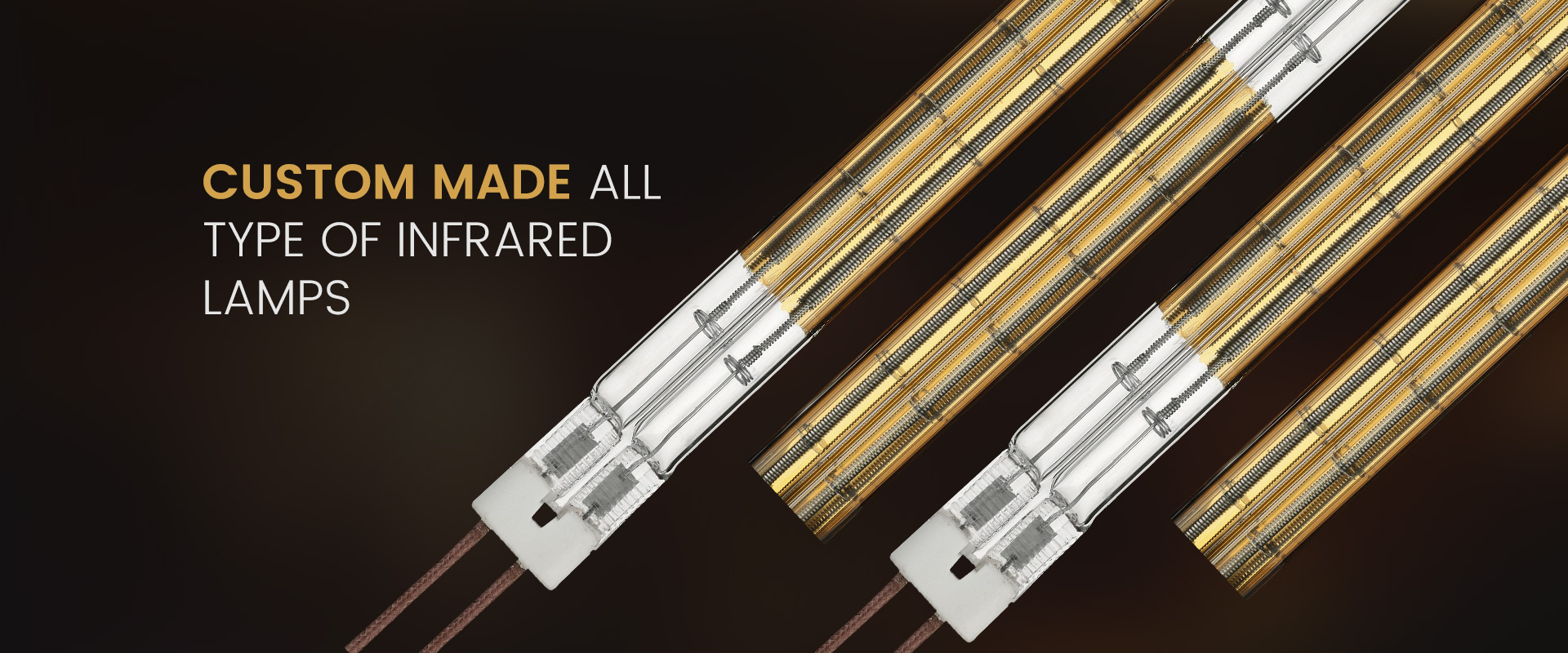
Wrong wavelength choice
Using low-intensity long-wave heaters for fast crease removal leads to long cycles and inconsistent results.
Solution: Match wavelength and power density to leather or PVC absorption; short-wave is usually preferred.
Under-sizing power
Too little installed kW makes the system rely on long dwell times, conflicting with takt time.
Solution: Size for peak demand and then throttle back via control.
Ignoring seat geometry
Flat panel heaters applied to highly contoured seats create hot and cold spots.
Solution: Design profiled ovens with side “wings” and zones for bolsters and edges.
Poor mounting and alignment
Variable distances cause large variations in intensity.
Solution: Mechanical design must lock geometry; use jigs and stops.
Neglecting insulation and shielding
Excess heat loss raises external temperatures and energy use.
Solution: Insulate enclosures, manage stray radiation, and protect operators.
Missing safety integration
Lack of conveyor interlocks or over-temperature protection is a major risk.
Solution: Include safety PLC or interlock circuits from the first design iteration.
No structured validation
Skipping pilot trials leads to surprises when changing seat designs or trim suppliers.
Solution: Build validation into the project plan, including worst-case material tests.
These are indicative starting points, not hard limits:
Heat-up time:
From ambient to around 90–100°C surface temperature in under 60 s for typical leather trim.
Temperature uniformity:
Approximately ±5–10°C across critical surfaces (bolsters, cushion, lumbar).
Specific energy consumption:
Aim for a clear downward trend versus existing methods, measured as kWh per seat at equal or better quality.
Incoming inspection of quartz tubes, filaments, and reflector materials.
Electrical testing (continuity, insulation resistance) of lamps and modules.
Burn-in or functional testing of representative emitters to confirm power and spectral characteristics.
Final inspection of modules and system assemblies for wiring, labeling, and mechanical integrity.
Q1. How do I size the power of an infrared car seat wrinkle removal system?
Start from your takt time, target surface temperature, and seat geometry. A quick rule is to estimate needed power density (for example 20–40 kW/m² for intensive wrinkle removal zones) and then calculate emitter area. Huai’an Yinfrared can help convert these targets into a lamp and module layout.
Q2. Can infrared heating really save energy compared with my existing hot-air oven?
In many cases, yes. By focusing radiant energy on the seat surface instead of heating a large air volume, IR systems can reduce wasted heat and cycle time. The exact savings depend on your current oven efficiency, production schedule, and insulation.
Q3. Will infrared lamps damage leather or foam?
When properly designed—correct wavelength, distance, power, and exposure time—infrared heating works within the material supplier’s specified temperature windows. Well-controlled surface heating can even improve comfort and efficiency compared with traditional resistive systems built into seats.
Q4. How long do infrared lamps last in a seat wrinkle removal application?
Short-wave quartz lamps are typically rated for thousands of hours of operation under proper conditions. Actual service life depends on switching frequency, cooling, and voltage stability. Designing for easy lamp access and including run-time counters helps plan replacements.
Q5. What information do you need from us to design a solution?
Key data include: seat drawings, trim materials and colors, foam type and thickness, line speed or takt time, permissible surface temperature, available line space, and local mains power. Photos or videos of the current process are also very helpful.
Q6. Can you support private label or OEM-branded modules?
Yes. For OEM and integrator partners, Huai’an Yinfrared can supply modules and subsystems with your branding, labels, and documentation structure, while providing engineering support behind the scenes.
Q7. Do you provide global support and after-sales service?
Huai’an Yinfrared works with international partners and can support remote troubleshooting, spare parts, and technical guidance. For turnkey systems, local service partners can be qualified as part of the project.
If you are an automotive OEM, Tier-1 seat supplier, or equipment integrator evaluating infrared heating lamps for car seat wrinkle removal, Huai’an Yinfrared Heating Technology can support you from concept to commissioning. Share your basic process data—seat drawings, materials, takt time, and available space—and our team will propose a preliminary sizing and layout.
To explore standard components, modular profiled ovens, or fully custom infrared heating solutions, contact Huai’an Yinfrared through your usual sales or inquiry channel so we can help you design a robust, energy-efficient seat wrinkle removal station.
Last modified: 2025-11-26


