Author: Site Editor Publish Time: 2025-08-16 Origin: Site
Last updated: August 29, 2026
An industrial infrared emitter heats a product by radiation. Electrical energy raises the temperature of an element, the element emits a spectrum of infrared radiation and the product absorbs part of that energy. The final temperature still depends on geometry, time, losses and material properties.
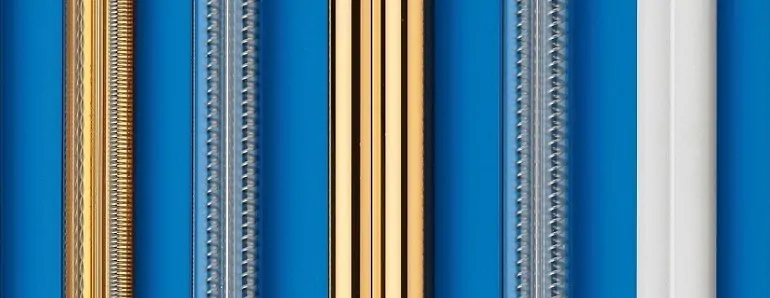
A resistance element heats when current flows through it. Element temperature and construction influence the emitted spectrum and response. The quartz envelope supports and isolates the element but does not by itself define the wavelength.
Radiation reaching a product may be absorbed, reflected or transmitted. Colour, coating, moisture, thickness and wavelength affect the balance, so identical lamps can heat two materials differently.
Working distance, emitter spacing, reflector shape and product orientation determine how much radiation reaches each area. Shadowing and edge loss often create non-uniformity before total wattage becomes the limiting factor.
| Process input | Measure | Design response |
|---|---|---|
| Material | Absorption and temperature limit | Emitter family |
| Motion | Line speed and dwell | Zone length and power |
| Geometry | Width, distance and shadowing | Spacing and reflector |
| Quality | Temperature and product endpoint | Sensing and recipe |
Compare YFR short-wave, fast medium-wave and carbon emitters.
Lamp colour or element temperature does not prove product temperature. Use suitable product sensors, profile trials and accepted-quality measurements at normal and worst-case operating conditions.
No, but airflow may still be needed for drying or cooling.
It may reflect a large portion of the incident radiation.
No. It redirects part of the available radiation.
Spacing, reflector geometry, distance or lamp-output variation may contribute.
Send YFR the product, target profile and machine geometry for an emitter-layout review.


