


Author: Process Heating Engineer Publish Time: 2025-08-21 Origin: Site
Last updated: September 1, 2026
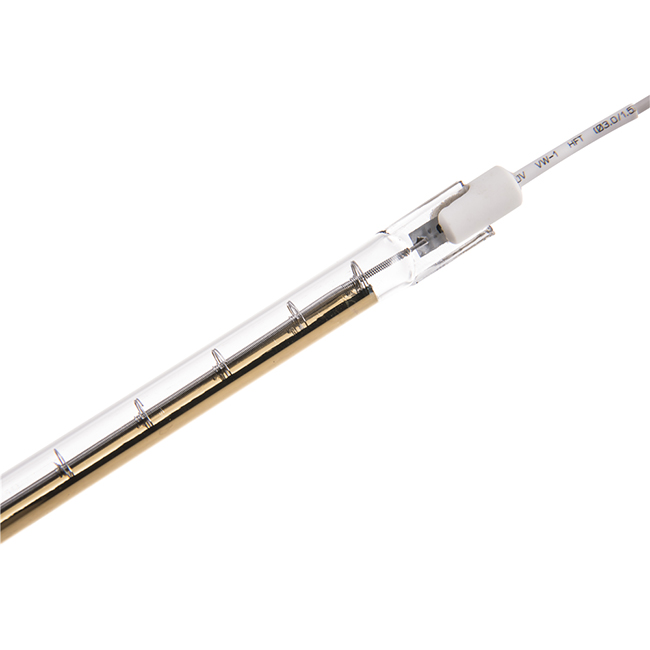
Industrial infrared heating is mainly used where a production process needs direct, controllable, and repeatable heat transfer. Instead of heating only the surrounding air, infrared radiation can transfer energy directly to coatings, inks, plastics, films, preforms, metal surfaces, food products, or materials moving on a conveyor.
The main industrial applications include drying, curing, preheating, forming, surface treatment, oven heating, and production-line heating. The right solution depends on the material, target temperature, heating distance, line speed, reflector design, and control method.
This guide is designed as a navigation hub for industrial infrared heating applications and product selection.
Industrial infrared heating uses radiant energy to transfer heat directly to a target surface or material. In many production systems, this can provide faster local heating than conventional hot-air heating, especially when the heat needs to be focused on a specific product, coating layer, film, or working zone.
However, infrared heating performance does not depend on lamp power alone. The actual result depends on wavelength selection, reflector direction, heating distance, material absorption, airflow, and power control.
Emitter family is an initial screening variable rather than a fixed application rule. Short-wave, fast-medium-wave, medium-wave, carbon and reflector configurations provide different response and directional characteristics. Final selection should follow material absorption, heat flux at the working distance, geometry, airflow, line speed and measured trials.
This is why industrial infrared heating should be selected by application, not only by wattage.
Industrial infrared heating can be used across many industries, but each process has different requirements. A drying line, PET blow molding machine, coating system, and industrial oven should not use the same heating logic.
The table below gives a quick overview.
| Application | Main Heating Goal | Typical IR Solution |
|---|---|---|
| Printing drying | Dry ink or coating on printed substrates | Fast medium wave or short wave IR emitters |
| Coating and curing | Support surface drying, varnish curing, or adhesive curing | Medium wave, fast medium wave, or carbon IR |
| PET preform heating | Heat preforms before blow molding | Replacement IR lamps and controlled heating zones |
| Plastic forming | Heat plastic sheets or parts before shaping | Medium wave or carbon IR depending on material |
| Industrial ovens | Add or replace controlled heating zones | IR modules or industrial oven replacement lamps |
| Conveyor drying | Dry moving products on production lines | IR drying modules and controlled lamp arrays |
This overview should be used as a starting point. The final selection should be based on the material, heating area, target temperature, and production speed.
Printing drying is a common application for industrial infrared heating. Infrared energy can help dry ink, varnish, coatings, and water-based layers more quickly on production lines.
For printing applications, stable heat output and correct heating distance are important. Too little heat may slow down the line. Too much heat may damage the substrate, deform film, or cause uneven drying.
YFR supplies printing drying infrared lamps for applications where controlled heating and fast response are required. The right lamp depends on the printing machine structure, working width, substrate, coating type, and line speed.
Printing drying systems may use fast medium wave emitters, short wave emitters, or reflector-type lamps depending on the process.
Coating and curing applications require stable and uniform heat transfer. Infrared heating can support varnish curing, adhesive curing, surface drying, coating drying, and controlled thermal treatment.
In coating systems, the challenge is often not only heating speed. Uniformity is equally important. If one area receives too much energy while another area receives too little, the final coating quality may become unstable.
Fast medium wave IR emitters can be suitable when the process requires a balance between response speed and material absorption. For some coatings, medium wave or carbon infrared may provide more controlled heating behavior than very aggressive high-intensity heating.
The correct choice depends on coating thickness, substrate sensitivity, target temperature, heating distance, and production line speed.
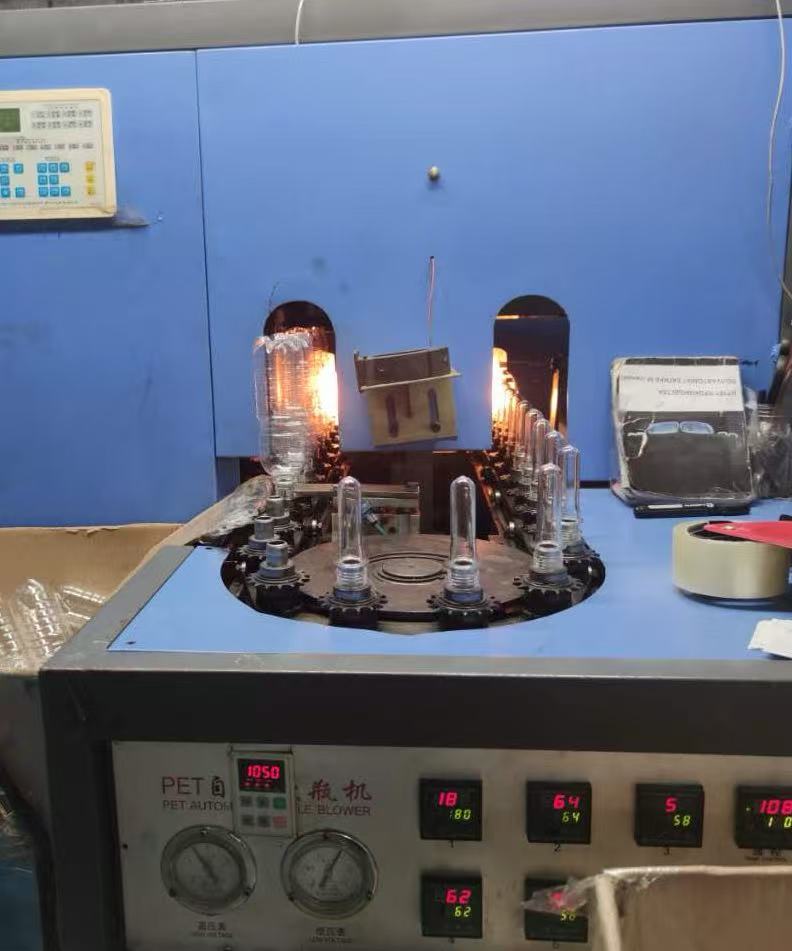
PET blow molding requires repeatable infrared heating. PET preforms must be heated evenly before forming, and the heating result directly affects bottle quality, wall thickness, and production stability.
For PET applications, the infrared lamp must match the machine structure and heating zone design. The lamp dimensions, wattage, heated length, end cap type, and reflector arrangement all affect performance.
YFR supplies PET blow molding replacement lamps for machines that require stable preform heating. When replacing old lamps, buyers should provide the original lamp photo, voltage, wattage, total length, heated length, tube diameter, and machine model.
In this application, repeatability is more important than simply using a high-power lamp.
Plastic forming and thermoforming require controlled heating before the material is shaped. The material must reach the correct forming temperature without overheating the surface or leaving the inner layer underheated.
Infrared heating can be useful because it allows heat to be directed toward sheets, films, or plastic parts. However, different plastics absorb different infrared wavelengths, so the emitter type should be selected carefully.
Medium wave infrared lamps are often used in processes where stable heating and controlled absorption are required. Carbon infrared lamps may also be suitable when smoother medium-wave output and longer heating cycles are needed.
For plastic processing, the main selection factors are material type, thickness, surface color, heating distance, target temperature, and line speed.
Industrial ovens and drying chambers often use infrared heating for controlled thermal processing. Infrared lamps can be used as the main heat source, as a preheating section, or as a replacement for worn heating elements inside existing equipment.
In oven applications, the heating system must provide stable output, safe installation, and easy maintenance. A single lamp may not be enough if the heating zone is wide or if the process needs uniform temperature distribution.
YFR supplies industrial oven replacement lamps for applications where the original lamp size, wattage, end cap, and heated length must be matched. For new equipment or larger heating areas, module-based designs may be more practical.
Oven heating should be designed around chamber size, material type, airflow, temperature requirement, and maintenance access.
When separate lamps are not enough, IR drying modules can provide a more complete solution. A drying module can combine infrared emitters, reflector housings, lamp cassettes, mounting structures, wiring, and heating zones into one integrated unit.
This is useful for conveyor drying, coating lines, printing lines, oven upgrades, and customized production equipment. A module-based structure can improve installation consistency and maintenance convenience because the lamp spacing, reflector angle, and mounting method are designed together.
IR drying modules are especially suitable when the application needs stable heating across a working width or when multiple heating zones must be controlled independently.
For machine builders and equipment manufacturers, a complete heating module can be more effective than choosing separate lamps one by one.
Infrared heating modules can be designed according to the available installation space, target temperature, heating width, lamp type, reflector structure, and control requirement. They can be used in industrial ovens, drying systems, coating machines, plastic processing equipment, and custom heating stations.
A module-based system can include the lamp, reflector, housing, bracket, wiring, and control interface. This helps reduce design risk and improves repeatability in production equipment.
For custom projects, the most important information includes the heating area, material, target temperature, available space, voltage, power limit, and operating environment.
Industrial infrared heating performance is determined by the complete system, not only by the lamp itself.
Four factors are especially important: wavelength matching, reflector direction, heating distance, and power control.
Wavelength matching determines how well the material absorbs infrared energy. Reflector direction affects how much energy reaches the target surface. Heating distance influences intensity and uniformity. Power control determines whether the process can remain stable over repeated cycles.
For directional heating, gold reflector IR lamps can help focus more energy toward the target zone. For systems that require stable output, an IR lamp power controller can help regulate lamp power and improve process repeatability.
A well-designed infrared heating system should match the lamp type, reflector, distance, controller, and process requirement together.
Choosing an industrial infrared heating solution starts with the application. A printing drying line, PET blow molding machine, plastic forming system, and oven heating chamber need different heating designs.
| Requirement | Recommended Direction |
| Fast surface heating | Short wave infrared lamps |
| Balanced drying and curing | Fast medium wave IR emitters |
| Stable medium-wave output | Carbon infrared lamps |
| Directional heating | Gold reflector IR lamps |
| Complete heating section | Infrared heating modules |
| Drying and curing line | IR drying modules |
Before choosing a product, define the material, heating distance, target temperature, working width, line speed, voltage, and available installation space. If the project is a replacement, provide a photo and specifications of the old lamp or heating section.
Industrial infrared heating can improve process efficiency when the system is correctly designed. However, actual energy savings depend on the application, material, insulation, control method, reflector design, heating distance, and operating schedule.
It is not reliable to judge efficiency only by lamp power. A lower-power system with better reflector design and control may perform better than a higher-power system with poor heat direction. In production systems, consistency, product quality, maintenance access, and downtime reduction are also part of the real operating cost.
For this reason, buyers should evaluate not only the price of the lamp, but also the heating result, replacement cycle, system stability, and process compatibility.
This page is designed as an application guide for industrial infrared heating. If you are looking for a specific product type, the following directions may help:
For general lamp selection, start with industrial infrared heating lamps. For drying and curing lines, review IR drying modules and fast medium wave IR emitters. For plastic heating or stable medium-wave output, review medium wave and carbon infrared lamps. For narrow or directional heating zones, review gold reflector IR lamps. For full machine integration, review infrared heating modules.
If you need to replace an old heating lamp in existing equipment, replacement IR lamps should be selected according to the original dimensions, voltage, wattage, end cap, and application.
Industrial infrared heating is commonly used for printing drying, coating curing, PET preform heating, plastic forming, industrial oven heating, conveyor drying, paint curing, and process heating.
It depends on the application. Infrared heating can be better when direct radiant heating, fast response, or targeted heating zones are required. Hot-air heating may still be useful for applications that require airflow, ventilation, or bulk air temperature control.
There is no single best lamp for all drying processes. Short-wave, fast-medium-wave, medium-wave and carbon emitters provide different response and spectral characteristics. Treat the family as a screening choice and confirm the result on the actual ink, coating and substrate.
IR drying modules are useful when separate lamps are not enough and the process needs integrated reflectors, lamp housings, mounting frames, wiring, and controlled heating zones.
Yes. Infrared lamps and modules can be used in industrial ovens as the main heat source, as a preheating section, or as replacement heating components. The correct solution depends on oven structure, temperature requirement, airflow, and material type.
Useful information includes application, material, target temperature, heating area, working width, heating distance, line speed, voltage, power requirement, available installation space, and whether the project is new design or replacement.
YFR focuses on industrial infrared lamps, replacement IR lamps, IR drying modules, infrared heating modules, and power control solutions. For complete production line projects, the final system may also require integration with the customer’s machine structure and control system.
Industrial infrared heating is not one single product or one fixed solution. It is an application-based heating method that must be matched to the material, process, and equipment structure.
For printing drying, coating curing, PET heating, plastic forming, industrial ovens, and process heating, the best result comes from selecting the right lamp type, reflector design, heating distance, module structure, and power control method.
If your application requires industrial infrared lamps, drying modules, heating modules, or replacement IR lamps, YFR can help evaluate the heating requirement and recommend a suitable infrared heating solution.
Share the material, process target, working distance, line speed, available installation space, voltage, power range and any existing lamp drawing or photo. YFR can review whether a lamp, replacement emitter, cassette or controlled module is the appropriate starting point.


