Author: Process Heating Engineer Publish Time: 2025-10-17 Origin: Site
Last updated: August 31, 2026
Infrared heating can be suitable for wood drying when the process requires rapid surface heating, controlled pre-drying, thin-material drying, or localized thermal treatment.
Veneer, wood skins, thin boards, coatings, adhesives, and continuously moving products are generally easier to heat with infrared than thick structural timber. Their lower thickness allows heat and moisture to move through the material more quickly.
For thick lumber, infrared heating is usually better used as part of a hybrid system. The emitters supply targeted heat, while circulating air and exhaust remove evaporated moisture from the chamber.
Infrared energy can accelerate suitable drying stages, but increasing lamp power without controlling moisture and airflow may increase the risk of surface checking, warping, case hardening, or uneven final moisture content.
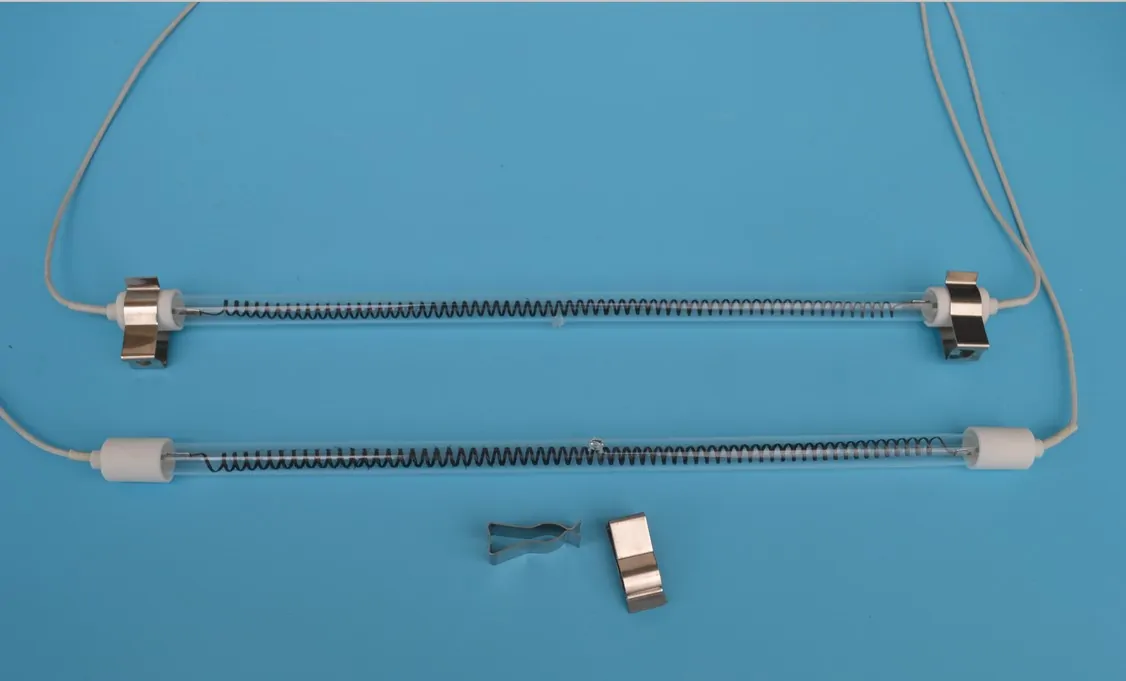
Infrared heating is not one universal replacement for every wood kiln. Its role depends on the material thickness, initial moisture content, target moisture, production speed, and acceptable quality level.
For veneer and thin boards, infrared emitters can provide rapid and controllable heating across a moving web or conveyor. The short distance through which moisture must travel makes these materials suitable for faster drying cycles.
For furniture parts, flooring components, and machined wood products, infrared heating may be used for surface pre-drying, moisture balancing before another process, or heating before coating and adhesive application.
It is also widely applicable to surface finishes. Paint, varnish, stain, adhesive, and protective coatings often require heat to accelerate evaporation or curing without heating an entire room or oven volume.
For thick boards and structural timber, infrared can support preheating or selected drying stages, but the complete process still requires controlled air circulation, humidity management, and adequate time for internal moisture migration.
Wood drying is not only a heating process. It is a combined heat- and mass-transfer process.
Infrared energy is absorbed mainly at the surface and near-surface region of the wood. Heat then conducts farther into the material. As the temperature rises, water inside the wood begins moving toward the surface, where it can evaporate.
The evaporated moisture must then be removed from the surrounding air. Without ventilation or dehumidification, humidity near the wood surface rises, evaporation slows, and the drying process becomes unstable.
If the surface is heated too aggressively, it may dry and shrink faster than the inner wood. This creates a moisture gradient and mechanical stress between the outer and inner layers.
The result may include checking, deformation, internal stress, or a dry surface surrounding a wetter core. A reliable system must therefore balance infrared power, airflow, humidity, temperature, and processing time.
Wood contains both free water and bound water.
Free water exists mainly inside cell cavities and is generally removed during the earlier drying stage. Bound water is held within the cell walls and becomes more difficult to remove as drying continues.
This means a single fixed heater setting is rarely suitable for the entire process. High initial power may accelerate early surface evaporation, but later stages may require lower power and more gradual drying to protect the wood.
A staged drying process can therefore be more effective:
Initial warming brings the wood and chamber to a stable condition.
Main drying removes free water with coordinated heating and airflow.
Controlled final drying reduces the remaining moisture more gradually.
Conditioning or equalization helps reduce moisture differences between boards.
The exact stages and settings depend on wood species, dimensions, initial moisture, final specification, and product quality requirements.
Different emitter types create different heating responses. The correct option depends on the wood product and drying stage.
| Emitter Type | Better Fit | Main Limitation |
|---|---|---|
| Short wave infrared | Rapid preheating, thin products, localized heating | May overheat the surface if distance and power are not controlled |
| Medium wave infrared lamps | Veneer, surface drying, moisture-rich coatings, controlled processes | Slower response than short wave lamps |
| Carbon infrared lamps | Gentle heating, wider areas, longer operating cycles | May not suit very high-speed heating requirements |
| Infrared heating module | Continuous lines, wide working areas, multi-zone drying | Requires system-level engineering |
| Hybrid IR and hot air | Timber drying and moisture-intensive processes | Requires coordinated heating, airflow, and exhaust control |
Short wave infrared lamps provide fast response and relatively high radiant intensity. They can be useful for preheating, thin wood products, compact heating zones, and production steps where rapid on/off control is important.
Medium wave infrared is often a practical option for veneer, coatings, adhesives, and wood surfaces containing moisture. It can provide a more controlled heat profile where maximum intensity is not the primary requirement.
Carbon infrared lamps are suitable for applications that need smoother medium-wave heating over longer periods. They may be considered for wider heating areas or temperature-sensitive wood products.
The emitter type should be confirmed through actual material testing. Wood species, color, grain, surface finish, thickness, and moisture all affect infrared absorption and drying behavior.
Veneer is one of the stronger application opportunities for infrared heating because it is thin and can be processed continuously.
Infrared emitters can be arranged across the working width of a conveyor or web line. The lamps heat the veneer surface while airflow removes evaporated moisture.
Uniformity is essential. Uneven lamp spacing or poor reflector alignment can leave some areas overdried while others remain too wet. This may affect veneer flatness, bonding quality, and downstream plywood production.
The system should therefore be designed around veneer width, thickness, feed speed, initial moisture, target moisture, and permissible surface temperature.
For a wide line, separate lamps may be difficult to align and maintain. An integrated IR drying module can combine lamps, reflectors, supports, wiring, and heating zones into a more consistent structure.
Thick timber requires more conservative drying than veneer because internal moisture must travel a greater distance before reaching the surface.
Applying strong infrared radiation to the surface does not automatically dry the core. Excessive surface heating may widen the moisture difference between the outside and inside of the board.
For thick lumber, infrared is generally more appropriate for preheating, surface conditioning, selected drying stages, or hybrid kiln configurations.
A hybrid system may use infrared emitters to provide rapid and zoned heat while circulating air transfers heat around the load and removes moisture. Exhaust dampers, dehumidification equipment, or other moisture-management methods may also be required.
The drying schedule should account for wood species, board thickness, stacking arrangement, airflow path, initial moisture, target moisture, and defect risk.
Infrared should therefore be treated as one controlled heat source within the kiln, not as a replacement for the entire drying process.
Furniture components and flooring blanks often require controlled moisture before machining, assembly, coating, or packaging.
Infrared heating can support localized pre-drying or moisture equalization on a production line. It may also be used to warm selected surfaces before adhesive application or coating.
For flooring and visible furniture components, surface quality is especially important. Overheating can affect color, dimensional stability, coatings, or adhesive performance.
Medium wave or carbon infrared may be considered where gentle, stable heating is needed. The system should use temperature monitoring and adjustable power rather than relying on a single fixed setting.
For engineered wood, adhesives and resins may also influence the heating requirement. The process must be evaluated according to the complete material structure, not only the natural wood layer.
Infrared heating has clear value in wood finishing lines because the target is often a surface coating rather than the full thickness of the wood.
Typical applications include stain drying, varnish curing, paint drying, adhesive activation, primer drying, and protective-coating processing.
The best emitter depends on the coating composition, film thickness, substrate sensitivity, conveyor speed, and required finish.
Medium wave and carbon emitters can be suitable for controlled surface drying. Faster emitters may be useful when the coating and substrate can tolerate rapid heat input.
Airflow remains important because many coatings release water, solvent, or other vapors during drying. The heating module should therefore be coordinated with ventilation and exhaust systems.
Infrared emitters supply heat, but they do not automatically remove evaporated moisture from the drying chamber.
As moisture leaves the wood surface, the surrounding air becomes more humid. If this humid air remains around the product, evaporation slows and moisture may condense in cooler areas.
A reliable wood-drying system may therefore need circulating fans, exhaust ventilation, humidity sensors, surface-temperature measurement, and moisture-content monitoring.
Air movement should be uniform. Excessively strong airflow in one area and weak airflow in another can create different drying rates across the load.
The control strategy should coordinate lamp power with airflow and exhaust. Increasing infrared power without removing additional moisture may provide little benefit and may increase surface stress.
The distance between the infrared lamp and the wood affects radiant intensity and heating uniformity.
A short distance creates higher local intensity but may increase the risk of hot spots. A greater distance provides wider coverage but may require more power or a different reflector layout.
Reflectors help direct energy toward the target and reduce unnecessary radiation toward the housing or surrounding equipment. Their geometry should match the lamp spacing, working width, and installation distance.
Wide drying lines often benefit from multiple heating zones. Separate zones allow the entrance, main drying, and final conditioning sections to operate at different power levels.
An infrared heating module can integrate emitters, reflector housings, lamp supports, wiring, and mounting frames. For timber-processing equipment manufacturers, this can provide better repeatability than installing lamps individually.
Power control is important because wood properties and moisture levels change throughout the drying cycle.
An adjustable system allows the operator to reduce output as the wood becomes drier or to use different settings for different wood species and thicknesses.
Temperature measurement alone is not always enough. Two boards at a similar surface temperature can still have different internal moisture levels.
The system should therefore combine appropriate temperature sensors with periodic or continuous moisture-content measurement.
YFR’s infrared heating systems and controls can support projects that require lamp grouping, zone control, and integration with production equipment. The final controller specification should match the electrical load, sensor type, response requirement, and safety design.
Separate infrared lamps may be suitable for replacement, testing, or a small localized heating area. A complete drying module is more appropriate when the process requires a wide working surface, several lamp rows, reflectors, zone control, or conveyor integration.
An IR drying module can combine the infrared emitters, reflector housing, lamp supports, wiring, mounting structure, and controller interface.
For wood processing, a module may also include space for airflow or coordination with external fans and exhaust ducts.
Modules are especially useful for veneer lines, coating lines, adhesive drying, continuous thin-board processing, and hybrid kiln upgrades.
The module should be designed around the wood product and drying process rather than adapted from an unrelated industrial heater.
The following information helps determine whether separate infrared lamps or a complete drying module is more suitable.
| Required Information | Why It Matters |
| Wood species and thickness | Determines drying speed and defect risk |
| Initial and target moisture content | Defines the required drying stages |
| Board, veneer, or product dimensions | Determines heating width and lamp arrangement |
| Batch cycle or conveyor speed | Defines response and power requirements |
| Available working distance | Affects radiant intensity and coverage |
| Airflow and exhaust arrangement | Determines how evaporated moisture is removed |
| Target surface temperature | Helps prevent overheating |
| Available voltage and installation space | Determines lamp, module, and controller design |
For new equipment, drawings of the chamber or production line are useful. For replacement projects, provide photos and specifications of the original lamps, holders, reflectors, wiring, and controls.
Actual wood samples should be tested whenever possible before finalizing a large production system.
A veneer line may use several medium wave emitters arranged across the conveyor width, with forced air carrying moisture away from the product.
A furniture finishing line may use carbon or medium wave lamps to dry coatings and adhesives without heating the entire workshop.
A hybrid timber kiln may use infrared zones for rapid preheating or selected drying stages, while fans and exhaust systems control humidity throughout the chamber.
A custom drying station may use separate heating modules for the top and bottom surfaces of thin boards, with independently adjustable output.
These configurations illustrate why the application should define the heating design. There is no single standard infrared wood dryer suitable for every wood species and product size.
YFR supplies infrared heating components and modules for industrial drying applications.
Relevant product directions include medium wave infrared lamps, carbon infrared lamps, IR drying modules, infrared heating modules, and infrared heating controls.
For a broader explanation of industrial drying-system design, review the industrial infrared drying guide.
YFR focuses on the infrared heating section. A complete wood-drying line may also require fans, exhaust equipment, humidity control, conveyors, insulation, moisture sensors, and process programming from the machine builder or system integrator.
Not in every application. Infrared can be effective for veneer, thin boards, surface drying, pre-drying, coatings, and hybrid kiln systems. Thick timber still requires controlled moisture migration, airflow, humidity management, and an appropriate drying schedule.
The correct wavelength depends on wood type, thickness, moisture, surface condition, and drying stage. Medium wave and carbon infrared are often considered for controlled wood and surface drying, while short wave infrared may be useful for rapid preheating or thin products.
It can support preheating or selected drying stages, but infrared energy alone does not guarantee uniform drying through the full thickness. Thick timber normally benefits from hybrid heating, air circulation, humidity control, and slower drying schedules.
Airflow removes evaporated moisture from the wood surface and carries it toward the exhaust or dehumidification system. Without adequate moisture removal, humidity around the wood rises and drying slows.
Carbon infrared lamps can be suitable for applications that require gentle, stable heating over a wider area or longer operating cycle. Their suitability should be confirmed using the actual wood product and drying conditions.
A module is appropriate when the process requires a wide heating area, several lamps, reflectors, mounting structures, zone control, conveyor integration, or coordinated airflow.
Provide the wood species, thickness, dimensions, initial moisture, target moisture, cycle or line speed, heating area, working distance, voltage, installation space, airflow arrangement, and required temperature-control method.
Infrared heating can improve selected wood-drying processes when it is used in the correct role.
Veneer, thin boards, coatings, adhesives, and pre-drying applications are strong candidates for infrared heating. Thick timber and complete kiln drying generally require a hybrid approach that combines infrared energy with airflow, humidity control, moisture monitoring, and a suitable drying schedule.
The best result comes from matching the emitter type, heating distance, reflector design, zone control, and moisture-removal system to the wood species and product dimensions.
YFR can support infrared lamp, drying module, heating module, and control-system selection based on the customer’s wood product, equipment layout, and process requirements.
Send YFR your material, dimensions, target temperature, cycle time and current equipment details for an application-specific review.


