Author: Process Heating Engineer Publish Time: 2025-11-04 Origin: Site
Last updated: August 31, 2026
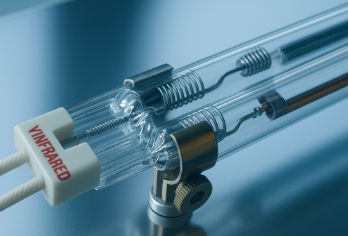
Infrared textile drying uses radiant energy to raise the temperature of a fabric, nonwoven web, ink, coating or finishing agent.
The absorbed energy heats the material and promotes evaporation. Unlike a conventional hot-air dryer, the primary heat transfer does not depend on first heating a large volume of air.
This can make infrared useful for rapid preheating, compact booster zones, surface drying and processes that need quick response when the production line starts, stops or changes speed.
However, the term “textile drying” covers several different industrial operations. These processes should not be treated as technically identical.
Textile drying may involve removing water after washing or dyeing, drying a water-based coating, stabilising a printed ink layer, removing moisture from a nonwoven web or preparing a fabric for a later curing or heat-setting stage.
Each process has a different moisture load, temperature limit and residence-time requirement.
Drying primarily removes water or another volatile liquid.
Curing involves a chemical or physical transformation in a resin, binder, adhesive or coating. The material may appear dry before curing is complete.
Fixation is used to secure dyes, pigments or functional chemicals to the fibre or coating structure.
Heat setting exposes thermoplastic fibres or fabrics to controlled temperature and tension so that dimensional properties can be stabilised.
Infrared heating may be used in all four operations, but the control objective is different in each case.
A drying line may be controlled according to residual moisture. A curing process may require a defined product temperature for a specified time. Heat setting may also require careful control of web tension, width and shrinkage.
The process must therefore be defined before the emitter type or installed power is selected.
Infrared can be integrated into several parts of a textile finishing line.
It may be installed after padding or coating to provide rapid initial water removal. It can operate before a stenter or hot-air dryer as a booster zone, reducing the thermal load entering the main oven.
Infrared may also be used in continuous textile printing, nonwoven production, adhesive activation and compact drying equipment where available floor space is limited.
Common starting applications include:
drying water-based textile inks;
pre-drying coatings and functional finishes;
drying woven or knitted fabric after wet treatment;
removing moisture from nonwoven webs;
heating coated textile laminates;
boosting an existing hot-air stenter or conveyor dryer.
The suitability of each application must still be confirmed by testing the actual textile and process formulation.
Infrared energy reaching a textile can be absorbed, reflected or transmitted.
Only the absorbed portion directly contributes to heating the fabric or coating.
The U.S. Department of Energy Process Heating Sourcebook explains that industrial infrared systems normally combine an emitter, a reflector and an application-specific control system. It also states that the emission characteristics should be matched to the absorption characteristics of the material.
This is important for textiles because absorption can change with:
fibre composition;
colour and dye concentration;
surface texture;
fabric density;
applied coating;
moisture content;
reflector and backing materials.
A lamp that performs well on a dark cotton fabric may produce a different temperature profile on an uncoloured polyester web or a fabric with a reflective functional coating.
Emitter selection should therefore be based on actual material tests rather than the general statement that one wavelength is always best for textiles.
Heating the textile is only one part of drying.
As water evaporates, the vapour must move away from the fabric surface. If the surrounding air becomes heavily loaded with moisture, the evaporation rate can fall even though the fabric remains hot.
Controlled airflow helps disrupt the humid boundary layer close to the fabric. Exhaust removes vapour from the drying chamber and introduces replacement air where required.
The European Commission Joint Research Centre’s Best Available Techniques Reference Document for the Textiles Industry describes fabric drying as a combination of mechanical water removal and final evaporation. It also identifies optimised exhaust airflow, air circulation, instrumentation and avoidance of over-drying as important measures for textile stenters and dryers.
For this reason, a practical textile dryer often combines:
mechanical dewatering → infrared preheating or booster zone → controlled airflow and exhaust → final conditioning or equalisation zone
Infrared should not be presented as a universal replacement for ventilation.
Water-based processes still need moisture removal. Solvent-containing formulations may require additional ventilation, emissions control and safety measures determined by the complete chemical process and local regulations.
Evaporating water thermally requires considerably more energy than removing free liquid mechanically.
Where the textile and process allow it, excess water should first be reduced through squeezing rollers, vacuum extraction, centrifugation or another appropriate dewatering method.
The correct method depends on fabric construction.
A delicate knitted textile may not tolerate the same squeezing pressure as a robust woven fabric. A porous nonwoven web may behave differently under vacuum extraction from a densely woven coated fabric.
Mechanical dewatering also affects the infrared design. A fabric entering with lower and more consistent moisture requires less thermal load and is easier to control across the web width.
The system designer should therefore confirm incoming moisture after the mechanical dewatering stage rather than estimating it from the upstream bath alone.
There is no single infrared emitter that is automatically correct for all textile products.
The following comparison should be used as a starting point rather than a universal rule.
| Emitter Type | Suitable Starting Point | Main Engineering Consideration |
|---|---|---|
| Short wave infrared lamp | High-speed lines, rapid preheating, thin printed layers and processes requiring very fast start-stop response | High local power density can overheat sensitive fibres or dark areas if distance and control are incorrect |
| Fast medium wave IR emitter | Textile coatings, water-based finishes, nonwoven webs and continuous roll-to-roll drying | Suitability must be verified against the coating, moisture load, line speed and required response |
| Medium wave infrared lamp | Processes needing a broader thermal response and less intense visible output | Slower response may require different zoning and standby control |
| Carbon infrared lamp | Applications needing medium-wave characteristics, controllable output and lower visible brightness | Available power density and response differ from high-temperature short-wave emitters |
The word “penetration” should be used carefully.
A shorter wavelength does not automatically produce deeper heating in every textile. Effective absorption depth depends on the fibre, colour, coating, water content and internal structure.
Short-wave emitters are better described as having high source temperature, high power density and fast response. Whether those characteristics are beneficial depends on the actual fabric.
Cotton, polyester, nylon, viscose, wool and blended fabrics respond differently to heat.
Cotton can retain significant moisture and may tolerate a different heating profile from a thermoplastic synthetic fibre.
Polyester and nylon require careful maximum-temperature control because local overheating can cause shrinkage, glazing, distortion or changes in handle.
Wool and some natural fibres can be sensitive to excessive drying and prolonged high temperature.
Elastane-containing fabrics may require particularly conservative temperature limits because dimensional stability and elasticity can be affected.
The emitter should therefore be selected together with the maximum allowable fabric temperature, not only the required evaporation rate.
Dark colours often absorb radiant energy differently from light or reflective surfaces.
A line adjusted for white fabric may produce a different temperature when a dark colour enters the same zone at the same power.
Coatings can further change the response. Metallic, mineral-filled, flame-retardant or reflective finishes may alter absorption and surface emissivity.
This creates a practical problem for textile plants processing frequent style changes.
A fixed-output dryer may require conservative settings that limit production speed. A zoned and controllable system can adjust output according to recipe, colour, fabric type and line speed.
Product trials should therefore include the lightest, darkest and most temperature-sensitive materials expected in production.
The required heating capacity depends strongly on how much water must be removed.
Two fabrics with the same width and speed can create very different dryer loads if their basis weight or incoming moisture differs.
The designer should define moisture on a consistent basis. Wet-basis and dry-basis moisture percentages are not interchangeable.
At minimum, the following points should be measured:
fabric mass before wet treatment;
wet pickup after padding or coating;
moisture entering the infrared zone;
required residual moisture at discharge;
production speed and web width.
When the coating contains solids, the calculation must distinguish between water or solvent that evaporates and solids that remain on the textile.
The time available under the emitters is determined by heating-zone length and web speed.
A faster line has a shorter exposure time unless the heating length is increased.
Increasing installed power is not always the correct response. Excessive local intensity can create surface overheating, early skin formation in a coating or uneven temperature before sufficient moisture has left the deeper structure.
A longer, zoned heating section may provide better control than a short zone operating at maximum power.
Line acceleration and deceleration must also be considered. The power controller should respond when the web slows, stops or leaves a zone.
Working distance is the separation between the emitter and the textile surface.
A short distance can produce high intensity but a narrower heating footprint. The process may become more sensitive to wrinkles, web movement and lamp spacing.
A greater distance can increase overlap between adjacent emitters and improve coverage over a wide fabric. However, the intensity at the textile may decrease and more radiation may reach surrounding equipment.
There is no universal best distance.
The correct value depends on:
emitter power and construction;
reflector geometry;
lamp spacing;
web width;
allowable surface intensity;
fabric movement;
required maintenance access.
The final position should be confirmed by thermal mapping and production trials.
A single lamp creates a heating field rather than a perfectly rectangular zone.
When multiple lamps are installed across or along a textile line, their fields overlap.
Insufficient overlap can produce cooler bands. Excessive overlap can create hot stripes or an overheated centre.
The fabric edges may also cool differently because they are exposed to surrounding air and may receive less overlap than the centre.
Wide lines may therefore require:
separate left, centre and right control zones;
additional edge emitters;
different edge power settings;
adjustable reflector geometry;
temperature or moisture measurement across the width.
Uniformity should be evaluated across the complete web, not from one sensor in the centre.
Infrared and convection perform different functions well.
Infrared can rapidly raise the temperature of the textile or wet coating. Hot air can carry vapour away and provide more gradual heat transfer around fibres, folds and less directly exposed areas.
A hybrid system can place infrared at the entrance of a hot-air dryer to increase the initial heating rate. The following convection zones then continue evaporation and equalise the temperature through the material.
Infrared can also be installed inside an existing oven if the mechanical structure, airflow and safety design permit it.
A hybrid conversion should not simply add lamps at full power. The existing airflow, exhaust, conveyor speed and control strategy must be reviewed as one system.
The general principles of combining infrared with convection are also explained in YFR’s industrial infrared drying guide.
Water-based textile coatings often need controlled initial evaporation.
If the surface is heated too aggressively, a dry film may form while moisture remains beneath it. This can slow later drying or cause defects such as blistering, cracking or poor adhesion.
A staged profile is usually more controllable.
The first zone raises the temperature without creating an extreme surface peak. The middle zone handles the main evaporation load. The final zone approaches the required residual moisture or curing condition without excessive overheating.
Airflow should remove water vapour continuously.
The coating supplier’s recommended temperature and curing conditions must be separated from the drying endpoint. A coating can feel dry while still being insufficiently cured.
Infrared is commonly considered for screen printing, digital textile printing and other processes using water-based or thermally processed inks.
The lamp choice depends on the ink formulation, deposit thickness, substrate and production speed.
A high-power short-wave zone may provide rapid response on a moving print line, but it must not scorch the fabric or trap moisture beneath a thick ink layer.
Fast medium wave can be evaluated where the process requires a wider drying window or a different interaction with the wet layer.
Ventilation remains necessary when the process releases significant moisture or other volatile compounds.
The dryer should also prevent the print from contacting rollers or guides before the surface has developed sufficient stability.
Nonwoven materials may contain water after hydroentanglement, coating, impregnation or binder application.
Their open structure can assist air movement, but lightweight webs may be mechanically unstable under strong airflow.
The dryer must balance radiant heating, airflow velocity and web handling.
Excessive air movement can disturb the web. Excessive radiant intensity can damage thin fibres, create local shrinkage or affect binder distribution.
For nonwovens, the designer should confirm:
web basis weight;
porosity and air permeability;
fibre type;
binder or finish;
support belt;
maximum tension;
allowed surface temperature.
A supported conveyor or controlled web path may be required through the heating zone.
Coated textiles and laminates can include multiple layers with different thermal responses.
The outer coating may absorb radiation strongly while the base fabric or adhesive layer responds more slowly.
Heating only from one side can create a temperature gradient through the structure.
Dual-sided heating may be useful in some applications, but it changes the module, guarding and control requirements.
The selected temperature profile should protect heat-sensitive films, foams, membranes and adhesives.
Where a chemical cure is involved, the required time at product temperature should be confirmed rather than inferred from emitter power.
A textile line does not necessarily need the same heat input at every point.
The entrance zone may need rapid preheating. The main evaporation zone may need the highest sustained output. The exit zone may need reduced power for equalisation or controlled final moisture.
Horizontal zoning can divide the line along the direction of travel.
Cross-web zoning can divide the left, centre and right areas.
An IR lamp power controller can support variable output, but the controller must be matched to the lamp load, voltage, current and required control method.
The system should reduce or interrupt power automatically when the web stops. Residual heat and response time must also be considered for medium-wave and carbon emitters.
Non-contact temperature measurement can be useful for moving fabrics because it does not touch or disturb the web.
However, an infrared thermometer or pyrometer does not automatically provide an accurate result on every textile.
Measurement is influenced by emissivity, colour, surface finish, viewing angle, distance and reflected radiation from hot emitters.
A sensor viewing a shiny coating may report a different value from a contact sensor or embedded test probe.
An infrared thermometer for IR heating systems should therefore be configured and validated for the actual fabric.
For process development, temperature labels, contact probes, thermal imaging and residual-moisture measurement may be used together to understand the complete profile.
Fabric temperature alone does not prove that the required moisture has been removed.
The same surface temperature can correspond to different moisture levels when fabric weight, speed or incoming wet pickup changes.
Where possible, residual moisture should be checked at the dryer exit.
This can be done through laboratory sampling, calibrated handheld instruments or suitable online moisture measurement.
The process should avoid both under-drying and unnecessary over-drying.
Under-drying can cause blocking, adhesion problems, inconsistent finishing or storage instability.
Over-drying can waste energy and may affect fabric handle, dimensions, fibre condition or downstream performance.
This may indicate insufficient edge power, excessive centre overlap, edge heat loss or uneven airflow.
The solution may require cross-web zoning, reflector adjustment or additional edge coverage rather than a general increase in all lamp power.
The edge emitters may be too close, the fabric may be narrower than the programmed recipe, or the edge zones may not be reduced when the product width changes.
An automatic width-based control strategy can reduce this risk.
The product temperature may exceed the limit of the fibre blend, or web tension may be unsuitable during heating.
Reducing peak intensity, increasing working distance or dividing the heat into more zones may provide better control.
The initial radiant intensity may be too high, causing early skin formation.
A more gradual first zone, improved airflow or a longer drying path may be required.
The new colour or finish may absorb radiation differently.
Recipes should be validated across representative colours instead of using one fixed setting for all styles.
The exhaust may be insufficient, recirculated air may already contain too much moisture, or the residence time may be too short.
Adding lamp power without correcting vapour removal may increase temperature without solving the drying limitation.
Lamp spacing, reflector alignment or individual lamp output may be inconsistent.
Failed or ageing emitters, dirty reflectors and incorrect replacement lamps should also be checked.
| Required Information | Why It Matters |
| Fibre and fabric composition | Establishes heat sensitivity and absorption behaviour |
| Woven, knitted or nonwoven structure | Affects web stability, airflow and dewatering |
| Fabric width | Determines lamp length and cross-web zoning |
| Basis weight | Determines textile mass flow and thermal load |
| Incoming moisture or wet pickup | Determines the evaporation requirement |
| Target residual moisture | Defines the drying endpoint |
| Coating, ink or finishing chemistry | Determines drying, ventilation and possible curing requirements |
| Line speed | Determines exposure time |
| Available heating length | Determines the possible zone arrangement |
| Maximum allowable product temperature | Protects the fabric, coating and dimensional stability |
| Existing airflow and exhaust capacity | Determines vapour-removal capability |
| Supply voltage and available electrical power | Determines lamp and controller design |
| Required start-stop response | Helps compare short wave, fast medium wave and carbon emitters |
| Product colour range | Helps evaluate variation in radiant absorption |
| Current dryer drawings and photographs | Supports mechanical and electrical integration |
Providing only voltage, wattage and line width is not enough to design a reliable textile drying system.
Material testing should be completed before a new emitter configuration is released for full production.
A useful test compares several emitter types or power profiles under the same defined conditions.
The test should record incoming moisture, fabric speed, working distance, applied power, surface temperature, exit moisture and visible product quality.
For coatings, adhesion, cracking, blocking and cure performance should also be checked after cooling.
A short laboratory trial cannot reproduce every production variable. Pilot or on-machine verification is still required for web tension, airflow, recipe changes and long-term operation.
A retrofit should begin by identifying the actual production limitation.
If the problem is slow initial heating, an infrared entrance booster may be appropriate.
If the limitation is saturated exhaust air, adding more radiant power may not improve production until airflow is corrected.
If the centre dries faster than the edges, zoning and heating geometry may matter more than total installed power.
The existing structure must also be checked for electrical capacity, thermal shielding, holder temperature, maintenance clearance and emergency shutdown.
YFR IR drying modules can combine emitters, reflectors and mounting structures, but the complete machine manufacturer remains responsible for guarding, ventilation, electrical protection and process safety.
Textile dryers can accumulate lint, coating deposits, oil mist and dust.
Deposits on quartz lamps or reflectors can reduce radiant delivery and change temperature uniformity.
Lint accumulation can also create a fire risk if housekeeping and ventilation are inadequate.
Maintenance should include inspection of:
lamp surfaces and reflector condition;
ceramic end caps and holders;
terminal tightness and lead wires;
airflow paths and exhaust ducts;
temperature sensors;
individual lamp output;
safety interlocks and stop-response functions.
The lamps should be allowed to cool before inspection or cleaning. Cleaning procedures must be suitable for the quartz surface and reflector coating.
YFR supplies quartz infrared emitters and heating components for textile machinery manufacturers, drying-line integrators and replacement projects.
Available starting options include:
Customisation may include voltage, wattage, total length, heated length, single-tube or twin-tube structure, reflector coating, end caps, lead wires and mounting arrangement.
Final emitter selection should follow material testing and complete line evaluation.
No. Fast medium wave and medium wave emitters are useful starting points for many textile coatings and continuous web processes, but short wave or carbon emitters may be more appropriate in other applications. Selection depends on the material, moisture, response requirement and temperature limit.
Sometimes infrared can serve as the main heat source, but many textile drying processes still require controlled airflow and exhaust. Hybrid infrared and convection systems are often practical because they combine rapid radiant heating with vapour removal.
Not automatically. Effective absorption depth depends on the fabric, colour, coating, moisture and structure. Short-wave emitters are better described as high-power-density, fast-response sources.
Not safely in all cases. Dark, light and reflective textiles may absorb radiation differently. Production recipes should be verified across representative colours and finishes.
The calculation starts with fabric mass flow, incoming moisture, target residual moisture, line speed and available heating length. Heat losses, airflow and process temperature must also be included. A wattage value should not be selected from web width alone.
The heating rate may exceed the vapour-removal rate. Exhaust capacity, recirculated-air humidity, residence time and coating structure should be checked before increasing lamp power.
It can be useful, but readings must be validated for the fabric emissivity, colour and viewing conditions. Exit moisture and product-quality checks remain important.
Common causes include lamp spacing, edge heat loss, incorrect reflector orientation, uneven airflow, product-width changes, failed lamps and inadequate cross-web zoning.
It may be possible to add an entrance booster or internal heating zone, but the retrofit must consider airflow, exhaust, electrical capacity, shielding, controls and emergency stop behaviour.
Provide the fabric type, width, basis weight, moisture load, coating or ink, line speed, heating length, temperature limit, airflow information, voltage and drawings or photographs of the existing equipment.
Infrared heating can provide fast and controllable energy for textile drying, printing, coating and nonwoven processing.
Its success depends on more than selecting a lamp wavelength.
The process must combine suitable emitter output, material absorption, working distance, lamp spacing, mechanical dewatering, airflow, exhaust and power control.
Short wave, fast medium wave, medium wave and carbon emitters should be evaluated against the actual fabric and process formulation.
The most reliable textile drying systems use measured incoming moisture, controlled heating zones and a defined residual-moisture endpoint.
For new systems or retrofits, the emitter should be selected only after the complete line speed, web width, moisture load, temperature limit and ventilation conditions have been reviewed.
Application results depend on the material, working distance, line speed, control method and validation criteria. Contact YFR to discuss your infrared heating application.


