


Author: Site Editor Publish Time: 2026-04-08 Origin: Site
Last updated: August 30, 2026
On many water-based jobs, the first sign of trouble is not always obvious at the dryer exit. The print may look acceptable on press, but then show blocking in the rewind, scuff during downstream handling, or lose stability when line speed is pushed back to target. In other cases, the operator adds more heat, sees some improvement in evaporation, and then starts chasing curl, distortion, surface upset, or inconsistent behavior across the web. That is why infrared drying for water-based printing is usually a balance decision, not a simple “more heat” decision.
Water-based systems often narrow the process window because evaporation must increase without letting the substrate temperature rise too far or too fast. On absorbent stocks, that can mean uneven moisture migration and sheet response. On coated or less absorbent surfaces, it can mean the water has fewer places to go except off the surface, which makes air movement, dwell, and heat delivery much more sensitive. In practical terms, faster drying for water-based printing depends on how evaporation, airflow, ink film, and substrate response work together, not on heater output alone.
A drying bottleneck is often described as “the ink is not drying fast enough,” but that description is too shallow for production decisions. In water-based printing, the real question is what happens when you try to force faster evaporation.
If the wet film is asked to give up moisture faster, several side effects can appear at the same time:
This is why water-based printing drying problems are often misdiagnosed. A press team may think they need more dryer power, when the deeper issue is poor evaporation control in water-based printing, weak air removal, or a mismatch between heat location and the most critical wet zone.
On some substrates, part of the liquid phase can move into the sheet structure. On others, most of the drying load stays at the surface. That difference matters. Filmic and coated materials do not offer the same absorption assistance as more open paper structures, so drying capacity becomes a surface-evaporation problem much more quickly.
This is a common plant mistake. The print exits cleanly, does not offset immediately, and seems acceptable. Then the problems show up later:
That is not only a moisture-removal issue. It is a downstream handling issue tied to how uniformly and thoroughly the water-based layer dried before the web moved on.
| Production symptom | Likely drying meaning | First thing to check |
|---|---|---|
| Print looks fine at exit but blocks later | Surface dryness without full through-dry condition | Residual moisture, air removal, rewind temperature |
| Drying improves only when heat is raised sharply | Drying capacity is marginal or poorly directed | IR placement, exhaust balance, dwell time |
| Substrate starts curling after added heat | Heat input is too aggressive for the stock | Surface temperature profile, distance, zoning |
| Drying varies across web width | Non-uniform heat or airflow distribution | Air knife or exhaust balance, heater profile |
| Smearing appears only at higher speed | Process window is too narrow at target throughput | Wet film load, dryer residence time, local IR support |
| Surface defects appear after stronger heating | Evaporation is destabilizing the surface or ink film | Peak intensity, exposure time, ink formulation review |
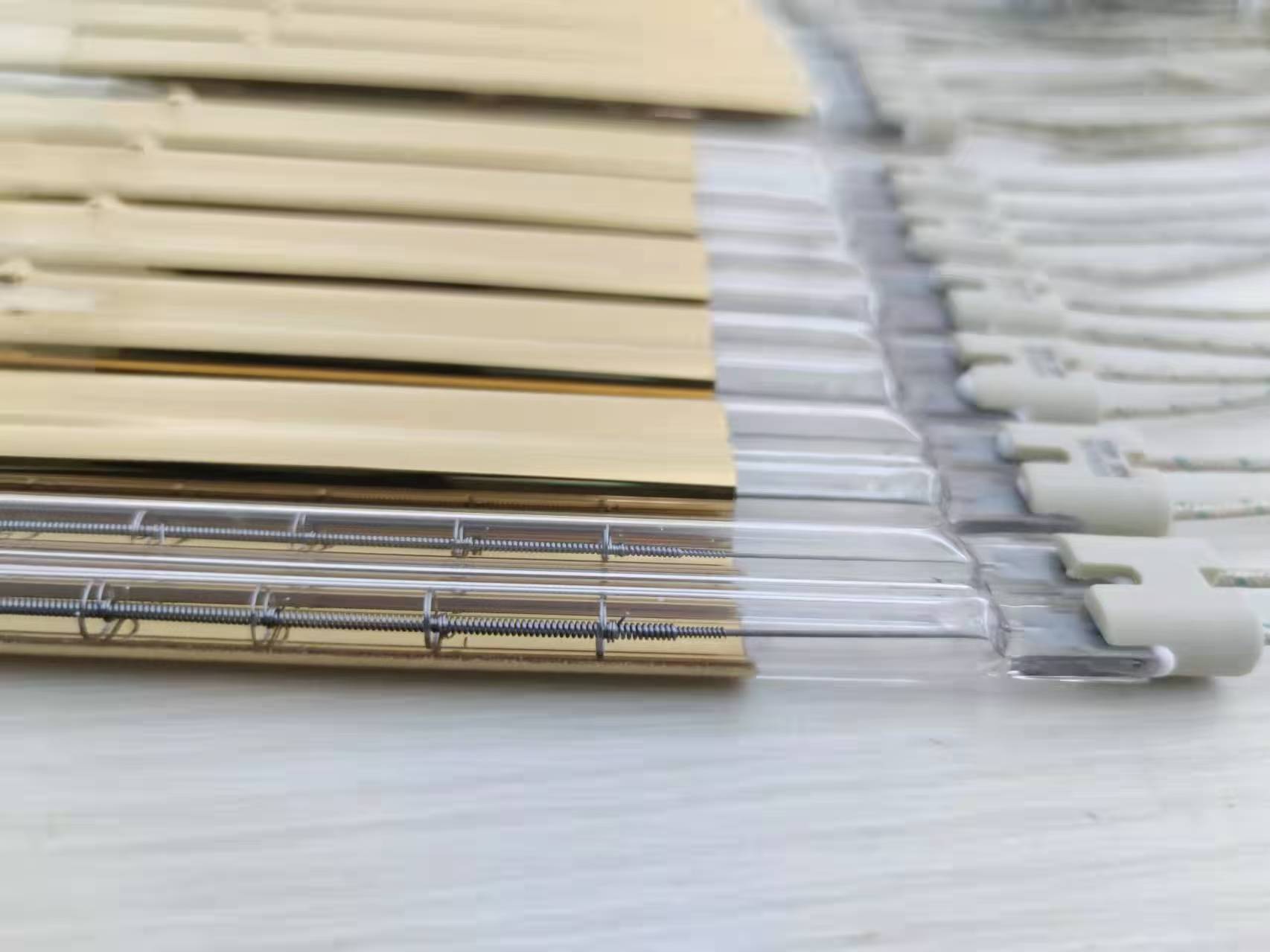
Infrared earns its place when the plant does not need a complete dryer rebuild, but does need better control at a specific bottleneck point. The strongest use case is usually localized evaporation support.
Many water-based systems struggle in the first part of the drying path, where the printed layer still carries a high moisture load. In that zone, well-controlled IR can help lift evaporation sooner, reduce the burden on later stages, and stabilize line speed without forcing the whole drying system to run hotter.
That is especially useful when the existing hot-air section has enough total capacity on paper, but the process still fails because the moisture is not being removed at the right time or in the right place.
Some presses can make acceptable print quality at moderate speed, but lose stability near target production rate. In these cases, infrared drying for water-based inks can act as a process-window widener rather than a brute-force heater. The point is not maximum temperature. The point is earlier and more controlled support to evaporation.
Water-based jobs on light paper, coated stocks, label facestocks, or temperature-sensitive materials often cannot tolerate a general increase in thermal load. Localized IR is helpful here because it lets the plant add support where needed instead of raising the entire drying environment.
This is also why a water-based process review should not be confused with a general printing ink drying problem page. The decision is more specific: where in the water-based process does evaporation fall behind, and how can support be added without destabilizing the substrate?
Infrared is effective when it is used as a controlled part of the drying system. It becomes disappointing when it is expected to fix problems that are not primarily thermal.
IR can often help with:
IR alone will not fix:
A useful plant-floor rule is simple. If extra heat improves drying but creates substrate instability, the plant likely has a control problem. If extra heat does very little, the plant may have an airflow, exhaust, wet-film, or formulation problem. If extra heat helps only in one product family, the issue may be substrate-specific rather than system-wide.
That is why this topic also differs from a page focused on an infrared dryer for flexo printing. Flexo-specific dryer choices can be part of the answer, but the broader question here is how water-based systems behave under evaporation stress across different jobs and materials.
The wrong way to tune a water-based line is to optimize one variable at a time in isolation. A line can look better on speed and worse on downstream performance. It can look drier at press exit and less stable two stations later.
At higher speed, the print does not just have less time. It also becomes less forgiving. Small variations in wet film, airflow, exhaust efficiency, or heater intensity can start showing up as practical defects. What felt like a minor drying weakness at moderate speed becomes a repeatable production limit.
Once the stock starts reacting badly to thermal input, the process loses flexibility fast. Depending on the material, that may show up as curl, cockle, dimensional movement, surface dulling, coating disturbance, tension instability, or reduced converting performance later.
This is why substrate protection in water-based printing must be judged by actual line behavior, not by heater nameplate output.
A water-based print that dries too aggressively at the surface can still create trouble if the drying profile becomes uneven. On films and other low-absorption materials, surface-only drying behavior is especially important because the liquid phase cannot disappear into the stock.
Plants that run mixed job types should also keep this distinction clear from infrared drying for paper printing. Paper can introduce its own absorption and sheet-response variables, while water-based process control must also cover coated, semi-absorbent, and low-absorption cases where surface evaporation dominates.
Not every water-based line needs IR retrofitting. Some lines simply need better tuning of what is already installed.
At that point, the decision should not be “add more heater power.” It should be a structured review of four things: wet load, IR support location, airflow removal, and substrate temperature response.
A packaging converter runs a water-based job family across coated paperboard and one synthetic label stock. At standard speed, the line is acceptable on coated board. When the same press is pushed closer to target on the synthetic stock, the print exits looking usable but shows occasional blocking in rewind and inconsistent rub resistance later in handling.
The first operator response is to raise overall dryer heat. Drying appears to improve, but the synthetic stock starts showing more dimensional instability and more tension sensitivity. The team then changes approach. Instead of forcing the whole dryer hotter, they review the first evaporation zone, check exhaust balance, and add localized IR support ahead of the point where the drying lag becomes visible. They also confirm that the late-stage problem is not only visual dryness, but residual moisture affecting handling.
In this kind of case, IR is not acting as a universal answer. It is acting as a targeted correction to the evaporation profile. The better result comes from balancing earlier water release with lower substrate stress, not from maximizing heat everywhere.
No. It is often a strong option when the line needs localized evaporation support, but it is not automatically the best answer for every press. If airflow removal, exhaust balance, or ink control are the main limits, IR alone will not solve the problem.
Sometimes, but only if those problems are actually caused by incomplete drying at the point where IR can help. If rewind tension, cooling, stacking conditions, or coating behavior are the main causes, a wider process review is needed.
Usually near the part of the process where evaporation first falls behind, not simply wherever there is empty space. In practice, the correct location depends on wet-film load, line speed, substrate sensitivity, and the balance between heat input and vapor removal.
Not always, but film and other low-absorption substrates often make drying capacity more critical because the liquid phase must leave from the surface rather than absorb into the stock. That increases the importance of carefully controlled drying support.
When drying improves only slightly but substrate behavior gets worse quickly. That usually means the plant is pushing thermal load into a process that actually needs better balance, zoning, airflow, or timing.
If your water-based line runs close to the edge of its drying window, the most useful next step is usually not a bigger heat number. It is a structured review of where moisture release falls behind, how the substrate reacts when support is added, and whether the current dryer is solving the right part of the problem.
A practical engineering discussion should look at the wettest zone, the point where speed starts to fail, the first signs of substrate instability, and whether localized IR support would reduce that pressure without overheating the material. If you are evaluating a retrofit or trying to stabilize an existing line, review the drying setup as a system, not as a single heater choice.
Review YFR replacement infrared lamps for printing equipment and heating modules and controls. Confirm lamp compatibility, airflow and dryer settings through press trials.
Send YFR your material, dimensions, target, cycle time and current equipment details for an application-specific review.


