Author: Site Editor Publish Time: 2025-08-02 Origin: Site
Last updated: August 30, 2026
That is why slow ink drying on printing presses should be treated as a process-diagnosis problem, not just a heating problem. In heatset operations, drying relies on evaporating the ink vehicle in the dryer and then stabilizing the film as the web cools. In coldset and many sheet-fed conditions, the ink may depend more on absorption and oxidation, which means the same visible symptom can come from a different mechanism. If you misread the mechanism, you will often spend money in the wrong place.
In practice, the first mistake many plants make is treating all slow-drying jobs as if they need more power. Some do. Many do not. Some need better heat placement. Some need more effective dwell time. Some are really airflow problems. Some are ink-film-load problems. Some are substrate-limitation problems. And some are combinations that only show up at production speed.
This is why buyers and engineers often start searching for broader printing ink drying solutions before they decide whether to tune the process, change the lamps, or redesign the drying section. That is the right instinct. The goal is not “more heat.” The goal is a stable drying window that protects print quality while allowing the press to run at the speed the job actually requires.
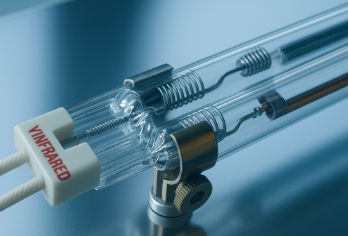
Slow drying rarely appears as a single clean symptom. It usually shows up as a cluster of operational warnings.
The first signs are typically practical, not theoretical:
set-off in the pile or after folding
smearing during handling
blocking after stacking or rewinding
a line-speed ceiling that seems lower than the press should allow
inconsistent appearance between the center and edges of the web
acceptable surface feel at exit, but defects later in finishing
In heatset web printing, the dryer’s job is to evaporate enough volatile ink oil that the ink does not transfer after cooling, cutting, folding, and stacking. When that does not happen consistently, you are not looking at a cosmetic inconvenience. You are looking at a stability problem inside the production window.
The hidden losses are often more expensive than the obvious defects. Operators slow the line for safety. Quality teams accept narrower tolerances. Jobs become operator-dependent. Changeovers take longer because crews no longer trust the original settings. In some plants, the press technically “runs,” but only at a speed that destroys the business case for the run.
That is why diagnosis has to begin with one question: what is actually limiting the drying window?
A useful way to approach the problem is to separate the bottlenecks rather than chase the symptom.
Sometimes the simplest answer is correct: the printed layer is not receiving enough usable thermal input. This can happen when lamp output has degraded, reflectors are dirty, heated length is insufficient, or the job now runs faster than the original drying setup was designed to support.
This is most common when the line used to run acceptably and now struggles under otherwise similar conditions. It is also common after lamp replacement with nominally “matching” parts that do not actually deliver the same energy profile in the same zone.
A press can have enough installed power and still dry badly. If the energy is concentrated too late, too early, too far from the web, or too unevenly across the width, the ink film never sees the right thermal profile.
This matters because drying is not only about total power. It is about where the energy enters the film, how long it remains effective, and whether the heat profile matches the ink load and web path.
At higher production speeds, even a drying system that looks adequate on paper may lose margin. The job does not necessarily need dramatically more temperature; it may simply need more effective exposure time or better use of the time already available.
That is why “it dries at low speed but not at target speed” is such an important diagnostic clue. The physics may be unchanged, but the process window has become too narrow.
In evaporative systems, airflow is not a side issue. It directly affects how vapor leaves the drying zone. Poor exhaust balance, weak removal of the evaporated fraction, or badly directed air can make additional heat much less effective.
Adding power into a badly balanced air system often creates a disappointing result: hotter equipment, but not a proportionally drier print.
This is where many troubleshooting efforts go wrong. The press team sees slow drying, raises heat, and then creates a second problem: curl, distortion, dimensional instability, gloss shift, or substrate sensitivity. Paper and paperboard are strongly affected by moisture balance and dimensional stability, and those changes matter directly to printability and runnability.
If the substrate is already near its thermal limit, the correct answer may be more targeted energy, better zoning, or a different drying sequence rather than simply more overall heat.
A good diagnosis does not begin with buying hardware. It begins with reading the symptoms correctly.
Suspect inadequate delivered energy when:
defects become worse mainly as speed increases
the same ink family used to run acceptably on the line
the center of the web performs better than the edges, or vice versa
replacement lamps were installed but drying never fully recovered
the print looks closer to acceptable when operators reduce coverage or speed
This pattern often points to insufficient effective energy at the ink film rather than a fundamental incompatibility in the chemistry.
Suspect positioning when:
drying is uneven across machine width
one color or one zone always appears to lag
increasing power helps only marginally
the web exits warm, but the defect pattern remains inconsistent
moving the job conditions slightly changes the problem more than expected
In these cases, the issue is often distribution, not absolute wattage.
Suspect airflow when:
the printed surface gets hotter, but drying improves very little
odor or vapor evacuation is visibly inconsistent
results change sharply with hood conditions or exhaust settings
one side of the web behaves differently from the other
drying varies by season, shift, or ambient conditions more than by lamp power
This is especially important in heatset printing, where drying depends on evaporation and removal of the volatile fraction.
Suspect substrate limitation when:
additional heat starts causing curl, waviness, or distortion
print quality degrades before drying fully stabilizes
coated and uncoated stocks behave very differently under the same dryer settings
thin films or heat-sensitive materials cannot tolerate the residence condition you would otherwise choose
When that happens, the ceiling is not the lamp alone. The ceiling is what the substrate will accept without quality loss.
| Symptom on press | Most likely process meaning |
|---|---|
| Smearing improves mainly when speed is reduced | Effective dwell time is too short |
| Set-off remains even after raising temperature | Airflow removal or heat placement may be limiting |
| Only certain widths or zones dry poorly | Cross-web energy distribution issue |
| Web exits hot but defects persist | Heat is not being used efficiently at the ink film |
| More heat causes curl or distortion before drying stabilizes | Substrate thermal limit has been reached |
| Drying changed after lamp replacement | Matching error in output, reflector, geometry, or heated length |
| What to check | What it tells you |
|---|---|
| Stable speed at current setup | Whether the problem is margin or total failure |
| Drying uniformity across width | Whether zoning or distribution is involved |
| Effect of small exhaust adjustment | Whether vapor removal is limiting |
| Behavior after coverage change | Whether ink load is the main driver |
| Behavior after small power change | Whether added energy still produces useful gain |
| Substrate response to added heat | Whether the line is already near material limits |
Infrared is useful when the problem is not just “heat,” but how and where heat is delivered.
Electric infrared is used in industrial process heating for applications that include ink curing and drying, paper and textile drying, and hybrid systems where IR is combined with more conventional heating. That matters in printing because IR can be used to deliver energy quickly to the target zone without requiring a full rebuild of the drying architecture.
When a press is losing speed because the print is not receiving enough effective energy in the available window, a well-matched IR section can help recover margin.
Many retrofit situations are constrained by machine geometry. There may be no appetite for a major hot-air redesign, no room for a larger dryer section, or no justification for a broad rebuild. IR becomes attractive in those cases because it can be applied with tighter zoning and more localized heating logic.
This is also where infrared drying vs hot air drying for printing becomes a real engineering decision rather than a generic comparison topic. If the job needs deeper evaporative support across a larger volume, convection may remain central. If the job needs fast, targeted energy in a tight footprint, IR often becomes more compelling.
IR tends to make the most sense when the plant needs one or more of the following:
recovery of drying margin at target production speed
better response in a limited installation space
more localized heating control
a practical upgrade path without a full dryer rebuild
improved matching to new job mixes that the original press setup was not designed to handle
That does not mean IR is always the answer. It means IR is strongest when the bottleneck is energy delivery quality, not only total installed heat.
Fast fixes often cost more than slow diagnosis.
Plants sometimes add wattage because it is easy to explain. But if the real problem is cross-web distribution, reflector condition, or poor heat placement, added power only masks the issue briefly.
They do not. Heatset, coldset, sheet-fed, coated stocks, lighter papers, and heat-sensitive films all respond differently because the drying mechanism and substrate limitations are different. EPA guidance distinguishes clearly between heatset drying by heated evaporation and non-heatset systems that rely more on absorption, oxidation, or radiation curing.
This is one of the most common procurement mistakes. Buyers look at overall length and wattage, assume the lamp is equivalent, and then discover that drying behavior changes anyway.
When plants jump directly to printing press replacement IR lamps, the correct matching logic has to include more than nominal electrical values. Heated length, reflector type, connection style, installation geometry, and cross-web energy behavior all matter. Otherwise, the new lamp may fit physically but still fail functionally.
The following is an illustrative plant-style scenario, not a universal performance claim.
A commercial press team begins seeing intermittent set-off and smear risk on a recurring job. The defects worsen at higher target speed, but increasing heat produces only partial improvement. Operators notice that the print feels warm at exit, yet finishing performance remains inconsistent. On lighter stocks, additional heat starts creating stability concerns before the drying window becomes reliable.
Instead of immediately specifying more total power, the team reviews the drying section in sequence:
lamp output condition
reflector cleanliness and geometry
heated zone position relative to the printed area
exhaust balance
web-width uniformity
substrate response to small heat changes
The review shows that the line did not primarily need a dramatic increase in total installed energy. It needed more effective energy in the correct zone, plus better consistency across width.
After correcting the delivery profile, the press regained a wider stable speed window. Operators reduced intervention. Set-off complaints dropped. The plant no longer had to choose as often between output and print quality.
That is the pattern you want. Not “maximum heat.” Not “highest wattage.” A wider, more repeatable process window.
Before approving a retrofit or replacement purchase, use this decision logic.
Process tuning may be enough when:
the installed system still has usable margin
drying responds clearly to small exhaust or zoning adjustments
the issue is job-specific rather than chronic
defects are strongly linked to setup drift, not hardware decline
A lamp change becomes justified when:
drying performance has degraded over time under familiar jobs
replacement history is mixed or poorly documented
the current lamp set no longer matches required line conditions
the plant can identify a clear mismatch in output or geometry
A broader upgrade is usually justified when:
target speed has moved beyond the original drying design window
the job mix has changed materially
substrate sensitivity has become the dominant constraint
the existing system cannot deliver the necessary control quality even after tuning
Because surface feel is not the same as full process stability. In heatset work especially, the volatile portion must be removed sufficiently in the dryer and the film must stabilize after cooling. A print can appear acceptable at exit and still transfer later if the effective drying margin is too small.
Sometimes, but not reliably. If the real bottleneck is heat placement, dwell time, airflow, or substrate sensitivity, more wattage alone may create more heat without creating proportional drying benefit.
No. Each solves a different part of the problem. Hot air remains important in many evaporative drying systems. Infrared is strongest when the plant needs targeted, fast energy delivery, tighter zoning, or retrofit flexibility in limited space. DOE process-heating guidance describes IR and conventional systems as complementary in many industrial applications, including hybrid arrangements.
Watch how the defect changes when you adjust one variable at a time. If small exhaust or setup changes produce a large effect, the process may be the main issue. If the system has lost performance over time on familiar jobs, hardware condition or matching becomes more likely.
At minimum, verify heated length, overall length, voltage, wattage, reflector type, connection style, installation geometry, and the drying behavior required at your target speed. Replacement should be based on process equivalence, not just part resemblance.
If your press is running below target speed because of drying instability, do not start with a generic “higher power” request.
Start with the job conditions, substrate, drying symptom, current lamp data, and the point in the press where the defect becomes visible. That makes it possible to judge whether you need process tuning, better heat placement, or correctly matched replacement components.
For plants working on retrofit planning, the most useful starting package is usually:
press model
substrate type
ink or coating type
current speed and target speed
defect description
existing lamp specifications
photos of the installed drying section
That is enough to turn a vague “slow drying” complaint into an engineering decision.
U.S. EPA — Offset lithographic printing and drying overview.
Useful for distinguishing heatset versus non-heatset mechanisms, dryer function, and the relationship between evaporation and post-dryer transfer behavior.
U.S. Department of Energy — Process Heat Basics.
Useful for framing drying as an industrial process-heating problem that depends on energy delivery, controls, and material response.
DOE Sourcebook for Industry — Electric infrared applications.
Useful for understanding where electric infrared is commonly used, including ink curing, paper drying, and hybrid heating arrangements.
TAPPI moisture and equilibrium references, plus paper technical guidance.
Useful for explaining why moisture balance and dimensional stability influence printability, curl, and runnability under thermal stress.
Peer-reviewed paper on heat and moisture transport in paper during printing/fusing.
Useful for supporting the broader point that heat and moisture redistribution can affect paper behavior and print stability under thermal loading.
I clean lamps with a soft cloth.
I check for cracks or discoloration.
I inspect electrical connections.
I monitor cooling systems. Regular maintenance extends lamp life and ensures consistent performance.
Review YFR replacement infrared lamps for printing equipment and heating modules and controls. Confirm dryer compatibility through press trials.
Send YFR your material, dimensions, target, cycle time and current equipment details for an application-specific review.


