Author: Site Editor Publish Time: 2025-08-12 Origin: Site
Last updated: August 29, 2026
Infrared emitter response time matters when a production line starts, stops or changes speed. A fast lamp can reduce unnecessary heating during interruptions, but speed alone does not determine process quality. Material absorption, installed power, working distance, sensing and control logic must be considered together.
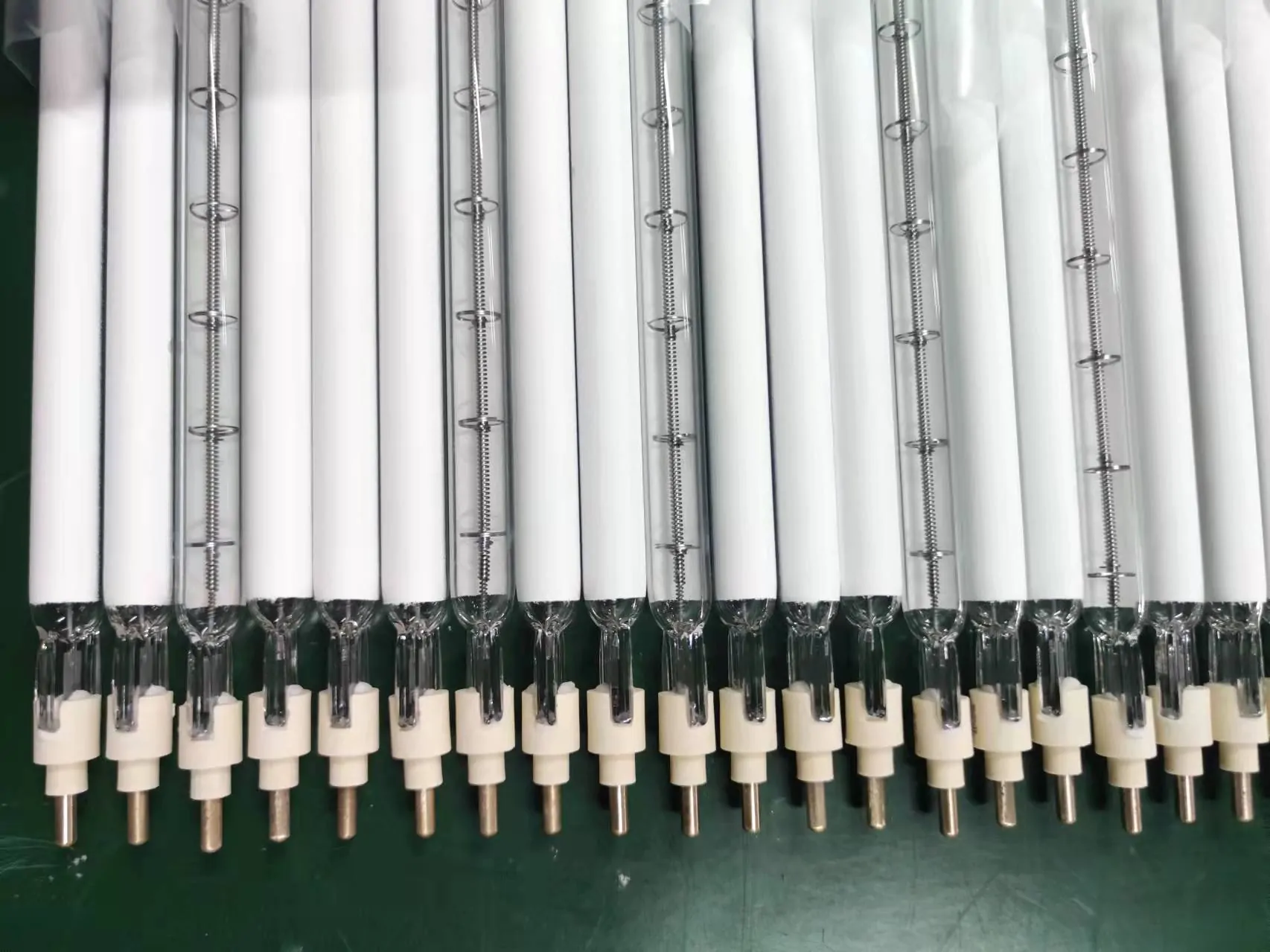
Record how quickly useful radiant output must rise and fall, the allowable product-temperature overshoot and the duration of normal line stops. Separate lamp response from the time required for the product itself to heat.
| Emitter family | Typical behaviour | Check before selection |
|---|---|---|
| Short wave | Low thermal inertia and rapid power response | Surface sensitivity and available power density |
| Fast medium wave | Fast control with a medium-wave-dominant output | Material absorption and heated width |
| Medium wave or carbon | More thermal inertia and gentler response | Warm-up allowance and moisture-removal needs |
Review YFR short-wave lamps and fast medium-wave emitters by process rather than by lamp temperature alone.
Use zone control, line-speed feedback and appropriate switching hardware. A stopped conveyor should trigger a defined power reduction or shutdown. The control must also account for residual heat from reflectors, housings and the product.
Measure product temperature at steady speed, acceleration, deceleration and restart. Record cold-start scrap, edge-to-centre variation and recovery time. Compare accepted output, not only electrical response.
Combine over-temperature protection, airflow proving and safe lamp isolation with the normal process controller. See YFR infrared controls for integration options.
No. It must also match absorption, uniformity, surface limits and available control.
No. Product mass, thickness and heat transfer determine the product response.
It helps, but residual heat and control delay must still be evaluated.
Test normal production plus the worst credible stop-and-restart sequence.
Send YFR the material, line speed, heated width and stop sequence for an emitter and control review.


