Author: Process Heating Engineer Publish Time: 2025-08-23 Origin: Site
Last updated: September 2, 2026
For component comparisons, review YFR industrial infrared lamps, medium-wave emitters and heating systems and controls. Greenhouse installation must still follow local electrical and agricultural-safety requirements.
Solar heat lamps for greenhouses are usually not a single standalone product. In most practical systems, they are infrared heating lamps powered by grid electricity, solar PV systems, or hybrid solar-electric setups. For greenhouse heating, the key is choosing the right infrared lamp type, mounting distance, control method, and heating zone design.
YFR does not manufacture solar panels, batteries, or consumer garden heaters. We focus on industrial infrared heating lamps, carbon IR lamps, fast medium wave emitters, and infrared heating modules that can be used in greenhouse heating, agricultural drying, and industrial process heating systems.
This article explains how solar-compatible infrared heat lamps work for greenhouses and how the same infrared heating technology is applied in agricultural and industrial heating applications.
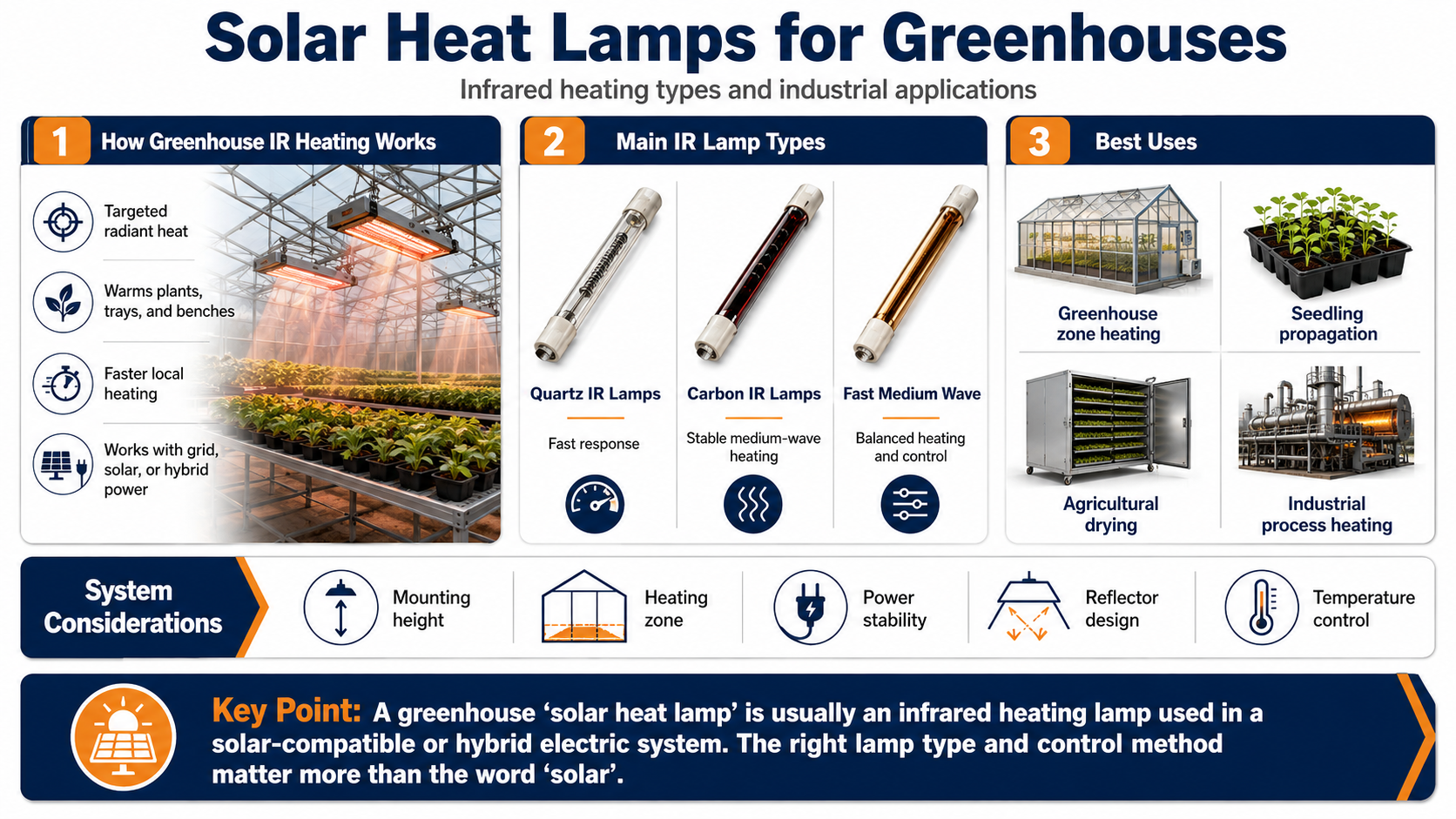
A solar heat lamp for greenhouse use usually means an electric heat lamp system that can be powered by solar energy. The heating lamp itself still requires stable electrical input. Solar panels, batteries, inverters, and controllers may support the power system, but the lamp is still an infrared or electric heating device.
In practical greenhouse applications, the main factors are:
Lamp type
Heating output
Mounting height
Heating area
Temperature control
Humidity resistance
Power supply stability
Day and night heating demand
Backup heating method

For small hobby greenhouses, a simple heater may be enough. For commercial greenhouses, plant nurseries, agricultural drying rooms, or controlled growing systems, infrared heating design needs to be evaluated more carefully.
Infrared heating is useful in greenhouses because it transfers radiant heat directly to target surfaces instead of only heating the surrounding air.
This can help warm:
Plant surfaces
Soil beds
Seedling trays
Propagation benches
Growing zones
Work areas inside the greenhouse
Compared with hot air heating, infrared heating can provide faster local warmth and more targeted heating zones. This is important when only specific parts of the greenhouse need additional heat.
For greenhouse operators, infrared heating may help reduce heat waste at roof level because energy can be directed toward plants, benches, or production zones.
Many buyers search for “solar powered heat lamp for greenhouse,” but it is important to understand the difference between solar-compatible and solar-powered.
A greenhouse heat lamp is usually solar-compatible, not automatically solar-powered.
This means:
Solar panels generate electricity
Batteries may store energy
An inverter may convert power
A controller manages electrical output
The infrared lamp still needs stable voltage and power
If the lamp requires high wattage, the solar system must be properly sized. Otherwise, the lamp may not run long enough during cloudy days, winter nights, or high-demand heating periods.
YFR supplies infrared heating lamps and heating modules, not solar PV systems. For greenhouse projects, the lamp selection and power system design should be evaluated together.
Different greenhouse and agricultural heating applications require different infrared lamp types.
Quartz infrared lamps are suitable for applications requiring fast response and high heating intensity. They can be used for localized heating zones, propagation benches, drying areas, and systems that require quick temperature rise.
Quartz lamps are often used when the heating process needs strong and direct radiant energy.
Carbon infrared lamps provide a different heating behavior compared with short wave quartz lamps. They are often used where stable medium-wave infrared output and softer heating are required.
In greenhouse and agricultural applications, carbon IR lamps may be suitable for:
Wider heating zones
Longer operating cycles
Gentle surface heating
Controlled agricultural drying
Plant processing applications
Fast medium wave IR emitters can provide balanced infrared heating for materials that absorb medium-wave radiation effectively.
They may be useful in greenhouse and agricultural heating systems where the goal is not only fast heat, but also stable process control.
Medium wave infrared lamps are commonly used in drying, coating, plastic heating, and thermal processing. In agricultural environments, they may also support controlled drying and heating processes when properly installed.
Choosing a greenhouse infrared heating lamp should not be based only on the word “solar.” The power source matters, but the heating performance depends mainly on lamp type and system design.
Important selection factors include:
Greenhouse size
Target temperature
Crop or plant type
Mounting height
Heating distance
Heating zone size
Daytime and nighttime demand
Humidity level
Voltage and power
Reflector type
Control method
Grid, solar, or hybrid power source
Safety and installation environment
For directional heating, gold reflector IR lamps may help direct more infrared energy toward the target zone. This can improve heating efficiency when the lamp is installed above benches, trays, or specific production areas.
Greenhouse heating and agricultural drying are related, but they are not the same application.
Greenhouse heating usually focuses on maintaining a suitable growing environment. The goal is to support plant growth, protect crops from cold conditions, or provide localized warmth for seedlings.
Agricultural drying focuses on moisture removal from products such as:
Fruits
Vegetables
Herbs
Seeds
Grains
Plant materials
Processed agricultural products
For drying applications, infrared energy must be controlled according to moisture content, product thickness, airflow, drying time, and target temperature.
In these situations, IR drying modules may be more suitable than separate lamps because they can combine infrared emitters, reflector structures, housings, and heating zones into a more complete system.
For small greenhouses, separate lamps may be enough. For commercial greenhouses, agricultural processing lines, or drying equipment, a complete heating module may be more practical.
Infrared heating modules can include:
Infrared lamps
Reflector housing
Lamp cassette
Mounting frame
Wiring structure
Heating zone design
Power control system
A module-based design helps improve installation consistency, heating uniformity, and maintenance convenience.
This is especially useful when the heating system must operate for long cycles or when multiple heating zones must be controlled independently.
Solar-compatible heating systems require stable control because available power may vary during the day.
Important control factors include:
Voltage stability
Power regulation
Temperature sensor placement
Nighttime backup heating
Overheating protection
Zone control
Humidity and ventilation coordination
An IR lamp power controller can help regulate infrared lamp output in industrial heating systems. For greenhouse or agricultural heating projects, power control should be designed according to the power source and actual heating demand.
Without proper control, an infrared heat lamp may overheat the target zone, waste energy, or fail to maintain a stable temperature during low-sunlight periods.
Solar-compatible greenhouse heating is only one application of infrared heating technology. The same infrared heating principle is widely used in industrial and agricultural production.
Typical applications include:
Agricultural drying
Greenhouse zone heating
Seedling propagation heating
Food drying
Plant material processing
Packaging drying
Plastic forming
Industrial oven heating
Printing and coating drying
In industrial environments, infrared heating is selected according to material absorption, heating speed, target temperature, and production efficiency.
YFR infrared lamps and modules are mainly designed for industrial applications where stable heat output, correct wavelength selection, and reliable process performance are required.
YFR does not supply complete solar PV systems, batteries, inverters, or consumer greenhouse heater kits.
We focus on:
Infrared heating lamps
Carbon infrared lamps
Fast medium wave emitters
Medium wave infrared lamps
Gold reflector IR lamps
Infrared heating modules
IR drying modules
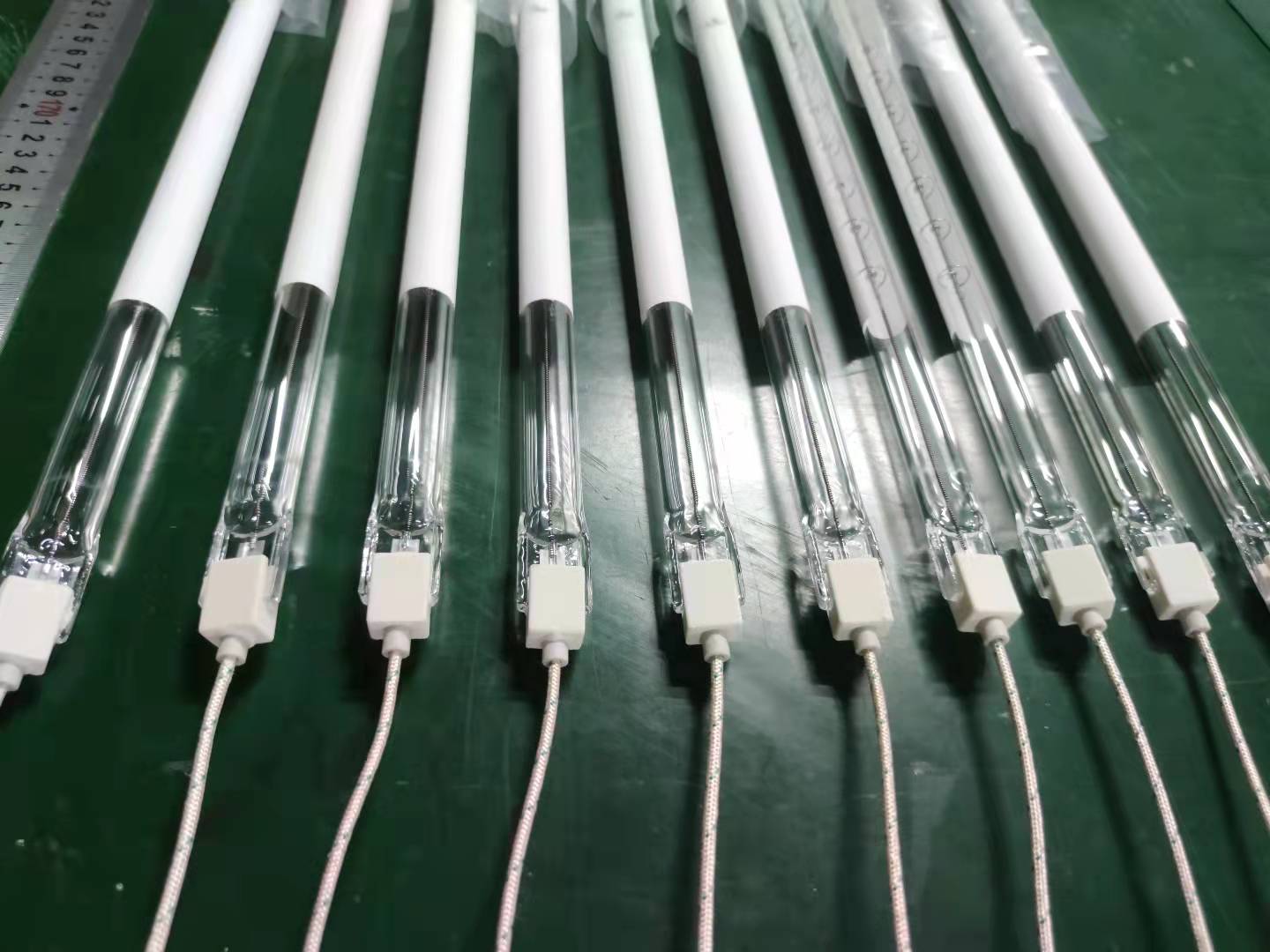
If your greenhouse, agricultural drying room, or heating equipment requires infrared lamps or heating modules, YFR can help evaluate the heating requirement and recommend a suitable lamp structure.
If the project requires full solar power design, the solar PV system should be calculated by a qualified solar system provider.
A solar heat lamp for greenhouse use is usually an electric heat lamp system that can be powered by solar energy through solar panels, batteries, inverters, and controllers. The lamp itself still requires stable electrical input.
Yes, but the solar system must be properly sized. The power demand of infrared lamps can be high, especially at night or during cold weather. Battery capacity, inverter size, and backup heating should be calculated carefully.
Infrared lamps can be useful for targeted greenhouse heating because they transfer radiant heat directly to plants, benches, soil, and growing zones. They are especially useful when only specific areas need supplemental heat.
The suitable lamp type depends on the heating zone, target temperature, mounting height, and power source. Quartz lamps provide fast response, carbon infrared lamps provide stable medium-wave heating, and fast medium wave emitters can provide balanced heating for agricultural and industrial applications.
Solar-compatible means the lamp can be used in a system powered by solar electricity. Solar-powered means the full heating system, including panels, batteries, and controls, is designed to supply enough power for the lamp. The heating lamp itself is still an electrical load.
No. YFR does not supply solar panels, batteries, or inverters. We supply industrial infrared heating lamps, carbon IR lamps, fast medium wave emitters, and infrared heating modules.
Yes. Infrared lamps and IR drying modules can be used for agricultural drying when temperature, moisture, airflow, and product characteristics are properly controlled.
Solar heat lamps for greenhouses should be evaluated as part of a complete heating system. The key is not only whether the power source is solar, but whether the infrared lamp type, control method, mounting distance, and heating zone design match the application.
For small greenhouses, simple solar-compatible heaters may be enough. For commercial greenhouses, agricultural drying rooms, or industrial process heating systems, a more technical infrared heating solution may be required.
If your application involves greenhouse zone heating, agricultural drying, or industrial infrared heating, YFR can help evaluate lamp type, reflector design, heating module structure, and replacement requirements.
Send the greenhouse dimensions, crop zone, required temperature range, mounting height, ventilation conditions and available power for a preliminary infrared-heating review.


